Loading...
This comparison has not been analyzed yet.
One-time AI generation (~1 minute). Scores and timeline are already available below.
Emperor Xuanzong of Jin vs Peter I of Bulgaria
Peter I of Bulgaria leads by 6.8 pts · 2 figures compared
…
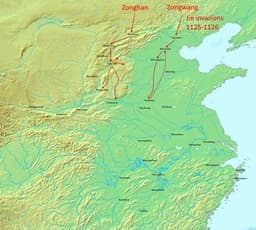
Emperor Xuanzong of Jin
Emperor · Medieval
44.7Total
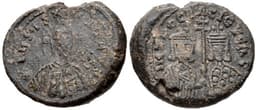
Peter I of Bulgaria
Emperor · Medieval
51.5Total
Basic Information
Born
1163
900
Died
1224
970
Era
Medieval
Medieval
Nationality
Jin dynasty
Bulgaria
Occupation
Emperor
Emperor
Civilization
Eastern
Western
Score Comparison
Military (10%)
50.0
21.2
Political (20%)
30.8
68.0
Influence (20%)
51.0
54.9
Legacy (20%)
41.7
45.0
Leadership (15%)
55.3
78.0
Strategy (15%)
35.7
25.0
TOTAL
44.7
51.5
Emperor Xuanzong of Jin — Complete Timeline
1214 AD
Moved the capital to KaifengPolitical Action◆ Major
Under pressure from Mongol attacks, Emperor Xuanzong of Jin ordered the relocation of the capital from Zhongdu (Beijing) to Kaifeng in the south. This move was seen as an abandonment of the northern territories and demoralized the Jin army.
Capital moveKaifengMongol pressure
Impact: nationaltragic
1215 AD
Loss of Zhongdu to the MongolsWar
After Xuanzong's departure, the Mongols captured Zhongdu, the former Jin capital. The city was sacked and burned, and the Jin dynasty lost control of its northern heartland, reducing its territory to the central plains.
Fall of ZhongduMongol conquestTerritorial loss
Impact: nationaltragic
Jin-Mongol peace negotiationsPolitical Action◆ Major
Xuanzong attempted to negotiate peace with the Mongols, offering tribute and recognition of Mongol supremacy. Genghis Khan initially accepted but later resumed hostilities, demanding further concessions and territory.
Peace talksDiplomacyTribute
Impact: regional
Peter I of Bulgaria — Complete Timeline
927 AD
Long reign of peace and stabilityPolitical Action◆ Major
Peter I ruled Bulgaria for over 40 years, a period marked by peace with the Byzantine Empire and internal stability. He maintained the treaty signed with Byzantium and focused on consolidating the state.
ReignPeaceBulgarian Empire
Impact: nationalconstructive
Recognition as Tsar and marriage to Byzantine princessPolitical Action◆ Major
Peter I was recognized as Tsar of Bulgaria by the Byzantine Empire and married Maria Lekapene, the granddaughter of Byzantine Emperor Romanos I. This marriage solidified the peace treaty and elevated Bulgaria's status.
MarriageDiplomacyByzantine-Bulgar Relations
Impact: regionalconstructive
This comparison has not been analyzed yet.
One-time AI generation (~1 minute). Scores and timeline are already available below.
Rankings
🥇
Peter I of BulgariaLeader
Mil: 21.2Pol: 68.0Inf: 54.9
51.5
🥈
Emperor Xuanzong of Jin
Mil: 50.0Pol: 30.8Inf: 51.0
44.7
+6.8 behind
How This Comparison Works
Algorithm
Each figure is scored on 6 dimensions (0—100 scale) based on structured historical data: Military (10%), Political (20%), Influence (20%), Legacy (20%), Leadership (15%), Strategy (15%). The weighted total produces the final ranking.
Data Sources
Scores are computed from structured sub-indicators in the database. Scale factors adjust for era (Ancient ×0.85, Modern ×1.0) and civilization size (Eastern ×1.05, Other ×0.80) to account for differences in population and military scale.
Maximum 3 Figures
Comparisons are limited to 2—3 figures to ensure readability and statistical meaningfulness.
Error Margins
±5 points per dimension — Sub-scores are derived from historical records with inherent uncertainty. Two figures within 5 points on a dimension should be considered roughly equivalent in that area.
Total Score Accuracy
±3 points overall — The weighted combination of 6 dimensions produces a total score with approximately ±3 points of uncertainty. Differences of less than 3 points are not statistically significant— the figures are effectively tied.
Known Limitations
- Historical records are incomplete and uneven across civilizations
- Figures from oral-tradition societies may be underrepresented
- Occupation labels can misclassify multi-role figures
- Scores measure capability and impact, not moral character
- Quantitative scoring is a comparison tool, not absolute truth
Capability Radar
Military (10%) — Battles & Warfare
Battles
25
15
Win Rate
20
10
Expansion
5
5
Political (20%) — Governance & Reform
Reform
20
40
Diplomacy
30
70
Economy
25
60
Influence (20%) — Cultural & Global Reach
Cultural
20
50
Global
15
20
Legacy (20%) — Historical Impact
Historical
30
40
Longevity
20
30
Leadership (15%) — Power & Stability
Tenure
55
80
Stability
15
85
Strategy (15%) — Tactics & Innovation
Strategy
15
15
Tactics
20
10
Reform
10
10
Similar Comparisons
Comments & Discussion
No comments yet. Be the first to share your thoughts!