Loading...
Erich Honecker vs Sushun
Erich Honecker leads by 17.8 pts · 2 figures compared
…

Erich Honecker
Politician · Modern
52.2Total
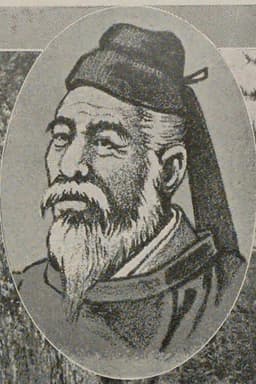
Sushun
Politician · Modern
34.4Total
Basic Information
Born
1912
1816
Died
1994
1861
Era
Modern
Modern
Nationality
East Germany
China
Occupation
Politician
Politician
Civilization
Western
Eastern
Score Comparison
Military (10%)
49.9
10.2
Political (20%)
39.4
25.0
Influence (20%)
54.9
45.5
Legacy (20%)
49.2
37.5
Leadership (15%)
74.0
34.6
Strategy (15%)
41.7
36.4
TOTAL
52.2
34.4
Erich Honecker — Complete Timeline
1961 AD
Construction of the Berlin WallPolitical Action
As head of state, Honecker oversaw the construction of the Berlin Wall, a fortified barrier dividing East and West Berlin. The wall was built to stop the mass emigration of East Germans to the West and became a symbol of the Cold War.
Cold WarBerlin Wall
Impact: globaldestructive
1971 AD
Implementation of the 'Unity of Economic and Social Policy'Reform
Honecker introduced a policy focused on increasing consumer goods and social welfare to improve living standards in East Germany. While popular, this policy strained the economy and increased dependence on West German loans.
Economic policySocial welfare
Impact: nationalconstructive
Appointment as General Secretary of the SEDPolitical Action◆ Major
Honecker succeeded Walter Ulbricht as General Secretary of the Socialist Unity Party of Germany (SED), becoming the de facto leader of East Germany. He consolidated power and pursued a policy of hardline communism.
Communist leadership
Impact: national
1989 AD
Fall of the Berlin WallPolitical Action
Following mass protests and a mistaken announcement by a party official, the Berlin Wall fell. Honecker, who had refused to use force against demonstrators, was forced to resign shortly afterward. The event marked the beginning of the end for East Germany.
Cold WarGerman reunification
Impact: global
Sushun — Complete Timeline
1860 AD
Opposed the Convention of PekingPolitical Action
During the Second Opium War, Sushun opposed signing the Convention of Peking, which ceded territories to Britain and France. His resistance reflected his hardline stance against foreign concessions.
Opium WarDiplomacyForeign Relations
Impact: national
1861 AD
Appointed as regent for the Tongzhi EmperorPolitical Action◆ Major
Upon the death of the Xianfeng Emperor, Sushun was appointed as one of eight regents for the young Tongzhi Emperor. He became the de facto leader of the regency council, controlling state affairs.
RegencyPower TransitionQing Court
Impact: national
Executed in the Xinyou CoupPolitical Action
Empress Dowagers Cixi and Ci'an, allied with Prince Gong, staged a coup against the regents. Sushun was arrested, tried for treason, and publicly executed by beheading, ending his political influence.
CoupExecutionPower Struggle
Impact: nationaltragic
Expert Analysis
Origins
Erich Honecker was born on August 25, 1912, in Neunkirchen, Germany, into a coal miner's family. His father was a committed communist, shaping Honecker's early political involvement. He joined the Communist Party of Germany in 1929 at age 17. After the Nazi rise, he was imprisoned for anti-Nazi activities from 1935 to 1945. Following World War II, he rose through the ranks of the Socialist Unity Party (SED) in East Germany, becoming a protégé of Walter Ulbricht.
Sushun (also known as Aisin Gioro Sushun) was born in 1816 into the Qing imperial clan, a descendant of Nurhaci. He was a member of the Manchu elite, serving in various official posts. He gained prominence as a conservative statesman during the Xianfeng Emperor's reign, opposing foreign concessions and advocating for traditional Confucian governance. His upbringing in the imperial court gave him deep understanding of Qing bureaucracy.
Rise to Power
Honecker's rise was methodical within the SED. He led the Free German Youth (FDJ) from 1946 to 1955, building a mass organization. In 1958, he became a full member of the Politburo. His key turning point came in 1971 when he succeeded Ulbricht as General Secretary of the SED, after a power struggle where he criticized Ulbricht's economic policies. Honecker consolidated power by purging opponents and aligning with the Soviet Union under Leonid Brezhnev.
Sushun rose as a trusted advisor to the Xianfeng Emperor. During the Second Opium War (1856-1860), he advocated for resistance against the British and French, earning the emperor's confidence. In 1861, upon Xianfeng's death, Sushun was appointed as one of eight regents for the young Tongzhi Emperor, effectively becoming co-ruler with other regents, including Duanhua and Zaiyuan. His opposition to the Convention of Peking (1860) marked him as a hardliner, but this stance later contributed to his downfall.
Leadership & Governance
Honecker's leadership style was authoritarian and centralized. He implemented the 'Unity of Economic and Social Policy' (1971-1989), focusing on consumer goods and housing construction to improve living standards. East Germany saw increased availability of Western goods, but at the cost of mounting foreign debt, which grew from 2 billion to 49 billion Deutsche Marks by 1989. Honecker maintained strict surveillance via the Stasi, employing 91,000 full-time officers and 173,000 informants. His governance scored 74.0 in Leadership, reflecting his firm control.
Sushun, as regent, favored conservative Confucian policies, resisting Western influence and modernization. He opposed the Self-Strengthening Movement advocated by Prince Gong. His governance was factional and short-lived: he relied on patronage and clan ties, but failed to build broad support. His Political score of 25.0 indicates limited effectiveness. He attempted to centralize power but alienated Empress Dowagers Cixi and Ci'an, leading to his isolation.
Triumph & Tragedy
Honecker's greatest success was stabilizing East Germany after the 1953 uprising and overseeing the Berlin Wall's construction in 1961, which stopped mass emigration and solidified the state. However, his refusal to reform led to economic stagnation and public discontent. The fall of the Berlin Wall on November 9, 1989, triggered by a mistaken announcement, was his ultimate failure. He was later forced to resign, fled to the Soviet Union, and died in exile in 1994.
Sushun's triumph was his role in preserving Qing authority during the Xianfeng Emperor's final years. He successfully prevented the court from fleeing during the Second Opium War. Yet his tragedy was the Xinyou Coup in 1861, when Cixi and Prince Gong arrested him. He was executed by slicing, a brutal end. His failure to secure alliances and his rigid opposition to reform sealed his fate.
Character & Destiny
Honecker was disciplined, dogmatic, and loyal to Soviet orthodoxy. He believed in the socialist system and resisted any liberalization, even as the Soviet Union under Gorbachev moved toward perestroika. His personality score in Strategy is 41.7, showing limited adaptability. His destiny was tied to the Soviet bloc; when it collapsed, so did his power.
Sushun was principled but inflexible. He despised corruption but lacked political acumen. His execution score of 10.2 in Military reflects his failure to command loyalty from the military. His character as a conservative hardliner made him a target in the power struggle. His destiny was sealed by the coup, as he underestimated Cixi's ambition.
Legacy
Honecker's legacy is mixed: he built a stable but oppressive state. The Berlin Wall became a symbol of Cold War division. His economic policies left East Germany bankrupt. Today, he is remembered as a dictator who maintained power through surveillance and repression. His Influence score of 54.9 reflects limited global impact outside the Eastern Bloc.
Sushun is largely forgotten outside historical circles. His execution marked the rise of Empress Dowager Cixi, who dominated China for decades. He is viewed as a tragic figure who tried to uphold tradition but failed. His Legacy score of 37.5 indicates minimal lasting influence. The Xinyou Coup set back reform in China, but Sushun's personal role is minor.
Conclusion
Erich Honecker had a greater impact than Sushun, despite his total score of 52.2 versus 34.4. Honecker ruled a modern state for 18 years, shaping the lives of 17 million East Germans and contributing to Cold War tensions. His construction of the Berlin Wall was a pivotal event in 20th-century history. Sushun's regency lasted only months, and his execution ended his influence. While Honecker's regime was repressive, its scale and duration outweigh Sushun's brief, failed regency. Honecker's score gap of 17.8 points reflects this disparity, particularly in Leadership (74.0 vs 34.6) and Political (39.4 vs 25.0). Thus, Honecker stands as the more consequential figure.
Rankings
🥇
Erich HoneckerLeader
Mil: 49.9Pol: 39.4Inf: 54.9
52.2
🥈
Sushun
Mil: 10.2Pol: 25.0Inf: 45.5
34.4
+17.8 behind
How This Comparison Works
Algorithm
Each figure is scored on 6 dimensions (0—100 scale) based on structured historical data: Military (10%), Political (20%), Influence (20%), Legacy (20%), Leadership (15%), Strategy (15%). The weighted total produces the final ranking.
Data Sources
Scores are computed from structured sub-indicators in the database. Scale factors adjust for era (Ancient ×0.85, Modern ×1.0) and civilization size (Eastern ×1.05, Other ×0.80) to account for differences in population and military scale.
Maximum 3 Figures
Comparisons are limited to 2—3 figures to ensure readability and statistical meaningfulness.
Error Margins
±5 points per dimension — Sub-scores are derived from historical records with inherent uncertainty. Two figures within 5 points on a dimension should be considered roughly equivalent in that area.
Total Score Accuracy
±3 points overall — The weighted combination of 6 dimensions produces a total score with approximately ±3 points of uncertainty. Differences of less than 3 points are not statistically significant— the figures are effectively tied.
Known Limitations
- Historical records are incomplete and uneven across civilizations
- Figures from oral-tradition societies may be underrepresented
- Occupation labels can misclassify multi-role figures
- Scores measure capability and impact, not moral character
- Quantitative scoring is a comparison tool, not absolute truth
Capability Radar
Military (10%) — Battles & Warfare
Battles
28
16
Win Rate
33
19
Expansion
34
20
Political (20%) — Governance & Reform
Reform
40
10
Diplomacy
30
20
Economy
20
10
Influence (20%) — Cultural & Global Reach
Cultural
20
5
Global
40
5
Legacy (20%) — Historical Impact
Historical
55
20
Longevity
30
5
Leadership (15%) — Power & Stability
Tenure
60
15
Stability
25
5
Strategy (15%) — Tactics & Innovation
Strategy
36
22
Tactics
43
25
Reform
41
30
Similar Comparisons
Comments & Discussion
No comments yet. Be the first to share your thoughts!