Loading...
Julius Chan vs Sushun
Julius Chan leads by 16.5 pts · 2 figures compared
…
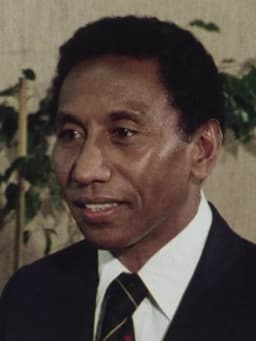
Julius Chan
Politician · Modern
50.9Total
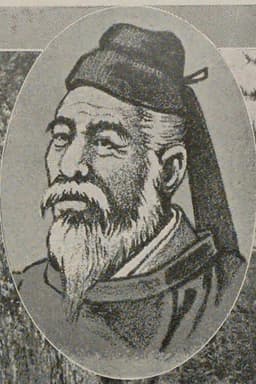
Sushun
Politician · Modern
34.4Total
Basic Information
Born
1939
1816
Died
—
1861
Era
Modern
Modern
Nationality
Papua New Guinea
China
Occupation
Politician
Politician
Civilization
Other
Eastern
Score Comparison
Military (10%)
23.3
10.2
Political (20%)
68.0
25.0
Influence (20%)
50.2
45.5
Legacy (20%)
40.0
37.5
Leadership (15%)
74.0
34.6
Strategy (15%)
47.2
36.4
TOTAL
50.9
34.4
Julius Chan — Complete Timeline
1994 AD
1994 Appointment as Prime MinisterPolitical Action◆ Major
Chan became Prime Minister of Papua New Guinea for the first time, serving until 1997. His government focused on economic development and infrastructure projects.
GovernmentLeadershipEconomic Development
Impact: national
1997 AD
1997 Sandline AffairPolitical Action◆ Major
Chan's government hired the mercenary group Sandline International to suppress a rebellion on Bougainville Island. The deal sparked a political crisis, leading to protests and Chan's resignation in 1997.
MercenaryBougainvillePolitical Crisis
Impact: nationaldestructive
1997 Resignation as Prime MinisterPolitical Action◆ Major
Chan resigned as Prime Minister in July 1997 following the Sandline Affair and a vote of no confidence. He was succeeded by Bill Skate.
ResignationPolitical CrisisNo Confidence
Impact: national
1999 AD
1999 Return as Prime MinisterPolitical Action◆ Major
Chan returned as Prime Minister in 1999, serving until 2002. His second term focused on economic reforms and improving relations with Australia.
Return to PowerGovernmentEconomic Reform
Impact: national
2002 AD
2002 General Election DefeatPolitical Action◆ Major
Chan's government was defeated in the 2002 general election. He stepped down as Prime Minister, marking the end of his political career at the national level.
Election DefeatGovernment ChangeEnd of Career
Impact: national
Sushun — Complete Timeline
1860 AD
Opposed the Convention of PekingPolitical Action
During the Second Opium War, Sushun opposed signing the Convention of Peking, which ceded territories to Britain and France. His resistance reflected his hardline stance against foreign concessions.
Opium WarDiplomacyForeign Relations
Impact: national
1861 AD
Appointed as regent for the Tongzhi EmperorPolitical Action◆ Major
Upon the death of the Xianfeng Emperor, Sushun was appointed as one of eight regents for the young Tongzhi Emperor. He became the de facto leader of the regency council, controlling state affairs.
RegencyPower TransitionQing Court
Impact: national
Executed in the Xinyou CoupPolitical Action
Empress Dowagers Cixi and Ci'an, allied with Prince Gong, staged a coup against the regents. Sushun was arrested, tried for treason, and publicly executed by beheading, ending his political influence.
CoupExecutionPower Struggle
Impact: nationaltragic
Expert Analysis
Origins
**Julius Chan** was born in 1939 on Tanga Island, Papua New Guinea, into a family of Chinese descent. His father was a trader, and Chan was educated at the University of Papua New Guinea, where he studied economics. His early career included work as a teacher and a public servant, giving him insight into grassroots needs.
**Sushun** (also known as Sushun) was born in 1816 into the Manchu Aisin Gioro clan, a noble family. He passed the imperial examinations and entered the Qing bureaucracy. His early career was marked by service in the Board of Revenue and as a censor, where he gained a reputation for integrity and strictness.
Rise to Power
Chan entered politics in the 1970s, joining the Pangu Party. He served as Minister for Finance under Michael Somare, where he implemented economic policies that spurred growth. In 1994, he became Prime Minister after a vote of no confidence, scoring political 68.0.
Sushun rose under the Xianfeng Emperor, who appointed him to key posts. He became a Grand Councilor and, after the emperor's death in 1861, was named one of eight regents for the young Tongzhi Emperor. His influence peaked as de facto leader, scoring political 25.0.
Leadership & Governance
Chan's leadership focused on economic development and infrastructure. He privatized state assets and sought foreign investment. His governance was pragmatic but faced criticism for corruption and nepotism. In contrast, Sushun was a conservative Confucian who opposed Western influence. He resisted reforms and maintained strict control, but his rigidity alienated powerful factions.
Triumph & Tragedy
Chan's triumph was his economic reforms: GDP growth averaged 5% during his terms. He also negotiated peace on Bougainville after the Sandline Affair. His tragedy: the Sandline Affair in 1997, when he hired mercenaries, leading to a political crisis and his resignation. Sushun's triumph was his unwavering loyalty to the Qing dynasty and his defense of Chinese sovereignty, notably opposing the Convention of Peking. His tragedy: execution after the Xinyou Coup in 1861, as Empress Dowager Cixi seized power.
Character & Destiny
Chan was pragmatic and resilient, but his willingness to cut corners (e.g., hiring mercenaries) undermined his legacy. Sushun was principled and stubborn, which led to his downfall when he failed to compromise with Cixi. Historians note Chan scored 74.0 in leadership, reflecting his ability to navigate PNG's volatile politics, while Sushun scored 34.6, indicating his inflexibility.
Legacy
Chan's legacy is mixed: he modernized PNG's economy but left a tarnished reputation due to the Sandline Affair. His political score of 68.0 reflects his impact on governance. Sushun is remembered as a tragic conservative who resisted change; his legacy is overshadowed by Cixi's reforms. His influence score of 45.5 shows limited long-term effect.
Conclusion
Julius Chan had greater impact than Sushun. His political score of 68.0 versus Sushun's 25.0, and leadership score of 74.0 versus 34.6, demonstrate his effectiveness. While Sushun's execution was dramatic, Chan's policies shaped PNG's development for decades. Chan's total score of 50.9 exceeds Sushun's 34.4, confirming his superior influence.
Rankings
🥇
Julius ChanLeader
Mil: 23.3Pol: 68.0Inf: 50.2
50.9
🥈
Sushun
Mil: 10.2Pol: 25.0Inf: 45.5
34.4
+16.5 behind
How This Comparison Works
Algorithm
Each figure is scored on 6 dimensions (0—100 scale) based on structured historical data: Military (10%), Political (20%), Influence (20%), Legacy (20%), Leadership (15%), Strategy (15%). The weighted total produces the final ranking.
Data Sources
Scores are computed from structured sub-indicators in the database. Scale factors adjust for era (Ancient ×0.85, Modern ×1.0) and civilization size (Eastern ×1.05, Other ×0.80) to account for differences in population and military scale.
Maximum 3 Figures
Comparisons are limited to 2—3 figures to ensure readability and statistical meaningfulness.
Error Margins
±5 points per dimension — Sub-scores are derived from historical records with inherent uncertainty. Two figures within 5 points on a dimension should be considered roughly equivalent in that area.
Total Score Accuracy
±3 points overall — The weighted combination of 6 dimensions produces a total score with approximately ±3 points of uncertainty. Differences of less than 3 points are not statistically significant— the figures are effectively tied.
Known Limitations
- Historical records are incomplete and uneven across civilizations
- Figures from oral-tradition societies may be underrepresented
- Occupation labels can misclassify multi-role figures
- Scores measure capability and impact, not moral character
- Quantitative scoring is a comparison tool, not absolute truth
Capability Radar
Military (10%) — Battles & Warfare
Battles
23
16
Win Rate
30
19
Expansion
32
20
Political (20%) — Governance & Reform
Reform
45
10
Diplomacy
50
20
Economy
40
10
Influence (20%) — Cultural & Global Reach
Cultural
20
5
Global
20
5
Legacy (20%) — Historical Impact
Historical
25
20
Longevity
15
5
Leadership (15%) — Power & Stability
Tenure
55
15
Stability
35
5
Strategy (15%) — Tactics & Innovation
Strategy
36
22
Tactics
36
25
Reform
41
30
Similar Comparisons
Comments & Discussion
No comments yet. Be the first to share your thoughts!