Loading...
Ernesto Zedillo vs Marcelo Caetano
Ernesto Zedillo leads by 13.5 pts · 2 figures compared
…

Ernesto Zedillo
Politician · Modern
59.7Total
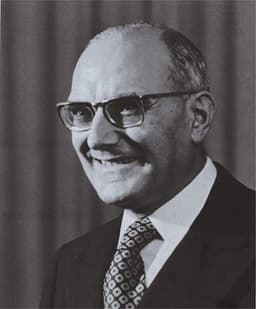
Marcelo Caetano
Politician · Modern
46.2Total
Basic Information
Born
1951
1906
Died
—
1980
Era
Modern
Modern
Nationality
Mexico
Portugal
Occupation
Politician
Politician
Civilization
Western
Western
Score Comparison
Military (10%)
50.0
50.0
Political (20%)
70.3
37.9
Influence (20%)
61.0
50.2
Legacy (20%)
52.0
40.0
Leadership (15%)
78.0
58.8
Strategy (15%)
42.1
41.8
TOTAL
59.7
46.2
Ernesto Zedillo — Complete Timeline
1994 AD
1994 Mexican peso crisis (Tequila Crisis)Other
Days after President Ernesto Zedillo took office, the Mexican peso collapsed, triggering a severe financial crisis. The government devalued the peso, and the U.S. led a $50 billion bailout. The crisis caused a deep recession and widespread hardship.
Peso CrisisFinancial CrisisBailout
Impact: globaltragic
1995 AD
Implementation of the FOBAPROA bank bailoutReform◆ Major
Zedillo's government created the FOBAPROA fund to rescue failing banks after the peso crisis. The bailout cost taxpayers an estimated $100 billion and was later criticized for corruption and for converting private bank debt into public debt.
Bank BailoutDebtCorruption
Impact: nationaldestructive
1996 AD
Electoral reforms leading to democratic transitionReform
Zedillo pushed through electoral reforms that created an independent Federal Electoral Institute (IFE) and allowed for fairer elections. These reforms ended 71 years of PRI dominance and led to the opposition victory in 2000.
DemocratizationElectoral ReformPolitical Transition
Impact: nationalconstructive
Marcelo Caetano — Complete Timeline
1968 AD
Continued Colonial War in AfricaWar◆ Major
Caetano continued Portugal's costly colonial wars in Angola, Mozambique, and Guinea-Bissau, resisting independence movements. The wars drained resources and caused growing opposition within the military and society.
Colonial WarAfrican IndependenceMilitary Conflict
Impact: globaldestructive
Appointed Prime Minister of PortugalPolitical Action◆ Major
Caetano succeeded Ant
Estado NovoSuccessionAuthoritarianism
Impact: national
1974 AD
Overthrown by the Carnation RevolutionPolitical Action
Caetano was overthrown by a military coup known as the Carnation Revolution, led by left-wing officers. The bloodless coup ended the Estado Novo regime and led to the establishment of democracy in Portugal.
CoupRevolutionEnd of Dictatorship
Impact: national
Exiled to BrazilPolitical Action
After the Carnation Revolution, Caetano was exiled to Brazil, where he lived until his death in 1980. He was not prosecuted for his role in the regime, but remained a controversial figure.
ExilePost-RevolutionLegacy
Impact: nationaltragic
Expert Analysis
Origins
Ernesto Zedillo was born on December 27, 1951, in Mexico City, to a working-class family. He earned a bachelor's degree from the National Polytechnic Institute and a PhD in economics from Yale University. His academic background shaped his technocratic approach. He joined the Institutional Revolutionary Party (PRI) early, working in the Ministry of Budget and Planning.
Marcelo Caetano was born on August 17, 1906, in Lisbon, Portugal, into a conservative family. He studied law at the University of Lisbon, becoming a professor and legal scholar. He was a key intellectual of the Estado Novo regime, serving as a minister under António de Oliveira Salazar. His rise was gradual within the authoritarian framework.
Rise to Power
Zedillo rose through the PRI ranks as an economist. He served as Secretary of Education under President Carlos Salinas and was chosen as the PRI's presidential candidate after the assassination of Luis Donaldo Colosio. He won the 1994 election with 48.7% of the vote, taking office on December 1, 1994.
Caetano was a loyalist of Salazar, serving as Minister of Colonies (1944-1947) and President of the Corporative Chamber. In 1968, Salazar suffered a stroke, and Caetano was appointed Prime Minister on September 27, 1968. He promised liberalization but maintained the regime's core.
Leadership & Governance
Zedillo faced the Mexican peso crisis immediately upon taking office. He devalued the peso on December 20, 1994, leading to a $50 billion international bailout led by the US. His government implemented austerity measures and structural reforms. He pushed electoral reforms that created an independent Federal Electoral Institute (IFE), allowing opposition victories and the end of PRI rule in 2000. His political score is 70.3, reflecting his role in democratization.
Caetano inherited a repressive regime and continued the Colonial War in Africa. He attempted cosmetic reforms, such as allowing limited political associations, but maintained censorship and secret police. His leadership score is 58.8, constrained by the regime's rigidity. He failed to address the war's costs, which consumed 40% of the national budget.
Triumph & Tragedy
Zedillo's triumph was overseeing Mexico's peaceful democratic transition. His electoral reforms are credited with enabling the 2000 election of Vicente Fox. His tragedy was the peso crisis and the FOBAPROA bank bailout, costing taxpayers an estimated $100 billion. His legacy score is 52.0, balanced between crisis mismanagement and democratic achievement.
Caetano's triumph was briefly stabilizing the economy in the early 1970s, with GDP growth averaging 7%. His tragedy was the Carnation Revolution on April 25, 1974, which overthrew him in a bloodless coup. He was exiled to Brazil, where he died in 1980. His influence score is 50.2, limited by the regime's collapse.
Character & Destiny
Zedillo was a technocrat focused on institutional reform. He prioritized democratic procedures over party loyalty, demonstrating willingness to cede power. His strategy score is 42.1, reflecting reactive crisis management. His character allowed him to accept the end of PRI dominance.
Caetano was a cautious reformer trapped by the regime's ideology. He lacked the will to democratize or end the colonial wars. His political score is 37.9, indicating poor navigation of change. His destiny was sealed by his inability to adapt.
Legacy
Zedillo's legacy is the democratic transition in Mexico. The IFE model influenced other countries. He is remembered as the president who ended 71 years of PRI rule. His total score is 59.7, reflecting moderate impact.
Caetano's legacy is the end of the Estado Novo and the loss of Portugal's African colonies. The Carnation Revolution led to democracy. He is often seen as a footnote to Salazar. His total score is 46.2, lower due to failure and limited influence.
Conclusion
Ernesto Zedillo had a greater impact with a total score of 59.7 compared to Caetano's 46.2. Zedillo's democratic transition reshaped Mexico, while Caetano's regime collapsed without lasting reforms. Zedillo's willingness to yield power contrasts with Caetano's futile defense of authoritarianism. Zedillo's legacy is positive and enduring; Caetano's is negative and ephemeral.
Rankings
🥇
Ernesto ZedilloLeader
Mil: 50.0Pol: 70.3Inf: 61.0
59.7
🥈
Marcelo Caetano
Mil: 50.0Pol: 37.9Inf: 50.2
46.2
+13.5 behind
How This Comparison Works
Algorithm
Each figure is scored on 6 dimensions (0—100 scale) based on structured historical data: Military (10%), Political (20%), Influence (20%), Legacy (20%), Leadership (15%), Strategy (15%). The weighted total produces the final ranking.
Data Sources
Scores are computed from structured sub-indicators in the database. Scale factors adjust for era (Ancient ×0.85, Modern ×1.0) and civilization size (Eastern ×1.05, Other ×0.80) to account for differences in population and military scale.
Maximum 3 Figures
Comparisons are limited to 2—3 figures to ensure readability and statistical meaningfulness.
Error Margins
±5 points per dimension — Sub-scores are derived from historical records with inherent uncertainty. Two figures within 5 points on a dimension should be considered roughly equivalent in that area.
Total Score Accuracy
±3 points overall — The weighted combination of 6 dimensions produces a total score with approximately ±3 points of uncertainty. Differences of less than 3 points are not statistically significant— the figures are effectively tied.
Known Limitations
- Historical records are incomplete and uneven across civilizations
- Figures from oral-tradition societies may be underrepresented
- Occupation labels can misclassify multi-role figures
- Scores measure capability and impact, not moral character
- Quantitative scoring is a comparison tool, not absolute truth
Capability Radar
Military (10%) — Battles & Warfare
Battles
29
27
Win Rate
30
34
Expansion
33
34
Political (20%) — Governance & Reform
Reform
75
20
Diplomacy
70
35
Economy
65
30
Influence (20%) — Cultural & Global Reach
Cultural
40
20
Global
55
20
Legacy (20%) — Historical Impact
Historical
60
25
Longevity
50
15
Leadership (15%) — Power & Stability
Tenure
60
40
Stability
55
15
Strategy (15%) — Tactics & Innovation
Strategy
38
38
Tactics
39
39
Reform
45
44
Similar Comparisons
Comments & Discussion
No comments yet. Be the first to share your thoughts!