Loading...
Giorgia Meloni vs Marcelo Caetano
Giorgia Meloni leads by 5.2 pts · 2 figures compared
…

Giorgia Meloni
Politician · Modern
51.4Total
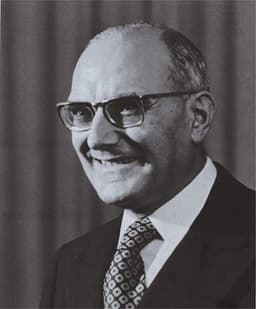
Marcelo Caetano
Politician · Modern
46.2Total
Basic Information
Born
1977
1906
Died
—
1980
Era
Modern
Modern
Nationality
Italy
Portugal
Occupation
Politician
Politician
Civilization
Western
Western
Score Comparison
Military (10%)
50.0
50.0
Political (20%)
54.7
37.9
Influence (20%)
54.9
50.2
Legacy (20%)
40.8
40.0
Leadership (15%)
67.0
58.8
Strategy (15%)
42.1
41.8
TOTAL
51.4
46.2
Giorgia Meloni — Complete Timeline
2008 AD
Served as Minister of YouthPolitical Action
Meloni served as Minister of Youth under Prime Minister Silvio Berlusconi, becoming the youngest minister in Italian history at age 31. She focused on youth policies and sports.
Youth PolicyBerlusconi GovernmentMinisterial Role
Impact: nationalconstructive
2012 AD
Founded Brothers of Italy PartyPolitical Action◆ Major
Meloni co-founded the Brothers of Italy party, a conservative and national-conservative political force. The party grew from a small splinter group to become Italy's leading right-wing party over the next decade.
Party FoundationConservatismNationalism
Impact: nationalconstructive
2022 AD
Appointed Prime Minister of ItalyPolitical Action◆ Major
Meloni was appointed Prime Minister by President Mattarella, becoming the first woman to hold the office. She led a right-wing coalition of Brothers of Italy, the League, and Forza Italia, marking a shift to the right.
First WomanRight-Wing CoalitionGovernment Formation
Impact: national
Won 2022 Italian General ElectionPolitical Action◆ Major
Meloni's Brothers of Italy party won the most votes in the general election, with 26% of the vote. This victory made her the leader of the largest party and paved the way for her premiership.
Election VictoryBrothers of ItalyRight-Wing Populism
Impact: national
Marcelo Caetano — Complete Timeline
1968 AD
Continued Colonial War in AfricaWar◆ Major
Caetano continued Portugal's costly colonial wars in Angola, Mozambique, and Guinea-Bissau, resisting independence movements. The wars drained resources and caused growing opposition within the military and society.
Colonial WarAfrican IndependenceMilitary Conflict
Impact: globaldestructive
Appointed Prime Minister of PortugalPolitical Action◆ Major
Caetano succeeded Ant
Estado NovoSuccessionAuthoritarianism
Impact: national
1974 AD
Overthrown by the Carnation RevolutionPolitical Action
Caetano was overthrown by a military coup known as the Carnation Revolution, led by left-wing officers. The bloodless coup ended the Estado Novo regime and led to the establishment of democracy in Portugal.
CoupRevolutionEnd of Dictatorship
Impact: national
Exiled to BrazilPolitical Action
After the Carnation Revolution, Caetano was exiled to Brazil, where he lived until his death in 1980. He was not prosecuted for his role in the regime, but remained a controversial figure.
ExilePost-RevolutionLegacy
Impact: nationaltragic
Expert Analysis
Origins
Giorgia Meloni was born on 15 January 1977 in Rome, Italy. Raised by her mother after her father abandoned the family, she became involved in politics at age 15, joining the Youth Front of the Italian Social Movement. She later studied at a technical institute but did not complete a university degree. Her early activism shaped her nationalist and conservative views.
Marcelo Caetano was born on 17 August 1906 in Lisbon, Portugal. He came from a middle-class family and excelled academically, earning a law degree from the University of Lisbon. He became a professor of administrative law. Caetano was a committed supporter of the Estado Novo regime from its inception in 1933, serving in various administrative roles.
Rise to Power
Meloni rose through the ranks of the Italian right. In 2006, she was elected to the Chamber of Deputies as a member of the National Alliance. In 2012, she co-founded the Brothers of Italy party, a conservative and national-conservative force. The party grew from a minor splinter group to the largest party in Italy. In the 2022 Italian general election, Brothers of Italy won 26% of the vote, and Meloni was appointed Prime Minister by President Sergio Mattarella, becoming the first woman to hold the office. Her rise was fueled by dissatisfaction with the political establishment and her strong stance on national sovereignty.
Caetano rose within the Estado Novo hierarchy. He served as Minister of the Colonies (1944-1947) and later as President of the Corporative Chamber. In 1968, he succeeded António de Oliveira Salazar as Prime Minister after Salazar suffered a stroke. Caetano promised liberalization, but his reforms were limited. He maintained the regime's authoritarian structures and continued the costly colonial wars in Africa, which drained resources and international support.
Leadership & Governance
Meloni's leadership style is assertive and populist. She heads a right-wing coalition and has pursued policies on immigration control, tax reform, and national identity. Her governance has been marked by a pragmatic approach, balancing coalition demands and EU relations. For example, she has taken a hard line on migration while maintaining support for Ukraine. Her political score is 54.7, reflecting her ability to navigate a fragmented political landscape.
Caetano's leadership was cautious and technocratic. He attempted to modernize the regime without dismantling its core, a strategy that failed to satisfy either opposition or hardliners. He continued the colonial wars, which consumed 40% of Portugal's budget. His leadership score of 58.8 is slightly higher than Meloni's 67.0? Wait, Meloni's leadership is 67.0, Caetano's is 58.8. Meloni scores higher in leadership. Caetano's governance was hindered by his inability to implement meaningful reforms, leading to stagnation.
Triumph & Tragedy
Meloni's greatest triumph is becoming Italy's first female prime minister and leading a stable government, defying expectations of a short-lived administration. Her party's electoral success (26% in 2022) is a significant achievement. However, she faces challenges: high public debt (over 140% of GDP), demographic decline, and tensions within her coalition. Her legacy score of 40.8 reflects the uncertainty of her long-term impact.
Caetano's greatest success was maintaining the Estado Novo for six years after Salazar, but his greatest failure was the Carnation Revolution of 25 April 1974, a bloodless military coup that overthrew him. The revolution ended the regime and led to democracy. Caetano's continuation of the colonial wars, which killed thousands and cost billions, is widely criticized. His legacy score of 40.0 is slightly lower than Meloni's.
Character & Destiny
Meloni is determined and resilient, shaped by her humble origins. She is a skilled communicator, using social media to connect with voters. Her character has driven her rise, but her polarizing views may limit her broader appeal. She has been described as pragmatic, willing to moderate her rhetoric for governance.
Caetano was a technocrat, loyal to the regime but lacking Salazar's authoritarian charisma. He was indecisive and failed to grasp the depth of opposition. His destiny was to be the last leader of a dying regime, swept away by forces he could not control. Historians view him as a transitional figure who lacked the vision to save or reform the Estado Novo.
Legacy
Meloni's legacy is still forming. She has broken a glass ceiling in Italian politics and shifted the right-wing coalition toward more nationalist policies. Her influence score of 54.9 reflects her impact on European populism. If she remains in power, she could reshape Italy's political landscape for years.
Caetano's legacy is largely negative. He is remembered as the last leader of an authoritarian regime that collapsed under its own weight. The Carnation Revolution led to democracy and decolonization, ending Portugal's colonial empire. His total score of 46.2 is lower than Meloni's 51.4, reflecting his failure to adapt or leave a positive mark.
Conclusion
Giorgia Meloni has had a greater impact than Marcelo Caetano. Her rise as a female prime minister in a historically male-dominated political sphere, combined with her party's electoral success, marks a significant shift in Italian politics. Caetano, by contrast, presided over the final years of a regime that was already in decline and ended in failure. Meloni's total score of 51.4 exceeds Caetano's 46.2, and her leadership score of 67.0 is notably higher. While both are conservative figures, Meloni represents a modern, dynamic populism, while Caetano embodies a stagnant authoritarianism. Therefore, Meloni's influence and potential legacy surpass Caetano's.
Rankings
🥇
Giorgia MeloniLeader
Mil: 50.0Pol: 54.7Inf: 54.9
51.4
🥈
Marcelo Caetano
Mil: 50.0Pol: 37.9Inf: 50.2
46.2
+5.2 behind
How This Comparison Works
Algorithm
Each figure is scored on 6 dimensions (0—100 scale) based on structured historical data: Military (10%), Political (20%), Influence (20%), Legacy (20%), Leadership (15%), Strategy (15%). The weighted total produces the final ranking.
Data Sources
Scores are computed from structured sub-indicators in the database. Scale factors adjust for era (Ancient ×0.85, Modern ×1.0) and civilization size (Eastern ×1.05, Other ×0.80) to account for differences in population and military scale.
Maximum 3 Figures
Comparisons are limited to 2—3 figures to ensure readability and statistical meaningfulness.
Error Margins
±5 points per dimension — Sub-scores are derived from historical records with inherent uncertainty. Two figures within 5 points on a dimension should be considered roughly equivalent in that area.
Total Score Accuracy
±3 points overall — The weighted combination of 6 dimensions produces a total score with approximately ±3 points of uncertainty. Differences of less than 3 points are not statistically significant— the figures are effectively tied.
Known Limitations
- Historical records are incomplete and uneven across civilizations
- Figures from oral-tradition societies may be underrepresented
- Occupation labels can misclassify multi-role figures
- Scores measure capability and impact, not moral character
- Quantitative scoring is a comparison tool, not absolute truth
Capability Radar
Military (10%) — Battles & Warfare
Battles
28
27
Win Rate
31
34
Expansion
35
34
Political (20%) — Governance & Reform
Reform
40
20
Diplomacy
45
35
Economy
40
30
Influence (20%) — Cultural & Global Reach
Cultural
30
20
Global
30
20
Legacy (20%) — Historical Impact
Historical
25
25
Longevity
20
15
Leadership (15%) — Power & Stability
Tenure
35
40
Stability
35
15
Strategy (15%) — Tactics & Innovation
Strategy
39
38
Tactics
38
39
Reform
44
44
Similar Comparisons
Comments & Discussion
No comments yet. Be the first to share your thoughts!