Loading...
Ernst Johann von Biron vs Peter III of Russia
Peter III of Russia leads by 0.4 pts · 2 figures compared
…

Ernst Johann von Biron
Emperor · Modern
36.7Total
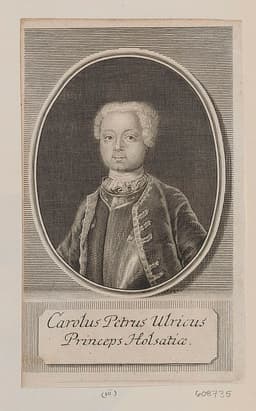
Peter III of Russia
Emperor · Modern
37.1Total
Basic Information
Born
1690
1728
Died
1772
1762
Era
Modern
Modern
Nationality
Courland
Russia
Occupation
Emperor
Emperor
Civilization
Western
Western
Score Comparison
Military (10%)
13.4
20.0
Political (20%)
26.4
30.8
Influence (20%)
47.1
45.5
Legacy (20%)
35.8
35.8
Leadership (15%)
31.2
31.2
Strategy (15%)
60.0
54.6
TOTAL
36.7
37.1
Ernst Johann von Biron — Complete Timeline
1737 AD
Became Duke of CourlandPolitical Action◆ Major
With the support of Empress Anna of Russia, Ernst Johann von Biron was elected Duke of Courland. He ruled the duchy as a Russian client, implementing policies favorable to St. Petersburg.
DuchyRussian Influence
Impact: regional
1740 AD
Exiled to Siberia after Anna's deathPolitical Action◆ Major
Following the death of Empress Anna, Biron was arrested by Field Marshal Burkhard Christoph von M
ExileFall from Power
Impact: nationaltragic
1763 AD
Restored as Duke of Courland by Catherine the GreatPolitical Action◆ Major
Catherine the Great restored Biron to the Duchy of Courland. He returned from exile and ruled again until 1769, when he abdicated in favor of his son Peter von Biron.
RestorationCatherine the Great
Impact: regionalconstructive
Peter III of Russia — Complete Timeline
1762 AD
Emancipation of the Nobility from State ServiceReform◆ Major
Peter III issued the 'Manifesto on the Freedom of the Nobility,' which freed nobles from compulsory state and military service. This reform granted nobles the right to choose their occupation, travel abroad, and own land without service. It strengthened the nobility's power but weakened state control.
NobilityReformManifesto
Impact: nationalconstructive
Accession as Emperor of RussiaPolitical Action◆ Major
Peter III ascended the throne after the death of Elizabeth of Russia. He was a grandson of Peter the Great and a devoted admirer of Frederick the Great of Prussia. His reign lasted only six months and was marked by unpopular policies that alienated the nobility and the military.
SuccessionShort ReignUnpopular
Impact: national
Withdrawal from the Seven Years' War (Treaty of Saint Petersburg)Political Action◆ Major
Peter III ended Russia's participation in the Seven Years' War by signing the Treaty of Saint Petersburg with Prussia. He returned all conquered territories to Prussia and formed an alliance with Frederick the Great. This decision reversed Elizabeth's policy and was seen as a betrayal of Russian sacrifices.
TreatySeven Years' WarPrussia
Impact: globaldestructive
Deposition and AssassinationPolitical Action◆ Major
Peter III was deposed in a coup led by his wife, Catherine, and her supporters, including the Orlov brothers. He was forced to abdicate and was imprisoned at Ropsha, where he was killed under unclear circumstances. His death cleared the way for Catherine the Great's reign.
CoupAssassinationCatherine the Great
Impact: nationaltragic
Expert Analysis
Origins
Ernst Johann von Biron was born in 1690 in Courland (now part of Latvia) into a minor noble family. His father, Karl von Biron, was a forester, and the family had little political influence. Biron studied at the University of Königsberg but left without a degree, then served as a page in the court of Anna Ivanovna, the Duchess of Courland. His charm and ambition caught Anna's attention, and he became her favorite, eventually rising to become her lover and chief advisor.
Peter III of Russia was born Karl Peter Ulrich in 1728 in Kiel, Germany. He was the grandson of Peter the Great through his mother, Anna Petrovna, and the son of Charles Frederick, Duke of Holstein-Gottorp. Orphaned at age 11, he was raised by court officials in Holstein, where he developed an admiration for Frederick the Great and Prussian militarism. In 1742, his aunt, Empress Elizabeth of Russia, declared him heir to the Russian throne, and he converted to Orthodoxy as Peter Feodorovich.
Rise to Power
Biron's rise was entirely tied to Empress Anna of Russia. When Anna became Empress of Russia in 1730, Biron moved to Saint Petersburg and quickly became her most trusted advisor. He was appointed Lord Chamberlain and later, in 1737, with Anna's support, he was elected Duke of Courland by the local nobility, effectively making him a vassal ruler under Russian influence. His power peaked during Anna's reign (1730–1740), as he controlled appointments, foreign policy, and court patronage.
Peter III's rise was more conventional: he was designated heir by Empress Elizabeth and ascended the throne on January 5, 1762, after Elizabeth's death. His reign was short, lasting only until July 9, 1762—just 186 days. His accession was initially accepted by the Russian nobility and military, but his rapid reforms and pro-Prussian policies quickly alienated key groups.
Leadership & Governance
Biron's governance style was autocratic and self-serving. He used his influence over Anna to amass wealth and power, often at the expense of the Russian state. He was known for his harsh treatment of political opponents, including the execution or exile of the Dolgorukovs and other noble families. However, he also implemented some administrative reforms, such as restructuring the Cabinet of Ministers and improving tax collection. His political score of 26.4 reflects his limited independent authority; he never ruled Russia directly but through Anna.
Peter III's leadership was erratic and reformist. In his six months, he issued a series of progressive edicts: the Manifesto on the Freedom of the Nobility (February 18, 1762) freed nobles from compulsory state service, the abolition of the Secret Chancellery (a political police force), and an edict on religious tolerance for Old Believers. However, his admiration for Frederick the Great led him to withdraw Russia from the Seven Years' War, returning all conquered Prussian territories. This outraged the military and nobility, who saw it as a betrayal of Russian sacrifices. His leadership score of 31.2 reflects his inability to consolidate power.
Triumph & Tragedy
Biron's greatest triumph was securing the Duchy of Courland, which he ruled from 1737 to 1741 and again from 1763 to 1769. He restored order to the duchy's finances and maintained its autonomy under Russian suzerainty. His tragedy came after Anna's death in 1740: he was arrested by Field Marshal Münnich, stripped of his titles, and exiled to Siberia. He spent 22 years in exile before Catherine the Great restored him in 1763, but his later rule was overshadowed by his son's incompetence.
Peter III's triumph was his reform package, which had lasting impact: the nobility's freedom from service remained in place until 1917, and his religious tolerance set a precedent for later rulers. His tragedy was his deposition and assassination. After the coup led by his wife Catherine, he was forced to abdicate and imprisoned at Ropsha, where he was murdered on July 17, 1762, likely by Alexei Orlov. He died without any significant legacy of his own reign.
Character & Destiny
Biron was calculating, ambitious, and ruthless. He understood the importance of a single patron (Anna) and built his career on her favor. His downfall came when he failed to secure his position after her death; he lacked independent support among the Russian elite. His character score of 31.2 and political score of 26.4 reflect his dependence on others.
Peter III was idealistic, impulsive, and tactless. He openly admired Frederick the Great and despised Russian Orthodox customs, which alienated the clergy and court. His decision to withdraw from the Seven Years' War was strategically sound (Russia was exhausted), but he executed it without consulting the military or nobility. His personality made him vulnerable to Catherine's conspiracy. His strategy score of 54.6 is higher than Biron's 60.0, but his leadership score of 31.2 is identical to Biron's.
Legacy
Biron's legacy is mixed: he is remembered as a corrupt favorite who exploited his position, but also as a capable administrator of Courland. The term "Bironovshchina" (Biron's regime) became synonymous with foreign dominance and repression in Russian historiography. His influence score of 47.1 reflects his impact on Russian political culture.
Peter III's legacy is more profound. Despite his short reign, his reforms shaped Russian society: the nobility's emancipation from service created a class of idle landowners, contributing to the conditions for later rebellions. His religious tolerance and abolition of the secret police influenced Catherine the Great's early policies. However, he is often overshadowed by Catherine's legacy. His total score of 37.1 barely edges Biron's 36.7.
Conclusion
Peter III had a greater impact than Ernst Johann von Biron, despite his shorter reign. His reforms—especially the emancipation of the nobility—were structural changes that lasted for over 150 years, while Biron's influence was personal and ephemeral. Peter's total score of 37.1 is slightly higher than Biron's 36.7, but the gap is narrow. However, Peter's actions set in motion the coup that brought Catherine the Great to power, one of Russia's most significant rulers. Biron, in contrast, was a footnote in Russian history, a symbol of favoritism. Therefore, Peter III, despite his failures, had a more lasting impact on the trajectory of the Russian Empire.
Rankings
🥇
Peter III of RussiaLeader
Mil: 20.0Pol: 30.8Inf: 45.5
37.1
🥈
Ernst Johann von Biron
Mil: 13.4Pol: 26.4Inf: 47.1
36.7
+0.4 behind
How This Comparison Works
Algorithm
Each figure is scored on 6 dimensions (0—100 scale) based on structured historical data: Military (10%), Political (20%), Influence (20%), Legacy (20%), Leadership (15%), Strategy (15%). The weighted total produces the final ranking.
Data Sources
Scores are computed from structured sub-indicators in the database. Scale factors adjust for era (Ancient ×0.85, Modern ×1.0) and civilization size (Eastern ×1.05, Other ×0.80) to account for differences in population and military scale.
Maximum 3 Figures
Comparisons are limited to 2—3 figures to ensure readability and statistical meaningfulness.
Error Margins
±5 points per dimension — Sub-scores are derived from historical records with inherent uncertainty. Two figures within 5 points on a dimension should be considered roughly equivalent in that area.
Total Score Accuracy
±3 points overall — The weighted combination of 6 dimensions produces a total score with approximately ±3 points of uncertainty. Differences of less than 3 points are not statistically significant— the figures are effectively tied.
Known Limitations
- Historical records are incomplete and uneven across civilizations
- Figures from oral-tradition societies may be underrepresented
- Occupation labels can misclassify multi-role figures
- Scores measure capability and impact, not moral character
- Quantitative scoring is a comparison tool, not absolute truth
Capability Radar
Military (10%) — Battles & Warfare
Battles
39
5
Win Rate
41
5
Expansion
42
5
Political (20%) — Governance & Reform
Reform
5
15
Diplomacy
15
20
Economy
10
10
Influence (20%) — Cultural & Global Reach
Cultural
5
5
Global
5
5
Legacy (20%) — Historical Impact
Historical
10
10
Longevity
5
5
Leadership (15%) — Power & Stability
Tenure
10
10
Stability
5
5
Strategy (15%) — Tactics & Innovation
Strategy
44
5
Tactics
46
5
Reform
51
10
Similar Comparisons
Comments & Discussion
No comments yet. Be the first to share your thoughts!