Loading...
Essam Sharaf vs Julius Caesar
Julius Caesar leads by 38.8 pts · 2 figures compared
…
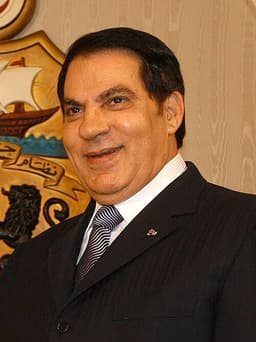
Essam Sharaf
Politician · Modern
44.0Total

Julius Caesar
General · Ancient
82.8Total
Basic Information
Born
1952
-100
Died
—
-44
Era
Modern
Ancient
Nationality
Egypt
Roman Republic
Occupation
Politician
General
Civilization
Middle Eastern
Western
Score Comparison
Military (10%)
50.0
88.0
Political (20%)
39.4
78.0
Influence (20%)
51.0
85.0
Legacy (20%)
39.2
82.0
Leadership (15%)
41.5
80.0
Strategy (15%)
42.8
85.0
TOTAL
44.0
82.8
Essam Sharaf — Complete Timeline
2011 AD
Appointment as Prime Minister of EgyptPolitical Action◆ Major
Essam Sharaf was appointed Prime Minister by the Supreme Council of the Armed Forces in March 2011, following the resignation of Ahmed Shafik. His appointment came during the 2011 Egyptian revolution, and he was seen as a reformist figure.
Prime MinisterRevolutionEgypt
Impact: nationalconstructive
Resignation amid political crisisPolitical Action◆ Major
Sharaf resigned as Prime Minister in November 2011 after months of protests against the military's handling of the transition. His resignation followed violent clashes between security forces and demonstrators in Tahrir Square.
ResignationProtestsEgypt
Impact: nationaltragic
Julius Caesar — Complete Timeline
58 BC
Gallic WarsWar◆ Major
Caesar, as proconsul of Gaul, launched a series of campaigns that conquered all of Gaul (modern France, Belgium, and parts of Switzerland). He fought numerous battles, including against the Helvetii, the Belgae, and the Gallic chieftain Vercingetorix. The wars brought immense wealth and a loyal army to Caesar.
Gallic WarsConquestRoman Expansion
Impact: regional
49 BC
Crossing the RubiconPolitical Action◆ Major
Caesar led Legio XIII across the Rubicon River into Italy, defying the Roman Senate's order to disband his army. This act triggered a civil war against Pompey and the Optimates, ultimately leading to Caesar's dictatorship and the end of the Roman Republic.
Roman Civil WarEnd of RepublicPower Struggle
Impact: global
48 BC
Battle of PharsalusWar◆ Major
Caesar's outnumbered army defeated the larger forces of Pompey the Great at Pharsalus in Greece. Caesar's tactical use of a reserve line to counter Pompey's cavalry charge proved decisive. Pompey fled to Egypt, where he was assassinated, leaving Caesar as the undisputed master of the Roman world.
Roman Civil WarBattleDecisive Victory
Impact: regional
44 BC
Appointment as Dictator for LifePolitical Action◆ Major
The Roman Senate appointed Caesar dictator perpetuo (dictator for life), granting him unprecedented personal power. This move concentrated military, legislative, and judicial authority in one person, effectively ending the Roman Republic's traditional system of checks and balances and alarming many senators.
DictatorshipEnd of RepublicPower Consolidation
Impact: regionaldestructive
Assassination on the Ides of MarchPolitical Action◆ Major
A group of Roman senators, led by Marcus Junius Brutus and Gaius Cassius Longinus, stabbed Caesar to death at a meeting of the Senate in the Theatre of Pompey. The assassination was intended to restore the Republic, but instead triggered another civil war that led to the rise of the Roman Empire.
AssassinationRoman PoliticsEnd of Republic
Impact: globaldestructive
Expert Analysis
essam-sharaf-vs-julius-caesar
# The General and the Engineer
On a January morning in 49 BCE, Julius Caesar paused at the Rubicon River, a small stream separating his province from Italy proper. To cross with his army was to declare war on the Roman Republic itself. He weighed the gamble, then gave the order. On a March day in 2011, Essam Sharaf, a mild-mannered engineering professor, accepted the prime ministership of Egypt from the Supreme Council of the Armed Forces, hoping to steer a revolution toward democracy. One man bet his life on a single, irreversible act of defiance; the other bet his reputation on a fragile compromise with military power. Both stepped into history’s crosshairs. Why did one reshape the world while the other vanished into its footnotes?
Origins
Caesar was born into a patrician family of dwindling fortunes and fierce ambition. The Rome of his youth was a republic in decay—senatorial corruption, street violence, and generals who commanded personal armies. He learned early that survival required audacity, charm, and a willingness to break rules. He was exiled by Sulla’s proscriptions, studied rhetoric in Rhodes, and was captured by pirates, whom he later crucified. Every setback became a lesson in power.
Essam Sharaf was born in 1952, the year of Egypt’s Free Officers Revolution. He grew up under Gamal Abdel Nasser’s pan-Arabism, Anwar Sadat’s infitah (economic opening), and Hosni Mubarak’s sclerotic autocracy. As a civil engineering professor at Cairo University, he specialized in transportation planning—a field about managing flows, not breaking them. He was a technocrat, not a tribune. His world was one of orderly systems, not civil wars.
Rise to Power
Caesar’s ascent was a masterclass in calculated risk. He climbed the political ladder—quaestor, aedile, praetor—borrowing fortunes to stage lavish games that won the mob’s love. He forged the First Triumvirate with Pompey and Crassus, then secured command in Gaul. Over eight years, he conquered a million people, enslaved another million, and wrote his own propaganda in *Commentarii de Bello Gallico*. He returned to Rome with a veteran army loyal only to him.
Sharaf’s rise was accidental. When Egypt’s 2011 revolution erupted, he was a retired academic with no political base. He had briefly served as minister of transport under Mubarak, resigning in protest over corruption. That principled gesture made him a symbol of clean government. The military council, desperate for a civilian face, appointed him prime minister in March 2011. He was a placeholder, not a power broker.
Leadership & Governance
Caesar governed as he conquered: decisively, ruthlessly, and with an eye on posterity. As dictator, he reformed the calendar, extended citizenship to provincials, initiated public works, and centralized tax collection. He pardoned former enemies, packing the Senate with loyalists. His military genius—the sieges of Alesia and the lightning campaign at Pharsalus—was inseparable from his political vision. He understood that war and statecraft were two sides of the same coin.
Sharaf governed in a fog of contradictions. He tried to satisfy both the protesters in Tahrir Square and the generals who held real power. He promised elections, purged Mubarak-era officials, and called for a "second revolution" against corruption. But the military council arrested activists, tried civilians in military courts, and refused to cede authority. Sharaf had no army, no party, no patronage network. He could only appeal to good faith—a currency that had already devalued.
Triumph & Tragedy
Caesar’s triumph was absolute. He defeated Pompey at Pharsalus in 48 BCE, crushed the remnants of the senatorial forces, and entered Rome as undisputed master. His tragedy was that he could not stop. He accepted dictatorship for life, trampled republican norms, and alienated even his allies. On the Ides of March, 44 BCE, sixty senators stabbed him to death in the Senate chamber. He bled out at the foot of Pompey’s statue, his last act a surrender to the very violence he had mastered.
Sharaf’s triumph was brief: he was the first civilian prime minister after Mubarak’s fall, a symbol of hope. His tragedy unfolded slowly. By November 2011, after months of protests against military rule, he offered his resignation. The generals accepted it without ceremony. He returned to obscurity, a footnote in Egypt’s unfinished revolution. His failure was not of ambition but of leverage—he had none.
Character & Destiny
Caesar was a gambler who believed in his own star. He was generous to enemies, ruthless to obstacles, and utterly convinced that his personal ambition served Rome’s destiny. His famous phrase *alea iacta est*—"the die is cast"—was not bravado but a statement of identity. He was a man for whom the only way forward was forward.
Sharaf was a conscientious man in an age of iron. He lacked Caesar’s ruthlessness, his charisma, his willingness to shed blood for order. He was an engineer trying to fix a political machine that was still on fire. His tragedy was that decency, without power, is a virtue that history rarely rewards.
Legacy
Caesar’s legacy is the Roman Empire. His adopted heir, Octavian, avenged his murder and became Augustus, the first emperor. The title "Caesar" became synonymous with imperial rule, surviving for centuries in Byzantium, Russia, and Germany. His writings shaped Latin prose, his reforms shaped Western governance, and his assassination became the archetype of political betrayal.
Sharaf’s legacy is a cautionary tale. He is remembered, if at all, as the prime minister who tried and failed to bridge a revolution and a military state. Egypt’s 2011 uprising eventually gave way to a new military dictatorship under Abdel Fattah el-Sisi. Sharaf’s name appears in footnotes, not monuments.
Conclusion
One man crossed a river and changed the world. Another accepted a portfolio and disappeared. Yet both faced the same fundamental question: What does it take to rule when the old order is dying? Caesar answered with conquest, blood, and a vision of absolute control. Sharaf answered with patience, negotiation, and a faith in institutions. History, as always, chose the sword over the blueprint. But perhaps the lesson is not that Sharaf was weak, but that revolutions devour those who try to manage them. Caesar understood that to ride the tiger, you must become the tiger. Sharaf, the engineer, only wanted to build a cage.
Rankings
🥇
Julius CaesarLeader
Mil: 88.0Pol: 78.0Inf: 85.0
82.8
🥈
Essam Sharaf
Mil: 50.0Pol: 39.4Inf: 51.0
44.0
+38.8 behind
How This Comparison Works
Algorithm
Each figure is scored on 6 dimensions (0—100 scale) based on structured historical data: Military (10%), Political (20%), Influence (20%), Legacy (20%), Leadership (15%), Strategy (15%). The weighted total produces the final ranking.
Data Sources
Scores are computed from structured sub-indicators in the database. Scale factors adjust for era (Ancient ×0.85, Modern ×1.0) and civilization size (Eastern ×1.05, Other ×0.80) to account for differences in population and military scale.
Maximum 3 Figures
Comparisons are limited to 2—3 figures to ensure readability and statistical meaningfulness.
Error Margins
±5 points per dimension — Sub-scores are derived from historical records with inherent uncertainty. Two figures within 5 points on a dimension should be considered roughly equivalent in that area.
Total Score Accuracy
±3 points overall — The weighted combination of 6 dimensions produces a total score with approximately ±3 points of uncertainty. Differences of less than 3 points are not statistically significant— the figures are effectively tied.
Known Limitations
- Historical records are incomplete and uneven across civilizations
- Figures from oral-tradition societies may be underrepresented
- Occupation labels can misclassify multi-role figures
- Scores measure capability and impact, not moral character
- Quantitative scoring is a comparison tool, not absolute truth
Capability Radar
Military (10%) — Battles & Warfare
Battles
22
95
Win Rate
26
92
Expansion
29
97
Political (20%) — Governance & Reform
Reform
40
90
Diplomacy
35
85
Economy
15
82
Influence (20%) — Cultural & Global Reach
Cultural
15
88
Global
20
94
Legacy (20%) — Historical Impact
Historical
25
95
Longevity
10
96
Leadership (15%) — Power & Stability
Tenure
20
75
Stability
10
60
Strategy (15%) — Tactics & Innovation
Strategy
32
94
Tactics
33
96
Reform
36
88
Similar Comparisons
Comments & Discussion
Rubicund Gambler6/17/2026
Caesar didn't just cross a river—he calculated that the Senate's nervous breakdown was more powerful than their legions. Sharaf, bless his tenure-track heart, walked into a military dictatorship and asked politely for democracy. It's like comparing a tiger to a tabby who thinks hissing will scare the dog. Caesar gambled his life; Sharaf gambled his textbook royalties. One moment reshaped the world; the other made a footnote. History doesn't reward good intentions—it rewards ruthless timing. Caes
算不清的账6/17/2026
Caesar crossing the Rubicon had a concrete military objective—to seize power before his enemies could. Sharaf became PM thinking a "consensus government" could tame SCAF. This is like comparing a surgical strike to a man who walks into a minefield wearing flip-flops, hoping the mines will be reasonable. Caesar's gamble had a plan B (die fighting), but Sharaf's had none. He was an engineer who forgot to check the structural integrity of his own foundation. That's why one is a legend and the other
Gaul-Measure6/17/2026
Let's talk metrics: Caesar annexed Gaul (modern France, Belgium, parts of Germany and Switzerland), plus invaded Britain, all while writing two books. Sharaf served 245 days as PM and couldn't even get the Cairo traffic under control. The Chunnel? Caesar's Rhine Bridge in 55 BCE was a military-engineering marvel in 10 days. Sharaf's legacy is a petition for "beef, milk, and poultry supplies." Caesar built an empire; Sharaf built a wish list. The lesson? Engineering genius without political ruthl
体制吹哨人6/17/2026
Sharaf is the perfect example of a "revolutionary with a retirement plan." He was a liberal darling of Tahrir Square, holding a PhD from Purdue, not a battle scar from the frontlines. Compare to Caesar—born into proscriptions, learned power under fire (literally, pirates). Sharaf thought he could negotiate with a military that had literally imprisoned his predecessor. That's like Caesar saying, "Let's ask the Senate nicely." History doesn't have a checkbox for "nice try." It has winners and lose
Classical Irony6/17/2026
Both men faced a fundamental question: what's the cost of crossing a line? Caesar's line was a river; Sharaf's was a non-binding civilian-military agreement. Caesar knew the audacity of his move would shock the system into submission. Sharaf thought a respectable professor's reputation would shame the generals into compliance. One acted like a falling sky; the other like a parked bicycle. Caesar's Italy fell in days; Sharaf's