Loading...
Etienne Tshisekedi vs George W. Bush
George W. Bush leads by 15.1 pts · 2 figures compared
…
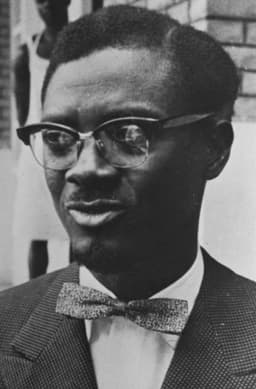
Etienne Tshisekedi
Politician · Modern
40.3Total
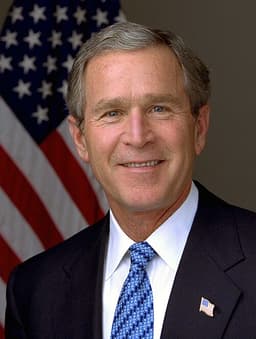
George W. Bush
Politician · Modern
55.4Total
Basic Information
Born
1932
1946
Died
—
—
Era
Modern
Modern
Nationality
DR Congo
United States
Occupation
Politician
Politician
Civilization
Other
Western
Score Comparison
Military (10%)
11.5
50.0
Political (20%)
36.5
48.0
Influence (20%)
50.2
61.0
Legacy (20%)
41.7
50.0
Leadership (15%)
41.5
74.0
Strategy (15%)
44.5
43.7
TOTAL
40.3
55.4
Etienne Tshisekedi — Complete Timeline
1982 AD
Founded Union for Democracy and Social Progress (UDPS)Political Action◆ Major
Tshisekedi co-founded the UDPS, the main opposition party in DR Congo under Mobutu's dictatorship. The party advocated for democratic reforms and multi-party elections, facing severe repression from the regime.
Opposition PartyDemocracyMobutu
Impact: nationalprogressive
1991 AD
Appointed Prime Minister Multiple TimesPolitical Action◆ Major
Tshisekedi was appointed prime minister three times during the transition period (1991, 1992, 1997) but was each time dismissed or sidelined by Mobutu. His brief tenures were marked by political paralysis and conflict with the presidency.
Prime MinisterPolitical TransitionMobutu
Impact: national
1997 AD
Refused to Recognize Kabila GovernmentPolitical Action
After Laurent Kabila overthrew Mobutu, Tshisekedi refused to recognize the new government, calling for a national dialogue. He was placed under house arrest and later exiled, continuing his role as a persistent opposition figure.
OppositionKabilaPolitical Conflict
Impact: national
George W. Bush — Complete Timeline
2000 AD
Elected PresidentPolitical Action
Bush won the 2000 presidential election after a contested recount in Florida, ultimately decided by the Supreme Court in Bush v. Gore. He became the 43rd president.
PresidencyElection
Impact: national
2001 AD
Responded to 9/11 AttacksPolitical Action
After the September 11 attacks, Bush declared a War on Terror, signing the USA PATRIOT Act and creating the Department of Homeland Security. He also launched military operations in Afghanistan.
9/11War on Terror
Impact: global
2003 AD
Invaded IraqWar
Bush ordered the invasion of Iraq, citing Saddam Hussein's alleged weapons of mass destruction. The invasion toppled Hussein's regime but led to a prolonged insurgency and no WMDs were found.
Iraq WarWMD
Impact: globaldestructive
2005 AD
Hurricane Katrina ResponsePolitical Action◆ Major
The federal response to Hurricane Katrina was widely criticized as slow and inadequate. Bush's approval ratings fell sharply, and the disaster highlighted failures in emergency management.
Natural DisasterGovernment Response
Impact: nationaldestructive
2008 AD
Financial Crisis of 2008Political Action◆ Major
Bush's administration responded to the global financial crisis with the Troubled Asset Relief Program (TARP), bailing out major banks and automakers. The crisis deepened the recession.
Financial CrisisBailout
Impact: globaldestructive
Expert Analysis
Origins
Etienne Tshisekedi was born on December 14, 1932, in Luluabourg (now Kananga), Belgian Congo, to a Luba family. He studied law at Lovanium University in Kinshasa and later became a lawyer. His early career included serving as Minister of Justice under Mobutu Sese Seko in the 1960s, but he soon became a vocal critic of the regime.
George W. Bush was born on July 6, 1946, in New Haven, Connecticut, into a political family: his father, George H.W. Bush, later became the 41st president. He attended Yale University (B.A., 1968) and Harvard Business School (M.B.A., 1975). After a stint in the Texas Air National Guard, he worked in the oil industry and later became part-owner of the Texas Rangers baseball team. His political career began with a failed run for Congress in 1978, but he was elected Governor of Texas in 1994.
Rise to Power
Tshisekedi rose to prominence as a founder of the Union for Democracy and Social Progress (UDPS) in 1982, the main opposition party under Mobutu's dictatorship. He was arrested multiple times and spent years in exile. In 1991, amid pro-democracy protests, Mobutu appointed him Prime Minister, but he was dismissed within weeks. He was reappointed in 1992 and again in 1997, but each time Mobutu thwarted his efforts. Following Mobutu's overthrow by Laurent Kabila in 1997, Tshisekedi refused to recognize the new government, leading to house arrest.
Bush's rise to the presidency was marked by a contested 2000 election. He won the Republican nomination after a primary battle with John McCain. In the general election, he lost the popular vote to Al Gore but won the Electoral College after a Supreme Court decision (Bush v. Gore) halted a recount in Florida. He became the 43rd president in January 2001.
Leadership & Governance
Tshisekedi's leadership was characterized by principled opposition. He consistently rejected compromise with dictatorships, refusing to participate in governments he deemed illegitimate. As Prime Minister, he attempted to implement democratic reforms but was blocked by Mobutu's loyalists. His governance score of 36.5 reflects his limited executive power. He prioritized dialogue and non-violent resistance, but his intransigence sometimes isolated him from other opposition figures.
Bush governed with a decisive, often unilateral style. After the 9/11 attacks, he launched the War on Terror, invading Afghanistan (2001) and Iraq (2003). He signed the USA PATRIOT Act, expanding surveillance powers, and created the Department of Homeland Security. Domestically, he pushed through tax cuts and the Medicare Part D prescription drug benefit. His leadership score of 74.0 is higher than Tshisekedi's 41.5, reflecting his executive authority. However, his response to Hurricane Katrina (2005) was widely criticized, and the 2008 financial crisis led to the TARP bailout.
Triumph & Tragedy
Tshisekedi's greatest triumph was his role in ending Mobutu's dictatorship. By leading the opposition for decades, he kept democratic hopes alive. His refusal to recognize the Kabila government, while principled, also limited his influence. His tragedy was never becoming president; he died in 2017 as the opposition leader, while his son Félix Tshisekedi later won the presidency in 2019.
Bush's triumph was the initial success in Afghanistan, toppling the Taliban, and preventing further attacks on US soil after 9/11. His tragedy was the Iraq War, based on faulty intelligence about weapons of mass destruction, which led to a prolonged insurgency, thousands of casualties, and regional instability. The financial crisis and Hurricane Katrina also tarnished his legacy.
Character & Destiny
Tshisekedi was known for his stubbornness and moral clarity. He believed in democracy and human rights, often at the cost of political pragmatism. His character scores (Strategy 44.5, Political 36.5) show a man more focused on principles than maneuvering. His destiny was to be the perpetual opposition, respected but never in power.
Bush was decisive and confident, often relying on his instincts. He saw himself as a wartime leader, which shaped his aggressive foreign policy. His strategy score of 43.7 is similar to Tshisekedi's, but his leadership score (74.0) was higher due to his ability to act. His character led to bold actions but also to overreach, as in Iraq.
Legacy
Tshisekedi's legacy is that of a democratic icon in Congo. The UDPS, which he founded, remains a major party. His son Félix's presidency is partly a continuation of his struggle. He scored 41.7 in legacy, reflecting his enduring symbolic importance.
Bush's legacy is more mixed. The War on Terror reshaped US foreign policy and led to ongoing conflicts. The PATRIOT Act and surveillance state have lasting effects. Domestically, his tax cuts and Medicare expansion endure. However, the Iraq War and financial crisis have damaged his reputation. He scored 50.0 in legacy, higher than Tshisekedi due to global impact.
Conclusion
George W. Bush had a greater impact on world history than Etienne Tshisekedi. While Tshisekedi was a symbol of resistance in one country, Bush's decisions as president affected global security, economics, and international law. With a total score of 55.4 compared to Tshisekedi's 40.3, Bush's influence on military (50.0 vs 11.5) and leadership (74.0 vs 41.5) is decisive. Tshisekedi's legacy is important regionally, but Bush's actions changed the world order.
Rankings
🥇
George W. BushLeader
Mil: 50.0Pol: 48.0Inf: 61.0
55.4
🥈
Etienne Tshisekedi
Mil: 11.5Pol: 36.5Inf: 50.2
40.3
+15.1 behind
How This Comparison Works
Algorithm
Each figure is scored on 6 dimensions (0—100 scale) based on structured historical data: Military (10%), Political (20%), Influence (20%), Legacy (20%), Leadership (15%), Strategy (15%). The weighted total produces the final ranking.
Data Sources
Scores are computed from structured sub-indicators in the database. Scale factors adjust for era (Ancient ×0.85, Modern ×1.0) and civilization size (Eastern ×1.05, Other ×0.80) to account for differences in population and military scale.
Maximum 3 Figures
Comparisons are limited to 2—3 figures to ensure readability and statistical meaningfulness.
Error Margins
±5 points per dimension — Sub-scores are derived from historical records with inherent uncertainty. Two figures within 5 points on a dimension should be considered roughly equivalent in that area.
Total Score Accuracy
±3 points overall — The weighted combination of 6 dimensions produces a total score with approximately ±3 points of uncertainty. Differences of less than 3 points are not statistically significant— the figures are effectively tied.
Known Limitations
- Historical records are incomplete and uneven across civilizations
- Figures from oral-tradition societies may be underrepresented
- Occupation labels can misclassify multi-role figures
- Scores measure capability and impact, not moral character
- Quantitative scoring is a comparison tool, not absolute truth
Capability Radar
Military (10%) — Battles & Warfare
Battles
19
30
Win Rate
22
35
Expansion
25
30
Political (20%) — Governance & Reform
Reform
30
40
Diplomacy
40
45
Economy
10
35
Influence (20%) — Cultural & Global Reach
Cultural
20
40
Global
20
55
Legacy (20%) — Historical Impact
Historical
30
55
Longevity
20
45
Leadership (15%) — Power & Stability
Tenure
20
60
Stability
10
30
Strategy (15%) — Tactics & Innovation
Strategy
30
40
Tactics
31
20
Reform
38
25
Similar Comparisons
Comments & Discussion
No comments yet. Be the first to share your thoughts!