Loading...
Etienne Tshisekedi vs Julius Caesar
Julius Caesar leads by 42.5 pts · 2 figures compared
…
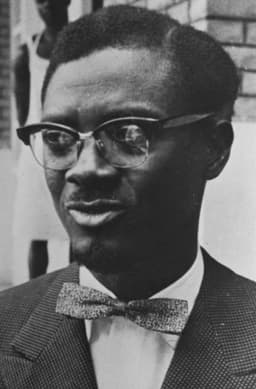
Etienne Tshisekedi
Politician · Modern
40.3Total

Julius Caesar
General · Ancient
82.8Total
Basic Information
Born
1932
-100
Died
—
-44
Era
Modern
Ancient
Nationality
DR Congo
Roman Republic
Occupation
Politician
General
Civilization
Other
Western
Score Comparison
Military (10%)
11.5
88.0
Political (20%)
36.5
78.0
Influence (20%)
50.2
85.0
Legacy (20%)
41.7
82.0
Leadership (15%)
41.5
80.0
Strategy (15%)
44.5
85.0
TOTAL
40.3
82.8
Etienne Tshisekedi — Complete Timeline
1982 AD
Founded Union for Democracy and Social Progress (UDPS)Political Action◆ Major
Tshisekedi co-founded the UDPS, the main opposition party in DR Congo under Mobutu's dictatorship. The party advocated for democratic reforms and multi-party elections, facing severe repression from the regime.
Opposition PartyDemocracyMobutu
Impact: nationalprogressive
1991 AD
Appointed Prime Minister Multiple TimesPolitical Action◆ Major
Tshisekedi was appointed prime minister three times during the transition period (1991, 1992, 1997) but was each time dismissed or sidelined by Mobutu. His brief tenures were marked by political paralysis and conflict with the presidency.
Prime MinisterPolitical TransitionMobutu
Impact: national
1997 AD
Refused to Recognize Kabila GovernmentPolitical Action
After Laurent Kabila overthrew Mobutu, Tshisekedi refused to recognize the new government, calling for a national dialogue. He was placed under house arrest and later exiled, continuing his role as a persistent opposition figure.
OppositionKabilaPolitical Conflict
Impact: national
Julius Caesar — Complete Timeline
58 BC
Gallic WarsWar◆ Major
Caesar, as proconsul of Gaul, launched a series of campaigns that conquered all of Gaul (modern France, Belgium, and parts of Switzerland). He fought numerous battles, including against the Helvetii, the Belgae, and the Gallic chieftain Vercingetorix. The wars brought immense wealth and a loyal army to Caesar.
Gallic WarsConquestRoman Expansion
Impact: regional
49 BC
Crossing the RubiconPolitical Action◆ Major
Caesar led Legio XIII across the Rubicon River into Italy, defying the Roman Senate's order to disband his army. This act triggered a civil war against Pompey and the Optimates, ultimately leading to Caesar's dictatorship and the end of the Roman Republic.
Roman Civil WarEnd of RepublicPower Struggle
Impact: global
48 BC
Battle of PharsalusWar◆ Major
Caesar's outnumbered army defeated the larger forces of Pompey the Great at Pharsalus in Greece. Caesar's tactical use of a reserve line to counter Pompey's cavalry charge proved decisive. Pompey fled to Egypt, where he was assassinated, leaving Caesar as the undisputed master of the Roman world.
Roman Civil WarBattleDecisive Victory
Impact: regional
44 BC
Appointment as Dictator for LifePolitical Action◆ Major
The Roman Senate appointed Caesar dictator perpetuo (dictator for life), granting him unprecedented personal power. This move concentrated military, legislative, and judicial authority in one person, effectively ending the Roman Republic's traditional system of checks and balances and alarming many senators.
DictatorshipEnd of RepublicPower Consolidation
Impact: regionaldestructive
Assassination on the Ides of MarchPolitical Action◆ Major
A group of Roman senators, led by Marcus Junius Brutus and Gaius Cassius Longinus, stabbed Caesar to death at a meeting of the Senate in the Theatre of Pompey. The assassination was intended to restore the Republic, but instead triggered another civil war that led to the rise of the Roman Empire.
AssassinationRoman PoliticsEnd of Republic
Impact: globaldestructive
Expert Analysis
etienne-tshisekedi-vs-julius-caesar
### The Rubicon and the Refusal: Two Paths of Power
On a January day in 49 BCE, a Roman general stood at the edge of a small river in northern Italy. The Rubicon was little more than a stream, but crossing it with an army was an act of war against the Republic itself. Julius Caesar made his choice, uttering the famous words, *“Alea iacta est”* — the die is cast. Two thousand years later, in the chaotic twilight of Mobutu Sese Seko’s Zaire, another man stood at a different kind of Rubicon. Étienne Tshisekedi, three times prime minister and three times dismissed, refused to cross the line of recognizing a new regime he deemed illegitimate. He chose principle over power, and in doing so, sealed his fate as a permanent opposition figure. Both men sought to reshape their worlds; one succeeded in destroying a republic to build an empire, the other spent a lifetime fighting a dictatorship without ever seizing its throne. What drove such radically different outcomes?
### Origins
Caesar was born into the patrician Julian clan, a family with ancient lineage but modest wealth in the late Roman Republic. The Rome of his youth was a brutal arena of senatorial feuds, civil wars, and class conflict. His uncle Marius had been a populist reformer; his father-in-law Cinna was a radical. Caesar learned early that survival meant navigating factional violence. He fled Sulla’s proscriptions, served as a military tribune in Asia, and cultivated the art of public spectacle — sponsoring gladiatorial games and building personal debt to win the people’s love. His era demanded ruthlessness, cunning, and a willingness to break tradition.
Tshisekedi was born in 1932 in the Kasai region of the Belgian Congo, a territory ruled by colonial masters who offered no path to self-governance. He studied law at Lovanium University, one of the few Congolese to receive a Western education, and entered the civil service under Patrice Lumumba’s brief, tragic government. The Congo of the 1960s was a cauldron of coup d’états, foreign intervention, and the rise of Mobutu Sese Seko. Unlike Caesar’s world of aristocratic competition, Tshisekedi’s was one of raw, extractive dictatorship. Mobutu’s rule was personal, kleptocratic, and absolute. There were no senatorial debates, only survival.
### Rise to Power
Caesar’s ascent was a masterclass in strategic patience. He secured the governorship of Gaul in 58 BCE at age 42, a command that gave him a veteran army and a war of conquest. Over eight years, he subdued hundreds of tribes, crossed the Rhine, and invaded Britain. His *Commentaries* turned military exploits into political propaganda, making him a hero in Rome. The Senate’s attempt to recall him in 50 BCE forced his hand. By crossing the Rubicon, he chose civil war over political eclipse. Within four years, he defeated Pompey, pacified the Mediterranean, and became dictator for life.
Tshisekedi’s rise was slower, more constrained. In 1982, at age 50, he co-founded the Union for Democracy and Social Progress (UDPS), the first major opposition party under Mobutu’s one-party state. The move was courageous: UDPS leaders were repeatedly jailed, beaten, and exiled. Tshisekedi became the face of defiance. In 1991, as Mobutu’s regime wobbled under economic collapse and foreign pressure, Tshisekedi was appointed prime minister — but only to be dismissed within days when he tried to assert real authority. He was appointed twice more, in 1992 and 1997, each time a pawn in Mobutu’s game of controlled concessions. Where Caesar commanded legions, Tshisekedi commanded only moral authority.
### Leadership & Governance
Caesar governed as a reformer and military genius. He centralized power, reformed the calendar (creating the Julian calendar still used in modified form), granted citizenship to Gauls, and launched massive public works. His military strategy was audacious — at Alesia in 52 BCE, he besieged a Gallic stronghold while simultaneously repelling a massive relief army, a feat of double-ring fortification that remains a textbook example of tactical brilliance. Yet his rule was autocratic. He packed the Senate with his supporters, reduced the power of the tribunes, and accepted a lifetime dictatorship. His political score of 78 reflects both his innovations and his dismantling of republican institutions.
Tshisekedi never held real power. As prime minister, he attempted to reform the corrupt state but was blocked at every turn. His governance was that of a moral witness, not a ruler. He refused to recognize Laurent Kabila’s government in 1997, calling for a national dialogue that never came. His strategy score of 56.4 suggests a man who understood opposition but not the mechanics of victory. He had no army, no treasury, no foreign backer. His leadership was about endurance, not conquest.
### Triumph & Tragedy
Caesar’s greatest triumph was the conquest of Gaul, which brought immense wealth and territory to Rome. His tragedy was his assassination on the Ides of March in 44 BCE, stabbed 23 times by senators he had pardoned. His dying words to Brutus — *“Et tu, Brute?”* — became the emblem of betrayal. The Republic he sought to reform died with him, replaced by the Empire.
Tshisekedi’s triumph was surviving. He outlasted Mobutu, who fled in 1997. He outlasted Kabila, who was assassinated in 2001. He saw his son, Félix Tshisekedi, become president in 2019. But his tragedy was that he never held power himself. He died in 2017, a revered but frustrated figure, having spent 35 years as the Congo’s perennial opposition leader.
### Character & Destiny
Caesar was audacious, calculating, and charismatic. He gambled everything at the Rubicon because he believed in his own star. His ambition was boundless, his mercy calculated, his cruelty strategic. He shaped his destiny through force of will and military might.
Tshisekedi was stubborn, principled, and cautious. He refused to compromise with dictators, but also refused to arm himself. His character was that of the martyr, not the general. He believed in the power of words and the ballot box in a country where bullets decided everything. That choice made him a symbol, but not a ruler.
### Legacy
Caesar’s legacy is the Roman Empire, the spread of Latin culture, and the very concept of the dictator as both builder and destroyer. His name became a title — Kaiser, Tsar. He is remembered as a military genius and a tyrant, a reformer and a gravedigger of liberty.
Tshisekedi’s legacy is the UDPS, a party that finally won the presidency in 2019, and a model of nonviolent resistance in a region of coups. He is remembered as the “Sphinx of Limete” — enigmatic, unbowed, and ultimately tragic. His scores — Military: 30.2, Political: 52.5 — tell the story of a man who chose a different kind of battle.
### Conclusion
Caesar and Tshisekedi never met, never could have met. One commanded legions across Europe; the other led protests in Kinshasa. Yet both stood at their own Rubicons. Caesar crossed his and remade the world. Tshisekedi refused to cross his and remained a witness to history. The difference was not just in their talents — Caesar’s 88 in military strategy against Tshisekedi’s 56 — but in the nature of their worlds. Caesar’s Rome had a path to absolute power; Tshisekedi’s Congo had only the long, hard road of endurance. One built an empire; the other built a hope. And sometimes, in the annals of history, hope is the harder thing to sustain.
Rankings
🥇
Julius CaesarLeader
Mil: 88.0Pol: 78.0Inf: 85.0
82.8
🥈
Etienne Tshisekedi
Mil: 11.5Pol: 36.5Inf: 50.2
40.3
+42.5 behind
How This Comparison Works
Algorithm
Each figure is scored on 6 dimensions (0—100 scale) based on structured historical data: Military (10%), Political (20%), Influence (20%), Legacy (20%), Leadership (15%), Strategy (15%). The weighted total produces the final ranking.
Data Sources
Scores are computed from structured sub-indicators in the database. Scale factors adjust for era (Ancient ×0.85, Modern ×1.0) and civilization size (Eastern ×1.05, Other ×0.80) to account for differences in population and military scale.
Maximum 3 Figures
Comparisons are limited to 2—3 figures to ensure readability and statistical meaningfulness.
Error Margins
±5 points per dimension — Sub-scores are derived from historical records with inherent uncertainty. Two figures within 5 points on a dimension should be considered roughly equivalent in that area.
Total Score Accuracy
±3 points overall — The weighted combination of 6 dimensions produces a total score with approximately ±3 points of uncertainty. Differences of less than 3 points are not statistically significant— the figures are effectively tied.
Known Limitations
- Historical records are incomplete and uneven across civilizations
- Figures from oral-tradition societies may be underrepresented
- Occupation labels can misclassify multi-role figures
- Scores measure capability and impact, not moral character
- Quantitative scoring is a comparison tool, not absolute truth
Capability Radar
Military (10%) — Battles & Warfare
Battles
19
95
Win Rate
22
92
Expansion
25
97
Political (20%) — Governance & Reform
Reform
30
90
Diplomacy
40
85
Economy
10
82
Influence (20%) — Cultural & Global Reach
Cultural
20
88
Global
20
94
Legacy (20%) — Historical Impact
Historical
30
95
Longevity
20
96
Leadership (15%) — Power & Stability
Tenure
20
75
Stability
10
60
Strategy (15%) — Tactics & Innovation
Strategy
30
94
Tactics
31
96
Reform
38
88
Similar Comparisons
Comments & Discussion
RUBICONSKEPTIC6/17/2026
This comparison is ahistorical clickbait. Étienne Tshisekedi didn't stand at any "Rubicon" – he was a politician who repeatedly failed to gain power despite popularity, and ended up as his son's booster. Caesar crossed a river with legions, seized Rome, started a civil war, and won. Tshisekedi died in 2017 having never held the presidency. Don't mythologize a man who spent decades getting fired from the same job.
历史转折手6/17/2026
把齐塞克迪比作凯撒?这简直是对罗马史的侮辱。凯撒跨过卢比孔河只用了几天就改变了历史轨迹,而齐塞克迪在刚果政坛反复辞职又复出,折腾了几十年连总统宝座都没摸到。说是“原则性拒绝”,更像是策略失误。历史上真正的失败者,往往被后人美化成“有原则的好人”。
VAE VICTIS6/17/2026
Let's be clear: Caesar crossed the Rubicon because he knew the alternative was prosecution and exile. He had concrete, urgent stakes – his political survival, his army's loyalty, his legions' pensions. Tshisekedi's "Rubicon" was a refusal to recognize Kabila's 2006 election? That's just a loser's lament, not a fatal gamble. One man bet everything on a civil war; the other chose irrelevance.
刚果观察家6/17/2026
扎伊尔的“卢比孔河”其实是蒙博托体制的崩溃时刻,而齐塞克迪的路线根本不是什么英雄史诗,而是优柔寡断。他有三度被任命为首相又下台的纪录,最后却连1997年卡比拉夺权后的联合政府都拒绝加入,结果从此被边缘化。凯撒至少知道自己要什么,齐塞克迪只是反复告诉别人他不要什么。
CLASSICALREVISIONIST6/17/2026
The analysis ignores context. Caesar's crossing wasn't some grand moral choice – it was the move of a man who had already rigged the system through military conquests and populist debt relief. Tshisekedi's refusal is more admirable in some ways: he faced a crumbling kleptocracy, not a functioning republic, and chose not to become another African strongman. But that doesn't make him Caesar.