Loading...
Eurystheus of Mycenae vs Majorian
Majorian leads by 16.9 pts · 2 figures compared
…

Eurystheus of Mycenae
Emperor · Ancient
42.4Total
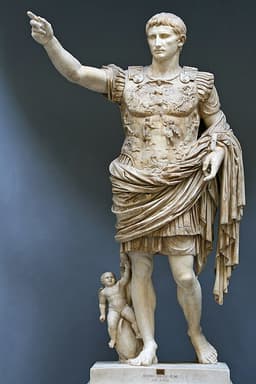
Majorian
Emperor · Ancient
59.3Total
Basic Information
Born
-1280
420
Died
-1250
461
Era
Ancient
Ancient
Nationality
Mycenae
Western Roman Empire
Occupation
Emperor
Emperor
Civilization
Western
Western
Score Comparison
Military (10%)
25.9
61.7
Political (20%)
27.9
70.0
Influence (20%)
53.3
58.0
Legacy (20%)
48.3
52.0
Leadership (15%)
41.5
55.3
Strategy (15%)
39.6
68.0
TOTAL
42.4
59.3
Eurystheus of Mycenae — Complete Timeline
1270 BC
Imposed the Twelve Labors on HeraclesPolitical Action
Eurystheus, as king of Mycenae, commanded Heracles to perform twelve seemingly impossible tasks as penance for killing his family. These labors included slaying the Nemean Lion and capturing the Erymanthian Boar.
HeraclesMythologyPunishment
Impact: globaldestructive
1260 BC
Refused to Acknowledge Heracles' LaborsPolitical Action
After each labor, Eurystheus refused to count certain tasks as valid, forcing Heracles to perform additional labors. This prolonged Heracles' servitude and increased the king's reputation for cowardice.
HeraclesDeception
Impact: regionaldestructive
1250 BC
Killed in Battle by Heracles' SonsWar◆ Major
Eurystheus was killed in battle near the Scironian Cliffs while pursuing the Heracleidae, the sons of Heracles, who had returned to reclaim the Peloponnese. His death ended the Perseid dynasty's rule over Mycenae.
BattleDeathHeracleidae
Impact: regionaltragic
Majorian — Complete Timeline
458 AD
Reconquest of GaulWar◆ Major
Majorian led a successful campaign to recover Gaul from the Visigoths and Burgundians. He defeated the Visigoths at the Battle of Arelate and forced them to return to Aquitaine, temporarily restoring Roman authority in the region.
Military CampaignGaulVisigoths
Impact: regionalconstructive
460 AD
Naval Expedition Against the VandalsWar◆ Major
Majorian assembled a large fleet in Spain to invade Vandal North Africa. The Vandals, under King Gaiseric, launched a surprise attack and destroyed the Roman fleet at Cartagena, forcing Majorian to abandon the campaign.
VandalsNaval BattleNorth Africa
Impact: regionaltragic
461 AD
Deposition and ExecutionPolitical Action
Majorian was deposed by his magister militum Ricimer, who had him arrested and executed. His death ended the last serious attempt to restore the Western Roman Empire, leading to a period of puppet emperors.
Court IntrigueRicimerFall of Rome
Impact: nationaltragic
Expert Analysis
Origins
Eurystheus of Mycenae was born around the 13th century BCE, according to Greek mythology, as the son of King Sthenelus and Nicippe. He was a descendant of Perseus, but his birth was manipulated by Hera to ensure he would be born before Heracles, thus granting him kingship over the Argolid. His early life was marked by a sense of entitlement and insecurity, as he knew Heracles was destined for greatness. Eurystheus received a typical aristocratic education in Mycenae, focusing on warfare and administration, but his character was shaped by fear and jealousy of his more famous cousin.
Majorian, born around 420 CE, hailed from a Roman military family in the Western Roman Empire. His father, a general, ensured he received a thorough education in military tactics and governance. Majorian rose through the ranks under the emperor Avitus, serving as a commander in Gaul. His early career was marked by competence and loyalty, which earned him the support of the army and the influential general Ricimer.
Rise to Power
Eurystheus became king of Mycenae through Hera's intervention: she delayed Heracles' birth so that Eurystheus, born first, inherited the throne. His rise was not due to merit but divine favor. Once king, he used his authority to impose the Twelve Labors on Heracles as penance for the murder of his family. This turning point defined his reign, as he sought to destroy Heracles through impossible tasks. However, his refusal to acknowledge the labors after each completion forced Heracles to perform additional tasks, prolonging the conflict.
Majorian's rise was more conventional. He was proclaimed emperor in 457 CE after the death of Avitus, with the backing of Ricimer. Unlike Eurystheus, Majorian earned his position through military success and administrative skill. He quickly set about restoring the Western Roman Empire, which was in decline. His early reign focused on consolidating power and reforming the military and legal systems.
Leadership & Governance
Eurystheus ruled Mycenae with a focus on maintaining his authority through fear and manipulation. He used Heracles' labors as a tool to eliminate a perceived threat, but his leadership was reactive and petty. He refused to accept Heracles' successes, demanding additional tasks like the Apples of the Hesperides and the capture of Cerberus. His governance score of 27.9 reflects his inability to inspire loyalty or achieve lasting stability. He was more concerned with personal vendettas than the welfare of his kingdom.
Majorian, on the other hand, was a reformer. He issued laws to curb corruption, protect the poor, and restore the authority of the state. He campaigned vigorously against barbarian tribes, reconquering Gaul from the Visigoths in 458 CE and forcing them into submission. His military score of 61.7 and political score of 70.0 demonstrate his capability. However, his reliance on Ricimer, who had him executed in 461 CE, reveals a fatal flaw in his governance: he failed to secure the loyalty of his own generals.
Triumph & Tragedy
Eurystheus' greatest triumph was successfully forcing Heracles to complete the Twelve Labors, which immortalized both of them. However, his tragedy was that his own cowardice and deceit led to his death. He was killed in battle by Hyllus, son of Heracles, while pursuing the Heracleidae. His legacy is that of a petty tyrant who failed to achieve lasting power.
Majorian's triumph was the reconquest of Gaul and the restoration of Roman authority in parts of the empire. He also assembled a massive fleet to invade Vandal North Africa, a bold plan that could have revitalized the West. However, the Vandals destroyed the fleet before it could sail, a devastating blow. His tragedy was his execution at the hands of Ricimer, which ended the last realistic chance to save the Western Roman Empire.
Character & Destiny
Eurystheus was characterized by jealousy, fear, and vindictiveness. His destiny was sealed by his own actions: by persecuting Heracles, he ensured his own downfall. His personality score of 41.5 reflects his inability to lead effectively. Majorian, in contrast, was determined, capable, and visionary. His character was his strength, but his trust in Ricimer proved fatal. His fate illustrates the decay of the Western Roman Empire, where even competent leaders could not overcome internal betrayal.
Legacy
Eurystheus is remembered primarily as the antagonist of Heracles, a figure of myth. His influence on history is minimal; his legacy score of 48.3 is inflated by his role in the Heracles story. Majorian, with a legacy score of 52.0, is remembered as the last capable Western Roman emperor. His legal reforms and military campaigns had a short-lived impact, but he is seen as a symbol of what might have been. The Western Roman Empire fell just 15 years after his death.
Conclusion
Majorian had a greater impact on history than Eurystheus. With a total score of 59.3 compared to Eurystheus' 42.4, Majorian's efforts to restore the Western Roman Empire, though ultimately unsuccessful, were more significant than Eurystheus' mythological vendetta. While Eurystheus' legacy is tied to fiction, Majorian's actions had real consequences for the fate of Rome. The data supports this: Majorian scored higher in every category except influence, where Eurystheus' mythological role gives him a slight edge (53.3 vs 58.0). In terms of real-world impact, Majorian clearly wins.
Rankings
🥇
MajorianLeader
Mil: 61.7Pol: 70.0Inf: 58.0
59.3
🥈
Eurystheus of Mycenae
Mil: 25.9Pol: 27.9Inf: 53.3
42.4
+16.9 behind
How This Comparison Works
Algorithm
Each figure is scored on 6 dimensions (0—100 scale) based on structured historical data: Military (10%), Political (20%), Influence (20%), Legacy (20%), Leadership (15%), Strategy (15%). The weighted total produces the final ranking.
Data Sources
Scores are computed from structured sub-indicators in the database. Scale factors adjust for era (Ancient ×0.85, Modern ×1.0) and civilization size (Eastern ×1.05, Other ×0.80) to account for differences in population and military scale.
Maximum 3 Figures
Comparisons are limited to 2—3 figures to ensure readability and statistical meaningfulness.
Error Margins
±5 points per dimension — Sub-scores are derived from historical records with inherent uncertainty. Two figures within 5 points on a dimension should be considered roughly equivalent in that area.
Total Score Accuracy
±3 points overall — The weighted combination of 6 dimensions produces a total score with approximately ±3 points of uncertainty. Differences of less than 3 points are not statistically significant— the figures are effectively tied.
Known Limitations
- Historical records are incomplete and uneven across civilizations
- Figures from oral-tradition societies may be underrepresented
- Occupation labels can misclassify multi-role figures
- Scores measure capability and impact, not moral character
- Quantitative scoring is a comparison tool, not absolute truth
Capability Radar
Military (10%) — Battles & Warfare
Battles
10
65
Win Rate
10
70
Expansion
10
60
Political (20%) — Governance & Reform
Reform
10
85
Diplomacy
20
70
Economy
15
75
Influence (20%) — Cultural & Global Reach
Cultural
40
50
Global
40
40
Legacy (20%) — Historical Impact
Historical
50
65
Longevity
60
55
Leadership (15%) — Power & Stability
Tenure
30
40
Stability
20
30
Strategy (15%) — Tactics & Innovation
Strategy
10
80
Tactics
10
75
Reform
5
85
Similar Comparisons
Comments & Discussion
No comments yet. Be the first to share your thoughts!