Loading...
Majorian vs Napoleon Bonaparte
Napoleon Bonaparte leads by 11.6 pts · 2 figures compared
…
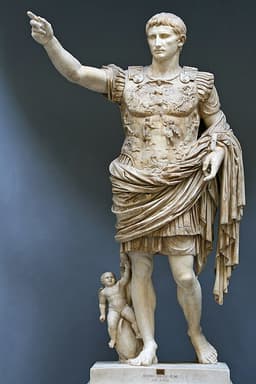
Majorian
Emperor · Ancient
59.3Total

Napoleon Bonaparte
General · Modern
70.9Total
Basic Information
Born
420
1769
Died
461
1821
Era
Ancient
Modern
Nationality
Western Roman Empire
France
Occupation
Emperor
General
Civilization
Western
Western
Score Comparison
Military (10%)
61.7
94.0
Political (20%)
70.0
72.0
Influence (20%)
58.0
40.0
Legacy (20%)
52.0
80.0
Leadership (15%)
55.3
78.0
Strategy (15%)
68.0
90.0
TOTAL
59.3
70.9
Majorian — Complete Timeline
458 AD
Reconquest of GaulWar◆ Major
Majorian led a successful campaign to recover Gaul from the Visigoths and Burgundians. He defeated the Visigoths at the Battle of Arelate and forced them to return to Aquitaine, temporarily restoring Roman authority in the region.
Military CampaignGaulVisigoths
Impact: regionalconstructive
460 AD
Naval Expedition Against the VandalsWar◆ Major
Majorian assembled a large fleet in Spain to invade Vandal North Africa. The Vandals, under King Gaiseric, launched a surprise attack and destroyed the Roman fleet at Cartagena, forcing Majorian to abandon the campaign.
VandalsNaval BattleNorth Africa
Impact: regionaltragic
461 AD
Deposition and ExecutionPolitical Action
Majorian was deposed by his magister militum Ricimer, who had him arrested and executed. His death ended the last serious attempt to restore the Western Roman Empire, leading to a period of puppet emperors.
Court IntrigueRicimerFall of Rome
Impact: nationaltragic
Napoleon Bonaparte — Complete Timeline
1799 AD
Coup of 18 BrumaireOther◆ Major
Napoleon Bonaparte, with support from his brother Lucien and key political figures, overthrew the Directory in a bloodless coup. He established the Consulate with himself as First Consul, effectively becoming the ruler of France. This event ended the French Revolution's most unstable period.
French RevolutionCoupRise to Power
Impact: regional
1804 AD
Promulgation of the Napoleonic CodeOther◆ Major
Napoleon enacted the Civil Code of the French, known as the Napoleonic Code, a comprehensive set of laws that replaced the fragmented feudal legal systems. The code established legal equality, protected property rights, and secularized law. It became the basis for legal systems in many European and world countries.
Legal ReformNapoleonic CodeCivil Law
Impact: globalconstructive
1805 AD
Battle of AusterlitzWar◆ Major
Napoleon's Grande Arm
Napoleonic WarsBattleDecisive Victory
Impact: global
1812 AD
Invasion of RussiaWar◆ Major
Napoleon led the Grande Arm
Napoleonic WarsInvasionDisaster
Impact: globaldestructive
1815 AD
Battle of WaterlooWar◆ Major
Napoleon's French army was defeated by the combined forces of the Duke of Wellington's Anglo-Allied army and Gebhard Leberecht von Bl
Napoleonic WarsBattleFinal Defeat
Impact: globaldestructive
Expert Analysis
majorian-vs-napoleon-bonaparte
# The Emperor Who Could Have Saved Rome, and the One Who Destroyed It
On a summer morning in 461, a man who had once commanded the legions of Rome knelt in the dust beside a river in northern Italy. He was stripped of his purple robes, his diadem thrown into the mud. A few moments later, the blade fell. Majorian, the last emperor with the will to restore the Western Roman Empire, was dead at forty-one, murdered by his own general.
Fourteen centuries later, on a December afternoon in 1840, another coffin arrived in Paris—a grand procession through the Arc de Triomphe, past crowds weeping and cheering. Inside lay Napoleon Bonaparte, who had died in exile on a remote Atlantic island nineteen years earlier, now returned home as a national hero. His body would rest under the golden dome of Les Invalides, alongside the kings and saints of France.
Two emperors. Two endings. One question: Why did one man's empire fall apart while he still lived, and the other's legend only grew after his fall?
Origins
The gulf between them began in the soil of their birth. Napoleon was born in 1769 on Corsica, an island of fierce independence that had just been sold to France by Genoa. His family were minor nobles, proud and impoverished. He spoke Italian before French, and as a boy he hated the French as conquerors. Yet the French Revolution, which erupted when he was twenty, would become his ladder to the sky.
Majorian was born in 420, into a world already crumbling. The Western Roman Empire had been bleeding for a century. Barbarian tribes—Goths, Vandals, Huns—had carved out kingdoms inside its borders. The emperor was often a puppet controlled by Germanic generals. Majorian came from a military family; his grandfather had served as an imperial official. He grew up not dreaming of glory, but of survival.
Napoleon belonged to an age of possibility. The old order of kings and nobles had been shattered by revolution, and a young man with talent could rise to the top. Majorian belonged to an age of decay, where the best he could hope for was to slow the collapse.
Rise to Power
Napoleon's ascent was meteoric. In 1793, at twenty-four, he drove the British out of Toulon and was made a brigadier general. By 1796, he commanded the army in Italy, where he defeated the Austrians in a series of lightning campaigns. His political genius matched his military brilliance: in 1799, he staged a coup and made himself First Consul. By 1804, he crowned himself Emperor of the French. The journey from obscure Corsican to master of Europe took barely a decade.
Majorian's path was slower and more treacherous. He rose through the ranks under the emperor Avitus, a Gallic nobleman who had been imposed by the Visigoths. In 457, Majorian led a revolt against Avitus and deposed him. The Eastern Emperor in Constantinople refused to recognize him, but Majorian had the army's loyalty. He took the throne anyway—not by conquest, but by necessity. The empire needed a soldier, not a figurehead.
Leadership & Governance
Napoleon ruled with a combination of iron will and radical reform. His Napoleonic Code, enacted in 1804, swept away feudal privileges and established legal equality, religious toleration, and merit-based advancement. He centralized the French state, created the Bank of France, and built roads and canals that connected his empire. On the battlefield, he was a genius of maneuver, crushing the Austrians at Austerlitz in 1805 and the Prussians at Jena in 1806. His Grande Armée was the most formidable fighting force Europe had seen since the Roman legions.
Majorian's achievements were smaller in scale but no less remarkable. In 458, he led a campaign to recover Gaul from the Visigoths and Burgundians. He defeated them at the Battle of Arelate, forcing the Visigoths to surrender their conquests and become allies. He then reformed the Roman army, recruiting barbarian warriors and restoring discipline. He passed laws protecting the poor from corrupt officials, repaired the aqueducts of Rome, and tried to revive the economy. His goal was not conquest but restoration—to give the empire another generation of life.
Both men understood the importance of law. Napoleon codified it; Majorian tried to enforce it. But Napoleon had the resources of a unified France behind him. Majorian commanded a hollow shell.
Triumph & Tragedy
Napoleon's greatest triumph was the Empire at its height in 1810, when he controlled most of Europe from Spain to Poland. His tragedy was his own ambition. The invasion of Russia in 1812 destroyed his Grande Armée—600,000 men marched east, fewer than 100,000 returned. He was exiled to Elba in 1814, escaped, and ruled for a hundred days before his final defeat at Waterloo in 1815. The British sent him to Saint Helena, where he died in 1821, probably of stomach cancer.
Majorian's triumph was brief. In 460, he assembled a massive fleet in Spain to invade Vandal North Africa—the heartland of the empire's grain supply. But the Vandal king Gaiseric, a master of treachery, launched a surprise attack and burned the Roman ships. Majorian was forced to make peace. The failure destroyed his credibility. In 461, his own general, Ricimer—a barbarian who had served him loyally—turned against him. Ricimer deposed Majorian, had him tortured and beheaded. The empire stumbled on for another fifteen years, but it was a corpse walking.
Character & Destiny
Napoleon was driven by an insatiable hunger for glory. "Impossible," he once said, "is a word found only in the dictionary of fools." He believed he could bend the world to his will. His arrogance was his strength and his ruin. He could not stop, could not compromise, could not share power. His personality shaped an era and then destroyed it.
Majorian was driven by duty. He knew the empire was dying, but he refused to let it go quietly. He was stern, just, and perhaps too trusting. He believed that loyalty could be earned, that merit mattered more than birth. His fatal flaw was his faith in Ricimer—a man who saw the emperor not as a savior but as a rival.
Napoleon died in defeat but was remembered as a titan. Majorian died in disgrace and was forgotten for centuries. Why? Because Napoleon's failures were epic, his ambition vast. Majorian's failure was quiet—the slow death of a world too tired to be saved.
Legacy
Napoleon's legacy is written in the laws of Europe, the boundaries of nations, the code of modern citizenship. He is studied in every military academy, debated in every history department. His name means ambition, genius, catastrophe.
Majorian's legacy is a handful of laws, a few ruined walls, and the memory of what might have been. The historian Edward Gibbon called him "a great and heroic prince" who deserved a better fate. But history does not reward those who try to save a dying world. It remembers those who build a new one.
Conclusion
Standing at the edge of their respective eras, Napoleon and Majorian faced the same question: Can one man change the course of history? Napoleon answered yes, and for a time he did. Majorian answered yes, and he failed. But perhaps failure is not the final measure. Majorian tried to preserve a civilization that had already given up on itself. Napoleon tried to create one that would outlast him. Both were crushed by forces larger than themselves—one by the ice of Russia, the other by the dagger of betrayal.
In the end, the difference between them is not talent or ambition. It is timing. Napoleon arrived when Europe was ready for transformation. Majorian arrived when Rome was ready for its grave. And the saddest thing about Majorian is that he knew it—and he fought anyway.
Rankings
🥇
Napoleon BonaparteLeader
Mil: 94.0Pol: 72.0Inf: 40.0
70.9
🥈
Majorian
Mil: 61.7Pol: 70.0Inf: 58.0
59.3
+11.6 behind
How This Comparison Works
Algorithm
Each figure is scored on 6 dimensions (0—100 scale) based on structured historical data: Military (10%), Political (20%), Influence (20%), Legacy (20%), Leadership (15%), Strategy (15%). The weighted total produces the final ranking.
Data Sources
Scores are computed from structured sub-indicators in the database. Scale factors adjust for era (Ancient ×0.85, Modern ×1.0) and civilization size (Eastern ×1.05, Other ×0.80) to account for differences in population and military scale.
Maximum 3 Figures
Comparisons are limited to 2—3 figures to ensure readability and statistical meaningfulness.
Error Margins
±5 points per dimension — Sub-scores are derived from historical records with inherent uncertainty. Two figures within 5 points on a dimension should be considered roughly equivalent in that area.
Total Score Accuracy
±3 points overall — The weighted combination of 6 dimensions produces a total score with approximately ±3 points of uncertainty. Differences of less than 3 points are not statistically significant— the figures are effectively tied.
Known Limitations
- Historical records are incomplete and uneven across civilizations
- Figures from oral-tradition societies may be underrepresented
- Occupation labels can misclassify multi-role figures
- Scores measure capability and impact, not moral character
- Quantitative scoring is a comparison tool, not absolute truth
Capability Radar
Military (10%) — Battles & Warfare
Battles
65
95
Win Rate
70
90
Expansion
60
95
Political (20%) — Governance & Reform
Reform
85
95
Diplomacy
70
80
Economy
75
85
Influence (20%) — Cultural & Global Reach
Cultural
50
85
Global
40
90
Legacy (20%) — Historical Impact
Historical
65
95
Longevity
55
90
Leadership (15%) — Power & Stability
Tenure
40
85
Stability
30
70
Strategy (15%) — Tactics & Innovation
Strategy
80
95
Tactics
75
98
Reform
85
92
Similar Comparisons
Comments & Discussion
REVIVALIST ROME6/17/2026
Majorian is the undisputed GOAT of late Roman emperors. While Napoleon was just a short Corsican upstart who rode the coattails of a revolution he didn't start, Majorian personally led his armies to reconquer Gaul and Spain from barbarians. The guy literally rebuilt the Roman fleet and defeated the Vandals at sea. Napoleon couldn't even beat the British navy. The difference? Majorian was betrayed by his own treacherous general Ricimer. If he'd lived, Rome would have stood for centuries more.
历史实证派6/17/2026
别被拿破仑的传奇故事骗了。军事地图画得再好看也改变不了他最终被流放的结局。Majorian在位四年就把被蛮族占据的高卢、西班牙收回帝国版图,拿破仑打了二十年仗,最后把法国搞得比开战前还小。仔细看看数据:Majorian的政策让残存的罗马经济回暖,拿破仑的大陆封锁政策呢?闹得全欧洲揭竿而起。谁的治理更有效一目了然。
CLASSICS SCEPTIC6/17/2026
The comparison is laughable. Napoleon modernized law codes, created a centralized state, and shaped European politics for generations. Majorian? He issued a few edicts trying to stop corruption and rebuild a dying institution. One man changed the world, the other delayed the inevitable collapse of a rotting corpse of an empire by, what, three years? Context matters: Napoleon's reforms outlived him, Majorian's accomplishments were erased the moment his head hit the dirt.
军事技术控6/17/2026
拿破仑的成就建立在18世纪成熟的火药武器和常备军制度上,Majorian面对的可是西罗马晚期烂到骨子里的动员体系。说句不好听的,给你同时指挥六万法军和六十万欧洲联军的机会,你也能打几场漂亮仗。Majorian有什么?征调来的蛮族雇佣兵、空荡荡的国库、还有随时准备捅刀子的将军。他在这种绝境下还能收复失地,军事才华根本不是一个级别的。