Loading...
Evika Silina vs Julius Caesar
Julius Caesar leads by 43.3 pts · 2 figures compared
…
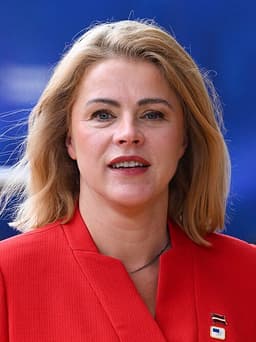
Evika Silina
Politician · Modern
39.5Total

Julius Caesar
General · Ancient
82.8Total
Basic Information
Born
1975
-100
Died
—
-44
Era
Modern
Ancient
Nationality
Latvia
Roman Republic
Occupation
Politician
General
Civilization
Western
Western
Score Comparison
Military (10%)
14.2
88.0
Political (20%)
43.7
78.0
Influence (20%)
47.9
85.0
Legacy (20%)
35.8
82.0
Leadership (15%)
51.9
80.0
Strategy (15%)
28.6
85.0
TOTAL
39.5
82.8
Evika Silina — Complete Timeline
2023 AD
Economic Reform EffortsReform
Silina's government pursued economic reforms including tax changes and measures to address inflation and energy costs. The reforms aimed to improve Latvia's competitiveness and fiscal stability.
EconomyTax ReformEnergy
Impact: nationalconstructive
Appointed Prime Minister of LatviaPolitical Action◆ Major
Silina became Prime Minister of Latvia, leading a coalition government formed by the New Unity party, the Union of Greens and Farmers, and the Progressives. She succeeded Kri
Prime MinisterCoalitionGovernment Formation
Impact: nationalconstructive
Continued Support for UkrainePolitical Action
Silina's government maintained Latvia's strong support for Ukraine, including military aid and hosting Ukrainian refugees. Latvia consistently advocated for EU sanctions against Russia.
UkraineForeign PolicySanctions
Impact: regionalconstructive
Julius Caesar — Complete Timeline
58 BC
Gallic WarsWar◆ Major
Caesar, as proconsul of Gaul, launched a series of campaigns that conquered all of Gaul (modern France, Belgium, and parts of Switzerland). He fought numerous battles, including against the Helvetii, the Belgae, and the Gallic chieftain Vercingetorix. The wars brought immense wealth and a loyal army to Caesar.
Gallic WarsConquestRoman Expansion
Impact: regional
49 BC
Crossing the RubiconPolitical Action◆ Major
Caesar led Legio XIII across the Rubicon River into Italy, defying the Roman Senate's order to disband his army. This act triggered a civil war against Pompey and the Optimates, ultimately leading to Caesar's dictatorship and the end of the Roman Republic.
Roman Civil WarEnd of RepublicPower Struggle
Impact: global
48 BC
Battle of PharsalusWar◆ Major
Caesar's outnumbered army defeated the larger forces of Pompey the Great at Pharsalus in Greece. Caesar's tactical use of a reserve line to counter Pompey's cavalry charge proved decisive. Pompey fled to Egypt, where he was assassinated, leaving Caesar as the undisputed master of the Roman world.
Roman Civil WarBattleDecisive Victory
Impact: regional
44 BC
Appointment as Dictator for LifePolitical Action◆ Major
The Roman Senate appointed Caesar dictator perpetuo (dictator for life), granting him unprecedented personal power. This move concentrated military, legislative, and judicial authority in one person, effectively ending the Roman Republic's traditional system of checks and balances and alarming many senators.
DictatorshipEnd of RepublicPower Consolidation
Impact: regionaldestructive
Assassination on the Ides of MarchPolitical Action◆ Major
A group of Roman senators, led by Marcus Junius Brutus and Gaius Cassius Longinus, stabbed Caesar to death at a meeting of the Senate in the Theatre of Pompey. The assassination was intended to restore the Republic, but instead triggered another civil war that led to the rise of the Roman Empire.
AssassinationRoman PoliticsEnd of Republic
Impact: globaldestructive
Expert Analysis
evika-silina-vs-julius-caesar
# The Rubicon and the Riga: Two Paths of Power
On a January morning in 2023, Evika Siliņa walked into the Saeima, Latvia’s parliament, to be sworn in as prime minister. Her task was not to conquer Gaul or cross a river that would change history, but to manage a small Baltic nation’s inflation, energy crisis, and unwavering support for a war-torn neighbor. Across two millennia, another leader prepared to cross a different river—the Rubicon—and plunge the Roman Republic into civil war. Julius Caesar and Evika Siliņa share the title of “head of state,” but the gulf between them is not merely one of time. It is a chasm of scale, ambition, and the very nature of power. Why does one man’s name echo through eternity while another’s remains a footnote in a regional newspaper? The answer lies not in their actions alone, but in the worlds they inhabited.
Origins
Gaius Julius Caesar was born into the patrician Julian clan in 100 BCE, a lineage that claimed descent from the goddess Venus. Yet his family was politically marginal, and his early life was shaped by the violent convulsions of the late Republic—civil wars, proscriptions, and the collapse of traditional norms. He grew up in a Rome where a man’s worth was measured by his military glory, his oratory, and his ability to manipulate the Senate. Evika Siliņa, born in 1975, came of age in a Latvia still under Soviet occupation. Her world was one of bureaucratic survival, not battlefield glory. She studied law at the University of Latvia, worked as a lawyer, and later entered politics through the New Unity party—a path of incremental advancement in a small democracy. Caesar’s era demanded a warrior; Siliņa’s demanded a manager.
Rise to Power
Caesar’s ascent was a masterpiece of calculated risk. He borrowed fortunes to fund public spectacles, forged alliances with the wealthy Crassus and the popular Pompey, and then sought military command in Gaul. From 58 to 50 BCE, he conquered a territory larger than Italy, writing his own commentaries to shape public opinion. When the Senate ordered him to disband his army, he crossed the Rubicon in 49 BCE, a single act that declared war on the Republic. Siliņa’s rise was quieter. She served as Minister of Welfare and then as a member of the European Parliament before being tapped to lead a coalition government in 2023. Her key turning point was not a river but a vote of confidence. Caesar seized power; Siliņa was appointed.
Leadership & Governance
As dictator, Caesar reformed the calendar, granted citizenship to provincials, and launched public works to employ the poor. His military genius was undeniable—he defeated Pompey at Pharsalus in 48 BCE and crushed rebellions from Egypt to Spain. Yet his rule was autocratic, centralizing power in his own hands and alienating the senatorial elite. Siliņa’s governance is the opposite: coalition management, consensus-building, and incremental reform. Her government’s key achievements include maintaining Latvia’s strong support for Ukraine—providing military aid and hosting refugees—and pursuing economic reforms to address inflation and energy costs. She rules not by decree but by parliamentary arithmetic. Caesar’s leadership was a spectacle; Siliņa’s is a process.
Triumph & Tragedy
Caesar’s greatest triumph was his conquest of Gaul, which brought immense wealth and glory to Rome and established him as a military titan. His most devastating failure was his assassination on the Ides of March in 44 BCE, stabbed by senators he had pardoned. He had centralized power so thoroughly that his death triggered another civil war, ultimately ending the Republic he had sought to dominate. Siliņa’s triumphs are quieter: she has steered Latvia through a period of geopolitical tension, maintaining its pro-Western stance while managing domestic pressures. Her potential tragedy is irrelevance—a small country’s leader in a world that pays little attention to the Baltic states. Caesar’s fall was dramatic; Siliņa’s risk is oblivion.
Character & Destiny
Caesar was a gambler, a showman, and a pragmatist. He pardoned his enemies, wrote his own history, and believed in his own star. His personality drove him to take risks that would have destroyed lesser men, and it ultimately led to his doom. Siliņa is cautious, methodical, and institutional. She operates within systems, not against them. Caesar’s destiny was to be remembered; Siliņa’s destiny is to be effective. One shaped history with his ambition; the other shapes policy with her competence.
Legacy
Caesar’s legacy is monumental. His name became a title—Kaiser, Tsar—and his reforms laid the foundation for the Roman Empire. He is studied, debated, and dramatized two thousand years later. Siliņa’s legacy is still being written, but it will likely be modest. She will be remembered as a competent prime minister of a small country during a difficult time. Her scores—Military 30.9, Political 63.8, Influence 66.0, Legacy 48.9—reflect a life devoted to governance, not glory.
Conclusion
The difference between Caesar and Siliņa is not one of talent or effort, but of stage. Caesar performed on the grandest stage of the ancient world, where a single man could topple a republic and reshape civilization. Siliņa performs on a smaller stage, where power is diffuse, coalitions are fragile, and history rarely pauses to note the name of a Latvian prime minister. Both crossed their own Rubicons—Caesar’s a river, Siliņa’s a threshold of office. But only one changed the world forever. The other simply kept it spinning.
Rankings
🥇
Julius CaesarLeader
Mil: 88.0Pol: 78.0Inf: 85.0
82.8
🥈
Evika Silina
Mil: 14.2Pol: 43.7Inf: 47.9
39.5
+43.3 behind
How This Comparison Works
Algorithm
Each figure is scored on 6 dimensions (0—100 scale) based on structured historical data: Military (10%), Political (20%), Influence (20%), Legacy (20%), Leadership (15%), Strategy (15%). The weighted total produces the final ranking.
Data Sources
Scores are computed from structured sub-indicators in the database. Scale factors adjust for era (Ancient ×0.85, Modern ×1.0) and civilization size (Eastern ×1.05, Other ×0.80) to account for differences in population and military scale.
Maximum 3 Figures
Comparisons are limited to 2—3 figures to ensure readability and statistical meaningfulness.
Error Margins
±5 points per dimension — Sub-scores are derived from historical records with inherent uncertainty. Two figures within 5 points on a dimension should be considered roughly equivalent in that area.
Total Score Accuracy
±3 points overall — The weighted combination of 6 dimensions produces a total score with approximately ±3 points of uncertainty. Differences of less than 3 points are not statistically significant— the figures are effectively tied.
Known Limitations
- Historical records are incomplete and uneven across civilizations
- Figures from oral-tradition societies may be underrepresented
- Occupation labels can misclassify multi-role figures
- Scores measure capability and impact, not moral character
- Quantitative scoring is a comparison tool, not absolute truth
Capability Radar
Military (10%) — Battles & Warfare
Battles
25
95
Win Rate
25
92
Expansion
27
97
Political (20%) — Governance & Reform
Reform
30
90
Diplomacy
40
85
Economy
35
82
Influence (20%) — Cultural & Global Reach
Cultural
10
88
Global
15
94
Legacy (20%) — Historical Impact
Historical
15
95
Longevity
10
96
Leadership (15%) — Power & Stability
Tenure
15
75
Stability
30
60
Strategy (15%) — Tactics & Innovation
Strategy
31
94
Tactics
32
96
Reform
36
88
Similar Comparisons
Comments & Discussion
数据粉碎机6/17/2026
比战力?Caesar打过高卢战争,杀了百万条命,Siliņa最高成就可能是平抑电费。但别急着嘲笑——换个角度,她面对的可是21世纪的经济泥潭,而Caesar只是玩老套的领土游戏。论影响力,Caesar赢;论生存复杂度,她未必输。数据不会骗人,但解读会。
罗马眼粉丝6/17/2026
等等,你拿Caesar跟一个管暖气补贴的比?他活着时镇压高卢、改写历法、勾引埃及艳后,死后还被神化。Siliņa呢?最多在波罗的海会议上发个言。这不是性别问题,是史诗感问题。Caesar是剧本主角,她只是个跑龙套的——历史舞台不撒谎。
修正派评手6/17/2026
别被"伟大"洗脑了。Caesar屠了高卢、毁了共和、搞独裁,Siliņa至少是民选上台的。她没杀过十万平民,也没把自己的脸印上硬币当神拜。论道德,她甩他十条街。所谓"不朽",不过是暴力的广告费付得够久而已。历史公正?只是赢家的叙事罢了。
Historian1146/17/2026
As a military historian, I’d stack Caesar’s Tenth Legion against any modern NATO force. Siliņa’s power rests on coalition deals and EU funds, not soldiers’ loyalty. Caesar crossed the Rubicon with one legion and gambled everything; her biggest risk is a vote of confidence. Scale defines leadership—his was empire, hers is administration.
Chronicler65936/17/2026
This comparison is absurd. Caesar reshaped the entire Western world; Siliņa manages a country smaller than Rome's suburbs. The only thing they crossed was different paperwork. Caesar’s "Et tu, Brute?" is immortal; her legacy will be forgotten before the next energy bill. Context matters, but let's not pretend they share the same weight in history’s ledger.