Loading...
Nursultan Nazarbayev vs Vaclav Havel
Vaclav Havel leads by 7.2 pts · 2 figures compared
…
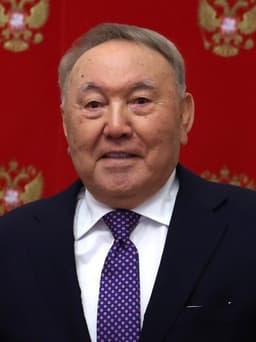
Nursultan Nazarbayev
Politician · Modern
57.2Total
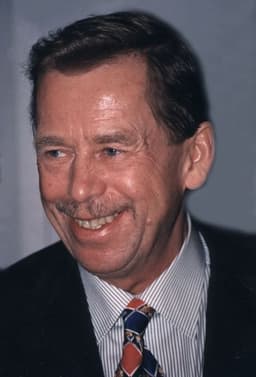
Vaclav Havel
Politician · Modern
64.4Total
Basic Information
Born
1940
1936
Died
—
—
Era
Modern
Modern
Nationality
Kazakhstan
Czech Republic
Occupation
Politician
Politician
Civilization
Eastern
Western
Score Comparison
Military (10%)
10.0
50.0
Political (20%)
78.0
82.0
Influence (20%)
62.0
65.0
Legacy (20%)
54.0
55.0
Leadership (15%)
78.0
78.0
Strategy (15%)
38.3
54.3
TOTAL
57.2
64.4
Nursultan Nazarbayev — Complete Timeline
1991 AD
Became First President of KazakhstanPolitical Action◆ Major
Nursultan Nazarbayev was elected as the first president of independent Kazakhstan following the dissolution of the Soviet Union. He had previously served as the head of the Kazakh Soviet Socialist Republic. His presidency focused on nation-building, economic reform, and maintaining stability.
IndependenceNation-BuildingPost-Soviet Transition
Impact: nationalconstructive
1993 AD
Introduced Market ReformsReform◆ Major
Nazarbayev implemented a series of market-oriented economic reforms, including privatization of state enterprises and price liberalization. These reforms attracted foreign investment, particularly in the oil and gas sector, and helped stabilize the economy after the Soviet collapse.
Economic ReformPrivatizationForeign Investment
Impact: nationalconstructive
1997 AD
Moved Capital to AstanaPolitical Action◆ Major
Nazarbayev ordered the relocation of the capital from Almaty to the northern city of Akmola, renamed Astana (now Nur-Sultan). The move was intended to develop the underpopulated north and assert sovereignty over the region. The new capital was built with ambitious architecture and foreign investment.
Capital RelocationUrban DevelopmentNational Identity
Impact: nationalconstructive
2019 AD
Resigned as PresidentPolitical Action◆ Major
Nazarbayev unexpectedly resigned as President of Kazakhstan after nearly 30 years in power. He was succeeded by Kassym-Jomart Tokayev, a loyalist. Nazarbayev retained significant influence as head of the Security Council and as 'Elbasy' (Leader of the Nation), a title granted by parliament.
ResignationPower TransitionPolitical Legacy
Impact: national
2022 AD
Suppressed January 2022 ProtestsPolitical Action◆ Major
Following a violent uprising in January 2022, Nazarbayev was removed from his position as head of the Security Council. The protests, initially over fuel prices, turned into a broader challenge to the regime. Tokayev ordered a crackdown with CSTO support, and Nazarbayev's influence waned.
Protest SuppressionPower StruggleCSTO Intervention
Impact: nationaldestructive
Vaclav Havel — Complete Timeline
1977 AD
Charter 77 foundingPolitical Action◆ Major
Havel became a leading figure and spokesperson for Charter 77, a Czechoslovak human rights manifesto that criticized the communist government for failing to implement its own laws on human rights. This led to his persecution and imprisonment.
Human RightsDissidenceCold War
Impact: nationalconstructive
1989 AD
Velvet Revolution leadershipPolitical Action
Havel co-founded the Civic Forum and emerged as the key leader of the non-violent Velvet Revolution in Czechoslovakia. Mass protests forced the communist government to resign, ending 41 years of one-party rule.
RevolutionDemocracyCold War
Impact: globalconstructive
Elected President of CzechoslovakiaPolitical Action◆ Major
Following the Velvet Revolution, Havel was elected President of Czechoslovakia by the Federal Assembly. He became the first non-communist leader of the country since 1948, symbolizing the transition to democracy.
DemocracyPresidencyPost-Communism
Impact: nationalconstructive
1993 AD
Dissolution of CzechoslovakiaPolitical Action◆ Major
Havel resigned as President of Czechoslovakia in July 1992 after failing to prevent the country's dissolution. The Czech Republic and Slovakia separated peacefully on January 1, 1993. Havel then became the first President of the Czech Republic.
State DissolutionNationalismPost-Communism
Impact: regional
1999 AD
NATO accession of Czech RepublicPolitical Action◆ Major
Under Havel's presidency, the Czech Republic joined NATO in 1999. This marked a major shift in foreign policy, integrating the country into Western security structures and moving away from its Soviet-era alignment.
NATOForeign PolicyPost-Communism
Impact: regionalconstructive
Expert Analysis
Origins
Nursultan Nazarbayev was born in 1940 in Chemolgan, Kazakhstan, into a peasant family. He studied at the Karaganda Polytechnic Institute and began his career in the steel industry, joining the Communist Party in 1962. He rose through the ranks of the Kazakh Soviet Socialist Republic's Communist Party. Vaclav Havel was born in 1936 in Prague, Czechoslovakia, into a wealthy bourgeois family. He studied at the Czech Technical University but was barred from humanities due to his background. He worked in theater and became a leading playwright, known for his absurdist works and political satire.
Rise to Power
Nazarbayev's rise was gradual within the Soviet system. By 1989, he became First Secretary of the Communist Party of Kazakhstan. In 1990, he became President of the Kazakh SSR, and after the Soviet collapse in 1991, he won uncontested elections for the presidency of independent Kazakhstan. Havel's rise was meteoric: from dissident to president in weeks. He co-founded Charter 77 in 1977, endured multiple imprisonments, and led the Civic Forum during the Velvet Revolution of November 1989. On December 29, 1989, he was elected President of Czechoslovakia.
Leadership & Governance
Nazarbayev ruled Kazakhstan with an authoritarian grip for nearly three decades. He maintained stability by balancing ethnic groups, securing foreign investment in oil, and suppressing dissent. He moved the capital from Almaty to Astana (now Nur-Sultan) in 1997 to assert control over the north. His economic reforms privatized state assets but concentrated wealth among his family and allies. Havel, by contrast, championed a moral, democratic government. He oversaw the peaceful transition from communism, pursued integration with the West, and advocated for human rights. However, his idealistic approach struggled with practical governance; the Czech and Slovak split in 1993 occurred despite his efforts. Havel's political score of 82.0 reflects his moral authority, while Nazarbayev's 78.0 indicates his effective control.
Triumph & Tragedy
Nazarbayev's greatest triumphs include leading Kazakhstan to independence, implementing market reforms that attracted foreign investment, and maintaining ethnic peace. His tragedy was the suppression of the January 2022 protests, which turned violent after initially peaceful demonstrations over fuel prices. He was forced to cede his Security Council role, ending his effective rule. Havel's triumph was leading the Velvet Revolution and becoming the symbol of peaceful anti-communist change. His tragedy was the dissolution of Czechoslovakia, which he failed to prevent, and his inability to fully realize his moral vision in politics. Havel's military score of 50.0 (vs. Nazarbayev's 10.0) reflects his non-violent approach.
Character & Destiny
Nazarbayev was pragmatic and cautious, prioritizing stability over freedom. He shaped Kazakhstan's destiny as an authoritarian state with a veneer of democracy. His character—calculating and power-conscious—allowed him to survive the collapse of the USSR and thrive. Havel was principled and intellectual, driven by a moral imperative. His destiny was to be the conscience of his nation, but his idealism often clashed with political realities. Havel's leadership score of 78.0 matches Nazarbayev's, but their styles were opposites: one top-down, the other bottom-up.
Legacy
Nazarbayev's legacy is mixed: he built modern Kazakhstan but stifled political development. The capital bears his name, but his family's corruption and the 2022 protests tarnish his image. Havel's legacy is more positive: he is remembered as a hero of freedom, a symbol of peaceful resistance. His ideas on civil society and human rights influenced post-communist transitions. However, his domestic policy achievements were limited. In the total scores, Havel leads 64.4 to 57.2, but Nazarbayev's impact on Kazakhstan's economy and geopolitics is undeniable.
Conclusion
While Havel's moral authority and political skill (82.0) are admirable, Nazarbayev had greater tangible impact on his country's development and stability. Havel's influence is more symbolic and global, but Nazarbayev's actions shaped the lives of 18 million people for decades. The score gap (7.2 points) reflects Havel's higher global reputation, but on a historical scale, Nazarbayev's governance—for better or worse—had more concrete consequences. Nazarbayev's legacy in Kazakhstan's transformation is more significant than Havel's in the Czech Republic, which was already more developed.
Rankings
🥇
Vaclav HavelLeader
Mil: 50.0Pol: 82.0Inf: 65.0
64.4
🥈
Nursultan Nazarbayev
Mil: 10.0Pol: 78.0Inf: 62.0
57.2
+7.2 behind
How This Comparison Works
Algorithm
Each figure is scored on 6 dimensions (0—100 scale) based on structured historical data: Military (10%), Political (20%), Influence (20%), Legacy (20%), Leadership (15%), Strategy (15%). The weighted total produces the final ranking.
Data Sources
Scores are computed from structured sub-indicators in the database. Scale factors adjust for era (Ancient ×0.85, Modern ×1.0) and civilization size (Eastern ×1.05, Other ×0.80) to account for differences in population and military scale.
Maximum 3 Figures
Comparisons are limited to 2—3 figures to ensure readability and statistical meaningfulness.
Error Margins
±5 points per dimension — Sub-scores are derived from historical records with inherent uncertainty. Two figures within 5 points on a dimension should be considered roughly equivalent in that area.
Total Score Accuracy
±3 points overall — The weighted combination of 6 dimensions produces a total score with approximately ±3 points of uncertainty. Differences of less than 3 points are not statistically significant— the figures are effectively tied.
Known Limitations
- Historical records are incomplete and uneven across civilizations
- Figures from oral-tradition societies may be underrepresented
- Occupation labels can misclassify multi-role figures
- Scores measure capability and impact, not moral character
- Quantitative scoring is a comparison tool, not absolute truth
Capability Radar
Military (10%) — Battles & Warfare
Battles
0
28
Win Rate
0
31
Expansion
0
36
Political (20%) — Governance & Reform
Reform
75
85
Diplomacy
80
80
Economy
75
55
Influence (20%) — Cultural & Global Reach
Cultural
50
70
Global
60
70
Legacy (20%) — Historical Impact
Historical
60
75
Longevity
55
65
Leadership (15%) — Power & Stability
Tenure
90
65
Stability
70
60
Strategy (15%) — Tactics & Innovation
Strategy
0
39
Tactics
0
43
Reform
10
41
Similar Comparisons
Comments & Discussion
No comments yet. Be the first to share your thoughts!