Loading...
Fasilides vs Julius Caesar
Julius Caesar leads by 23.5 pts · 2 figures compared
…
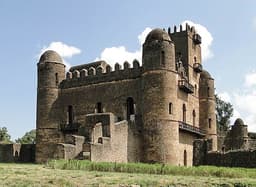
Fasilides
Emperor · Modern
59.3Total

Julius Caesar
General · Ancient
82.8Total
Basic Information
Born
1603
-100
Died
1667
-44
Era
Modern
Ancient
Nationality
Ethiopia
Roman Republic
Occupation
Emperor
General
Civilization
Other
Western
Score Comparison
Military (10%)
46.7
88.0
Political (20%)
72.0
78.0
Influence (20%)
62.0
85.0
Legacy (20%)
50.0
82.0
Leadership (15%)
72.0
80.0
Strategy (15%)
50.0
85.0
TOTAL
59.3
82.8
Fasilides — Complete Timeline
1632 AD
Expulsion of the JesuitsPolitical Action◆ Major
Fasilides ordered the expulsion of Jesuit missionaries from Ethiopia, reversing the pro-Catholic policies of his predecessors. He restored the traditional Ethiopian Orthodox Church as the sole state religion and severed ties with the Roman Catholic Church.
Religious PolicyCatholic MissionOrthodox Church
Impact: national
1636 AD
Foundation of GondarCultural◆ Major
Fasilides established the city of Gondar as the permanent capital of the Ethiopian Empire. He constructed the Fasil Ghebbi fortress complex, which became the center of imperial administration and culture for over two centuries.
Capital CityArchitectureGondarine Period
Impact: nationalconstructive
1640 AD
Construction of the Fasil GhebbiCultural◆ Major
Fasilides built the Fasil Ghebbi, a fortified royal enclosure in Gondar. The complex included palaces, churches, and administrative buildings, blending Ethiopian, Indian, and Portuguese architectural styles.
ArchitectureUNESCO World HeritageGondar
Impact: nationalconstructive
Julius Caesar — Complete Timeline
58 BC
Gallic WarsWar◆ Major
Caesar, as proconsul of Gaul, launched a series of campaigns that conquered all of Gaul (modern France, Belgium, and parts of Switzerland). He fought numerous battles, including against the Helvetii, the Belgae, and the Gallic chieftain Vercingetorix. The wars brought immense wealth and a loyal army to Caesar.
Gallic WarsConquestRoman Expansion
Impact: regional
49 BC
Crossing the RubiconPolitical Action◆ Major
Caesar led Legio XIII across the Rubicon River into Italy, defying the Roman Senate's order to disband his army. This act triggered a civil war against Pompey and the Optimates, ultimately leading to Caesar's dictatorship and the end of the Roman Republic.
Roman Civil WarEnd of RepublicPower Struggle
Impact: global
48 BC
Battle of PharsalusWar◆ Major
Caesar's outnumbered army defeated the larger forces of Pompey the Great at Pharsalus in Greece. Caesar's tactical use of a reserve line to counter Pompey's cavalry charge proved decisive. Pompey fled to Egypt, where he was assassinated, leaving Caesar as the undisputed master of the Roman world.
Roman Civil WarBattleDecisive Victory
Impact: regional
44 BC
Appointment as Dictator for LifePolitical Action◆ Major
The Roman Senate appointed Caesar dictator perpetuo (dictator for life), granting him unprecedented personal power. This move concentrated military, legislative, and judicial authority in one person, effectively ending the Roman Republic's traditional system of checks and balances and alarming many senators.
DictatorshipEnd of RepublicPower Consolidation
Impact: regionaldestructive
Assassination on the Ides of MarchPolitical Action◆ Major
A group of Roman senators, led by Marcus Junius Brutus and Gaius Cassius Longinus, stabbed Caesar to death at a meeting of the Senate in the Theatre of Pompey. The assassination was intended to restore the Republic, but instead triggered another civil war that led to the rise of the Roman Empire.
AssassinationRoman PoliticsEnd of Republic
Impact: globaldestructive
Expert Analysis
fasilides-vs-julius-caesar
### The Cross and the Eagle: Why Caesar Fell and Fasilides Endured
On the Ides of March, 44 BCE, a dictator’s blood pooled on the Senate floor in Rome, staining the toga of his assassins. Three hundred years later and three thousand miles away, an emperor in the highlands of Ethiopia ordered the gates of a new city thrown open, a fortress of stone and faith rising from the dust. One man conquered the known world and was destroyed by his own ambition; the other defended a kingdom and died in his bed, leaving a capital that still stands. What, in the end, separates glory from survival?
### Origins
Julius Caesar was born into the twilight of the Roman Republic, a world of iron discipline and ruthless competition. His family, the Julii, claimed descent from the goddess Venus, but their political fortunes had faded. A young Caesar learned early that in Rome, prestige was a currency spent on armies, and armies were the path to power. The Republic was a machine designed for conquest, but its gears were grinding toward civil war.
Fasilides, by contrast, was born in 1603 into the Solomonic dynasty of Ethiopia, a Christian kingdom that had survived for centuries by isolating itself from the world. His father, Emperor Susenyos, had converted to Catholicism under pressure from Portuguese Jesuits, sparking bloody rebellions from Orthodox traditionalists. Fasilides inherited a throne that was not expanding but contracting, its unity threatened not by foreign armies but by foreign priests.
### Rise to Power
Caesar’s path was a ladder of debts and triumphs. He won the consulship in 59 BCE through a political alliance with Pompey and Crassus, then spent eight years conquering Gaul, slaughtering a million people and enslaving another million. His *Commentaries* turned a brutal war into a literary masterpiece. When the Senate ordered him to disband his army, he crossed the Rubicon River in 49 BCE, a declaration of war against his own republic.
Fasilides rose through patience and piety. When his father abdicated in 1632, the empire was in chaos. The Jesuits had built churches, converted nobles, and demanded allegiance to the Pope. The people, however, had not forgotten their ancient faith. Fasilides’ first act as emperor was to expel the Jesuit missionaries, a decision that was both a political masterstroke and a religious restoration. He did not need to march on Rome; he only needed to close his borders.
### Leadership & Governance
Caesar governed as a revolutionary. As dictator, he reformed the calendar, granted citizenship to provincials, and launched public works that employed the poor. He centralized power, weakened the Senate, and planned campaigns against Parthia that would have rivaled Alexander. His rule was a relentless engine of change, driven by a belief that the old Republic was too corrupt to save.
Fasilides governed as a conservator. In 1636, he founded Gondar as his capital, building the Fasil Ghebbi—a fortified royal enclosure of palaces, churches, and administrative buildings. He did not expand the empire; he fortified it. He negotiated peace with the neighboring Muslim states, secured trade routes to the Red Sea, and restored the Orthodox Church to its central role. Where Caesar tore down walls, Fasilides built them.
### Triumph & Tragedy
Caesar’s greatest triumph was Gaul, a conquest that made him the richest man in Rome and the most feared general of his age. His greatest tragedy was the Ides of March, when sixty senators stabbed him twenty-three times. He had believed that absolute power could be made legitimate through reform; he was wrong.
Fasilides’ triumph was the survival of his dynasty. By expelling the Jesuits, he preserved Ethiopian Christianity from absorption into European Catholicism. His tragedy was more subtle: Gondar would become a glorious capital, but the empire’s isolation, which he reinforced, would leave it vulnerable to later invasions. He built a fortress, not a future.
### Character & Destiny
Caesar was driven by an insatiable need for glory. He forgave his enemies, courted popularity, and gambled everything on his own genius. His personality was a weapon: charm, ruthlessness, and an unshakable belief that he alone could save Rome. That belief killed him.
Fasilides was driven by a need for stability. He was a builder, not a conqueror; a restorer, not a reformer. His personality reflected his environment: cautious, devout, and deeply aware of the fragility of his throne. He did not seek to change the world; he sought to keep the world from changing Ethiopia.
### Legacy
Caesar’s legacy is the Roman Empire. His adopted heir, Octavian, became Augustus, and the Republic died with Caesar’s name. For two thousand years, every European ruler who called himself “Caesar” — from Kaiser to Tsar — was borrowing his shadow. His writings are still read; his name is still synonymous with absolute power.
Fasilides’ legacy is Gondar. The city he founded became the seat of Ethiopian emperors for two centuries. The castles he built remain a UNESCO World Heritage site, a testament to a ruler who chose faith over empire, isolation over conquest. In Ethiopia, he is remembered as a defender of Orthodoxy, not a world‑shaker.
### Conclusion
Caesar and Fasilides faced the same fundamental question: How do you hold power in a world that wants to tear you down? Caesar answered by reaching for everything, and was destroyed by the reach. Fasilides answered by holding fast to what he had, and endured. One wrote his name across history in blood; the other carved it into stone. Both were leaders of their people. But only one understood that sometimes the greatest conquest is the one you never attempt.
Rankings
🥇
Julius CaesarLeader
Mil: 88.0Pol: 78.0Inf: 85.0
82.8
🥈
Fasilides
Mil: 46.7Pol: 72.0Inf: 62.0
59.3
+23.5 behind
How This Comparison Works
Algorithm
Each figure is scored on 6 dimensions (0—100 scale) based on structured historical data: Military (10%), Political (20%), Influence (20%), Legacy (20%), Leadership (15%), Strategy (15%). The weighted total produces the final ranking.
Data Sources
Scores are computed from structured sub-indicators in the database. Scale factors adjust for era (Ancient ×0.85, Modern ×1.0) and civilization size (Eastern ×1.05, Other ×0.80) to account for differences in population and military scale.
Maximum 3 Figures
Comparisons are limited to 2—3 figures to ensure readability and statistical meaningfulness.
Error Margins
±5 points per dimension — Sub-scores are derived from historical records with inherent uncertainty. Two figures within 5 points on a dimension should be considered roughly equivalent in that area.
Total Score Accuracy
±3 points overall — The weighted combination of 6 dimensions produces a total score with approximately ±3 points of uncertainty. Differences of less than 3 points are not statistically significant— the figures are effectively tied.
Known Limitations
- Historical records are incomplete and uneven across civilizations
- Figures from oral-tradition societies may be underrepresented
- Occupation labels can misclassify multi-role figures
- Scores measure capability and impact, not moral character
- Quantitative scoring is a comparison tool, not absolute truth
Capability Radar
Military (10%) — Battles & Warfare
Battles
30
95
Win Rate
40
92
Expansion
25
97
Political (20%) — Governance & Reform
Reform
65
90
Diplomacy
60
85
Economy
50
82
Influence (20%) — Cultural & Global Reach
Cultural
60
88
Global
40
94
Legacy (20%) — Historical Impact
Historical
55
95
Longevity
50
96
Leadership (15%) — Power & Stability
Tenure
70
75
Stability
55
60
Strategy (15%) — Tactics & Innovation
Strategy
35
94
Tactics
30
96
Reform
20
88
Similar Comparisons
Comments & Discussion
No comments yet. Be the first to share your thoughts!