Loading...
This comparison has not been analyzed yet.
One-time AI generation (~1 minute). Scores and timeline are already available below.
Fasilides vs Michael of Russia
Fasilides leads by 5.0 pts · 2 figures compared
…
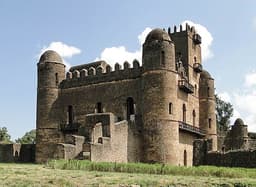
Fasilides
Emperor · Modern
59.3Total

Michael of Russia
Emperor · Modern
54.3Total
Basic Information
Born
1603
1596
Died
1667
1645
Era
Modern
Modern
Nationality
Ethiopia
Russia
Occupation
Emperor
Emperor
Civilization
Other
Western
Score Comparison
Military (10%)
46.7
25.9
Political (20%)
72.0
72.0
Influence (20%)
62.0
55.7
Legacy (20%)
50.0
50.0
Leadership (15%)
72.0
79.8
Strategy (15%)
50.0
25.0
TOTAL
59.3
54.3
Fasilides — Complete Timeline
1632 AD
Expulsion of the JesuitsPolitical Action◆ Major
Fasilides ordered the expulsion of Jesuit missionaries from Ethiopia, reversing the pro-Catholic policies of his predecessors. He restored the traditional Ethiopian Orthodox Church as the sole state religion and severed ties with the Roman Catholic Church.
Religious PolicyCatholic MissionOrthodox Church
Impact: national
1636 AD
Foundation of GondarCultural◆ Major
Fasilides established the city of Gondar as the permanent capital of the Ethiopian Empire. He constructed the Fasil Ghebbi fortress complex, which became the center of imperial administration and culture for over two centuries.
Capital CityArchitectureGondarine Period
Impact: nationalconstructive
1640 AD
Construction of the Fasil GhebbiCultural◆ Major
Fasilides built the Fasil Ghebbi, a fortified royal enclosure in Gondar. The complex included palaces, churches, and administrative buildings, blending Ethiopian, Indian, and Portuguese architectural styles.
ArchitectureUNESCO World HeritageGondar
Impact: nationalconstructive
Michael of Russia — Complete Timeline
1613 AD
Election as Tsar by the Zemsky SoborPolitical Action
Michael Romanov, a 16-year-old boyar, was elected Tsar by the Zemsky Sobor, ending the Time of Troubles. His election established the Romanov dynasty, which would rule Russia until 1917.
ElectionRomanovZemsky Sobor
Impact: nationalconstructive
1617 AD
Treaty of Stolbovo with SwedenPolitical Action◆ Major
Michael's government signed the Treaty of Stolbovo with Sweden, ending the Ingrian War. Russia ceded Ingria and access to the Baltic Sea but regained Novgorod and other territories. Sweden became a dominant Baltic power.
SwedenTreatyBaltic
Impact: regional
1618 AD
Truce of Deulino with Poland-LithuaniaPolitical Action◆ Major
Michael's government signed the Truce of Deulino with Poland-Lithuania, ending the Polish-Muscovite War. Poland retained Smolensk and other territories, but recognized Michael as Tsar, ending Polish claims to the Russian throne.
PolandTruceSmolensk
Impact: regional
1634 AD
Reconquest of SmolenskWar◆ Major
Michael launched the Smolensk War to recapture Smolensk from Poland. The Russian army besieged the city but was forced to surrender after Polish relief forces arrived. The Treaty of Polyanovka confirmed Polish control of Smolensk.
SmolenskPolandWar
Impact: regional
This comparison has not been analyzed yet.
One-time AI generation (~1 minute). Scores and timeline are already available below.
Rankings
🥇
FasilidesLeader
Mil: 46.7Pol: 72.0Inf: 62.0
59.3
🥈
Michael of Russia
Mil: 25.9Pol: 72.0Inf: 55.7
54.3
+5.0 behind
How This Comparison Works
Algorithm
Each figure is scored on 6 dimensions (0—100 scale) based on structured historical data: Military (10%), Political (20%), Influence (20%), Legacy (20%), Leadership (15%), Strategy (15%). The weighted total produces the final ranking.
Data Sources
Scores are computed from structured sub-indicators in the database. Scale factors adjust for era (Ancient ×0.85, Modern ×1.0) and civilization size (Eastern ×1.05, Other ×0.80) to account for differences in population and military scale.
Maximum 3 Figures
Comparisons are limited to 2—3 figures to ensure readability and statistical meaningfulness.
Error Margins
±5 points per dimension — Sub-scores are derived from historical records with inherent uncertainty. Two figures within 5 points on a dimension should be considered roughly equivalent in that area.
Total Score Accuracy
±3 points overall — The weighted combination of 6 dimensions produces a total score with approximately ±3 points of uncertainty. Differences of less than 3 points are not statistically significant— the figures are effectively tied.
Known Limitations
- Historical records are incomplete and uneven across civilizations
- Figures from oral-tradition societies may be underrepresented
- Occupation labels can misclassify multi-role figures
- Scores measure capability and impact, not moral character
- Quantitative scoring is a comparison tool, not absolute truth
Capability Radar
Military (10%) — Battles & Warfare
Battles
30
10
Win Rate
40
15
Expansion
25
15
Political (20%) — Governance & Reform
Reform
65
55
Diplomacy
60
65
Economy
50
50
Influence (20%) — Cultural & Global Reach
Cultural
60
40
Global
40
35
Legacy (20%) — Historical Impact
Historical
55
60
Longevity
50
55
Leadership (15%) — Power & Stability
Tenure
70
60
Stability
55
70
Strategy (15%) — Tactics & Innovation
Strategy
35
10
Tactics
30
5
Reform
20
20
Similar Comparisons
Comments & Discussion
No comments yet. Be the first to share your thoughts!