Loading...
Feng Dao vs Qin Shi Huang
Qin Shi Huang leads by 31.1 pts · 2 figures compared
…

Feng Dao
Politician · Medieval
54.1Total
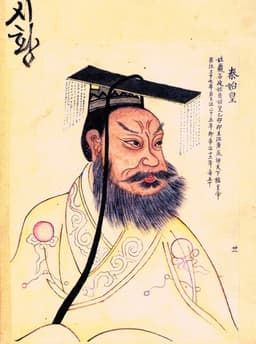
Qin Shi Huang
Emperor · Ancient
85.2Total
Basic Information
Born
882
-259
Died
954
-210
Era
Medieval
Ancient
Nationality
China
China
Occupation
Politician
Emperor
Civilization
Eastern
Eastern
Score Comparison
Military (10%)
50.0
80.0
Political (20%)
55.0
90.0
Influence (20%)
56.4
85.0
Legacy (20%)
47.5
90.0
Leadership (15%)
72.0
78.0
Strategy (15%)
40.5
82.0
TOTAL
54.1
85.2
Feng Dao — Complete Timeline
907 AD
Served Under Ten Emperors Across Five DynastiesPolitical Action◆ Major
Feng Dao began his career under the Later Liang and continued to serve as a high-ranking minister through the Later Tang, Later Jin, Later Han, and Later Zhou dynasties. His ability to survive political purges made him a symbol of bureaucratic adaptability.
LongevityBureaucracyFive Dynasties
Impact: national
932 AD
Commissioned the Printing of the Confucian ClassicsCultural◆ Major
Feng Dao oversaw the first government-sponsored printing of the Nine Confucian Classics using woodblock printing. This project standardized texts and made them widely available, significantly advancing Chinese education and scholarship.
PrintingConfucianismEducation
Impact: globalconstructive
Qin Shi Huang — Complete Timeline
246 BC
Construction of the Mausoleum and Terracotta ArmyOther◆ Major
Qin Shi Huang commissioned a vast mausoleum complex near Xi'an, guarded by thousands of life-sized terracotta soldiers, horses, and chariots. The project employed hundreds of thousands of workers and reflected his obsession with immortality and imperial power.
Impact: global
230 BC
Conquest of the Six Warring StatesWar
From 230 to 221 BCE, Ying Zheng led the Qin state in a series of campaigns that conquered the Han, Zhao, Wei, Chu, Yan, and Qi states. This unified China under a single ruler for the first time, ending the Warring States period.
Impact: global
221 BC
Standardization of Writing, Currency, and MeasurementsReform◆ Major
Qin Shi Huang ordered the standardization of Chinese script, currency, and weights and measures across the unified empire. This facilitated administration, trade, and cultural integration, laying a foundation for future dynasties.
Impact: globalconstructive
Proclamation of the Qin DynastyPolitical Action
After conquering the last independent state, Ying Zheng declared himself Shi Huangdi (First Emperor), founding the Qin Dynasty. He adopted a new title to signify his supreme authority and initiated centralized imperial rule.
Impact: global
214 BC
Initiation of the Great Wall ConstructionOther◆ Major
Qin Shi Huang ordered the connection and extension of existing northern fortifications to create a unified defensive wall against nomadic Xiongnu raids. This project involved massive conscripted labor and became the precursor to the later Great Wall.
Impact: regional
213 BC
Burning of Books and Burying of ScholarsPolitical Action◆ Major
On the advice of Li Si, Qin Shi Huang ordered the burning of historical records and philosophical texts not aligned with Legalist doctrine. He also had 460 Confucian scholars buried alive to suppress dissent and consolidate ideological control.
Impact: nationaldestructive
Expert Analysis
feng-dao-vs-qin-shi-huang
### The Emperor and the Eternal Official
Imagine two men, both wielding immense power over the fate of China, yet separated by over a millennium. One built a mountain of terracotta warriors to guard his tomb, a monument to absolute power and a singular, terrifying will. The other served ten different emperors, navigating five collapsing dynasties, and left behind not a tomb, but a printed book. How can a single civilization produce such vastly different definitions of success? The answer lies not in their ambitions, but in the eras that forged them and the choices they made when faced with the impossible.
### Origins
Qin Shi Huang (259–210 BC) was born into a world of chaos. The Warring States period had raged for centuries, a brutal, unending chess game of assassination, alliance, and betrayal. He was born Ying Zheng, a prince of the state of Qin, a kingdom known for its harsh Legalist philosophy and military ruthlessness. His father was a hostage in a neighboring state; his early life was a lesson in precarious survival. The world he inherited demanded a sword, not a scroll. He was shaped by a philosophy that saw human nature as inherently flawed, requiring iron law to be molded into order.
Feng Dao (882–954 AD) was born into a different kind of chaos. The mighty Tang Dynasty had collapsed, and China fractured into the Five Dynasties and Ten Kingdoms period. But this was a chaos of courts and coups, not of conquering armies reshaping continents. A scholar-official from a modest background, Feng Dao’s world was one of bureaucracy, poetry, and the constant threat of a new emperor. His survival depended not on crushing his enemies, but on being indispensable to whoever held the seal. His era taught him that power was a fleeting guest, and the only permanent resident was the state itself.
### Rise to Power
Qin Shi Huang’s rise was a conquest of steel. At just thirteen, he inherited the Qin throne. By 230 BC, he began a relentless campaign, systematically swallowing the six other warring states. In 221 BC, after the last kingdom fell, he did not declare himself a king. He invented a new title: *Shi Huangdi*—the First Emperor. His power was absolute, won through the blood of his enemies and the genius of his Legalist advisors. He was the architect of his own destiny, and he built it with the bones of his rivals.
Feng Dao’s rise was a conquest of ink. He began as a low-ranking official under the Later Liang. His skill was not in commanding armies but in composing state documents and managing the delicate egos of warlords. He rose not by overthrowing a dynasty, but by surviving it. When the Later Tang overthrew the Liang, Feng Dao was too valuable to execute. He was promoted. He repeated this feat four more times. His power was not absolute; it was liquid, flowing into the cracks left by every falling throne.
### Leadership & Governance
Their styles of rule could not be more different. Qin Shi Huang was a revolutionary. He abolished the old feudal system and divided his empire into 36 commanderies, ruled by centrally appointed officials. He ordered the standardization of writing, currency, and axle widths for carts. A single script, a single coin, a single law. In 214 BC, he ordered the connection of existing northern walls into what would become the Great Wall. His governance was a hammer, smashing every local tradition into a single imperial mold. He was efficient, ruthless, and profoundly creative.
Feng Dao was a conservator. He understood that in an age of rapid turnover, the only stability was in institutions. His greatest act, in 932 AD, was to commission the first government-sponsored printing of the Nine Confucian Classics. This was not a flashy reform. It was a quiet, monumental act of preservation. By carving the texts onto woodblocks, he ensured that even if a dynasty fell, the core of Chinese civilization would not be lost. His leadership was not about breaking the old world, but about mending it so it could survive the next storm.
### Triumph & Tragedy
Qin Shi Huang’s triumph was unification itself. He created China as a political reality. His tragedy was his paranoia and his fear of death. Obsessed with immortality, he sent expeditions for the elixir of life. He also, in 213 BC, ordered the "Burning of Books and Burying of Scholars," an act of intellectual terror designed to erase history that did not glorify his regime. He died at 49, likely from mercury poisoning from his own immortality potions. His dynasty collapsed within four years of his death, a monument to a will that could not be inherited.
Feng Dao’s triumph was his survival and his legacy of texts. He died at 72, in his bed, a rare feat for a high official in his era. His tragedy was his reputation. Later Confucian historians, who valued loyalty to a single ruler above all, branded him a "turncoat" and a "shameless official." They could not forgive his service to ten emperors. In his own time, he was praised as a wise man who kept the state running. In history, he was often condemned as a man without principles.
### Character & Destiny
Qin Shi Huang’s personality was forged in the certainty of his own destiny. He believed he was the Son of Heaven, the first of a line that would last ten thousand generations. This arrogance was his engine and his undoing. He could not delegate, he could not trust, and he could not imagine a world without him. His character demanded that history be rewritten in his image, a demand that ultimately ensured his name was remembered, but his dynasty was not.
Feng Dao’s character was forged in the uncertainty of survival. He was pragmatic to the point of appearing servile. When asked why he did not die for a fallen dynasty, he reportedly replied, "If I had died, who would have preserved the classics?" His character was not about glory, but about duty to the abstract state, not the transient emperor. This flexibility made him a traitor to some, but a savior to civilization.
### Legacy
Qin Shi Huang’s legacy is a paradox. He is remembered as a tyrant who burned books and as the unifier who gave China its name. The Great Wall and the Terracotta Army are his eternal monuments. His system of centralized bureaucracy lasted for over two thousand years. He is a ghost that haunts every Chinese emperor who came after him, a warning and a template.
Feng Dao’s legacy is quieter but no less profound. The woodblock-printed Confucian classics he commissioned became the standard text for the civil service exams for centuries. He helped ensure that the intellectual tradition of China survived the darkest of its medieval ages. He is not a name known to tourists, but he is a figure of deep respect among scholars. He proved that in a world of falling dynasties, the most powerful act can be to preserve the past.
### Conclusion
One man conquered the world; the other conquered time. Qin Shi Huang believed that power meant reshaping reality to his will. Feng Dao understood that true power was the ability to endure. The First Emperor built a tomb that would never be opened, while the Eternal Official printed books that would never be forgotten. Their lives ask us a question that history cannot answer: Is it greater to change the world in a flash of fire, or to preserve its light through a long, dark night? Perhaps the answer is not in choosing, but in recognizing that both are necessary for a civilization to call itself eternal.
Rankings
🥇
Qin Shi HuangLeader
Mil: 80.0Pol: 90.0Inf: 85.0
85.2
🥈
Feng Dao
Mil: 50.0Pol: 55.0Inf: 56.4
54.1
+31.1 behind
How This Comparison Works
Algorithm
Each figure is scored on 6 dimensions (0—100 scale) based on structured historical data: Military (10%), Political (20%), Influence (20%), Legacy (20%), Leadership (15%), Strategy (15%). The weighted total produces the final ranking.
Data Sources
Scores are computed from structured sub-indicators in the database. Scale factors adjust for era (Ancient ×0.85, Modern ×1.0) and civilization size (Eastern ×1.05, Other ×0.80) to account for differences in population and military scale.
Maximum 3 Figures
Comparisons are limited to 2—3 figures to ensure readability and statistical meaningfulness.
Error Margins
±5 points per dimension — Sub-scores are derived from historical records with inherent uncertainty. Two figures within 5 points on a dimension should be considered roughly equivalent in that area.
Total Score Accuracy
±3 points overall — The weighted combination of 6 dimensions produces a total score with approximately ±3 points of uncertainty. Differences of less than 3 points are not statistically significant— the figures are effectively tied.
Known Limitations
- Historical records are incomplete and uneven across civilizations
- Figures from oral-tradition societies may be underrepresented
- Occupation labels can misclassify multi-role figures
- Scores measure capability and impact, not moral character
- Quantitative scoring is a comparison tool, not absolute truth
Capability Radar
Military (10%) — Battles & Warfare
Battles
40
85
Win Rate
41
90
Expansion
46
90
Political (20%) — Governance & Reform
Reform
65
95
Diplomacy
75
75
Economy
60
90
Influence (20%) — Cultural & Global Reach
Cultural
50
95
Global
30
85
Legacy (20%) — Historical Impact
Historical
55
95
Longevity
40
95
Leadership (15%) — Power & Stability
Tenure
80
70
Stability
70
65
Strategy (15%) — Tactics & Innovation
Strategy
50
85
Tactics
47
80
Reform
51
95
Similar Comparisons
Comments & Discussion
TerracottaTactician6/17/2026
Qin Shi Huang gets all the glory for his terra-cotta army, but let's be real—that's just a big, expensive ego trip. Feng Dao actually survived ten emperors across five dynasties, which takes more political skill than conquering six states. Qin's empire collapsed within years of his death, while Feng's printed texts lasted centuries. The "First Emperor" couldn't even keep his dynasty alive past his grandson. That's not genius—that's a failure masked by spectacle.
兵马俑骂人6/17/2026
搞什么鬼?秦始皇修个陵墓用八千陶俑,这是浪费民力还是炫耀武力?冯道印本书就流传千年,这才是真本事。秦朝二世而亡,冯道辅佐十帝三十年,谁更懂治国之道?用铁血统治的人最后啥也没剩下,用文化传世的人才真正赢了。别被那些陶土小人的排场忽悠了。
DataBreaker6/17/2026
You're all missing the scale. Qin Shi Huang conquered six states—that's a 100% success rate in military unification. Feng Dao? He served ten emperors—that's not loyalty, that's a 90% turnover rate of bosses. And what did Feng actually accomplish? Some printing projects we barely have records of. Qin standardized weights, measures, writing, and connected China with roads and canals. Build a wall and a universal script, then talk to me about impact. Feng was a bureaucrat who got lucky with surviva
典籍守护者6/17/2026
冯道才是中国文化的真英雄。他主持雕版印刷《九经》,那是历史上第一次大规模官方印刷典籍。秦始皇焚书坑儒,烧掉多少古籍?冯道却让经典活了下来。你以为秦始皇统一文字了不起?没有冯道刻印那些书,你连"统一"俩字怎么写都不知道。一个是摧毁文化的人,一个是传承文化的人,高下立判。
RevisionistRover6/17/2026
Let's stop romanticizing Qin Shi Huang as a visionary. He was a tyrant who buried scholars alive and burned books to control thought. The Great Wall? That was built on slave labor with millions dead. Feng Dao served multiple dynasties during the Five Dynasties period because he prioritized stability over personal glory. He advised emperors to reduce taxes and avoid war. History called him a "turncoat," but modern historians see a pragmatic survivor who kept civilization running while kings playe