Loading...
Nizam al-Mulk vs Qin Shi Huang
Qin Shi Huang leads by 22.3 pts · 2 figures compared
…

Nizam al-Mulk
Politician · Medieval
62.9Total
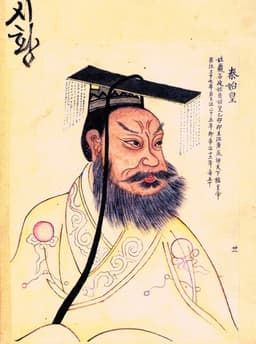
Qin Shi Huang
Emperor · Ancient
85.2Total
Basic Information
Born
1018
-259
Died
1092
-210
Era
Medieval
Ancient
Nationality
Seljuk Empire
China
Occupation
Politician
Emperor
Civilization
Middle Eastern
Eastern
Score Comparison
Military (10%)
22.6
80.0
Political (20%)
84.0
90.0
Influence (20%)
65.0
85.0
Legacy (20%)
65.0
90.0
Leadership (15%)
78.0
78.0
Strategy (15%)
38.3
82.0
TOTAL
62.9
85.2
Nizam al-Mulk — Complete Timeline
1063 AD
Served as Vizier to Alp Arslan and Malik ShahPolitical Action◆ Major
Nizam al-Mulk served as vizier to the Seljuk sultans Alp Arslan and Malik Shah for over 30 years. He centralized the administration, reformed the tax system, and built a network of roads and caravanserais, consolidating Seljuk power from Anatolia to Central Asia.
VizierSeljuk AdministrationCentralization
Impact: regionalconstructive
1067 AD
Founded the Nizamiyya madrasa in BaghdadReform
Nizam al-Mulk founded the Nizamiyya madrasa in Baghdad, a state-sponsored college for Sunni Islamic education. This institution standardized the curriculum for Shafi'i law and Ash'ari theology, becoming a model for madrasas across the Islamic world and strengthening Sunni orthodoxy.
EducationSunni RevivalMadrasa
Impact: globalconstructive
1070 AD
Reformed the iqta systemReform
Nizam al-Mulk reformed the iqta (land grant) system, assigning land revenues to military commanders in exchange for service. This system provided a stable income for the army and reduced corruption, but also laid the groundwork for feudal decentralization in later periods.
Land ReformMilitary AdministrationFeudalism
Impact: regionalconstructive
1091 AD
Wrote 'Siyasatnama' (Book of Government)Cultural◆ Major
Nizam al-Mulk wrote 'Siyasatnama', a treatise on statecraft and governance for Sultan Malik Shah I. The work outlined principles of just rule, administration, and military organization, drawing on Persian and Islamic traditions, and became a classic of Islamic political thought.
Political TheoryStatecraftMirror for Princes
Impact: globalconstructive
1092 AD
Assassinated by a Nizari IsmailiPolitical Action◆ Major
Nizam al-Mulk was assassinated near Nahavand by a member of the Nizari Ismaili sect (the Assassins). His death removed the chief architect of Seljuk administration, leading to political instability and the decline of the Great Seljuk Empire under Malik Shah's successors.
AssassinationNizari IsmailisSeljuk Decline
Impact: regionaltragic
Qin Shi Huang — Complete Timeline
246 BC
Construction of the Mausoleum and Terracotta ArmyOther◆ Major
Qin Shi Huang commissioned a vast mausoleum complex near Xi'an, guarded by thousands of life-sized terracotta soldiers, horses, and chariots. The project employed hundreds of thousands of workers and reflected his obsession with immortality and imperial power.
Impact: global
230 BC
Conquest of the Six Warring StatesWar
From 230 to 221 BCE, Ying Zheng led the Qin state in a series of campaigns that conquered the Han, Zhao, Wei, Chu, Yan, and Qi states. This unified China under a single ruler for the first time, ending the Warring States period.
Impact: global
221 BC
Standardization of Writing, Currency, and MeasurementsReform◆ Major
Qin Shi Huang ordered the standardization of Chinese script, currency, and weights and measures across the unified empire. This facilitated administration, trade, and cultural integration, laying a foundation for future dynasties.
Impact: globalconstructive
Proclamation of the Qin DynastyPolitical Action
After conquering the last independent state, Ying Zheng declared himself Shi Huangdi (First Emperor), founding the Qin Dynasty. He adopted a new title to signify his supreme authority and initiated centralized imperial rule.
Impact: global
214 BC
Initiation of the Great Wall ConstructionOther◆ Major
Qin Shi Huang ordered the connection and extension of existing northern fortifications to create a unified defensive wall against nomadic Xiongnu raids. This project involved massive conscripted labor and became the precursor to the later Great Wall.
Impact: regional
213 BC
Burning of Books and Burying of ScholarsPolitical Action◆ Major
On the advice of Li Si, Qin Shi Huang ordered the burning of historical records and philosophical texts not aligned with Legalist doctrine. He also had 460 Confucian scholars buried alive to suppress dissent and consolidate ideological control.
Impact: nationaldestructive
Expert Analysis
nizam-al-mulk-vs-qin-shi-huang
# The Unifier and the Administrator: Qin Shi Huang and Nizam al-Mulk
On a winter morning in 221 BC, a 38-year-old king named Ying Zheng stood atop a conquered city wall in northern China, gazing at a land that had been at war for centuries. He had just done the impossible: crushed six rival states and brought the entire Chinese heartland under one rule. That same year, from his capital at Xianyang, he declared himself *Shi Huangdi*—the First Emperor—and set in motion a revolution that would reshape the world.
More than a thousand years later and four thousand miles to the west, in the bustling city of Baghdad, a Persian scholar-politician named Nizam al-Mulk was writing a book. His *Siyasatnama*, or "Book of Government," would become a masterpiece of medieval statecraft, advising sultans on how to rule justly, collect taxes, and fend off enemies. He had served as vizier for three decades, founding schools and reforming armies, yet his end came not in battle but by a dagger in the dark.
Two men, two empires, two visions of power. One built with fire and stone, the other with ink and institutions. What drove their different paths—and what do they tell us about the nature of leadership itself?
Origins
Qin Shi Huang was born into war. The year was 259 BC, during the chaotic Warring States period, when seven Chinese kingdoms fought ceaselessly for supremacy. His father was the king of Qin, a western state seen by rivals as a semi-barbaric upstart. Young Ying Zheng grew up in a court rife with intrigue; his mother was a former concubine, and his early years were shadowed by regents and eunuchs who wielded power behind the throne. By the time he assumed full control at age 22, he had learned one lesson above all: trust no one, and rule absolutely.
Nizam al-Mulk came from a different world—the sophisticated Persianate culture of the 11th century. Born Abu Ali Hasan ibn Ali Tusi in 1018 near Tus in modern-day Iran, he was the son of a minor tax official. He studied Islamic law, theology, and administration in the great cities of Nishapur and Baghdad. The Seljuk Empire was then a rising Turkic power, conquering lands from the Byzantine frontier to Central Asia. Nizam al-Mulk entered service as a bureaucrat, climbing the ladder through competence and loyalty. Where Qin Shi Huang saw chaos as a threat to be crushed, Nizam al-Mulk saw it as a problem to be managed.
Rise to Power
Qin Shi Huang’s ascent was swift and brutal. From 230 to 221 BC, he launched a series of lightning campaigns: first the Han, then the Zhao, the Wei, the Chu, the Yan, and finally the Qi. Each conquest was a masterclass in strategy—using spies, bribes, and overwhelming force. He did not merely defeat armies; he erased kingdoms. Nobles were relocated, capitals razed, and local histories burned. By 221 BC, the last independent state fell, and Ying Zheng renamed himself Shi Huangdi, the First Emperor. He was now the master of all China, but his rule had only just begun.
Nizam al-Mulk’s rise was quieter but no less remarkable. In 1063, the Seljuk sultan Alp Arslan appointed him vizier—the empire’s chief minister. For the next 29 years, under Alp Arslan and his son Malik Shah, Nizam al-Mulk ran the empire. He did not conquer with swords; he conquered with decrees. He reformed the *iqta* system, assigning land revenues to military commanders in exchange for service, ensuring the army stayed loyal and the treasury full. He founded the Nizamiyya madrasa in Baghdad in 1067, a state-sponsored college that became the model for Islamic universities. Where Qin Shi Huang unified through terror, Nizam al-Mulk unified through institutions.
Leadership & Governance
Qin Shi Huang governed with an iron fist. He standardized writing, currency, and measurements across his empire—a monumental achievement that made trade and communication possible. He ordered the construction of the Great Wall, connecting existing fortifications to protect against northern nomads. But his methods were ruthless. In 213 BC, on the advice of his chancellor Li Si, he ordered the burning of all historical records and philosophical texts not aligned with Legalist doctrine. Hundreds of scholars were buried alive. He believed that the past was a threat to his new order; only the present and future mattered.
Nizam al-Mulk governed with a velvet glove over a mailed fist. His *Siyasatnama* is a manual of pragmatic wisdom: "The king must be just, for justice is the foundation of the realm." He advocated for a strong central administration, but also for consultation with scholars and religious leaders. He rooted out corruption, promoted education, and maintained a network of spies. Yet he was no pacifist—he supported military campaigns against the Byzantine Empire and the Fatimid Caliphate. His approach was not to destroy the old order but to absorb and reform it. Where Qin Shi Huang erased the past, Nizam al-Mulk preserved and adapted it.
Triumph & Tragedy
Qin Shi Huang’s greatest triumph was also his greatest tragedy: the unification itself. He created a single Chinese state that would endure for two millennia, but at a terrible cost. His mausoleum, guarded by thousands of life-sized terracotta soldiers, was a monument to his obsession with immortality. He consumed mercury elixirs in search of eternal life, and died in 210 BC at age 49, possibly poisoned by his own alchemy. Within three years of his death, the Qin Dynasty collapsed in rebellion, its harsh laws and forced labor having bred hatred across the land.
Nizam al-Mulk’s triumph was the stability he built. Under his guidance, the Seljuk Empire reached its peak, stretching from Anatolia to India. The Nizamiyya schools produced generations of scholars and administrators. But his tragedy came in 1092, when he was assassinated near Nahavand by a member of the Nizari Ismaili sect—the "Assassins." His death destabilized the empire; Sultan Malik Shah died soon after, and the Seljuk realm fragmented into civil war. The system he had built survived, but without his steady hand, it began to decay.
Character & Destiny
Qin Shi Huang was a man of extremes: paranoid, ambitious, and utterly convinced of his own destiny. He believed that unity required uniformity, and that dissent was a cancer to be excised. His personality shaped a regime of terror, but also of brilliance. The Great Wall, the standardized script, the network of roads—these were the products of a mind that thought in centuries, not years.
Nizam al-Mulk was a man of balance: pragmatic, learned, and deeply religious. He believed that power required legitimacy, and that legitimacy came from justice and knowledge. His personality shaped a regime of order, but also of fragility. The Nizamiyya schools, the *iqta* reforms, the *Siyasatnama*—these were the products of a mind that thought in generations, not decades.
Both men died before their work was complete. Qin Shi Huang’s empire crumbled; Nizam al-Mulk’s empire fractured. Yet both left something that outlasted them: the idea that a state could be more than a collection of tribes or kingdoms—that it could be a civilization.
Legacy
Qin Shi Huang is remembered as the First Emperor, the man who gave China its name. His standardization of writing made Chinese civilization possible across a vast geography. His terracotta army is one of the world’s greatest archaeological wonders. Yet he is also reviled as a tyrant who burned books and buried scholars. The Chinese character for "emperor" still carries his shadow.
Nizam al-Mulk is remembered as the greatest vizier of the Islamic Golden Age. His Nizamiyya madrasa became the model for universities from Cairo to Delhi. His *Siyasatnama* remains a classic of political thought. Yet he is also a figure of intrigue—his assassination by the Assassins inspired legends that echo in literature and film.
Conclusion
Standing at their respective moments of triumph—Qin Shi Huang atop a conquered wall, Nizam al-Mulk writing his book in Baghdad—both men believed they were building for eternity. One built with stone and fire, the other with ink and institutions. One sought to erase the past, the other to preserve it. Both succeeded, and both failed.
Perhaps the deepest lesson is this: power, whether wielded by an emperor or a vizier, is ultimately fragile. What endures is not the law or the wall, but the idea—the idea that order is possible, that justice matters, that knowledge is worth passing on. Qin Shi Huang and Nizam al-Mulk gave us different versions of that idea. We are still living with both.
Rankings
🥇
Qin Shi HuangLeader
Mil: 80.0Pol: 90.0Inf: 85.0
85.2
🥈
Nizam al-Mulk
Mil: 22.6Pol: 84.0Inf: 65.0
62.9
+22.3 behind
How This Comparison Works
Algorithm
Each figure is scored on 6 dimensions (0—100 scale) based on structured historical data: Military (10%), Political (20%), Influence (20%), Legacy (20%), Leadership (15%), Strategy (15%). The weighted total produces the final ranking.
Data Sources
Scores are computed from structured sub-indicators in the database. Scale factors adjust for era (Ancient ×0.85, Modern ×1.0) and civilization size (Eastern ×1.05, Other ×0.80) to account for differences in population and military scale.
Maximum 3 Figures
Comparisons are limited to 2—3 figures to ensure readability and statistical meaningfulness.
Error Margins
±5 points per dimension — Sub-scores are derived from historical records with inherent uncertainty. Two figures within 5 points on a dimension should be considered roughly equivalent in that area.
Total Score Accuracy
±3 points overall — The weighted combination of 6 dimensions produces a total score with approximately ±3 points of uncertainty. Differences of less than 3 points are not statistically significant— the figures are effectively tied.
Known Limitations
- Historical records are incomplete and uneven across civilizations
- Figures from oral-tradition societies may be underrepresented
- Occupation labels can misclassify multi-role figures
- Scores measure capability and impact, not moral character
- Quantitative scoring is a comparison tool, not absolute truth
Capability Radar
Military (10%) — Battles & Warfare
Battles
30
85
Win Rate
35
90
Expansion
50
90
Political (20%) — Governance & Reform
Reform
90
95
Diplomacy
85
75
Economy
80
90
Influence (20%) — Cultural & Global Reach
Cultural
80
95
Global
70
85
Legacy (20%) — Historical Impact
Historical
85
95
Longevity
80
95
Leadership (15%) — Power & Stability
Tenure
85
70
Stability
75
65
Strategy (15%) — Tactics & Innovation
Strategy
55
85
Tactics
40
80
Reform
60
95
Similar Comparisons
Comments & Discussion
TerraCottaSkeptic6/17/2026
People fetishize Qin Shi Huang’s terracotta army as some masterstroke, but it’s just propaganda. He wasted 700,000 laborers on a tomb complex he’d never see—meanwhile, Nizam al-Mulk funded universities that educated generations. One built a mausoleum for himself; the other built institutions for civilization. The accounting’s clear on who added more value.
兵马俑守夜人6/17/2026
秦始皇烧书坑儒这事儿洗不白。他统一文字货币确实牛,但思想钳制让中国文化断层了几百年。看看尼扎姆·穆尔克,人家不光建学校,还写治国术教后来人怎么平衡权力。一个靠恐惧统治,一个靠智慧管理,高下立判。
NomadStrategist6/17/2026
Nizam al-Mulk gets romanticized as a scholar, but his *Siyasatnama* was essentially a manual for an ethnic Persian ruling over Turkic warlords. He knew his days were numbered if he didn’t keep them distracted. Qin Shi Huang, by contrast, actually built a unified state from scratch—standardizing script, axles, laws. The vizier played politics; the emperor engineered a civilization.
法家铁粉6/17/2026
你们懂什么?秦始皇“车同轨,书同文”是实干家的硬核思维。尼扎姆·穆尔克写了本好书,但塞尔柱帝国没他照旧分裂。秦始皇把六国熔成一个大国骨架,连长城都是实用工程。一个留下理论,一个留下实际版图——谁更狠?答案很明显。
Vizier’s Ghost6/17/2026
Let’s be honest—Qin Shi Huang’s dynasty lasted fifteen years after his death. Nizam al-Mulk’s reforms in education and administration survived for centuries across the Islamic world. The First Emperor was a brilliant conqueror and a terrible sustainer; the vizier was the opposite. Which one would you rather have running your country?
影子宰相6/17/2026
两种秩序观的对决:秦始皇用青铜剑和法家律令把个体碾成标准件,尼扎姆·穆尔克用宗教合法性和官僚制织成一张有弹性的网。前者高效但脆裂,后者柔韧却能吸收冲击。历史总偏向能学习的人,而不是发号施令的人。