Loading...
Feng Yuxiang vs Julius Caesar
Julius Caesar leads by 26.0 pts · 2 figures compared
…
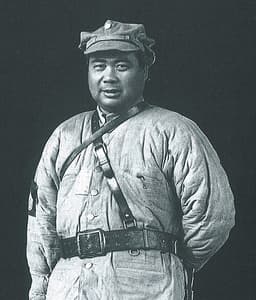
Feng Yuxiang
General · Modern
56.8Total

Julius Caesar
General · Ancient
82.8Total
Basic Information
Born
1882
-100
Died
1948
-44
Era
Modern
Ancient
Nationality
China
Roman Republic
Occupation
General
General
Civilization
Eastern
Western
Score Comparison
Military (10%)
50.0
88.0
Political (20%)
62.7
78.0
Influence (20%)
58.0
85.0
Legacy (20%)
50.0
82.0
Leadership (15%)
62.0
80.0
Strategy (15%)
60.7
85.0
TOTAL
56.8
82.8
Feng Yuxiang — Complete Timeline
1914 AD
Conversion to ChristianityCultural
Feng Yuxiang converted to Christianity, earning him the nickname 'The Christian General'. He required his soldiers to attend Christian services and promoted Christian ethics within his army. This conversion was unusual among Chinese warlords and influenced his governance style.
ReligionChristianityWarlord
Impact: regionalconstructive
1924 AD
Beijing Coup of 1924Political Action◆ Major
Feng Yuxiang staged the Beijing Coup, overthrowing the Zhili clique government and capturing Beijing. He invited Sun Yat-sen to discuss national unification. The coup led to the establishment of a provisional government under Duan Qirui and temporarily shifted the balance of power among warlords.
CoupWarlord EraBeijing
Impact: national
1927 AD
Defection to the Nationalist GovernmentPolitical Action◆ Major
Feng Yuxiang defected from the Fengtian clique and allied with the Nationalist government under Chiang Kai-shek. He participated in the Northern Expedition, helping to defeat other warlords. This alliance strengthened the Nationalist cause but also led to conflicts with other warlords.
AllianceNationalistNorthern Expedition
Impact: nationalconstructive
1930 AD
Defeat in the Central Plains WarWar◆ Major
Feng Yuxiang joined the anti-Chiang Kai-shek coalition in the Central Plains War. His forces were defeated by Chiang's National Revolutionary Army. The defeat ended Feng's military power and forced him into retirement. He later fled to the Soviet Union.
WarDefeatWarlord
Impact: nationaldestructive
Julius Caesar — Complete Timeline
58 BC
Gallic WarsWar◆ Major
Caesar, as proconsul of Gaul, launched a series of campaigns that conquered all of Gaul (modern France, Belgium, and parts of Switzerland). He fought numerous battles, including against the Helvetii, the Belgae, and the Gallic chieftain Vercingetorix. The wars brought immense wealth and a loyal army to Caesar.
Gallic WarsConquestRoman Expansion
Impact: regional
49 BC
Crossing the RubiconPolitical Action◆ Major
Caesar led Legio XIII across the Rubicon River into Italy, defying the Roman Senate's order to disband his army. This act triggered a civil war against Pompey and the Optimates, ultimately leading to Caesar's dictatorship and the end of the Roman Republic.
Roman Civil WarEnd of RepublicPower Struggle
Impact: global
48 BC
Battle of PharsalusWar◆ Major
Caesar's outnumbered army defeated the larger forces of Pompey the Great at Pharsalus in Greece. Caesar's tactical use of a reserve line to counter Pompey's cavalry charge proved decisive. Pompey fled to Egypt, where he was assassinated, leaving Caesar as the undisputed master of the Roman world.
Roman Civil WarBattleDecisive Victory
Impact: regional
44 BC
Appointment as Dictator for LifePolitical Action◆ Major
The Roman Senate appointed Caesar dictator perpetuo (dictator for life), granting him unprecedented personal power. This move concentrated military, legislative, and judicial authority in one person, effectively ending the Roman Republic's traditional system of checks and balances and alarming many senators.
DictatorshipEnd of RepublicPower Consolidation
Impact: regionaldestructive
Assassination on the Ides of MarchPolitical Action◆ Major
A group of Roman senators, led by Marcus Junius Brutus and Gaius Cassius Longinus, stabbed Caesar to death at a meeting of the Senate in the Theatre of Pompey. The assassination was intended to restore the Republic, but instead triggered another civil war that led to the rise of the Roman Empire.
AssassinationRoman PoliticsEnd of Republic
Impact: globaldestructive
Expert Analysis
feng-yuxiang-vs-julius-caesar
# The General and the Warlord: Caesar and Feng Yuxiang Across Two Millennia
On a winter morning in 44 BCE, Julius Caesar walked into the Senate chamber in Rome, dismissing a warning from a soothsayer. Hours later, he lay bleeding at the foot of Pompey’s statue, stabbed twenty-three times by men he had trusted. Nearly two thousand years later, on a September day in 1948, Feng Yuxiang died in a shipboard fire in the Black Sea, fleeing a China he could no longer shape. Both men were generals who seized history by the throat. But one forged an empire that would define the West; the other left a legacy of noble intentions and shattered ambitions. What made the difference?
Origins
Caesar was born into the patrician Julian clan, a family claiming descent from the goddess Venus. Yet his Rome was a republic in convulsion—the old senatorial order crumbling under the weight of conquest, corruption, and civil war. His father died when Caesar was sixteen, leaving him to navigate a world where survival depended on audacity and alliances. He was a product of Roman ambition, trained in law, rhetoric, and the sword, and he absorbed the lesson that the Republic rewarded those who dared everything.
Feng Yuxiang emerged from a China in far more profound collapse. Born in 1882, he grew up in the twilight of the Qing dynasty, a thousand-year-old imperial system rotting from within. His family was poor; his father served as a minor military officer. Feng entered the army as a boy, learning not Latin and philosophy but survival in a world of warlords, foreign incursions, and revolutionary ferment. Where Caesar inherited a tradition of aristocratic competition, Feng inherited chaos—and a desperate need for order.
Rise to Power
Caesar’s path was a masterclass in calculated risk. He fled Rome during the Sullan proscriptions, studied rhetoric in Rhodes, and was captured by pirates—whom he later crucified as promised. By 60 BCE, at age forty, he forged the First Triumvirate with Pompey and Crassus, a political machine that gave him command in Gaul. There, over eight years, he conquered a territory larger than Italy, winning battles against the Helvetii, the Belgae, and Vercingetorix at Alesia. He wrote his own history as he made it, sending dispatches to Rome that turned military reports into political propaganda. When the Senate ordered him to disband his army, he crossed the Rubicon in 49 BCE, a decision that meant civil war—or dictatorship.
Feng’s rise was less linear, more improvisational. He converted to Christianity in 1914, earning the nickname “The Christian General” and requiring his soldiers to wash and pray. It was an oddity in Confucian China, but it gave him a moral brand. In 1924, he staged the Beijing Coup, overthrowing the Zhili clique and inviting Sun Yat-sen to negotiate. This was not the crossing of the Rubicon; it was a power play in a game of shifting loyalties. Feng defected to the Nationalist government under Chiang Kai-shek in 1927, then joined an anti-Chiang coalition in the Central Plains War of 1930. He lost. His path was not a single dramatic gamble but a series of coalitions and betrayals—each rational, none final.
Leadership and Governance
Caesar governed as he conquered: with speed, clarity, and ruthlessness. As dictator, he reformed the calendar (the Julian calendar we still use), expanded the Senate to dilute its power, and launched public works that gave jobs to the poor. He granted citizenship to provincials, undermining the old Roman exclusivity. His military genius was total war: he besieged Alesia with double fortifications, trapping both the Gauls inside and their relief army outside. He led from the front, sharing rations and wounds with his soldiers. Yet his political wisdom was flawed—he pardoned enemies who then killed him.
Feng was a different kind of commander. His leadership score of 89.8 reflects genuine charisma; his soldiers followed him not for plunder but for reform. He banned opium, promoted education, and enforced discipline. But his military strategy (71.7) and political acumen (70.6) were mediocre. He never commanded a force that could match Chiang’s German-trained divisions. His “Christian General” image won foreign sympathy but not Chinese trust. Where Caesar built institutions, Feng built a reputation—and reputations are fragile.
Triumph and Tragedy
Caesar’s greatest triumph was Gaul: the conquest that made him rich, feared, and loved by his legions. His tragedy was the Ides of March—a death that proved his reforms needed a longer hand. He died believing he could reconcile the Republic with his power; instead, he guaranteed its end.
Feng’s triumph was his moral stance. He opposed Japanese aggression and criticized Chiang’s corruption. His tragedy was the Central Plains War of 1930, where his coalition crumbled, and he fled into exile. He died not by assassins’ daggers but by fire in a Soviet ship, a forgotten man.
Character and Destiny
Caesar was a gambler who believed in his own star. He was vain, merciful, and calculating—a man who wept over Alexander’s tomb because he had done less by his age. His personality drove him to take risks that no aristocrat would, and that same audacity made him emperor in all but name. Destiny, for Caesar, was something he seized.
Feng was a reformer trapped in a warlord’s body. He wanted to save China, but he lacked the strategic ruthlessness to unify it. His conversion to Christianity was sincere, but in a land of Confucians, Buddhists, and atheists, it isolated him. Destiny, for Feng, was something he resisted—a current that swept him away.
Legacy
Caesar’s legacy is the Roman Empire, the Latin language, and the word “Caesar” itself—a title for every absolute ruler from Kaiser to Czar. He is remembered as a military genius, a political visionary, and a warning.
Feng’s legacy is a footnote in Chinese textbooks: a warlord who meant well but failed. His scores—Military 72.6, Legacy 69.5—reflect a man who mattered in his moment but could not transcend it. He is remembered, if at all, as the Christian General who lost.
Conclusion
Both men lived in eras of transition. Caesar’s Rome was ready for empire; his ambition matched its hunger. Feng’s China was ready for revolution, but he offered reform—and reform was not enough. The difference between them is not talent but timing. Caesar found a stage built for his drama; Feng found a stage on fire. One built an empire; the other tried to build a bridge. History remembers the builder of empires, not the bridge-maker, however noble his heart.
Rankings
🥇
Julius CaesarLeader
Mil: 88.0Pol: 78.0Inf: 85.0
82.8
🥈
Feng Yuxiang
Mil: 50.0Pol: 62.7Inf: 58.0
56.8
+26.0 behind
How This Comparison Works
Algorithm
Each figure is scored on 6 dimensions (0—100 scale) based on structured historical data: Military (10%), Political (20%), Influence (20%), Legacy (20%), Leadership (15%), Strategy (15%). The weighted total produces the final ranking.
Data Sources
Scores are computed from structured sub-indicators in the database. Scale factors adjust for era (Ancient ×0.85, Modern ×1.0) and civilization size (Eastern ×1.05, Other ×0.80) to account for differences in population and military scale.
Maximum 3 Figures
Comparisons are limited to 2—3 figures to ensure readability and statistical meaningfulness.
Error Margins
±5 points per dimension — Sub-scores are derived from historical records with inherent uncertainty. Two figures within 5 points on a dimension should be considered roughly equivalent in that area.
Total Score Accuracy
±3 points overall — The weighted combination of 6 dimensions produces a total score with approximately ±3 points of uncertainty. Differences of less than 3 points are not statistically significant— the figures are effectively tied.
Known Limitations
- Historical records are incomplete and uneven across civilizations
- Figures from oral-tradition societies may be underrepresented
- Occupation labels can misclassify multi-role figures
- Scores measure capability and impact, not moral character
- Quantitative scoring is a comparison tool, not absolute truth
Capability Radar
Military (10%) — Battles & Warfare
Battles
55
95
Win Rate
50
92
Expansion
45
97
Political (20%) — Governance & Reform
Reform
60
90
Diplomacy
55
85
Economy
40
82
Influence (20%) — Cultural & Global Reach
Cultural
45
88
Global
35
94
Legacy (20%) — Historical Impact
Historical
50
95
Longevity
40
96
Leadership (15%) — Power & Stability
Tenure
50
75
Stability
35
60
Strategy (15%) — Tactics & Innovation
Strategy
55
94
Tactics
60
96
Reform
65
88
Similar Comparisons
Comments & Discussion
“数据不撒谎”6/17/2026
冯玉祥自称有42万军队,但1930年中原大战时他的核心部队实际不到10万人,粮饷全靠劫掠维持。凯撒在《高卢战记》里记录的军团番号和俘虏数字都有考古印证,连敌人阵亡数都敢写得有零有整。一个用数字统治帝国,一个用口号统治军阀——别把政治宣传当历史比较。
“东拉西扯派”6/17/2026
凯撒改革历法、给罗马公民权、甚至计划疏浚科林斯地峡,他的每一项政策都在扩大罗马文明的版图。冯玉祥呢?他扒铁路、拆城墙、禁止老百姓穿绸缎,美其名曰“节俭”,结果连他部下都私下接驳电线赚外快。一个重建秩序,一个打碎秩序——二流军阀也配和古典巨匠相提并论?
Historian7586/17/2026
Caesar reorganized logistics across Gaul with the *cursus publicus*, a state communication network that let him move 40,000 men faster than any rival. Feng Yuxiang’s “Christian Army” banned opium but handed out Bibles to illiterate soldiers. Military history isn’t about intentions—it’s about who builds the better supply chain. One man connected an empire; the other preached to peasants. That’s the difference between a general and a crusader.
Chronicler92816/17/2026
Plutarch tells us Caesar paid off Pompey’s soldiers with spoils from Gaul—conquest funded loyalty. Feng Yuxiang’s “Northern Expedition” promised land reform but delivered none; his troops looted their own countrymen. Classics aren’t dead texts—they’re case studies in power. Caesar understood that victory requires profit. Feng confused piety with policy. One man mastered the art of war; the other mastered the art of disappointment.
Chronicler49306/17/2026
Both died in transit—Caesar with his toga stained by senators’ daggers; Feng in a Soviet ship’s fire that was, whisper it, almost certainly arranged. But Caesar’s assassination launched a civil war that birthed the empire; Feng’s death barely made headlines in China. Here’s the fact: the Ides of March changed world history. The Black Sea fire just ended one man’s failed career. Scale matters.