Loading...
Ferdinand I of Aragon vs Igor of Kiev
Ferdinand I of Aragon leads by 15.8 pts · 2 figures compared
…
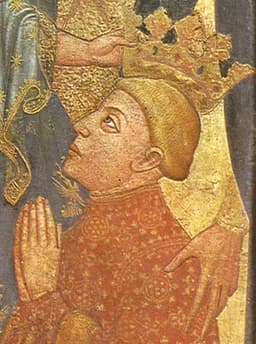
Ferdinand I of Aragon
Emperor · Medieval
54.8Total
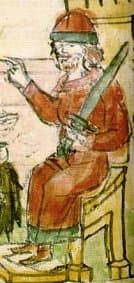
Igor of Kiev
Emperor · Medieval
39.0Total
Basic Information
Born
1380
877
Died
1416
945
Era
Medieval
Medieval
Nationality
Aragon
Kievan Rus
Occupation
Emperor
Emperor
Civilization
Western
Western
Score Comparison
Military (10%)
40.0
50.0
Political (20%)
68.0
26.4
Influence (20%)
55.7
47.9
Legacy (20%)
45.0
39.2
Leadership (15%)
74.0
34.6
Strategy (15%)
43.3
30.3
TOTAL
54.8
39.0
Ferdinand I of Aragon — Complete Timeline
1412 AD
Compromise of CaspePolitical Action
Ferdinand I was elected King of Aragon by the Compromise of Caspe, a commission of nine representatives from Aragon, Catalonia, and Valencia. This resolved the succession crisis following the death of Martin I without a direct heir, bringing the Trastamara dynasty to the Aragonese throne.
Succession crisisTrastamara dynasty
Impact: regionalconstructive
1414 AD
Conquest of SardiniaWar◆ Major
Ferdinand I launched a military campaign to subdue the rebellious Sardinian nobles who had resisted Aragonese rule. The campaign successfully reasserted Aragonese control over the island, consolidating the Crown of Aragon's Mediterranean possessions.
Mediterranean expansionSardinia
Impact: regional
1415 AD
Reform of the Aragonese administrationReform
Ferdinand I implemented administrative reforms in the Crown of Aragon, including the reorganization of the royal council and the standardization of tax collection. These reforms strengthened royal authority and improved the efficiency of governance across the diverse territories of Aragon.
Administrative reformRoyal authority
Impact: nationalconstructive
Igor of Kiev — Complete Timeline
941 AD
Igor's Campaign Against ConstantinopleWar◆ Major
Igor launched a naval attack on Constantinople. The Byzantine fleet, using Greek fire, destroyed most of Igor's ships. The campaign failed, forcing Igor to retreat and later negotiate a less favorable treaty in 944.
Byzantine-Rus WarNaval DefeatGreek Fire
Impact: regionaldestructive
944 AD
Rus'-Byzantine Treaty of 944Political Action
Following his failed campaign, Igor signed a treaty with the Byzantine Empire. The treaty renewed trade relations but imposed restrictions on Rus merchants and required Igor to provide military assistance to Byzantium.
DiplomacyTradeByzantine Empire
Impact: regional
945 AD
Murder by the DrevliansPolitical Action
Igor attempted to collect excessive tribute from the Drevlians, an East Slavic tribe. The Drevlians rebelled, captured Igor, and killed him by tying him to bent trees that tore his body apart. His death triggered Olga's revenge.
AssassinationRevoltTribute
Impact: nationaltragic
Expert Analysis
Origins
Ferdinand I of Aragon was born in 1380 as the son of John I of Castile and Eleanor of Aragon. He belonged to the Trastamara dynasty and grew up in Castile, receiving education in governance and military affairs. His early years were marked by the political instability of Castile, where he served as regent for his nephew John II before being elected to the Aragonese throne.
Igor of Kiev, born around 877, was a prince of the Rurik dynasty, the son of Rurik (according to the Primary Chronicle). He succeeded Oleg as ruler of Kievan Rus' in 912. His early life is obscure, but he inherited a realm that controlled trade routes between Scandinavia and Byzantium. He continued the policy of tribute collection from Slavic tribes, which defined his reign.
Rise to Power
Ferdinand's rise came through the Compromise of Caspe in 1412. After the death of Martin of Aragon without heirs, a commission of nine representatives from Aragon, Catalonia, and Valencia elected Ferdinand as king. This event was a turning point, as it resolved a succession crisis through legal and political means, setting a precedent for institutional decision-making. Ferdinand had to negotiate with rival claimants, including James II of Urgell, whom he eventually defeated militarily in 1413.
Igor became grand prince of Kiev upon Oleg's death in 912. His authority was initially secure, but he faced challenges from nomadic tribes like the Pechenegs and from internal dissent. His early reign focused on consolidating control over the Drevlians and other tribes, demanding tribute as his predecessor had done.
Leadership & Governance
Ferdinand I scored 74.0 in leadership and 68.0 in political skill. He reformed the Aragonese administration, reorganizing the royal council and standardizing taxation. He also convened the Cortes (parliament) to gain support for his policies. His governance emphasized legal uniformity and centralized authority, but he faced resistance from the nobility, particularly in Catalonia, which he managed through negotiation and occasional force.
Igor's leadership score of 34.6 reflects his reliance on tribute and military force. He governed through a retinue of warriors and local tribal leaders, maintaining control through annual tribute collection (polyudie). His administrative system was less institutionalized than Ferdinand's, relying on personal loyalty and coercion. The Drevlians, for instance, were subjugated but not integrated, leading to their rebellion.
Triumph & Tragedy
Ferdinand's greatest success was the Compromise of Caspe, which not only gave him the throne but also demonstrated the Crown of Aragon's ability to resolve succession peacefully. He also conquered Sardinia, reasserting Aragonese control over the rebellious nobles in 1420. However, his reign was cut short by death in 1416, leaving many reforms incomplete. His failure to fully integrate the different realms of the Crown of Aragon led to tensions that erupted after his death.
Igor's major triumph was the Rus'-Byzantine Treaty of 944, which renewed trade relations after his failed campaign. However, his greatest tragedy was his murder by the Drevlians in 945. After demanding excessive tribute, the Drevlians rebelled, captured him, and killed him by tying him to two bent birch trees and tearing him apart. This event exposed the fragility of his rule and led to a period of regency under his wife Olga.
Character & Destiny
Ferdinand was pragmatic and diplomatic, with a political score of 68.0. He preferred negotiation over war, as seen in the Compromise of Caspe. His military score of 40.0 indicates he was not a great commander, but he effectively used alliances and legal maneuvers. His early death prevented him from consolidating his achievements, but his character shaped a stable succession for the Trastamara dynasty in Aragon.
Igor was more aggressive and greedy, with a military score of 50.0 and strategy of 30.3. His desire for more tribute led to his downfall. He lacked foresight, ignoring the Drevlians' capacity to resist. His death was a direct consequence of his character—his inability to assess the limits of his power. Historians note that his legacy is overshadowed by his wife Olga's more successful rule.
Legacy
Ferdinand I's legacy is mixed, with a score of 45.0. He strengthened the Crown of Aragon's institutions and set a precedent for parliamentary involvement in succession. However, his short reign limited his impact. The Compromise of Caspe is remembered as a key moment in Aragonese constitutional history. His descendants continued to rule Aragon and later united with Castile.
Igor's legacy score of 39.2 reflects his role in the early history of Kievan Rus'. The Treaty of 944 established trade relations that benefited the Rus' economy. However, his murder highlighted the dangers of overreach. His son Sviatoslav would later expand the Rus' state, but Igor's reign is seen as a cautionary tale. His wife Olga's revenge on the Drevlians and her conversion to Christianity had more lasting impact.
Conclusion
Ferdinand I of Aragon had a greater overall impact than Igor of Kiev, with a total score of 54.8 compared to Igor's 39.0. Ferdinand's political and leadership scores (68.0 and 74.0) far exceeded Igor's (26.4 and 34.6). While Igor's military score (50.0) was higher than Ferdinand's (40.0), his strategic failures and death undermined his achievements. Ferdinand's institutional reforms and peaceful succession model had enduring significance for the Crown of Aragon, whereas Igor's reign ended in chaos and left a negative example. Thus, Ferdinand's contributions to governance and stability outweigh Igor's largely negative legacy.
Rankings
🥇
Ferdinand I of AragonLeader
Mil: 40.0Pol: 68.0Inf: 55.7
54.8
🥈
Igor of Kiev
Mil: 50.0Pol: 26.4Inf: 47.9
39.0
+15.8 behind
How This Comparison Works
Algorithm
Each figure is scored on 6 dimensions (0—100 scale) based on structured historical data: Military (10%), Political (20%), Influence (20%), Legacy (20%), Leadership (15%), Strategy (15%). The weighted total produces the final ranking.
Data Sources
Scores are computed from structured sub-indicators in the database. Scale factors adjust for era (Ancient ×0.85, Modern ×1.0) and civilization size (Eastern ×1.05, Other ×0.80) to account for differences in population and military scale.
Maximum 3 Figures
Comparisons are limited to 2—3 figures to ensure readability and statistical meaningfulness.
Error Margins
±5 points per dimension — Sub-scores are derived from historical records with inherent uncertainty. Two figures within 5 points on a dimension should be considered roughly equivalent in that area.
Total Score Accuracy
±3 points overall — The weighted combination of 6 dimensions produces a total score with approximately ±3 points of uncertainty. Differences of less than 3 points are not statistically significant— the figures are effectively tied.
Known Limitations
- Historical records are incomplete and uneven across civilizations
- Figures from oral-tradition societies may be underrepresented
- Occupation labels can misclassify multi-role figures
- Scores measure capability and impact, not moral character
- Quantitative scoring is a comparison tool, not absolute truth
Capability Radar
Military (10%) — Battles & Warfare
Battles
40
20
Win Rate
45
15
Expansion
50
25
Political (20%) — Governance & Reform
Reform
45
10
Diplomacy
60
25
Economy
50
15
Influence (20%) — Cultural & Global Reach
Cultural
35
15
Global
30
10
Legacy (20%) — Historical Impact
Historical
40
20
Longevity
30
15
Leadership (15%) — Power & Stability
Tenure
55
30
Stability
50
10
Strategy (15%) — Tactics & Innovation
Strategy
40
15
Tactics
35
20
Reform
30
5
Similar Comparisons
Comments & Discussion
No comments yet. Be the first to share your thoughts!