Loading...
Igor of Kiev vs King Seongjong
King Seongjong leads by 21.6 pts · 2 figures compared
…
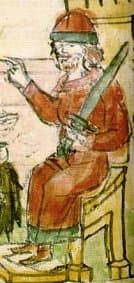
Igor of Kiev
Emperor · Medieval
39.0Total

King Seongjong
Emperor · Medieval
60.6Total
Basic Information
Born
877
960
Died
945
997
Era
Medieval
Medieval
Nationality
Kievan Rus
Korea
Occupation
Emperor
Emperor
Civilization
Western
Eastern
Score Comparison
Military (10%)
50.0
50.0
Political (20%)
26.4
70.0
Influence (20%)
47.9
60.0
Legacy (20%)
39.2
58.0
Leadership (15%)
34.6
80.0
Strategy (15%)
30.3
35.7
TOTAL
39.0
60.6
Igor of Kiev — Complete Timeline
941 AD
Igor's Campaign Against ConstantinopleWar◆ Major
Igor launched a naval attack on Constantinople. The Byzantine fleet, using Greek fire, destroyed most of Igor's ships. The campaign failed, forcing Igor to retreat and later negotiate a less favorable treaty in 944.
Byzantine-Rus WarNaval DefeatGreek Fire
Impact: regionaldestructive
944 AD
Rus'-Byzantine Treaty of 944Political Action
Following his failed campaign, Igor signed a treaty with the Byzantine Empire. The treaty renewed trade relations but imposed restrictions on Rus merchants and required Igor to provide military assistance to Byzantium.
DiplomacyTradeByzantine Empire
Impact: regional
945 AD
Murder by the DrevliansPolitical Action
Igor attempted to collect excessive tribute from the Drevlians, an East Slavic tribe. The Drevlians rebelled, captured Igor, and killed him by tying him to bent trees that tore his body apart. His death triggered Olga's revenge.
AssassinationRevoltTribute
Impact: nationaltragic
King Seongjong — Complete Timeline
982 AD
Establishment of Confucian State StructureReform◆ Major
King Seongjong implemented a comprehensive Confucian administrative system, reorganizing the central government into three departments and six ministries. He adopted Chinese-style bureaucratic institutions and promoted Confucian scholarship as the state ideology.
Confucian ReformBureaucracyState Building
Impact: nationalconstructive
986 AD
Promulgation of the Gyeongje YukjeonReform◆ Major
Seongjong issued the Gyeongje Yukjeon, a comprehensive legal code that systematized administrative, penal, and land laws. This code provided a legal foundation for the Confucian state and remained influential for centuries.
Legal CodeConfucian ReformGovernance
Impact: nationalconstructive
992 AD
Establishment of Local Government SchoolsReform
Seongjong ordered the establishment of Confucian schools in each province and county. These hyanggyo schools provided education in Confucian classics and trained candidates for the civil service examinations, spreading Confucian values throughout the kingdom.
EducationConfucian ReformLocal Administration
Impact: nationalconstructive
993 AD
Military Campaign Against Jurchen TribesWar
Seongjong launched a military campaign against Jurchen tribes in the northeast, expanding Goryeo's territory. The campaign secured the border region and established Goryeo's authority over the area, though it faced logistical challenges.
Territorial ExpansionBorder SecurityJurchen
Impact: regional
Expert Analysis
Origins
Igor of Kiev (c. 877–945) was born into the Rurikid dynasty, the son of Rurik, the legendary founder of the Kievan Rus. After Rurik's death, Igor's early life was overshadowed by the regency of his relative Oleg, who expanded the Rus territory and secured trade routes with Byzantium. Igor inherited a burgeoning state but lacked Oleg's military and political acumen. His upbringing was likely centered on warfare and tribute collection, the lifeblood of early Rus economy.
King Seongjong of Goryeo (961–997) was born as Wang Chi, the son of King Daejong and Queen Seonui. He ascended the throne at age 20 after his uncle King Gyeongjong died without heirs. Seongjong was educated in Confucian classics from a young age, heavily influenced by his tutor, the Confucian scholar Choe Seungno. This education shaped his vision of a centralized, bureaucratic state modeled on Tang China.
Rise to Power
Igor became Grand Prince of Kiev around 912 after Oleg's death. His early reign focused on maintaining the tribute system that funded the Rus state. He faced constant rebellions from Slavic tribes like the Drevlians and Ulichs. In 941, Igor launched a naval campaign against Constantinople, hoping to replicate Oleg's successful 907 raid. However, the Byzantine navy used Greek fire to destroy his fleet, forcing a humiliating retreat. The failure weakened his authority and led to the Rus-Byzantine Treaty of 944, which restored trade but limited Rus privileges. Igor's inability to secure decisive victories eroded his control over subject tribes.
Seongjong's rise was smoother. He was appointed crown prince in 976 and ascended the throne in 981. His early reign was marked by the influence of his mother, Queen Heonae, and the powerful aristocrat Kim Chiyang, but Seongjong gradually asserted independence. In 982, he received a memorial from Choe Seungno outlining 28 articles of reform, which became the blueprint for his administrative overhaul. Seongjong consolidated power by sidelining aristocratic factions and promoting Confucian-trained officials.
Leadership & Governance
Igor ruled as a traditional Viking-style warlord, relying on personal charisma and military force. His governance was extractive: each winter, he and his retinue (the 'polyudie') traveled among subject tribes to collect tribute, often through intimidation. This system lacked institutional structure; loyalty was personal and fragile. Igor's leadership score of 34.6 reflects his inability to build stable institutions. His political score of 26.4 shows his failure to manage tribal relations—the Drevlians revolted when he demanded excessive tribute.
Seongjong, by contrast, was a reformer who built enduring institutions. He reorganized the central government into three departments and six ministries, modeled on Tang bureaucracy. He issued the Gyeongje Yukjeon, a legal code that systematized administrative, penal, and land laws, providing a stable legal framework for centuries. He established Confucian schools (hyanggyo) in every province and county, promoting education based on Confucian classics. His leadership score of 80.0 reflects his ability to implement lasting reforms. His political score of 70.0 shows his skill in navigating aristocratic opposition.
Triumph & Tragedy
Igor's greatest triumph was maintaining the Rus state after Oleg's death and securing the 944 treaty, which reopened trade with Byzantium. However, his failures overshadowed his successes. The 941 campaign was a disaster, with most of his fleet destroyed. His tragic end came in 945 when he attempted to collect tribute from the Drevlians a second time in one season, violating the customary limit. The Drevlians captured him, tied him to two bent birch trees, and released them, tearing him apart. His murder triggered a brutal revenge by his wife, Olga, but exposed the fragility of his rule.
Seongjong's triumphs were foundational. He established a Confucian state structure that lasted until the end of Goryeo in 1392. His legal code and school system created a literate bureaucracy that reduced aristocratic influence. His military campaign against the Jurchen in 993 expanded Goryeo's territory and secured the northeast border. However, his reliance on civilian officials weakened the military, leading to later military rebellions. He also failed to completely curb aristocratic power, as the nobility retained private armies. His strategy score of 35.7 reflects limited military innovation.
Character & Destiny
Igor was impulsive and greedy. His decision to demand extra tribute from the Drevlians showed poor judgment and a lack of understanding of his subjects' tolerance. He was not a strategic thinker; his military score of 50.0 reflects average competence but no brilliance. His character—prideful and short-sighted—led directly to his death. Historians see him as a transitional figure between Viking chieftain and medieval monarch, but lacking the vision to build a lasting state.
Seongjong was methodical and idealistic. He studied classical texts and surrounded himself with scholars. His patience allowed him to implement reforms gradually, overcoming resistance from powerful nobles. He was decisive in launching the Jurchen campaign but prioritized civil over military affairs. His character—pragmatic and reform-minded—shaped Goryeo into a Confucian kingdom. He died naturally in 997, succeeded by his son Mokjong.
Legacy
Igor's legacy is mixed. He is remembered as a cautionary tale of greed; his murder triggered Olga's revenge, which strengthened the monarchy. The 944 treaty set terms for Rus-Byzantine relations for decades. However, his influence score of 47.9 and legacy score of 39.2 reflect his limited long-term impact. He did not build institutions or expand territory significantly. His son Svyatoslav would later overshadow him.
Seongjong's legacy is profound. His Confucian reforms shaped Korean governance for centuries. The Gyeongje Yukjeon influenced later legal codes. The local school system promoted literacy and Confucian values. His influence score of 60.0 and legacy score of 58.0 show his lasting impact. He is considered one of Goryeo's greatest kings, often compared to Sejong the Great.
Conclusion
King Seongjong had clearly greater impact. His total score of 60.6 far exceeds Igor's 39.0. Igor's failures—his military defeat, political mismanagement, and violent death—highlight his limitations. Seongjong built a bureaucratic state that endured for 400 years, while Igor's legacy was largely negative. Seongjong's reforms created the foundation for a centralized, literate administration, whereas Igor's rule was extractive and unstable. While Igor's era was formative for Kievan Rus, Seongjong's achievements were more significant and longer-lasting. The data supports Seongjong as the more effective and influential ruler.
Rankings
🥇
King SeongjongLeader
Mil: 50.0Pol: 70.0Inf: 60.0
60.6
🥈
Igor of Kiev
Mil: 50.0Pol: 26.4Inf: 47.9
39.0
+21.6 behind
How This Comparison Works
Algorithm
Each figure is scored on 6 dimensions (0—100 scale) based on structured historical data: Military (10%), Political (20%), Influence (20%), Legacy (20%), Leadership (15%), Strategy (15%). The weighted total produces the final ranking.
Data Sources
Scores are computed from structured sub-indicators in the database. Scale factors adjust for era (Ancient ×0.85, Modern ×1.0) and civilization size (Eastern ×1.05, Other ×0.80) to account for differences in population and military scale.
Maximum 3 Figures
Comparisons are limited to 2—3 figures to ensure readability and statistical meaningfulness.
Error Margins
±5 points per dimension — Sub-scores are derived from historical records with inherent uncertainty. Two figures within 5 points on a dimension should be considered roughly equivalent in that area.
Total Score Accuracy
±3 points overall — The weighted combination of 6 dimensions produces a total score with approximately ±3 points of uncertainty. Differences of less than 3 points are not statistically significant— the figures are effectively tied.
Known Limitations
- Historical records are incomplete and uneven across civilizations
- Figures from oral-tradition societies may be underrepresented
- Occupation labels can misclassify multi-role figures
- Scores measure capability and impact, not moral character
- Quantitative scoring is a comparison tool, not absolute truth
Capability Radar
Military (10%) — Battles & Warfare
Battles
20
15
Win Rate
15
20
Expansion
25
10
Political (20%) — Governance & Reform
Reform
10
85
Diplomacy
25
70
Economy
15
75
Influence (20%) — Cultural & Global Reach
Cultural
15
70
Global
10
30
Legacy (20%) — Historical Impact
Historical
20
65
Longevity
15
60
Leadership (15%) — Power & Stability
Tenure
30
75
Stability
10
80
Strategy (15%) — Tactics & Innovation
Strategy
15
15
Tactics
20
10
Reform
5
20
Similar Comparisons
Comments & Discussion
No comments yet. Be the first to share your thoughts!