Loading...
Ferdinand I of Bulgaria vs Hamengkubuwono IX
Hamengkubuwono IX leads by 2.2 pts · 2 figures compared
…

Ferdinand I of Bulgaria
Emperor · Modern
52.6Total
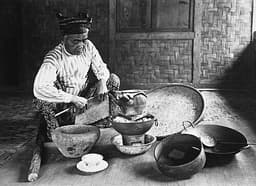
Hamengkubuwono IX
Emperor · Modern
54.8Total
Basic Information
Born
1861
1912
Died
1948
1988
Era
Modern
Modern
Nationality
Bulgaria
Indonesia
Occupation
Emperor
Emperor
Civilization
Western
Eastern
Score Comparison
Military (10%)
20.0
21.2
Political (20%)
62.7
72.0
Influence (20%)
55.7
55.0
Legacy (20%)
44.2
50.0
Leadership (15%)
68.0
78.0
Strategy (15%)
60.0
39.6
TOTAL
52.6
54.8
Ferdinand I of Bulgaria — Complete Timeline
1908 AD
Proclamation of Bulgarian IndependencePolitical Action
Ferdinand I proclaimed Bulgaria's full independence from the Ottoman Empire, declaring himself Tsar. This ended Ottoman suzerainty and established Bulgaria as a sovereign kingdom.
IndependenceOttoman EmpireSovereignty
Impact: nationalconstructive
1912 AD
First Balkan WarWar◆ Major
Ferdinand I led Bulgaria into the First Balkan War against the Ottoman Empire. Bulgaria achieved major victories, capturing Adrianople and much of Thrace, significantly expanding its territory.
Balkan WarsTerritorial ExpansionThrace
Impact: regional
1913 AD
Second Balkan WarWar◆ Major
Ferdinand I ordered an attack on former allies Serbia and Greece, triggering the Second Balkan War. Bulgaria was defeated by a coalition including Romania and the Ottoman Empire, losing most of its gains.
Balkan WarsDefeatTerritorial Loss
Impact: regionaldestructive
1918 AD
Abdication after WWIPolitical Action◆ Major
After Bulgaria's defeat in World War I, Ferdinand I abdicated in favor of his son Boris III. He went into exile, ending his reign amid national crisis and territorial losses.
AbdicationWorld War IExile
Impact: nationaltragic
Hamengkubuwono IX — Complete Timeline
1940 AD
Accession as Sultan of YogyakartaPolitical Action◆ Major
Hamengkubuwono IX became the Sultan of Yogyakarta, a princely state in the Dutch East Indies. His reign began during the Japanese occupation, and he later played a key role in the Indonesian National Revolution.
AccessionYogyakartaIndonesian Independence
Impact: national
1945 AD
Support for Indonesian IndependencePolitical Action◆ Major
Hamengkubuwono IX declared his support for the newly proclaimed Republic of Indonesia, offering Yogyakarta as the republic's capital. His decision provided a safe haven for the republican government during the war for independence.
Indonesian National RevolutionCapitalSupport
Impact: nationalconstructive
1966 AD
Role in the March 11 Order (Supersemar)Political Action◆ Major
Hamengkubuwono IX, along with other senior military figures, was involved in the transfer of executive authority from President Sukarno to General Suharto via the Supersemar document. This event marked the beginning of Suharto's New Order regime.
SupersemarTransition of PowerNew Order
Impact: national
1973 AD
Appointment as Vice President of IndonesiaPolitical Action◆ Major
Hamengkubuwono IX was elected Vice President of Indonesia under President Suharto, serving until 1978. His role symbolized the integration of traditional Javanese monarchy into the modern Indonesian state.
Vice PresidentSuhartoNew Order
Impact: national
1988 AD
Death and State FuneralOther
Hamengkubuwono IX died in Jakarta and was given a state funeral. He was buried in the royal cemetery at Imogiri, Yogyakarta. His death marked the end of an era for the Yogyakarta Sultanate and Indonesian politics.
DeathState FuneralYogyakarta
Impact: nationaltragic
Expert Analysis
Origins
**Ferdinand I of Bulgaria** was born on February 26, 1861, in Vienna, Austria, as a prince of the House of Saxe-Coburg and Gotha-Koháry. His father was Prince August of Saxe-Coburg and Gotha, and his mother was Princess Clémentine of Orléans. Ferdinand was educated in Vienna and entered the Austro-Hungarian army, but his life changed in 1887 when he was elected Prince of Bulgaria after the abdication of Alexander of Battenberg. He was not initially well-received due to his Catholic faith and foreign origins.
**Hamengkubuwono IX** was born on April 12, 1912, in Yogyakarta, Dutch East Indies, as the son of Sultan Hamengkubuwono VIII. He studied at the Hogere Burgerschool in Yogyakarta and later at the University of Leiden in the Netherlands. He was groomed for leadership from a young age, and upon his father's death in 1939, he became the Sultan of Yogyakarta, a powerful princely state with a long history of Javanese kingship.
Rise to Power
Ferdinand I's rise to power came through political maneuvering. After the abdication of Prince Alexander in 1886, a regency was established, and Ferdinand was elected as Prince of Bulgaria by the Grand National Assembly in 1887. However, his position was precarious: the Great Powers did not recognize him, and he faced opposition from pro-Russian factions. He consolidated power by appointing loyal ministers and gradually gained recognition: the Ottoman Empire accepted him in 1896, and he used the instability of the Ottoman Empire to declare Bulgaria's full independence in 1908, proclaiming himself Tsar.
Hamengkubuwono IX became Sultan in 1940, during the Japanese occupation of the Dutch East Indies. He initially cooperated with the Japanese to protect his people, but after Japan's surrender in 1945, he quickly aligned with the Indonesian independence movement. On August 17, 1945, Sukarno and Hatta proclaimed independence, and Hamengkubuwono IX declared his sultanate part of the Republic of Indonesia. He offered Yogyakarta as the republic's capital, a crucial move that provided a secure base for the fledgling government. This decision elevated him from a traditional ruler to a national leader.
Leadership & Governance
Ferdinand I ruled as an autocrat. He centralized power, suppressed political opposition, and sought to modernize Bulgaria along Western lines. He invested in infrastructure, education, and the military. However, his foreign policy was aggressive: he aimed to expand Bulgarian territory to include Macedonia and Thrace, leading to the Balkan Wars. His governance style was top-down and secretive, often ignoring the advice of his ministers. His political score of 62.7 reflects his ability to maintain power but also his failure to build stable alliances.
Hamengkubuwono IX governed as a constitutional monarch and later as a statesman. He modernized Yogyakarta's administration and promoted education and health. During the Indonesian National Revolution (1945-1949), he supported the republican government financially and militarily. As vice president (1973-1978), he played a ceremonial but unifying role. His leadership score of 78.0 is higher than Ferdinand's 68.0, reflecting his ability to adapt to changing political circumstances and his collaborative approach.
Triumph & Tragedy
Ferdinand I's greatest triumph was the proclamation of Bulgarian independence in 1908, which ended Ottoman suzerainty and elevated him to Tsar. In the First Balkan War (1912-1913), Bulgaria achieved significant victories, capturing Adrianople and much of Thrace. However, his greatest tragedy was the Second Balkan War (1913), which he initiated by attacking former allies. Bulgaria was defeated, losing most of its gains. In World War I, he again chose the losing side, leading to national disaster and his abdication in 1918. His military score of 20.0 reflects these catastrophic defeats.
Hamengkubuwono IX's triumph was his role in securing Indonesian independence. By aligning Yogyakarta with the republic, he provided legitimacy and a capital during the revolution. His greatest tragedy might be his involvement in the Supersemar affair in 1966, which transferred executive authority from Sukarno to Suharto, leading to the New Order regime. While he may have intended to stabilize the country, the outcome was a repressive dictatorship. His military score of 21.2 is low but higher than Ferdinand's, as he did not command armies in battle.
Character & Destiny
Ferdinand I was ambitious, cunning, and ruthless. He was known for his vanity and love of luxury, but also for his intelligence and diplomatic skills. His character drove him to pursue aggressive expansion, which ultimately led to his downfall. Historical assessments often label him as a gamble who overreached. His destiny was exile and obscurity after his abdication.
Hamengkubuwono IX was pragmatic, humble, and dedicated to his people. He was a traditional ruler who embraced modernity and nationalism. His character allowed him to navigate the transition from colonialism to independence. He is remembered as a unifier and a symbol of Javanese culture within a modern republic. His destiny was to become a respected elder statesman.
Legacy
Ferdinand I's legacy is mixed. He is credited with securing Bulgarian independence and modernizing the state, but his military defeats and poor decisions tarnish his reputation. In Bulgaria, he is often seen as a controversial figure who led the country into disasters. His influence score of 55.7 reflects his impact on Bulgarian history, but his legacy score of 44.2 is low due to the negative outcomes of his wars.
Hamengkubuwono IX's legacy is overwhelmingly positive. He is celebrated as a national hero in Indonesia for his support of independence. Yogyakarta retains special status as a sultanate within Indonesia, a testament to his political acumen. His legacy score of 50.0 is higher than Ferdinand's, and his influence score of 55.0 is comparable. He is remembered as a bridge between tradition and modernity.
Conclusion
Hamengkubuwono IX had a greater impact than Ferdinand I. His total score of 54.8 edges out Ferdinand's 52.6, but the qualitative difference is larger. Ferdinand led Bulgaria into multiple wars that ended in disaster, while Hamengkubuwono IX helped secure Indonesian independence and established a model for traditional rulers in a modern state. Ferdinand's leadership score of 68.0 is lower than Hamengkubuwono's 78.0, and his political score of 62.7 is also lower than 72.0. While both were monarchs, Hamengkubuwono's legacy is one of nation-building, while Ferdinand's is one of overreach and failure. Therefore, Hamengkubuwono IX is the more successful leader.
Rankings
🥇
Hamengkubuwono IXLeader
Mil: 21.2Pol: 72.0Inf: 55.0
54.8
🥈
Ferdinand I of Bulgaria
Mil: 20.0Pol: 62.7Inf: 55.7
52.6
+2.2 behind
How This Comparison Works
Algorithm
Each figure is scored on 6 dimensions (0—100 scale) based on structured historical data: Military (10%), Political (20%), Influence (20%), Legacy (20%), Leadership (15%), Strategy (15%). The weighted total produces the final ranking.
Data Sources
Scores are computed from structured sub-indicators in the database. Scale factors adjust for era (Ancient ×0.85, Modern ×1.0) and civilization size (Eastern ×1.05, Other ×0.80) to account for differences in population and military scale.
Maximum 3 Figures
Comparisons are limited to 2—3 figures to ensure readability and statistical meaningfulness.
Error Margins
±5 points per dimension — Sub-scores are derived from historical records with inherent uncertainty. Two figures within 5 points on a dimension should be considered roughly equivalent in that area.
Total Score Accuracy
±3 points overall — The weighted combination of 6 dimensions produces a total score with approximately ±3 points of uncertainty. Differences of less than 3 points are not statistically significant— the figures are effectively tied.
Known Limitations
- Historical records are incomplete and uneven across civilizations
- Figures from oral-tradition societies may be underrepresented
- Occupation labels can misclassify multi-role figures
- Scores measure capability and impact, not moral character
- Quantitative scoring is a comparison tool, not absolute truth
Capability Radar
Military (10%) — Battles & Warfare
Battles
45
10
Win Rate
40
10
Expansion
40
10
Political (20%) — Governance & Reform
Reform
50
80
Diplomacy
60
70
Economy
45
60
Influence (20%) — Cultural & Global Reach
Cultural
35
60
Global
40
55
Legacy (20%) — Historical Impact
Historical
45
65
Longevity
30
50
Leadership (15%) — Power & Stability
Tenure
75
70
Stability
30
75
Strategy (15%) — Tactics & Innovation
Strategy
50
10
Tactics
35
10
Reform
55
20
Similar Comparisons
Comments & Discussion
No comments yet. Be the first to share your thoughts!