Loading...
Ferdinand I of Bulgaria vs Leopold I
Leopold I leads by 15.4 pts · 2 figures compared
…

Ferdinand I of Bulgaria
Emperor · Modern
52.6Total
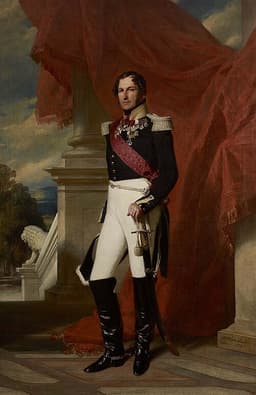
Leopold I
Emperor · Modern
68.0Total
Basic Information
Born
1861
1640
Died
1948
1705
Era
Modern
Modern
Nationality
Bulgaria
Holy Roman Empire
Occupation
Emperor
Emperor
Civilization
Western
Western
Score Comparison
Military (10%)
20.0
74.0
Political (20%)
62.7
78.0
Influence (20%)
55.7
72.0
Legacy (20%)
44.2
52.0
Leadership (15%)
68.0
75.0
Strategy (15%)
60.0
66.3
TOTAL
52.6
68.0
Ferdinand I of Bulgaria — Complete Timeline
1908 AD
Proclamation of Bulgarian IndependencePolitical Action
Ferdinand I proclaimed Bulgaria's full independence from the Ottoman Empire, declaring himself Tsar. This ended Ottoman suzerainty and established Bulgaria as a sovereign kingdom.
IndependenceOttoman EmpireSovereignty
Impact: nationalconstructive
1912 AD
First Balkan WarWar◆ Major
Ferdinand I led Bulgaria into the First Balkan War against the Ottoman Empire. Bulgaria achieved major victories, capturing Adrianople and much of Thrace, significantly expanding its territory.
Balkan WarsTerritorial ExpansionThrace
Impact: regional
1913 AD
Second Balkan WarWar◆ Major
Ferdinand I ordered an attack on former allies Serbia and Greece, triggering the Second Balkan War. Bulgaria was defeated by a coalition including Romania and the Ottoman Empire, losing most of its gains.
Balkan WarsDefeatTerritorial Loss
Impact: regionaldestructive
1918 AD
Abdication after WWIPolitical Action◆ Major
After Bulgaria's defeat in World War I, Ferdinand I abdicated in favor of his son Boris III. He went into exile, ending his reign amid national crisis and territorial losses.
AbdicationWorld War IExile
Impact: nationaltragic
Leopold I — Complete Timeline
1683 AD
Battle of ViennaWar
Leopold I, as Holy Roman Emperor, organized the relief of Vienna from the Ottoman siege. A combined imperial, Polish, and German army under John III Sobieski defeated the Ottoman forces, halting Ottoman expansion into Central Europe and marking the beginning of the Great Turkish War.
Great Turkish WarOttoman EmpireSiege
Impact: global
1688 AD
War of the Grand AllianceWar◆ Major
Leopold I led the Holy Roman Empire in the War of the Grand Alliance against Louis XIV of France. The conflict, fought across Europe and the colonies, ended with the Treaty of Ryswick in 1697, which confirmed French gains but checked French expansion.
War of the Grand AllianceLouis XIVTreaty of Ryswick
Impact: global
1699 AD
Treaty of KarlowitzPolitical Action
Leopold I's forces, under Prince Eugene of Savoy, defeated the Ottomans, leading to the Treaty of Karlowitz. The treaty ceded Hungary, Transylvania, and Slavonia to the Habsburgs, establishing Austria as a major European power and ending Ottoman dominance in the region.
Great Turkish WarTreatyHabsburg Expansion
Impact: regional
Expert Analysis
Origins
Ferdinand I of Bulgaria was born on February 26, 1861, in Vienna, Austria, as Prince Ferdinand Maximilian Karl Leopold Maria of Saxe-Coburg and Gotha. He was a prince of the German noble house of Saxe-Coburg and Gotha, and his family had strong ties to European royalty. He was educated in Vienna and later at the Theresian Military Academy, but his path to kingship was unconventional. In 1887, he was elected Prince of Bulgaria by the Bulgarian parliament, following the abdication of Prince Alexander of Battenberg. Ferdinand's early life was marked by diplomatic maneuvering and a deep interest in natural history and botany.
Leopold I, born on June 9, 1640, in Vienna, was the second son of Ferdinand III, Holy Roman Emperor, and his wife Maria Anna of Spain. He was originally destined for the church, receiving a thorough Jesuit education, but after the death of his older brother Ferdinand IV in 1654, he became heir apparent. He succeeded his father as Holy Roman Emperor in 1658. Leopold's upbringing was steeped in Catholic piety and Habsburg dynastic tradition, with a strong emphasis on art and music.
Rise to Power
Ferdinand I's rise to power began with his election as Prince of Bulgaria in 1887, a position that was initially precarious due to opposition from Russia and internal political instability. He consolidated his rule by playing off the Great Powers against each other and gradually asserting Bulgarian autonomy. A key turning point came on October 5, 1908, when Ferdinand proclaimed Bulgaria's full independence from the Ottoman Empire and declared himself Tsar. This action, timed with the Austro-Hungarian annexation of Bosnia, ended Ottoman suzerainty and established Bulgaria as a sovereign kingdom. Ferdinand's diplomatic skill allowed him to navigate the complex Balkan politics.
Leopold I became Holy Roman Emperor in 1658 after a lengthy election process. He faced immediate challenges from the Ottoman Empire and France. His rise was marked by the ongoing conflict with the Ottoman Empire, which culminated in the 1683 Battle of Vienna. Leopold's ability to form a coalition with Poland and the German states to relieve Vienna was a decisive turning point. The victory at Vienna established Leopold as a defender of Christendom and solidified his authority. He also navigated the complex politics of the Holy Roman Empire, balancing the interests of the powerful German princes.
Leadership & Governance
Ferdinand I ruled Bulgaria as an autocrat, centralizing power and suppressing political dissent. He pursued a policy of modernization, infrastructure development, and military expansion. His leadership was characterized by personal ambition and a desire to elevate Bulgaria's status. He scored 68.0 in leadership and 62.7 in political acumen. However, his governance was often erratic and driven by his own interests rather than the nation's well-being. For example, he pushed for the Balkan Wars to expand Bulgarian territory, but his decision to attack former allies in the Second Balkan War was a strategic blunder.
Leopold I's leadership style was more methodical and diplomatic. He ruled through a network of ministers and generals, notably Prince Eugene of Savoy. He focused on consolidating Habsburg power within the Holy Roman Empire and expanding eastward at the expense of the Ottomans. His political score of 78.0 reflects his ability to maintain alliances and manage a multi-ethnic empire. Leopold was a patron of the arts and music, supporting composers like Mozart's father Leopold (though not directly). His governance was marked by a balance between centralization and respect for traditional privileges of the German princes.
Triumph & Tragedy
Ferdinand I's greatest triumph was the proclamation of Bulgarian independence in 1908, which elevated him from prince to tsar and secured Bulgaria's sovereignty. He also led Bulgaria to significant victories in the First Balkan War (1912-1913), where Bulgarian forces captured Adrianople and advanced towards Constantinople. However, his greatest tragedy was the Second Balkan War (1913), where Bulgaria was defeated by a coalition of its former allies, resulting in the loss of much of the territory gained. This was followed by Bulgaria's entry into World War I on the side of the Central Powers, leading to another defeat and Ferdinand's abdication in 1918. He scored only 20.0 in military, highlighting his poor strategic decisions.
Leopold I's triumphs include the victory at the Battle of Vienna in 1683, which saved the Habsburg capital and turned the tide against the Ottoman Empire. This led to the Great Turkish War, culminating in the Treaty of Karlowitz in 1699, which ceded Hungary, Transylvania, and Croatia to the Habsburgs. Leopold also successfully defended against French expansion in the War of the Grand Alliance. His tragedy lies in the prolonged conflicts that drained resources and caused widespread suffering. The War of the Spanish Succession, which began near the end of his reign, would continue after his death. Leopold's military score of 74.0 reflects his successful campaigns under capable commanders.
Character & Destiny
Ferdinand I was ambitious, cunning, and often described as ruthless. He had a keen intellect but was also prone to overconfidence and poor judgment in military affairs. His character led him to take risks that ultimately backfired, such as the attack on Serbia and Greece in 1913. He was deeply interested in natural history, amassing a collection of plants and animals, but his political decisions were driven by a desire for personal glory. His destiny was to see his reign end in exile, with Bulgaria in ruins.
Leopold I was pious, methodical, and cautious. He preferred diplomacy to war but was capable of decisive action when necessary. His character was shaped by his Jesuit education and Habsburg sense of duty. He relied heavily on capable subordinates like Prince Eugene and the Margrave of Baden. His destiny was to preside over the rise of the Habsburg Empire as a major European power, but he also faced constant challenges from France and the Ottomans. Historians rate him as a competent ruler who successfully navigated a difficult period.
Legacy
Ferdinand I's legacy is mixed. He is remembered as the founder of modern Bulgaria's independence, but also as the monarch who led the country into disastrous wars. His reign saw the modernization of Bulgaria's infrastructure and military, but his strategic errors cost Bulgaria dearly. His total score of 52.6 reflects this mixed legacy. He is often criticized for his authoritarianism and poor judgment. Today, he is a controversial figure in Bulgarian history.
Leopold I's legacy is more positive. He is remembered as a defender of Europe against the Ottoman Empire and a patron of the arts. The Treaty of Karlowitz marked the beginning of Habsburg dominance in Central Europe. His support of music and culture, including the construction of the Vienna State Opera, left a lasting cultural impact. His political score of 78.0 and influence score of 72.0 indicate his significant role in European history. He is generally regarded as one of the more successful Holy Roman Emperors.
Conclusion
Leopold I had a greater impact than Ferdinand I. With a total score of 68.0 compared to Ferdinand's 52.6, Leopold's achievements in defending Europe and expanding Habsburg power were more enduring and strategically sound. Ferdinand's legacy is tainted by his catastrophic military decisions, which set Bulgaria back for decades. While Ferdinand did achieve independence for Bulgaria, his leadership ultimately led to national defeat and exile. Leopold's victories, particularly against the Ottomans, reshaped the map of Europe and established a balance of power that lasted for centuries. Therefore, Leopold I stands as the more effective and influential ruler.
Rankings
🥇
Leopold ILeader
Mil: 74.0Pol: 78.0Inf: 72.0
68.0
🥈
Ferdinand I of Bulgaria
Mil: 20.0Pol: 62.7Inf: 55.7
52.6
+15.4 behind
How This Comparison Works
Algorithm
Each figure is scored on 6 dimensions (0—100 scale) based on structured historical data: Military (10%), Political (20%), Influence (20%), Legacy (20%), Leadership (15%), Strategy (15%). The weighted total produces the final ranking.
Data Sources
Scores are computed from structured sub-indicators in the database. Scale factors adjust for era (Ancient ×0.85, Modern ×1.0) and civilization size (Eastern ×1.05, Other ×0.80) to account for differences in population and military scale.
Maximum 3 Figures
Comparisons are limited to 2—3 figures to ensure readability and statistical meaningfulness.
Error Margins
±5 points per dimension — Sub-scores are derived from historical records with inherent uncertainty. Two figures within 5 points on a dimension should be considered roughly equivalent in that area.
Total Score Accuracy
±3 points overall — The weighted combination of 6 dimensions produces a total score with approximately ±3 points of uncertainty. Differences of less than 3 points are not statistically significant— the figures are effectively tied.
Known Limitations
- Historical records are incomplete and uneven across civilizations
- Figures from oral-tradition societies may be underrepresented
- Occupation labels can misclassify multi-role figures
- Scores measure capability and impact, not moral character
- Quantitative scoring is a comparison tool, not absolute truth
Capability Radar
Military (10%) — Battles & Warfare
Battles
45
85
Win Rate
40
80
Expansion
40
80
Political (20%) — Governance & Reform
Reform
50
75
Diplomacy
60
85
Economy
45
70
Influence (20%) — Cultural & Global Reach
Cultural
35
65
Global
40
70
Legacy (20%) — Historical Impact
Historical
45
75
Longevity
30
70
Leadership (15%) — Power & Stability
Tenure
75
90
Stability
30
75
Strategy (15%) — Tactics & Innovation
Strategy
50
85
Tactics
35
70
Reform
55
75
Similar Comparisons
Comments & Discussion
No comments yet. Be the first to share your thoughts!