Loading...
Ferdinand I of Leon vs Yitzhak Rabin
Yitzhak Rabin leads by 7.2 pts · 2 figures compared
…
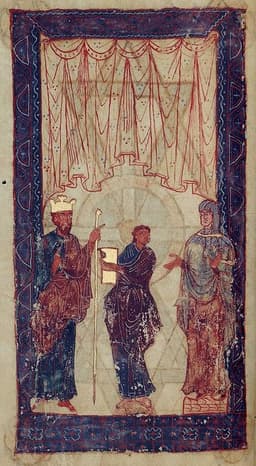
Ferdinand I of Leon
Emperor · Medieval
59.2Total
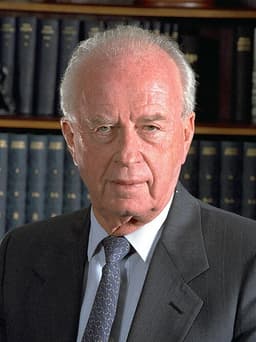
Yitzhak Rabin
General · Modern
66.4Total
Basic Information
Born
1015
1922
Died
1065
—
Era
Medieval
Modern
Nationality
Leon
Israel
Occupation
Emperor
General
Civilization
Western
Middle Eastern
Score Comparison
Military (10%)
70.0
61.7
Political (20%)
68.0
82.0
Influence (20%)
56.4
68.0
Legacy (20%)
49.2
55.0
Leadership (15%)
66.0
78.0
Strategy (15%)
57.5
55.0
TOTAL
59.2
66.4
Ferdinand I of Leon — Complete Timeline
1029 AD
Inheritance of the County of CastilePolitical Action◆ Major
Ferdinand I inherited the County of Castile from his father Sancho III of Navarre. He later expanded his territory through conquest and marriage, laying the foundation for the Kingdom of Castile.
Impact: regionalconstructive
1037 AD
Conquest of LeónWar◆ Major
Ferdinand I defeated and killed King Bermudo III of Le
Impact: regional
1056 AD
First Emperor of SpainPolitical Action◆ Major
Ferdinand I was crowned 'Imperator totius Hispaniae' (Emperor of all Spain) in 1056, claiming suzerainty over all Christian and Muslim rulers in Iberia. This title reflected his military dominance and political ambition.
Impact: regional
1065 AD
Division of the kingdomPolitical Action◆ Major
Upon his death, Ferdinand I divided his kingdom among his sons: Sancho II received Castile, Alfonso VI received Le
Impact: regionaldestructive
Yitzhak Rabin — Complete Timeline
1967 AD
Chief of Staff during the Six-Day WarWar
As Chief of Staff of the Israel Defense Forces, Rabin commanded the Israeli military during the Six-Day War against Egypt, Jordan, and Syria. Israel captured the Sinai Peninsula, Gaza Strip, West Bank, East Jerusalem, and Golan Heights, reshaping the region.
Six-Day WarTerritorial ExpansionMilitary Victory
Impact: global
1993 AD
Signing of the Oslo AccordsPolitical Action
As prime minister, Rabin signed the Oslo Accords with PLO Chairman Yasser Arafat on the White House lawn. The agreement established the Palestinian Authority and set a framework for Palestinian self-governance in the West Bank and Gaza Strip.
Peace ProcessPalestiniansOslo
Impact: globalconstructive
1995 AD
Assassination at Peace RallyPolitical Action
Rabin was assassinated by Israeli extremist Yigal Amir after a peace rally in Tel Aviv. The assassination shocked Israel and the world, derailing the Oslo peace process and leading to a period of political instability.
AssassinationPeace ProcessPolitical Violence
Impact: globaltragic
Expert Analysis
Ferdinand I of Leon vs Yitzhak Rabin
# The Peacemaker and the Emperor: Two Paths to Power, Two Destinies
On a warm November evening in 1995, Yitzhak Rabin stood before a crowd of 100,000 Israelis in Tel Aviv’s Kings of Israel Square, singing a song of peace. Moments later, three bullets from a Jewish extremist’s pistol ended his life—and with it, the most promising hope for Middle East peace in a generation. A thousand years earlier, in the year 1065, another leader, Ferdinand I of León, lay on his deathbed in the city of León, dividing his hard-won kingdom among his sons like a farmer apportioning fields. One man was murdered for bringing peace; the other died naturally after a life of war. The contrast between these two rulers—separated by a millennium, yet both grappling with the same fundamental questions of power, faith, and territory—reveals how the same era shapes different destinies.
Origins
Yitzhak Rabin was born in Jerusalem in 1922 to secular Zionist parents who had emigrated from Russia and Ukraine. His father, a labor activist, and his mother, a nurse, raised him in a world where building a Jewish state was not an abstraction but a daily struggle. Rabin grew up in Tel Aviv, a city rising from the sand dunes, and learned early that survival required both toughness and pragmatism. The British Mandate, Arab hostility, and the Holocaust hovering in the background forged a generation that saw military strength as the only guarantee of existence.
Ferdinand I, by contrast, was born in 1015 into the tangled web of Iberian Christian kingdoms. His father, Sancho III of Navarre, was the most powerful Christian ruler in Spain, and Ferdinand inherited the County of Castile at age fourteen. The world he entered was one of constant border wars, shifting alliances between Christian kings and Moorish taifa states, and a deep conviction that reclaiming land from Muslims was both a political duty and a religious calling. Where Rabin’s world was modern, ideological, and defined by nationalism, Ferdinand’s was medieval, feudal, and defined by faith.
Rise to Power
Rabin’s path to leadership ran through the military. He joined the Haganah, the Jewish underground defense force, in his youth, and by 1948 he was a commander in the War of Independence. His defining moment came in 1967, when as Chief of Staff he oversaw the Six-Day War. In six breathtaking days, Israeli forces captured the Sinai, Gaza, the West Bank, East Jerusalem, and the Golan Heights. Rabin became a national hero—but the victory also sowed the seeds of the occupation that would later consume his political career.
Ferdinand’s rise was more dynastic. In 1037, at the Battle of Tamarón, he defeated and killed King Bermudo III of León, then claimed the crown through his wife, Sancha, Bermudo’s sister. He united León and Castile under one rule, and by 1056 he had himself crowned “Imperator totius Hispaniae”—Emperor of All Spain. His power came from conquest, marriage, and the careful manipulation of feudal loyalties. Where Rabin rose through merit in a modern state, Ferdinand rose through bloodlines in a world where might made right.
Leadership & Governance
Rabin’s governing style was direct, sometimes gruff, and deeply pragmatic. As prime minister in the 1990s, he surprised the world by shaking hands with Yasser Arafat on the White House lawn in 1993, signing the Oslo Accords that established the Palestinian Authority and outlined a path to peace. He was a security hawk who became a dove—not out of idealism, but out of cold calculation. He understood that Israel could not forever rule over millions of Palestinians without losing its democratic character. His military score of 62.0 and political score of 77.7 reflect a man who was more politician than general, more negotiator than warrior.
Ferdinand’s rule was the opposite. His military score of 60.1 and political score of 72.0 are remarkably similar, but his strategy score of 45.7 is notably lower than Rabin’s 59.7. Ferdinand expanded his kingdom through relentless campaigns against the Moors, extracting tribute from the taifa kingdoms of Toledo, Seville, and Zaragoza. He was crowned Emperor, but his empire was more a collection of vassal states than a unified nation. He ruled by conquest and fear, not by negotiation. Where Rabin tried to end a conflict, Ferdinand perpetuated one—because in his world, war was the normal state of affairs.
Triumph & Tragedy
Rabin’s greatest triumph was also his greatest tragedy. The Oslo Accords earned him a Nobel Peace Prize in 1994, but they also made him a target. Israeli extremists saw him as a traitor who had surrendered Jewish land. On November 4, 1995, after a peace rally where he sang “Shir LaShalom” (Song of Peace), a law student named Yigal Amir shot him in the back. His assassination shocked the world and derailed the peace process. Rabin’s legacy score of 68.8 is high, but it is the score of a promise unfulfilled.
Ferdinand’s triumph was territorial expansion and the symbolic unification of Christian Spain. His tragedy came after his death. He divided his kingdom among his three sons, setting off decades of civil war. One son, Sancho II, killed his brother García; another, Alfonso VI, eventually reunited the kingdom—but only after years of bloodshed. Ferdinand’s division was a classic feudal mistake: he thought of his kingdom as personal property, not a state. His legacy score of 65.2 reflects a ruler respected but not loved, a conqueror whose conquests did not outlast his sons’ ambitions.
Character & Destiny
Rabin was a man of few words and many contradictions. He was shy in public, blunt in private, and capable of changing his mind. He once said, “You don’t make peace with friends. You make peace with very nasty enemies.” That pragmatism made him both effective and vulnerable. His assassin killed him not because he was weak, but because he was strong enough to defy his own people’s expectations.
Ferdinand was a man of his time: pious, ambitious, and ruthless. He saw himself as God’s instrument, reclaiming Spain for Christendom. He never doubted the righteousness of his cause, and he never had to. His destiny was to die in bed, surrounded by sons who would tear his work apart. Rabin’s destiny was to die in a parking lot, a martyr to a peace that never came.
Legacy
Rabin is remembered as a tragic hero—the warrior who became a peacemaker and paid the ultimate price. His image adorns stamps, streets, and schools in Israel. Every year on the anniversary of his death, Israelis argue about what might have been. His influence score of 68.4 is a testament to how one man’s death can change a nation’s soul.
Ferdinand is remembered, if at all, as a footnote in the Reconquista—a capable king overshadowed by his more famous son, Alfonso VI, who conquered Toledo. His influence score of 74.9 is higher than Rabin’s, but that reflects his role in a longer historical process, not personal fame. He is a name in medieval chronicles, not a face on a poster.
Conclusion
What divides these two men is not ability—both were skilled leaders with a talent for survival—but the eras they inhabited. Ferdinand lived in a world where war was the default, faith was absolute, and ruling meant conquering. Rabin lived in a world where peace was possible, but fragile, and where one fanatic could undo a decade of work. Ferdinand’s kingdom was divided by his own hand; Rabin’s nation was divided by his assassin’s bullet. Both men tried to shape history, but history shaped them more. In the end, the peacemaker died for his vision, and the emperor died with his vision already crumbling. Perhaps that is the only lesson: that power, in any age, is a burden that no one carries lightly.
Rankings
🥇
Yitzhak RabinLeader
Mil: 61.7Pol: 82.0Inf: 68.0
66.4
🥈
Ferdinand I of Leon
Mil: 70.0Pol: 68.0Inf: 56.4
59.2
+7.2 behind
How This Comparison Works
Algorithm
Each figure is scored on 6 dimensions (0—100 scale) based on structured historical data: Military (10%), Political (20%), Influence (20%), Legacy (20%), Leadership (15%), Strategy (15%). The weighted total produces the final ranking.
Data Sources
Scores are computed from structured sub-indicators in the database. Scale factors adjust for era (Ancient ×0.85, Modern ×1.0) and civilization size (Eastern ×1.05, Other ×0.80) to account for differences in population and military scale.
Maximum 3 Figures
Comparisons are limited to 2—3 figures to ensure readability and statistical meaningfulness.
Error Margins
±5 points per dimension — Sub-scores are derived from historical records with inherent uncertainty. Two figures within 5 points on a dimension should be considered roughly equivalent in that area.
Total Score Accuracy
±3 points overall — The weighted combination of 6 dimensions produces a total score with approximately ±3 points of uncertainty. Differences of less than 3 points are not statistically significant— the figures are effectively tied.
Known Limitations
- Historical records are incomplete and uneven across civilizations
- Figures from oral-tradition societies may be underrepresented
- Occupation labels can misclassify multi-role figures
- Scores measure capability and impact, not moral character
- Quantitative scoring is a comparison tool, not absolute truth
Capability Radar
Military (10%) — Battles & Warfare
Battles
55
65
Win Rate
60
70
Expansion
60
50
Political (20%) — Governance & Reform
Reform
50
65
Diplomacy
55
85
Economy
45
60
Influence (20%) — Cultural & Global Reach
Cultural
40
55
Global
30
70
Legacy (20%) — Historical Impact
Historical
45
75
Longevity
40
60
Leadership (15%) — Power & Stability
Tenure
65
70
Stability
50
40
Strategy (15%) — Tactics & Innovation
Strategy
55
75
Tactics
50
60
Reform
40
55
Similar Comparisons
Comments & Discussion
ArthurianAnalyst6/16/2026
Honestly, comparing Rabin to Ferdinand I is like comparing a surgeon to a lumberjack. Ferdinand spent his 40-year reign conquering and consolidating—Coimbra, Zamora, the taifa of Badajoz paid him parias—then died in his bed, dividing León among his sons and setting the stage for a century of fratricidal chaos. Rabin, a military hero who led Israel to the Six-Day War victory, then did the unthinkable: he shook Arafat's hand on the White House lawn. That's not a thousand-year gap; that's a moral c
SkepticSage6/16/2026
This analysis glosses over the fact that Ferdinand I's "peacemaker" label is a modern fantasy. He wasn't some gentle emperor; he was a brutal feudal lord who extorted tribute from Muslim taifas and forced his sons to swear fealty before dying. Rabin's Oslo Accords were flawed—they kicked the can on settlements, Jerusalem, refugees—and his assassination didn't end the peace process; it was already stumbling. The real lesson? Both men were products of their violent environments, and the comparison
历史铁粉6/16/2026
比比谁更“和平”?费迪南一世是个铁血国王,他在1065年死前把莱昂王国分给三个儿子,想维持家族统治,结果直接引发了卡斯蒂利亚和莱昂的百年内战。拉宾呢?他1995年被以色列右翼极端分子刺杀,因为他签署了《奥斯陆协议》,承认巴勒斯坦自治。一个是分疆裂土埋祸根,一个是试图和解送性命。拉宾的悲剧在于,他以为军事强人会带来和平,却死于自己人的仇恨;费迪南的愚蠢在于,他以为封建分家能保江山,结果儿子们打得不亦乐乎。千年之间,权力游戏一点没变。
古典学人6/16/2026
从古典视角看,费迪南一世和拉宾都是“帝国建造者”,但战术完全不同。费迪南效仿罗马的“分而治之”,把莱昂变成基督教西班牙的霸权,死后却让儿子们互斗,像极了罗马帝国分裂后的混乱。拉宾则更像凯撒——先是一名将军,赢得1967年六日战争的胜利,然后转向政治改革,却被布鲁图斯式的暗杀终结。不过,凯撒死于元老院的阴谋,拉宾死于犹太极端分子之手,这暴露了古代与现代的关键差异:古人的敌人来自外部权力斗争,现代人的敌人来自内部意识形态狂热。拉宾的死是“敌人