Loading...
This comparison has not been analyzed yet.
One-time AI generation (~1 minute). Scores and timeline are already available below.
Ferdinand I of Romania vs King Abdulaziz Ibn Saud
King Abdulaziz Ibn Saud leads by 19.3 pts · 2 figures compared
…
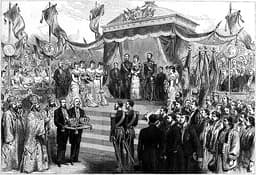
Ferdinand I of Romania
Emperor · Modern
52.1Total

King Abdulaziz Ibn Saud
Emperor · Modern
71.4Total
Basic Information
Born
1865
1875
Died
1927
1953
Era
Modern
Modern
Nationality
Romania
Saudi Arabia
Occupation
Emperor
Emperor
Civilization
Western
Middle Eastern
Score Comparison
Military (10%)
50.0
85.0
Political (20%)
45.0
82.0
Influence (20%)
54.9
65.0
Legacy (20%)
45.8
65.0
Leadership (15%)
68.0
75.0
Strategy (15%)
50.0
68.1
TOTAL
52.1
71.4
Ferdinand I of Romania — Complete Timeline
1914 AD
Ascended to the Throne of RomaniaPolitical Action◆ Major
Ferdinand I became King of Romania on October 10, 1914, following the death of his uncle, King Carol I. He inherited a kingdom at a critical moment, as World War I had just begun, and Romania was initially neutral.
AccessionWorld War INeutrality
Impact: national
1916 AD
Led Romania into World War I on the Allied SideWar
Ferdinand I signed the Treaty of Bucharest with the Allies on August 17, 1916, committing Romania to enter World War I on their side. Romania declared war on Austria-Hungary on August 27, 1916, aiming to annex Transylvania.
World War IAllianceTransylvania
Impact: regional
1918 AD
Oversaw the Union of Transylvania with RomaniaPolitical Action
Following the collapse of Austria-Hungary, the Great National Assembly of Alba Iulia proclaimed the union of Transylvania with Romania on December 1, 1918. Ferdinand I ratified this union, fulfilling a key national goal and greatly expanding Romania's territory.
Great UnionTransylvaniaNational Unification
Impact: nationalconstructive
1921 AD
Implemented the Land Reform of 1921Reform◆ Major
Ferdinand I signed the Agrarian Reform Law of 1921, which expropriated large estates and redistributed land to peasants. This reform aimed to address rural poverty and create a stable class of small landowners, but it also weakened the traditional aristocracy.
Land ReformPeasantrySocial Change
Impact: nationalprogressive
1922 AD
Crowned King of Greater Romania at Alba IuliaPolitical Action◆ Major
Ferdinand I and Queen Marie were crowned in a grand ceremony at Alba Iulia on October 15, 1922, symbolizing the unification of all Romanian provinces. The coronation affirmed the creation of Greater Romania after World War I.
CoronationGreater RomaniaSymbolism
Impact: nationalconstructive
King Abdulaziz Ibn Saud — Complete Timeline
1902 AD
Capture of RiyadhWar
Ibn Saud led a small force of 40 men to recapture Riyadh from the rival Al Rashid clan. The daring night raid restored the Saud family's control over their ancestral capital and marked the beginning of the unification of Arabia.
Military CampaignUnificationSaudi Arabia
Impact: regional
1932 AD
Unification of Saudi ArabiaPolitical Action
Ibn Saud proclaimed the Kingdom of Saudi Arabia, unifying the regions of Najd, Hejaz, Asir, and Al-Ahsa under his rule. The new kingdom was established as an absolute monarchy with Islamic law as its foundation.
UnificationStatehoodSaudi Arabia
Impact: regionalconstructive
1938 AD
Discovery of oil in Saudi ArabiaInvention
Oil was discovered in commercial quantities in Dhahran by the American company Standard Oil of California (SOCAL). Ibn Saud granted a concession that led to the creation of Aramco, transforming Saudi Arabia's economy and global standing.
OilEconomyAramco
Impact: globalconstructive
1945 AD
Meeting with Franklin D. RooseveltPolitical Action◆ Major
Ibn Saud met with US President Franklin D. Roosevelt aboard the USS Quincy in the Suez Canal. The meeting established the US-Saudi alliance, with the US guaranteeing Saudi security in exchange for oil access, a relationship that lasted for decades.
DiplomacyUS-Saudi RelationsOil
Impact: globalconstructive
This comparison has not been analyzed yet.
One-time AI generation (~1 minute). Scores and timeline are already available below.
Rankings
🥇
King Abdulaziz Ibn SaudLeader
Mil: 85.0Pol: 82.0Inf: 65.0
71.4
🥈
Ferdinand I of Romania
Mil: 50.0Pol: 45.0Inf: 54.9
52.1
+19.3 behind
How This Comparison Works
Algorithm
Each figure is scored on 6 dimensions (0—100 scale) based on structured historical data: Military (10%), Political (20%), Influence (20%), Legacy (20%), Leadership (15%), Strategy (15%). The weighted total produces the final ranking.
Data Sources
Scores are computed from structured sub-indicators in the database. Scale factors adjust for era (Ancient ×0.85, Modern ×1.0) and civilization size (Eastern ×1.05, Other ×0.80) to account for differences in population and military scale.
Maximum 3 Figures
Comparisons are limited to 2—3 figures to ensure readability and statistical meaningfulness.
Error Margins
±5 points per dimension — Sub-scores are derived from historical records with inherent uncertainty. Two figures within 5 points on a dimension should be considered roughly equivalent in that area.
Total Score Accuracy
±3 points overall — The weighted combination of 6 dimensions produces a total score with approximately ±3 points of uncertainty. Differences of less than 3 points are not statistically significant— the figures are effectively tied.
Known Limitations
- Historical records are incomplete and uneven across civilizations
- Figures from oral-tradition societies may be underrepresented
- Occupation labels can misclassify multi-role figures
- Scores measure capability and impact, not moral character
- Quantitative scoring is a comparison tool, not absolute truth
Capability Radar
Military (10%) — Battles & Warfare
Battles
20
85
Win Rate
25
90
Expansion
10
90
Political (20%) — Governance & Reform
Reform
55
90
Diplomacy
70
85
Economy
40
75
Influence (20%) — Cultural & Global Reach
Cultural
30
70
Global
40
80
Legacy (20%) — Historical Impact
Historical
50
85
Longevity
35
80
Leadership (15%) — Power & Stability
Tenure
60
85
Stability
45
80
Strategy (15%) — Tactics & Innovation
Strategy
30
85
Tactics
15
75
Reform
40
80
Similar Comparisons
Comments & Discussion
No comments yet. Be the first to share your thoughts!