Loading...
Ferdinand I of Romania vs Napoleon Bonaparte
Napoleon Bonaparte leads by 18.8 pts · 2 figures compared
…
Ferdinand I of Romania
Emperor · Modern
52.1Total

Napoleon Bonaparte
General · Modern
70.9Total
Basic Information
Born
1865
1769
Died
1927
1821
Era
Modern
Modern
Nationality
Romania
France
Occupation
Emperor
General
Civilization
Western
Western
Score Comparison
Military (10%)
50.0
94.0
Political (20%)
45.0
72.0
Influence (20%)
54.9
40.0
Legacy (20%)
45.8
80.0
Leadership (15%)
68.0
78.0
Strategy (15%)
50.0
90.0
TOTAL
52.1
70.9
Ferdinand I of Romania — Complete Timeline
1914 AD
Ascended to the Throne of RomaniaPolitical Action◆ Major
Ferdinand I became King of Romania on October 10, 1914, following the death of his uncle, King Carol I. He inherited a kingdom at a critical moment, as World War I had just begun, and Romania was initially neutral.
AccessionWorld War INeutrality
Impact: national
1916 AD
Led Romania into World War I on the Allied SideWar
Ferdinand I signed the Treaty of Bucharest with the Allies on August 17, 1916, committing Romania to enter World War I on their side. Romania declared war on Austria-Hungary on August 27, 1916, aiming to annex Transylvania.
World War IAllianceTransylvania
Impact: regional
1918 AD
Oversaw the Union of Transylvania with RomaniaPolitical Action
Following the collapse of Austria-Hungary, the Great National Assembly of Alba Iulia proclaimed the union of Transylvania with Romania on December 1, 1918. Ferdinand I ratified this union, fulfilling a key national goal and greatly expanding Romania's territory.
Great UnionTransylvaniaNational Unification
Impact: nationalconstructive
1921 AD
Implemented the Land Reform of 1921Reform◆ Major
Ferdinand I signed the Agrarian Reform Law of 1921, which expropriated large estates and redistributed land to peasants. This reform aimed to address rural poverty and create a stable class of small landowners, but it also weakened the traditional aristocracy.
Land ReformPeasantrySocial Change
Impact: nationalprogressive
1922 AD
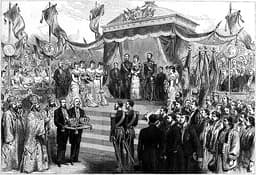
Crowned King of Greater Romania at Alba IuliaPolitical Action◆ Major
Ferdinand I and Queen Marie were crowned in a grand ceremony at Alba Iulia on October 15, 1922, symbolizing the unification of all Romanian provinces. The coronation affirmed the creation of Greater Romania after World War I.
CoronationGreater RomaniaSymbolism
Impact: nationalconstructive
Napoleon Bonaparte — Complete Timeline
1799 AD
Coup of 18 BrumaireOther◆ Major
Napoleon Bonaparte, with support from his brother Lucien and key political figures, overthrew the Directory in a bloodless coup. He established the Consulate with himself as First Consul, effectively becoming the ruler of France. This event ended the French Revolution's most unstable period.
French RevolutionCoupRise to Power
Impact: regional
1804 AD
Promulgation of the Napoleonic CodeOther◆ Major
Napoleon enacted the Civil Code of the French, known as the Napoleonic Code, a comprehensive set of laws that replaced the fragmented feudal legal systems. The code established legal equality, protected property rights, and secularized law. It became the basis for legal systems in many European and world countries.
Legal ReformNapoleonic CodeCivil Law
Impact: globalconstructive
1805 AD
Battle of AusterlitzWar◆ Major
Napoleon's Grande Arm
Napoleonic WarsBattleDecisive Victory
Impact: global
1812 AD
Invasion of RussiaWar◆ Major
Napoleon led the Grande Arm
Napoleonic WarsInvasionDisaster
Impact: globaldestructive
1815 AD
Battle of WaterlooWar◆ Major
Napoleon's French army was defeated by the combined forces of the Duke of Wellington's Anglo-Allied army and Gebhard Leberecht von Bl
Napoleonic WarsBattleFinal Defeat
Impact: globaldestructive
Expert Analysis
ferdinand-i-of-romania-vs-napoleon-bonaparte
# The Corsican and the Hohenzollern: Two Kings, Two Fates
On a misty October morning in 1922, Ferdinand I of Romania stood before the ancient cathedral of Alba Iulia, a crown of steel and gold upon his head, as a nation of fifteen million people roared its approval. The king who had gambled his throne on a world war now ruled over a kingdom twice the size of the one he had inherited. Just over a century earlier, another crowned figure had stood in a very different cathedral—Notre-Dame in Paris—where Napoleon Bonaparte had seized the imperial crown from the Pope’s hands and placed it on his own head. One man built an empire that crumbled in a single decade; the other built a nation that would endure for generations. What made the difference between glory and greatness?
Origins
Napoleon was born in 1769 on the dusty island of Corsica, a land conquered by France only months before his birth. His family were minor Italian nobility, struggling and resentful under French rule. Young Napoleon spoke Italian before French and carried the chip of a provincial outsider on his shoulder. The French Revolution, which erupted when he was twenty, shattered the old order and opened paths that birth alone could never have granted.
Ferdinand came from the opposite end of Europe’s social ladder. Born in 1865 to the Hohenzollern-Sigmaringen dynasty, he was a German prince placed on a Romanian throne by the great powers of Europe. He grew up in the shadow of his formidable uncle, King Carol I, and his own wife, the brilliant Queen Marie. Where Napoleon had to invent himself, Ferdinand had to prove himself worthy of a role he never earned.
Rise to Power
Napoleon’s ascent was a thunderbolt. At twenty-four, he drove the British out of Toulon. At twenty-six, he crushed a royalist uprising in Paris with a “whiff of grapeshot.” By thirty, he had conquered Italy and Egypt, covering himself in glory while the corrupt Directory governed France. The coup of 18 Brumaire in 1799 placed him at the head of the state. He had climbed from nothing to everything in a decade.
Ferdinand’s path was quieter but no less decisive. He ascended the throne on October 10, 1914, inheriting a kingdom torn between loyalty to its German allies and the dream of reclaiming Transylvania from Austria-Hungary. For two agonizing years, he watched and waited, while his prime minister, Ion Brătianu, negotiated with both sides. When he finally signed the Treaty of Bucharest with the Allies on August 17, 1916, he committed Romania to war—and to a gamble that could have destroyed his dynasty.
Leadership & Governance
Napoleon governed as he conquered: with relentless energy and absolute control. He reformed French law with the Napoleonic Code, centralizing administration and establishing meritocratic principles that survive to this day. He built roads, founded schools, and stabilized the currency. But he also suppressed dissent, censored the press, and crowned himself emperor. His political score of 75 reflects a man who was a brilliant administrator but a poor listener.
Ferdinand governed differently. His military score of 42 is modest—he never led troops in battle—but his leadership score of 80.7 reveals a king who understood that ruling meant trusting others. During the disastrous 1916 campaign, when German forces occupied two-thirds of Romania, Ferdinand refused to flee. He stayed with his army, sharing their hardships, earning their loyalty. After the war, he signed the Agrarian Reform Law of 1921, breaking up the great estates and giving land to peasants—a reform that Napoleon would never have contemplated. Ferdinand’s genius was not in commanding but in consenting.
Triumph & Tragedy
Napoleon’s greatest triumph was Austerlitz in 1805, where he destroyed the armies of Austria and Russia in a single day. His greatest tragedy was the invasion of Russia in 1812—600,000 men marched east, and fewer than 100,000 returned. The disaster broke his aura of invincibility and set the stage for his final defeat at Waterloo in 1815. He died on a remote Atlantic island, a prisoner at fifty-one.
Ferdinand’s triumph came in 1918, when the Great National Assembly of Alba Iulia proclaimed the union of Transylvania with Romania. The king who had risked everything saw his dream fulfilled. But tragedy shadowed his final years. The land reform that made him a hero to peasants alienated the aristocracy. The new territories brought ethnic tensions that would haunt Romania for decades. And his own health failed—he died in 1927, watching the fragile unity he had built begin to fray.
Character & Destiny
Napoleon was a man of iron will and boundless ambition. “Impossible,” he once said, “is a word found only in the dictionary of fools.” He believed that destiny was something to be seized, not awaited. This conviction made him a conqueror but also a prisoner of his own success—he could never stop, because stopping meant decline.
Ferdinand was quieter, more reflective. He was called “the Loyal” by his people, a nickname that captures his essence. He understood that a king’s role was to embody the nation’s will, not impose his own. Where Napoleon demanded obedience, Ferdinand inspired trust. Where Napoleon’s ego drove him to ever-greater gambles, Ferdinand’s caution kept Romania steady through its most dangerous hour.
Legacy
Napoleon’s legacy is a paradox. He is remembered as a military genius with a strategy score of 93, yet his empire lasted only a decade. The Napoleonic Code survives across Europe, but the man himself remains a cautionary tale about the limits of ambition. His influence score of 82 is high, yet much of that influence comes from the wars he provoked and the nationalism he inadvertently unleashed.
Ferdinand’s legacy of 63 is more modest but more concrete. Greater Romania existed for only twenty years after his death, but the union he achieved endured in the hearts of his people. When the Iron Curtain fell in 1989, Romanians still remembered Alba Iulia. His land reform, though imperfect, broke the power of the old aristocracy and created a modern society.
Conclusion
Standing before the crowds at Alba Iulia, Ferdinand I might have thought of Napoleon. Both men were outsiders who rose to rule nations. Both gambled everything on war. But where Napoleon built an empire on the bodies of millions and watched it crumble, Ferdinand built a nation on the will of its people and watched it endure. The difference was not in ambition—both had plenty. It was in understanding that true greatness is not about how much you conquer, but how much you leave behind. Napoleon left a legend. Ferdinand left a country.
Rankings
🥇
Napoleon BonaparteLeader
Mil: 94.0Pol: 72.0Inf: 40.0
70.9
🥈
Ferdinand I of Romania
Mil: 50.0Pol: 45.0Inf: 54.9
52.1
+18.8 behind
How This Comparison Works
Algorithm
Each figure is scored on 6 dimensions (0—100 scale) based on structured historical data: Military (10%), Political (20%), Influence (20%), Legacy (20%), Leadership (15%), Strategy (15%). The weighted total produces the final ranking.
Data Sources
Scores are computed from structured sub-indicators in the database. Scale factors adjust for era (Ancient ×0.85, Modern ×1.0) and civilization size (Eastern ×1.05, Other ×0.80) to account for differences in population and military scale.
Maximum 3 Figures
Comparisons are limited to 2—3 figures to ensure readability and statistical meaningfulness.
Error Margins
±5 points per dimension — Sub-scores are derived from historical records with inherent uncertainty. Two figures within 5 points on a dimension should be considered roughly equivalent in that area.
Total Score Accuracy
±3 points overall — The weighted combination of 6 dimensions produces a total score with approximately ±3 points of uncertainty. Differences of less than 3 points are not statistically significant— the figures are effectively tied.
Known Limitations
- Historical records are incomplete and uneven across civilizations
- Figures from oral-tradition societies may be underrepresented
- Occupation labels can misclassify multi-role figures
- Scores measure capability and impact, not moral character
- Quantitative scoring is a comparison tool, not absolute truth
Capability Radar
Military (10%) — Battles & Warfare
Battles
20
95
Win Rate
25
90
Expansion
10
95
Political (20%) — Governance & Reform
Reform
55
95
Diplomacy
70
80
Economy
40
85
Influence (20%) — Cultural & Global Reach
Cultural
30
85
Global
40
90
Legacy (20%) — Historical Impact
Historical
50
95
Longevity
35
90
Leadership (15%) — Power & Stability
Tenure
60
85
Stability
45
70
Strategy (15%) — Tactics & Innovation
Strategy
30
95
Tactics
15
98
Reform
40
92
Similar Comparisons
Comments & Discussion
数据真相6/17/2026
拿破仑打了60多场战役,胜率接近90%,但他统治的法国只撑了15年。斐迪南一世只打赢了一场世界大战,但他的大罗马尼亚延续了整整55年。战争不是答题比赛,谁分数高谁赢。你把帝国当烟花放,欧洲却只记得谁修好了房子。
Bourbon's Ghost6/17/2026
Napoleon had a vision: a unified Europe under French law, meritocracy, the Civil Code. Ferdinand had a map and a treaty. Which one lasts? The Corsican's legal system still shapes Europe today. Ferdinand's Romania dissolved in 1940. Glory isn't just duration—it's what you leave behind. I'd take one Napoleonic Code over a dozen kingdoms that vanish at the first storm.
评书先生6/17/2026
拿破仑是那个在巴黎圣母院自己把皇冠戴头上的天才疯人将军;斐迪南一世是在阿尔巴尤利亚跪着让大主教把王冠放他脑壳上的老实人。一个抢,一个受。结果呢?天才的帝国十年就碎成了渣,老实人的王国倒撑了几十年。老天爷有时候也讲道理——太狂的人,棺材板压不住。
Classica Scholar6/17/2026
Call Ferdinand a builder, but he built on foundations Napoleon never had: a nation's identity that predated him. Romania's unity wasn't his creation—he just slept in the room others had furnished. Napoleon created France's modern self from the ashes of revolution. He didn't inherit a crown; he invented the throne. That's not hubris—that's theology of state. Ferdinand was a caretaker; Napoleon was a creator god.
Historian2866/17/2026
Ferdinand's crown stayed on because he knew his army's limits. Napoleon's Grande Armée could march from Madrid to Moscow, winning battles but never understanding logistics. Ferdinand didn't need to conquer Europe; he just needed to hold the Carpathians. That's the difference between a general who reads maps and one who only draws them. Waterloo wasn't fate—it was bad supply chains.