Loading...
Ferdinand I vs Sultan Agung of Mataram
Sultan Agung of Mataram leads by 13.5 pts · 2 figures compared
…
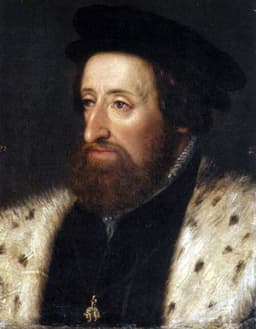
Ferdinand I
Emperor · Modern
55.8Total
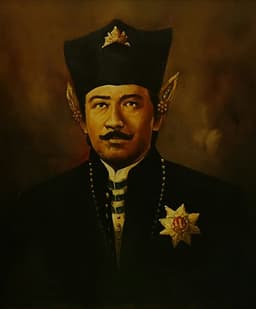
Sultan Agung of Mataram
Emperor · Modern
69.3Total
Basic Information
Born
1503
1593
Died
1564
1645
Era
Modern
Modern
Nationality
Holy Roman Empire
Indonesia
Occupation
Emperor
Emperor
Civilization
Western
Eastern
Score Comparison
Military (10%)
25.0
82.0
Political (20%)
70.0
70.3
Influence (20%)
56.4
72.0
Legacy (20%)
47.5
55.0
Leadership (15%)
72.0
80.0
Strategy (15%)
60.0
68.1
TOTAL
55.8
69.3
Ferdinand I — Complete Timeline
1555 AD
Peace of AugsburgPolitical Action
Ferdinand I played a key role in negotiating the Peace of Augsburg, which ended the religious wars between Catholics and Lutherans in the Holy Roman Empire. The treaty established the principle of 'cuius regio, eius religio' (whose realm, his religion), allowing princes to choose the religion of their territories. This was a landmark in religious tolerance.
Peace of AugsburgReligious ToleranceReformation
Impact: globalconstructive
1556 AD
Abdication of Charles VPolitical Action
Ferdinand I's brother, Emperor Charles V, abdicated the throne, dividing the Habsburg empire. Charles gave Spain and the Netherlands to his son Philip II, while Ferdinand received the Austrian lands and the title of Holy Roman Emperor. This formalized the split between the Spanish and Austrian branches of the Habsburgs.
AbdicationHabsburg DivisionImperial Succession
Impact: global
1558 AD
Coronation as Holy Roman EmperorPolitical Action◆ Major
Ferdinand I was crowned Holy Roman Emperor in Frankfurt, following the abdication of Charles V. His coronation marked the formal transfer of the imperial title to the Austrian branch of the Habsburgs. Ferdinand's reign focused on consolidating imperial authority and managing religious tensions.
CoronationImperial AuthorityHabsburg Dynasty
Impact: globalconstructive
Sultan Agung of Mataram — Complete Timeline
1613 AD
Establishment of Mataram as a Centralized KingdomPolitical Action◆ Major
Upon ascending the throne, Sultan Agung centralized political power by subduing rebellious vassals and reorganizing the administration. He established a strong bureaucracy and military structure, transforming Mataram from a fragmented state into a unified and powerful kingdom in Java.
CentralizationState BuildingMataram Kingdom
Impact: nationalconstructive
1625 AD
Conquest of Surabaya (1625)War◆ Major
Sultan Agung conquered the powerful city-state of Surabaya, a major trading port in eastern Java. This victory unified most of Java under Mataram's control, consolidating his rule and expanding the empire's territory and influence.
Javanese UnificationConquestMataram Expansion
Impact: regionalconstructive
1628 AD
Siege of Batavia (1628-1629)War◆ Major
Sultan Agung launched a major military campaign to expel the Dutch East India Company (VOC) from Batavia (present-day Jakarta). The Mataram army besieged the city but failed due to logistical issues and Dutch naval superiority, marking a significant setback for Javanese expansion.
Dutch Colonial WarSiegeMataram-VOC Conflict
Impact: regionaldestructive
1633 AD
Reform of the Javanese Calendar (1633)Cultural◆ Major
Sultan Agung introduced a new Javanese calendar system that combined the Islamic lunar calendar with the existing Hindu-Javanese Saka calendar. This reform aimed to unify the kingdom under a single timekeeping system and strengthen Islamic identity while preserving local traditions.
Calendar ReformIslamic InfluenceCultural Synthesis
Impact: nationalconstructive
Expert Analysis
Origins
Ferdinand I was born in 1503 in Alcalá de Henares, Spain, as the second son of Philip the Handsome and Joanna of Castile. He grew up in the Burgundian court, receiving a humanist education. His brother Charles V inherited the Spanish and Habsburg lands, while Ferdinand was groomed for the Austrian territories. He married Anna of Bohemia and Hungary in 1521, linking him to Central Europe.
Sultan Agung was born in 1593 in Kotagede, Java, the son of Sultan Anyakrakusuma (Panembahan Seda ing Krapyak). He ascended the throne of Mataram in 1613 at age 20. His early life was shaped by Javanese court traditions and the growing presence of the Dutch East India Company (VOC) in Batavia.
Rise to Power
Ferdinand I's rise came through inheritance and diplomacy. In 1521, he was granted the Austrian duchies by Charles V. After the Battle of Mohács (1526), he claimed the thrones of Bohemia and Hungary through his marriage. He spent decades consolidating control in Hungary against the Ottoman-backed John Zápolya. His coronation as Holy Roman Emperor occurred in 1558 after Charles V abdicated.
Sultan Agung rose by centralizing Mataram. Upon becoming sultan in 1613, he subdued rebellious vassals like Pati (1614) and conquered the powerful port of Surabaya in 1625 after a five-year campaign. He also defeated the kingdom of Blambangan, unifying most of Java under his rule.
Leadership & Governance
Ferdinand I governed the Holy Roman Empire through consensus. He presided over the Diet of Augsburg (1555) that produced the Peace of Augsburg, establishing the principle 'cuius regio, eius religio' (whose realm, his religion), ending religious wars between Catholics and Lutherans. He reformed the imperial administration and improved tax collection. His political score of 70.0 reflects his ability to manage a fragmented empire.
Sultan Agung centralized Mataram into a highly organized kingdom. He reorganized the bureaucracy, created a standing army, and introduced a new Javanese calendar in 1633 that blended Islamic and Hindu traditions. He controlled trade routes and demanded loyalty from vassals. His political score is 70.3, nearly identical to Ferdinand's.
Triumph & Tragedy
Ferdinand I's greatest achievement was the Peace of Augsburg (1555), which stabilized the empire and prevented further religious conflict for decades. He also secured a favorable peace with the Ottoman Empire in 1562, stabilizing the Hungarian frontier. However, he failed to reunite the Habsburg domains; the division between Spanish and Austrian branches became permanent. His military score of 25.0 reflects his limited success in warfare.
Sultan Agung's triumph was the conquest of Surabaya in 1625, which made Mataram the dominant power in Java. His reform of the calendar unified Javanese culture. However, his greatest failure was the Siege of Batavia (1628-1629). He sent two massive expeditions against the Dutch VOC, both failing due to disease, lack of naval power, and poor logistics. His military score of 82.0 reflects his overall prowess, but the Batavia failure was a strategic setback.
Character & Destiny
Ferdinand I was a pragmatic and patient ruler. Unlike his brother Charles V, who sought universal monarchy, Ferdinand focused on consolidating power in Central Europe. His willingness to compromise with Lutheran princes shaped the religious settlement. His leadership score of 72.0 indicates effective governance.
Sultan Agung was ambitious and ruthless. He executed rivals and demanded absolute loyalty. His decision to attack Batavia showed boldness but overreach. His leadership score of 80.0 reflects his ability to inspire and command, but his destiny was limited by Dutch naval superiority.
Legacy
Ferdinand I's legacy is the Peace of Augsburg, which laid the groundwork for religious tolerance in the Holy Roman Empire. He also established the Austrian Habsburg line that would dominate Central Europe until 1918. His influence score of 56.4 reflects his role in shaping European politics.
Sultan Agung is remembered as the greatest Mataram ruler. He unified Java and created a cultural legacy through the Javanese calendar. However, his failure to expel the Dutch foreshadowed colonial domination. His influence score of 72.0 and legacy score of 55.0 show his enduring impact on Indonesian identity.
Conclusion
Sultan Agung had greater overall impact, with a total score of 69.3 against Ferdinand's 55.8. While Ferdinand's political and leadership scores are comparable, Agung's military and strategic scores are far superior. Ferdinand's Peace of Augsburg was a diplomatic achievement, but it was a temporary solution; the religious divisions persisted. Agung's unification of Java and cultural reforms created a lasting Javanese identity that survived colonialism. Though his military failure at Batavia was significant, his state-building achievements outweigh Ferdinand's legacy. Sultan Agung's influence on Indonesian history is more profound than Ferdinand's on European history.
Rankings
🥇
Sultan Agung of MataramLeader
Mil: 82.0Pol: 70.3Inf: 72.0
69.3
🥈
Ferdinand I
Mil: 25.0Pol: 70.0Inf: 56.4
55.8
+13.5 behind
How This Comparison Works
Algorithm
Each figure is scored on 6 dimensions (0—100 scale) based on structured historical data: Military (10%), Political (20%), Influence (20%), Legacy (20%), Leadership (15%), Strategy (15%). The weighted total produces the final ranking.
Data Sources
Scores are computed from structured sub-indicators in the database. Scale factors adjust for era (Ancient ×0.85, Modern ×1.0) and civilization size (Eastern ×1.05, Other ×0.80) to account for differences in population and military scale.
Maximum 3 Figures
Comparisons are limited to 2—3 figures to ensure readability and statistical meaningfulness.
Error Margins
±5 points per dimension — Sub-scores are derived from historical records with inherent uncertainty. Two figures within 5 points on a dimension should be considered roughly equivalent in that area.
Total Score Accuracy
±3 points overall — The weighted combination of 6 dimensions produces a total score with approximately ±3 points of uncertainty. Differences of less than 3 points are not statistically significant— the figures are effectively tied.
Known Limitations
- Historical records are incomplete and uneven across civilizations
- Figures from oral-tradition societies may be underrepresented
- Occupation labels can misclassify multi-role figures
- Scores measure capability and impact, not moral character
- Quantitative scoring is a comparison tool, not absolute truth
Capability Radar
Military (10%) — Battles & Warfare
Battles
35
75
Win Rate
40
70
Expansion
40
80
Political (20%) — Governance & Reform
Reform
65
80
Diplomacy
75
70
Economy
60
75
Influence (20%) — Cultural & Global Reach
Cultural
40
75
Global
40
60
Legacy (20%) — Historical Impact
Historical
50
80
Longevity
45
70
Leadership (15%) — Power & Stability
Tenure
70
85
Stability
55
70
Strategy (15%) — Tactics & Innovation
Strategy
45
85
Tactics
30
80
Reform
50
75
Similar Comparisons
Comments & Discussion
No comments yet. Be the first to share your thoughts!