Loading...
Ferdinand II of Bohemia vs Nizam-ul-Mulk Asaf Jah I
Nizam-ul-Mulk Asaf Jah I leads by 10.0 pts · 2 figures compared
…

Ferdinand II of Bohemia
Emperor · Modern
51.7Total
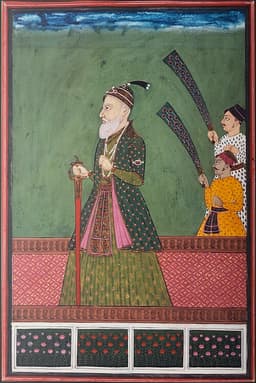
Nizam-ul-Mulk Asaf Jah I
Emperor · Modern
61.7Total
Basic Information
Born
1578
1671
Died
1637
1748
Era
Modern
Modern
Nationality
Bohemia
India
Occupation
Emperor
Emperor
Civilization
Western
Indian
Score Comparison
Military (10%)
20.0
61.7
Political (20%)
43.7
72.0
Influence (20%)
58.0
55.0
Legacy (20%)
52.0
55.0
Leadership (15%)
64.0
78.0
Strategy (15%)
60.0
55.0
TOTAL
51.7
61.7
Ferdinand II of Bohemia — Complete Timeline
1618 AD
Defenestration of PraguePolitical Action
Ferdinand II's policies as King of Bohemia, including the suppression of Protestantism, led to the Defenestration of Prague. Protestant nobles threw two Catholic regents from a window, sparking the Bohemian Revolt and the Thirty Years' War.
Thirty Years' WarBohemian Revolt
Impact: regionaldestructive
1620 AD
Battle of White MountainWar◆ Major
Ferdinand II's Catholic League forces defeated the Protestant army of Frederick V at White Mountain near Prague. This victory allowed Ferdinand to reassert Habsburg control over Bohemia and enforce Catholic uniformity.
Thirty Years' WarBattle
Impact: regionalconstructive
1629 AD
Edict of RestitutionReform◆ Major
Ferdinand II issued the Edict of Restitution, which ordered the return of all church lands seized by Protestants since 1552. This radical policy alienated many German princes and prolonged the Thirty Years' War.
Thirty Years' WarReligious Policy
Impact: regionaldestructive
Nizam-ul-Mulk Asaf Jah I — Complete Timeline
1722 AD
Appointed Grand Vizier of the Mughal EmpirePolitical Action◆ Major
Nizam-ul-Mulk Asaf Jah I was appointed Grand Vizier (Prime Minister) of the Mughal Empire under Emperor Muhammad Shah. He attempted to reform the empire's administration and finances but faced opposition from court factions.
Mughal EmpireGrand VizierAdministration
Impact: national
1724 AD
Battle of Shakar KhedaWar◆ Major
Nizam-ul-Mulk Asaf Jah I defeated the Mughal imperial forces led by Mubariz Khan at the Battle of Shakar Kheda. This victory solidified his control over the Deccan and effectively established his independent rule.
BattleDeccanMughal Empire
Impact: regional
Founded the Asaf Jahi dynasty and the state of HyderabadPolitical Action
After resigning as Grand Vizier, Nizam-ul-Mulk Asaf Jah I established an independent principality in the Deccan, founding the Asaf Jahi dynasty. He made Hyderabad his capital and created a stable state that would last for over two centuries.
HyderabadDynastyDeccanIndependence
Impact: regionalconstructive
1725 AD
Implemented administrative reforms in the DeccanReform◆ Major
Nizam-ul-Mulk Asaf Jah I introduced a system of revenue administration and governance in the Deccan that balanced local autonomy with central authority. His reforms provided stability and prosperity to the region for decades.
AdministrationRevenueDeccan
Impact: regionalconstructive
Expert Analysis
Origins
Ferdinand II of Bohemia (1578-1637) was born into the House of Habsburg, a dynasty deeply committed to Catholicism. Educated by Jesuits, he inherited the Inner Austrian territories in 1590 and became King of Bohemia in 1617. His early experiences reinforced a rigid Catholic orthodoxy, shaping his later policies.
Nizam-ul-Mulk Asaf Jah I (1671-1748) was born as Mir Qamar-ud-din Khan in a noble family serving the Mughal Empire. His father, Ghazi ud-Din Khan, was a prominent general. He received a comprehensive education in military and administration, entering Mughal service at a young age. His career was marked by loyalty and competence, rising through the ranks.
Rise to Power
Ferdinand II's rise was accelerated by the death of his cousin, Matthias, in 1619, making him Holy Roman Emperor. However, his policies as King of Bohemia, particularly suppressing Protestantism, sparked the Defenestration of Prague in 1618, a turning point that led to the Thirty Years' War. He consolidated power through the Catholic League, winning the Battle of White Mountain in 1620, which allowed him to reclaim Bohemia and impose Catholicism.
Asaf Jah I rose through Mughal administrative and military ranks, serving as governor of the Deccan and later becoming Grand Vizier in 1722 under Emperor Muhammad Shah. He attempted to reform the empire but faced court intrigue. Resigning in 1724, he marched to the Deccan, where he defeated Mughal forces at the Battle of Shakar Kheda in 1724, establishing de facto independence. He founded the Asaf Jahi dynasty and the state of Hyderabad, ruling until his death.
Leadership & Governance
Ferdinand II's leadership was defined by religious absolutism. He issued the Edict of Restitution in 1629, ordering the return of all church lands seized by Protestants since 1552, alienating many Protestant states. His governance relied on military force and the Catholic League, scoring 64.0 in leadership and 60.0 in strategy. However, his military score of 20.0 reflects his reliance on commanders like Wallenstein rather than personal military skill.
Asaf Jah I, scoring 78.0 in leadership, was a pragmatic administrator. He implemented revenue reforms in the Deccan, balancing local autonomy with central authority. His system allowed for stable governance, avoiding religious conflict. He maintained a strong military (61.7) but focused on diplomacy and administration, securing Hyderabad's autonomy within the declining Mughal Empire.
Triumph & Tragedy
Ferdinand II's greatest triumph was the Battle of White Mountain (1620), which secured Bohemia for Catholicism and the Habsburgs. He also achieved the Peace of Prague in 1635, temporarily unifying the empire. However, his Edict of Restitution backfired, prolonging the Thirty Years' War and devastating the German states. His failure to achieve a lasting peace left the empire exhausted, and his legacy is tied to the war's destruction.
Asaf Jah I's triumphs include founding the Hyderabad state and defeating the Mughal army at Shakar Kheda. He successfully navigated the decline of the Mughal Empire, creating a stable successor state. His tragedy was the inability to reform the Mughal Empire itself, as his efforts as Grand Vizier were thwarted by court politics. His dynasty endured for two centuries, but he died just as the Maratha threat grew.
Character & Destiny
Ferdinand II was devout, stubborn, and uncompromising, shaped by Jesuit education. His character led him to prioritize religious uniformity over political stability, directly causing the Thirty Years' War. Historical assessments view him as a catalyst for widespread devastation, with his scores reflecting low military (20.0) and moderate political (43.7) acumen.
Asaf Jah I was pragmatic, patient, and strategic. He knew when to withdraw from a losing position (resigning as Grand Vizier) and when to strike (Shakar Kheda). His character allowed him to build a durable state. He scored 72.0 in political skill, reflecting his ability to navigate complex power dynamics. His destiny was to be a founder rather than a reformer, leaving a lasting legacy in Hyderabad.
Legacy
Ferdinand II's legacy is the Thirty Years' War, which reshaped Europe's religious and political landscape. The war led to the decline of Habsburg dominance and the rise of France. His policies are remembered as a cautionary tale of religious extremism. His total score of 51.7 reflects a mixed impact: influence (58.0) but low military (20.0).
Asaf Jah I's legacy is the Asaf Jahi dynasty, which ruled Hyderabad until 1948. His administrative system influenced later governance in the Deccan. He scored 55.0 in both influence and legacy, with a total of 61.7. His state became a center of culture and stability, contrasting with the turmoil of the Mughal decline.
Conclusion
While Ferdinand II had significant influence over European history, his impact was largely negative, causing prolonged conflict. Asaf Jah I, with a higher total score of 61.7 vs 51.7, achieved lasting positive impact by founding a stable state that endured for centuries. His pragmatic leadership and administrative reforms outshine Ferdinand II's destructive religious war. Nizam-ul-Mulk Asaf Jah I had greater impact, as his legacy was constructive and enduring, whereas Ferdinand II's was catastrophic and fleeting.
Rankings
🥇
Nizam-ul-Mulk Asaf Jah ILeader
Mil: 61.7Pol: 72.0Inf: 55.0
61.7
🥈
Ferdinand II of Bohemia
Mil: 20.0Pol: 43.7Inf: 58.0
51.7
+10.0 behind
How This Comparison Works
Algorithm
Each figure is scored on 6 dimensions (0—100 scale) based on structured historical data: Military (10%), Political (20%), Influence (20%), Legacy (20%), Leadership (15%), Strategy (15%). The weighted total produces the final ranking.
Data Sources
Scores are computed from structured sub-indicators in the database. Scale factors adjust for era (Ancient ×0.85, Modern ×1.0) and civilization size (Eastern ×1.05, Other ×0.80) to account for differences in population and military scale.
Maximum 3 Figures
Comparisons are limited to 2—3 figures to ensure readability and statistical meaningfulness.
Error Margins
±5 points per dimension — Sub-scores are derived from historical records with inherent uncertainty. Two figures within 5 points on a dimension should be considered roughly equivalent in that area.
Total Score Accuracy
±3 points overall — The weighted combination of 6 dimensions produces a total score with approximately ±3 points of uncertainty. Differences of less than 3 points are not statistically significant— the figures are effectively tied.
Known Limitations
- Historical records are incomplete and uneven across civilizations
- Figures from oral-tradition societies may be underrepresented
- Occupation labels can misclassify multi-role figures
- Scores measure capability and impact, not moral character
- Quantitative scoring is a comparison tool, not absolute truth
Capability Radar
Military (10%) — Battles & Warfare
Battles
45
65
Win Rate
40
70
Expansion
40
70
Political (20%) — Governance & Reform
Reform
40
80
Diplomacy
35
85
Economy
30
80
Influence (20%) — Cultural & Global Reach
Cultural
30
65
Global
60
55
Legacy (20%) — Historical Impact
Historical
65
70
Longevity
55
75
Leadership (15%) — Power & Stability
Tenure
55
85
Stability
20
75
Strategy (15%) — Tactics & Innovation
Strategy
50
80
Tactics
35
75
Reform
30
60
Similar Comparisons
Comments & Discussion
No comments yet. Be the first to share your thoughts!