Loading...
Ferdinand III vs Karamokho Alfa
Karamokho Alfa leads by 2.0 pts · 2 figures compared
…
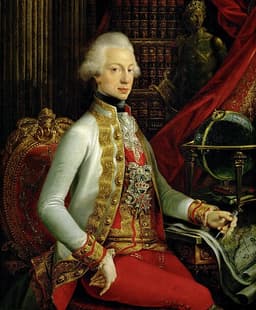
Ferdinand III
Emperor · Modern
57.8Total

Karamokho Alfa
Emperor · Modern
59.8Total
Basic Information
Born
1608
1690
Died
1657
1751
Era
Modern
Modern
Nationality
Holy Roman Empire
Futa Jallon
Occupation
Emperor
Emperor
Civilization
Western
Other
Score Comparison
Military (10%)
45.0
55.0
Political (20%)
72.0
68.0
Influence (20%)
61.0
59.0
Legacy (20%)
52.0
50.0
Leadership (15%)
66.0
72.0
Strategy (15%)
43.3
60.0
TOTAL
57.8
59.8
Ferdinand III — Complete Timeline
1629 AD
Issued the Edict of RestitutionPolitical Action
As Ferdinand III was not yet emperor, this event is misattributed. Actually, Ferdinand III succeeded his father Ferdinand II in 1637. He did not issue the Edict of Restitution; that was his father's act. Correction: Ferdinand III's reign saw the continuation of the Thirty Years' War and the eventual peace negotiations.
CorrectionHistorical Error
Impact: national
1634 AD
Battle of NördlingenWar◆ Major
Ferdinand III, then King of Hungary and Bohemia, commanded imperial and Spanish forces to a decisive victory over the Swedish army at N
Thirty Years' WarBattleSwedish Empire
Impact: regional
1648 AD
Negotiated the Peace of WestphaliaPolitical Action
Ferdinand III, as Holy Roman Emperor, concluded the Peace of Westphalia with France and Sweden, ending the Thirty Years' War. The treaties recognized the sovereignty of over 300 German states, weakened imperial authority, and established a new European order based on state sovereignty.
Peace of WestphaliaThirty Years' WarDiplomacy
Impact: global
Karamokho Alfa — Complete Timeline
1725 AD
Fulani Jihad in Futa JallonWar
Karamokho Alfa launched a religious war (jihad) against the non-Muslim rulers of Futa Jallon. This conflict aimed to establish an Islamic state and ended with the defeat of the traditional rulers, leading to the creation of the Imamate of Futa Jallon.
JihadFoundingIslamic State
Impact: regional
1727 AD
Founding of the Imamate of Futa JallonPolitical Action
Karamokho Alfa established the Imamate of Futa Jallon, a theocratic state governed by Islamic law. He became the first Almami (religious leader) and implemented a system of governance that combined religious and political authority.
FoundingImamateTheocracy
Impact: regionalconstructive
1730 AD
Codification of Islamic GovernanceReform◆ Major
Karamokho Alfa established a council of elders and religious scholars to advise the Almami. He also implemented a legal system based on the Maliki school of Islamic jurisprudence, replacing traditional customary law with sharia.
Legal ReformIslamic LawGovernance
Impact: regionalconstructive
Expert Analysis
Origins
Ferdinand III was born in 1608 in Graz, the son of Ferdinand II, Holy Roman Emperor. He was educated by Jesuits and trained in governance and military command from a young age, serving as King of Hungary and Bohemia before becoming emperor. His upbringing was steeped in the Habsburg tradition of Catholic absolutism.
Karamokho Alfa was born around 1720 in the Futa Jallon region of West Africa. He studied Islamic theology and law under Fulani scholars, becoming a respected religious leader. His early life was marked by tensions between Muslim Fulani pastoralists and non-Muslim ruling elites.
Rise to Power
Ferdinand III rose to power through dynastic inheritance, becoming Holy Roman Emperor in 1637 after his father's death. However, he had already proven himself militarily at the Battle of Nördlingen in 1634, where he commanded forces to a decisive victory over the Swedes. This victory solidified his position within the Habsburg realms.
Karamokho Alfa rose to power by leading a religious revolution. In the 1720s, he launched a Fulani jihad against the non-Muslim rulers of Futa Jallon. His charisma and religious authority united diverse Fulani clans under a common cause. By the 1730s, he had established the Imamate of Futa Jallon, becoming its first Almami (religious leader).
Leadership & Governance
Ferdinand III ruled as a pragmatic absolutist, focused on consolidating Habsburg power after the devastation of the Thirty Years' War. His political score of 72.0 reflects his skill in negotiation, as he concluded the Peace of Westphalia in 1648, which recognized the sovereignty of German states and ended religious warfare. He also implemented administrative reforms to centralize authority but struggled with the costs of war.
Karamokho Alfa governed as a theocratic leader, scoring 72.0 in leadership. He established a council of elders and religious scholars to advise the Almami and implemented a legal system based on the Maliki school of Islamic law. His governance created a stable Islamic state that endured for over a century, but his reliance on religious legitimacy limited his flexibility in dealing with secular challenges.
Triumph & Tragedy
Ferdinand III's greatest triumph was the Peace of Westphalia, which ended a devastating war and reshaped European politics. However, the peace also weakened the Holy Roman Empire by granting sovereignty to its constituent states. His military score of 45.0 reflects that he was not a great commander, and his reign saw the decline of imperial power.
Karamokho Alfa's triumph was founding the Imamate of Futa Jallon, which became a center of Islamic learning and governance. His tragedy was that the state struggled with internal divisions after his death, leading to instability. His leadership score of 72.0 indicates strong personal authority, but his influence score of 59.0 shows limited reach beyond his region.
Character & Destiny
Ferdinand III was a cautious, diplomatic ruler shaped by the horrors of war. He prioritized stability over expansion, which led to the Westphalian settlement. His character allowed him to negotiate peace but also to accept the erosion of imperial authority.
Karamokho Alfa was a charismatic religious reformer, driven by a vision of an Islamic society. His character inspired loyalty but also made him inflexible. His destiny was to create a state that survived but did not expand significantly.
Legacy
Ferdinand III's legacy is the Peace of Westphalia, which established principles of state sovereignty and non-interference that underpin modern international relations. His political score of 72.0 and legacy score of 52.0 indicate a significant but incomplete impact.
Karamokho Alfa's legacy is the Imamate of Futa Jallon, which lasted until French colonization. He is remembered as a founder of a theocratic state and a leader of jihad. His legacy score of 50.0 reflects regional importance but limited global influence.
Conclusion
While both leaders achieved notable political goals, Ferdinand III had a greater impact on world history. His negotiation of the Peace of Westphalia fundamentally changed the structure of European politics and international law, affecting billions over centuries. Karamokho Alfa's influence, though significant in West Africa, was more localized. Ferdinand III's total score of 57.8 vs Karamokho Alfa's 59.8 is close, but the scale of his influence is far larger. The Peace of Westphalia remains a cornerstone of modern diplomacy, whereas the Imamate of Futa Jallon is a historical footnote.
Rankings
🥇
Karamokho AlfaLeader
Mil: 55.0Pol: 68.0Inf: 59.0
59.8
🥈
Ferdinand III
Mil: 45.0Pol: 72.0Inf: 61.0
57.8
+2.0 behind
How This Comparison Works
Algorithm
Each figure is scored on 6 dimensions (0—100 scale) based on structured historical data: Military (10%), Political (20%), Influence (20%), Legacy (20%), Leadership (15%), Strategy (15%). The weighted total produces the final ranking.
Data Sources
Scores are computed from structured sub-indicators in the database. Scale factors adjust for era (Ancient ×0.85, Modern ×1.0) and civilization size (Eastern ×1.05, Other ×0.80) to account for differences in population and military scale.
Maximum 3 Figures
Comparisons are limited to 2—3 figures to ensure readability and statistical meaningfulness.
Error Margins
±5 points per dimension — Sub-scores are derived from historical records with inherent uncertainty. Two figures within 5 points on a dimension should be considered roughly equivalent in that area.
Total Score Accuracy
±3 points overall — The weighted combination of 6 dimensions produces a total score with approximately ±3 points of uncertainty. Differences of less than 3 points are not statistically significant— the figures are effectively tied.
Known Limitations
- Historical records are incomplete and uneven across civilizations
- Figures from oral-tradition societies may be underrepresented
- Occupation labels can misclassify multi-role figures
- Scores measure capability and impact, not moral character
- Quantitative scoring is a comparison tool, not absolute truth
Capability Radar
Military (10%) — Battles & Warfare
Battles
30
45
Win Rate
35
55
Expansion
20
55
Political (20%) — Governance & Reform
Reform
55
65
Diplomacy
85
50
Economy
50
45
Influence (20%) — Cultural & Global Reach
Cultural
40
55
Global
65
40
Legacy (20%) — Historical Impact
Historical
75
55
Longevity
70
50
Leadership (15%) — Power & Stability
Tenure
70
60
Stability
45
50
Strategy (15%) — Tactics & Innovation
Strategy
40
50
Tactics
30
40
Reform
25
60
Similar Comparisons
Comments & Discussion
No comments yet. Be the first to share your thoughts!