Loading...
This comparison has not been analyzed yet.
One-time AI generation (~1 minute). Scores and timeline are already available below.
Fiame Naomi Mataafa vs John McEwen
Fiame Naomi Mataafa leads by 16.4 pts · 2 figures compared
…

Fiame Naomi Mataafa
Politician · Modern
55.5Total
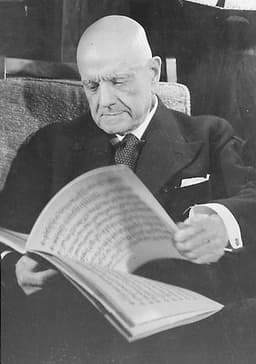
John McEwen
Politician · Modern
39.1Total
Basic Information
Born
1957
1900
Died
—
1980
Era
Modern
Modern
Nationality
Samoa
Australia
Occupation
Politician
Politician
Civilization
Other
Western
Score Comparison
Military (10%)
50.0
49.0
Political (20%)
68.0
26.4
Influence (20%)
57.2
45.5
Legacy (20%)
47.5
35.8
Leadership (15%)
66.0
38.1
Strategy (15%)
42.2
42.0
TOTAL
55.5
39.1
Fiame Naomi Mataafa — Complete Timeline
2021 AD
Elected as first female Prime Minister of SamoaPolitical Action
Fiame Naomi Mataafa was elected Prime Minister, becoming the first woman to hold the office in Samoa. Her FAST party won the general election, ending the 22-year rule of Tuilaepa Sailele and ushering in a new political era.
Gender EqualityLeadershipSamoa
Impact: nationalprogressive
Sworn in amid constitutional crisisPolitical Action◆ Major
Fiame was sworn in as Prime Minister by the Head of State in a ceremony outside Parliament, after the previous government refused to cede power. The event followed a period of legal uncertainty and highlighted tensions in Samoa's democratic processes.
Constitutional CrisisInaugurationSamoa
Impact: national
Appointed first female Cabinet ministersPolitical Action◆ Major
Fiame appointed several women to key Cabinet positions, including the first female Minister of Finance and Minister of Police. This move advanced gender representation in Samoan politics and set a precedent for future governments.
Gender EqualityCabinetSamoa
Impact: nationalprogressive
2024 AD
Hosted Pacific Islands Forum in SamoaPolitical Action◆ Major
Fiame hosted the Pacific Islands Forum in Apia, focusing on climate change and regional cooperation. The summit addressed rising sea levels and economic resilience, reinforcing Samoa's role in Pacific diplomacy.
DiplomacyClimate ChangePacific Islands
Impact: regionalconstructive
John McEwen — Complete Timeline
1949 AD
Appointed Minister for Trade and IndustryPolitical Action◆ Major
McEwen was appointed Minister for Trade and Industry in the Menzies government. He held this position for over two decades, shaping Australia's trade policies and protectionist economic strategies.
Trade PolicyEconomic Protectionism
Impact: nationalconstructive
1958 AD
Leader of the Country PartyPolitical Action◆ Major
McEwen became leader of the Country Party in 1958. He led the party for 13 years, maintaining its influence in coalition governments and advocating for rural and agricultural interests.
Party LeadershipRural Advocacy
Impact: national
1967 AD
Became Prime Minister of AustraliaPolitical Action◆ Major
McEwen became Prime Minister on 19 December 1967 after the disappearance of Harold Holt. He served as interim leader for 23 days until John Gorton was elected Liberal Party leader.
Prime MinisterInterim Government
Impact: national
This comparison has not been analyzed yet.
One-time AI generation (~1 minute). Scores and timeline are already available below.
Rankings
🥇
Fiame Naomi MataafaLeader
Mil: 50.0Pol: 68.0Inf: 57.2
55.5
🥈
John McEwen
Mil: 49.0Pol: 26.4Inf: 45.5
39.1
+16.4 behind
How This Comparison Works
Algorithm
Each figure is scored on 6 dimensions (0—100 scale) based on structured historical data: Military (10%), Political (20%), Influence (20%), Legacy (20%), Leadership (15%), Strategy (15%). The weighted total produces the final ranking.
Data Sources
Scores are computed from structured sub-indicators in the database. Scale factors adjust for era (Ancient ×0.85, Modern ×1.0) and civilization size (Eastern ×1.05, Other ×0.80) to account for differences in population and military scale.
Maximum 3 Figures
Comparisons are limited to 2—3 figures to ensure readability and statistical meaningfulness.
Error Margins
±5 points per dimension — Sub-scores are derived from historical records with inherent uncertainty. Two figures within 5 points on a dimension should be considered roughly equivalent in that area.
Total Score Accuracy
±3 points overall — The weighted combination of 6 dimensions produces a total score with approximately ±3 points of uncertainty. Differences of less than 3 points are not statistically significant— the figures are effectively tied.
Known Limitations
- Historical records are incomplete and uneven across civilizations
- Figures from oral-tradition societies may be underrepresented
- Occupation labels can misclassify multi-role figures
- Scores measure capability and impact, not moral character
- Quantitative scoring is a comparison tool, not absolute truth
Capability Radar
Military (10%) — Battles & Warfare
Battles
24
30
Win Rate
23
33
Expansion
30
34
Political (20%) — Governance & Reform
Reform
55
10
Diplomacy
60
15
Economy
50
10
Influence (20%) — Cultural & Global Reach
Cultural
45
5
Global
40
5
Legacy (20%) — Historical Impact
Historical
45
10
Longevity
40
5
Leadership (15%) — Power & Stability
Tenure
60
10
Stability
55
15
Strategy (15%) — Tactics & Innovation
Strategy
30
37
Tactics
36
40
Reform
35
44
Similar Comparisons
Comments & Discussion
No comments yet. Be the first to share your thoughts!