Loading...
This comparison has not been analyzed yet.
One-time AI generation (~1 minute). Scores and timeline are already available below.
Fidel Ramos vs Kara Mustafa Pasha
Kara Mustafa Pasha leads by 9.7 pts · 2 figures compared
…
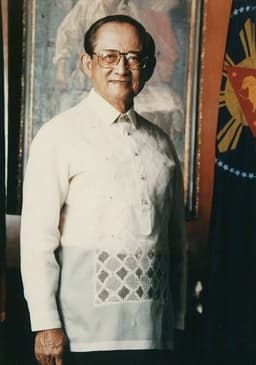
Fidel Ramos
General · Modern
53.2Total

Kara Mustafa Pasha
General · Modern
62.9Total
Basic Information
Born
1928
1634
Died
—
1683
Era
Modern
Modern
Nationality
Philippines
Ottoman Empire
Occupation
General
General
Civilization
Eastern
Middle Eastern
Score Comparison
Military (10%)
55.0
67.5
Political (20%)
60.0
68.0
Influence (20%)
56.4
61.0
Legacy (20%)
48.3
56.0
Leadership (15%)
48.8
71.0
Strategy (15%)
52.5
60.0
TOTAL
53.2
62.9
Fidel Ramos — Complete Timeline
1989 AD
Suppressed the 1989 Coup AttemptPolitical Action◆ Major
As Chief of the Philippine Constabulary, Ramos played a key role in suppressing the 1989 coup attempt against President Corazon Aquino. He remained loyal to the government and helped stabilize the country.
Coup AttemptLoyaltyStability
Impact: nationalconstructive
1992 AD
Initiated Economic Liberalization ReformsReform◆ Major
Ramos implemented a series of economic liberalization policies, including deregulation, privatization of state-owned enterprises, and opening the economy to foreign investment. These reforms led to sustained economic growth.
Economic ReformLiberalizationGrowth
Impact: nationalconstructive
Elected President of the PhilippinesPolitical Action◆ Major
Ramos was elected as the 12th President of the Philippines, succeeding Corazon Aquino. He was the first Protestant president in a predominantly Catholic country and focused on economic reforms and peace negotiations.
ElectionPresidencyProtestant
Impact: nationalconstructive
1996 AD
Signed the Final Peace Agreement with the MNLFPolitical Action◆ Major
Ramos signed a final peace agreement with the Moro National Liberation Front (MNLF), ending decades of insurgency in Mindanao. The agreement established the Autonomous Region in Muslim Mindanao (ARMM).
Peace AgreementMNLFMindanao
Impact: regionalconstructive
Kara Mustafa Pasha — Complete Timeline
1676 AD
Appointed Grand Vizier of the Ottoman EmpirePolitical Action◆ Major
Kara Mustafa Pasha was appointed Grand Vizier by Sultan Mehmed IV. He became the most powerful official in the empire, overseeing military campaigns and administrative reforms.
Ottoman EmpireLeadershipPolitics
Impact: global
1683 AD
Led the Siege of ViennaWar
Kara Mustafa Pasha led the Ottoman army in the Siege of Vienna, aiming to capture the Habsburg capital. The siege failed after a relief force led by John III Sobieski of Poland defeated the Ottomans at the Battle of Vienna.
SiegeOttoman-Habsburg WarsEurope
Impact: globaldestructive
Executed by Order of the SultanPolitical Action◆ Major
After the failure at Vienna, Kara Mustafa Pasha was executed by order of Sultan Mehmed IV. His head was sent to the sultan as proof of his death, marking a dramatic fall from power.
ExecutionOttoman EmpireFall from Power
Impact: regionaltragic
This comparison has not been analyzed yet.
One-time AI generation (~1 minute). Scores and timeline are already available below.
Rankings
🥇
Kara Mustafa PashaLeader
Mil: 67.5Pol: 68.0Inf: 61.0
62.9
🥈
Fidel Ramos
Mil: 55.0Pol: 60.0Inf: 56.4
53.2
+9.7 behind
How This Comparison Works
Algorithm
Each figure is scored on 6 dimensions (0—100 scale) based on structured historical data: Military (10%), Political (20%), Influence (20%), Legacy (20%), Leadership (15%), Strategy (15%). The weighted total produces the final ranking.
Data Sources
Scores are computed from structured sub-indicators in the database. Scale factors adjust for era (Ancient ×0.85, Modern ×1.0) and civilization size (Eastern ×1.05, Other ×0.80) to account for differences in population and military scale.
Maximum 3 Figures
Comparisons are limited to 2—3 figures to ensure readability and statistical meaningfulness.
Error Margins
±5 points per dimension — Sub-scores are derived from historical records with inherent uncertainty. Two figures within 5 points on a dimension should be considered roughly equivalent in that area.
Total Score Accuracy
±3 points overall — The weighted combination of 6 dimensions produces a total score with approximately ±3 points of uncertainty. Differences of less than 3 points are not statistically significant— the figures are effectively tied.
Known Limitations
- Historical records are incomplete and uneven across civilizations
- Figures from oral-tradition societies may be underrepresented
- Occupation labels can misclassify multi-role figures
- Scores measure capability and impact, not moral character
- Quantitative scoring is a comparison tool, not absolute truth
Capability Radar
Military (10%) — Battles & Warfare
Battles
35
75
Win Rate
40
40
Expansion
20
65
Political (20%) — Governance & Reform
Reform
65
45
Diplomacy
60
40
Economy
55
50
Influence (20%) — Cultural & Global Reach
Cultural
30
40
Global
40
55
Legacy (20%) — Historical Impact
Historical
45
60
Longevity
35
50
Leadership (15%) — Power & Stability
Tenure
55
60
Stability
50
30
Strategy (15%) — Tactics & Innovation
Strategy
50
50
Tactics
45
55
Reform
60
30
Similar Comparisons
Comments & Discussion
No comments yet. Be the first to share your thoughts!