Loading...
This comparison has not been analyzed yet.
One-time AI generation (~1 minute). Scores and timeline are already available below.
Fidel Ramos vs Oishi Yoshio
Fidel Ramos leads by 8.3 pts · 2 figures compared
…
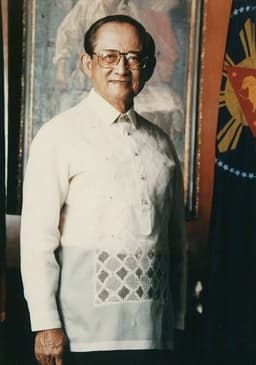
Fidel Ramos
General · Modern
53.2Total

Oishi Yoshio
General · Modern
44.9Total
Basic Information
Born
1928
1659
Died
—
1703
Era
Modern
Modern
Nationality
Philippines
Japan
Occupation
General
General
Civilization
Eastern
Eastern
Score Comparison
Military (10%)
55.0
25.9
Political (20%)
60.0
26.4
Influence (20%)
56.4
60.0
Legacy (20%)
48.3
58.0
Leadership (15%)
48.8
30.0
Strategy (15%)
52.5
43.7
TOTAL
53.2
44.9
Fidel Ramos — Complete Timeline
1989 AD
Suppressed the 1989 Coup AttemptPolitical Action◆ Major
As Chief of the Philippine Constabulary, Ramos played a key role in suppressing the 1989 coup attempt against President Corazon Aquino. He remained loyal to the government and helped stabilize the country.
Coup AttemptLoyaltyStability
Impact: nationalconstructive
1992 AD
Initiated Economic Liberalization ReformsReform◆ Major
Ramos implemented a series of economic liberalization policies, including deregulation, privatization of state-owned enterprises, and opening the economy to foreign investment. These reforms led to sustained economic growth.
Economic ReformLiberalizationGrowth
Impact: nationalconstructive
Elected President of the PhilippinesPolitical Action◆ Major
Ramos was elected as the 12th President of the Philippines, succeeding Corazon Aquino. He was the first Protestant president in a predominantly Catholic country and focused on economic reforms and peace negotiations.
ElectionPresidencyProtestant
Impact: nationalconstructive
1996 AD
Signed the Final Peace Agreement with the MNLFPolitical Action◆ Major
Ramos signed a final peace agreement with the Moro National Liberation Front (MNLF), ending decades of insurgency in Mindanao. The agreement established the Autonomous Region in Muslim Mindanao (ARMM).
Peace AgreementMNLFMindanao
Impact: regionalconstructive
Oishi Yoshio — Complete Timeline
1701 AD
Planning of the Revenge PlotPolitical Action◆ Major
After Asano Naganori's death, Oishi Yoshio organized the ronin of the Ako domain. He spent over a year planning the revenge, gathering intelligence on Kira's mansion and maintaining secrecy among the group.
PlanningRoninConspiracy
Impact: national
1702 AD
Leadership of the 47 Ronin RevengePolitical Action◆ Major
Oishi Yoshio led 47 ronin in a carefully planned attack on Kira Yoshinaka's mansion in Edo. They killed Kira and avenged their master, Asano Naganori. The attack was carried out at night and was meticulously organized.
47 RoninRevengeKira
Impact: national
1703 AD
Seppuku of the 47 RoninOther◆ Major
After avenging their master, Oishi and the 46 surviving ronin were ordered by the shogunate to commit seppuku. They were executed on the same day, becoming symbols of samurai loyalty and honor.
Seppuku47 RoninExecution
Impact: nationaltragic
Surrender to the ShogunatePolitical Action
After the attack, Oishi and the ronin surrendered to the shogunate authorities. They were placed under house arrest while the shogunate debated their fate, ultimately deciding on seppuku.
SurrenderShogunateArrest
Impact: national
This comparison has not been analyzed yet.
One-time AI generation (~1 minute). Scores and timeline are already available below.
Rankings
🥇
Fidel RamosLeader
Mil: 55.0Pol: 60.0Inf: 56.4
53.2
🥈
Oishi Yoshio
Mil: 25.9Pol: 26.4Inf: 60.0
44.9
+8.3 behind
How This Comparison Works
Algorithm
Each figure is scored on 6 dimensions (0—100 scale) based on structured historical data: Military (10%), Political (20%), Influence (20%), Legacy (20%), Leadership (15%), Strategy (15%). The weighted total produces the final ranking.
Data Sources
Scores are computed from structured sub-indicators in the database. Scale factors adjust for era (Ancient ×0.85, Modern ×1.0) and civilization size (Eastern ×1.05, Other ×0.80) to account for differences in population and military scale.
Maximum 3 Figures
Comparisons are limited to 2—3 figures to ensure readability and statistical meaningfulness.
Error Margins
±5 points per dimension — Sub-scores are derived from historical records with inherent uncertainty. Two figures within 5 points on a dimension should be considered roughly equivalent in that area.
Total Score Accuracy
±3 points overall — The weighted combination of 6 dimensions produces a total score with approximately ±3 points of uncertainty. Differences of less than 3 points are not statistically significant— the figures are effectively tied.
Known Limitations
- Historical records are incomplete and uneven across civilizations
- Figures from oral-tradition societies may be underrepresented
- Occupation labels can misclassify multi-role figures
- Scores measure capability and impact, not moral character
- Quantitative scoring is a comparison tool, not absolute truth
Capability Radar
Military (10%) — Battles & Warfare
Battles
35
10
Win Rate
40
15
Expansion
20
5
Political (20%) — Governance & Reform
Reform
65
5
Diplomacy
60
20
Economy
55
5
Influence (20%) — Cultural & Global Reach
Cultural
30
50
Global
40
40
Legacy (20%) — Historical Impact
Historical
45
55
Longevity
35
60
Leadership (15%) — Power & Stability
Tenure
55
10
Stability
50
10
Strategy (15%) — Tactics & Innovation
Strategy
50
20
Tactics
45
30
Reform
60
5
Similar Comparisons
Comments & Discussion
No comments yet. Be the first to share your thoughts!