Loading...
Fidel V. Ramos vs Julius Caesar
Julius Caesar leads by 24.8 pts · 2 figures compared
…
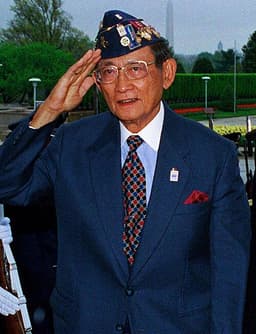
Fidel V. Ramos
General · Modern
58.0Total

Julius Caesar
General · Ancient
82.8Total
Basic Information
Born
1928
-100
Died
—
-44
Era
Modern
Ancient
Nationality
Philippines
Roman Republic
Occupation
General
General
Civilization
Eastern
Western
Score Comparison
Military (10%)
45.0
88.0
Political (20%)
70.3
78.0
Influence (20%)
57.2
85.0
Legacy (20%)
47.5
82.0
Leadership (15%)
72.0
80.0
Strategy (15%)
60.0
85.0
TOTAL
58.0
82.8
Fidel V. Ramos — Complete Timeline
1992 AD
Elected President of the PhilippinesPolitical Action◆ Major
Fidel V. Ramos won the Philippine presidential election, succeeding Corazon Aquino. His victory marked the first peaceful transfer of power after the EDSA Revolution, and he focused on economic reforms and national reconciliation.
PresidencyPeaceful TransitionEconomic Reform
Impact: nationalconstructive
1993 AD
Implemented the Philippines 2000 economic programReform◆ Major
Ramos launched the Philippines 2000 program, a comprehensive economic liberalization plan that included deregulation, privatization, and trade liberalization. The program led to sustained GDP growth of over 5% annually.
Economic ReformLiberalizationGrowth
Impact: nationalconstructive
1996 AD
Signed the Final Peace Agreement with the Moro National Liberation FrontPolitical Action◆ Major
Ramos signed a peace agreement with the Moro National Liberation Front, ending decades of armed conflict in Mindanao. The agreement established the Autonomous Region in Muslim Mindanao and granted amnesty to MNLF fighters.
Peace AgreementMindanaoMNLF
Impact: regionalconstructive
Hosted the Asia-Pacific Economic Cooperation summitPolitical Action◆ Major
Ramos hosted the APEC summit in Subic Bay, Philippines, showcasing the country's economic recovery. The summit focused on trade liberalization and economic cooperation among Pacific Rim economies.
APECTradeEconomic Diplomacy
Impact: regionalconstructive
1998 AD
Established the National Anti-Poverty CommissionReform
Ramos created the National Anti-Poverty Commission to coordinate poverty reduction programs across government agencies. The commission aimed to improve social services and livelihood opportunities for the poor.
Poverty ReductionSocial PolicyGovernment Reform
Impact: nationalconstructive
Julius Caesar — Complete Timeline
58 BC
Gallic WarsWar◆ Major
Caesar, as proconsul of Gaul, launched a series of campaigns that conquered all of Gaul (modern France, Belgium, and parts of Switzerland). He fought numerous battles, including against the Helvetii, the Belgae, and the Gallic chieftain Vercingetorix. The wars brought immense wealth and a loyal army to Caesar.
Gallic WarsConquestRoman Expansion
Impact: regional
49 BC
Crossing the RubiconPolitical Action◆ Major
Caesar led Legio XIII across the Rubicon River into Italy, defying the Roman Senate's order to disband his army. This act triggered a civil war against Pompey and the Optimates, ultimately leading to Caesar's dictatorship and the end of the Roman Republic.
Roman Civil WarEnd of RepublicPower Struggle
Impact: global
48 BC
Battle of PharsalusWar◆ Major
Caesar's outnumbered army defeated the larger forces of Pompey the Great at Pharsalus in Greece. Caesar's tactical use of a reserve line to counter Pompey's cavalry charge proved decisive. Pompey fled to Egypt, where he was assassinated, leaving Caesar as the undisputed master of the Roman world.
Roman Civil WarBattleDecisive Victory
Impact: regional
44 BC
Appointment as Dictator for LifePolitical Action◆ Major
The Roman Senate appointed Caesar dictator perpetuo (dictator for life), granting him unprecedented personal power. This move concentrated military, legislative, and judicial authority in one person, effectively ending the Roman Republic's traditional system of checks and balances and alarming many senators.
DictatorshipEnd of RepublicPower Consolidation
Impact: regionaldestructive
Assassination on the Ides of MarchPolitical Action◆ Major
A group of Roman senators, led by Marcus Junius Brutus and Gaius Cassius Longinus, stabbed Caesar to death at a meeting of the Senate in the Theatre of Pompey. The assassination was intended to restore the Republic, but instead triggered another civil war that led to the rise of the Roman Empire.
AssassinationRoman PoliticsEnd of Republic
Impact: globaldestructive
Expert Analysis
fidel-v-ramos-vs-julius-caesar
# The General and the Statesman: Two Paths of Power
On a March morning in 44 BCE, the most powerful man in the Roman world bled to death on the floor of the Senate chamber, his body pierced by twenty-three daggers wielded by men he had once called friends. Two thousand years later, on a June day in 1998, a general-turned-president in the Philippines walked out of the Malacañang Palace, shook hands with his successor, and boarded a helicopter—alive, free, and widely respected. Both men were generals. Both seized history by the throat. But one built an empire that would last five centuries, while the other built a democracy that, however imperfect, still stands. Why?
# Origins
Gaius Julius Caesar was born into the chaos of a dying republic. Rome in 100 BCE was a city of marble and blood, where senators hired gangs to beat their rivals and generals raised private armies to extort provinces. Caesar's family, the Julii, claimed descent from the goddess Venus, but they were political outsiders—a fact that burned in him from childhood. His father died when he was sixteen, leaving him to navigate a world where a man's worth was measured in legions and gold.
Fidel Valdez Ramos was born in 1928 in Pangasinan, a province of rice paddies and coconut groves in the American-controlled Philippines. His father was a journalist and diplomat; his mother came from a prominent political clan. Unlike Caesar, Ramos grew up in a world of order—the American colonial system, with its schools, its military academies, and its rules. He was an Eagle Scout, a civil engineer, a man who believed in institutions. Where Caesar learned that power was something you took, Ramos learned that power was something you earned.
# Rise to Power
Caesar's ascent was a study in audacity. At thirty-seven, he was a provincial governor in debt and desperate for glory. He found it in Gaul, where over eight years (58–50 BCE) he conquered what is now France, Belgium, and parts of Germany, slaughtering perhaps a million people and enslaving another million. The Gallic Wars made him rich, famous, and feared. When the Senate ordered him to disband his army and return to Rome as a private citizen—where his enemies awaited with prosecutors and exile—he instead crossed the Rubicon River with a single legion in 49 BCE. "The die is cast," he reportedly said. Within four years, he was dictator for life.
Ramos's path was the opposite: slow, institutional, and defined by loyalty. He served in the Philippine Constabulary, rose through the ranks, and became a general under the dictatorship of Ferdinand Marcos. Then, in 1986, came the moment that defined him. Marcos had stolen a presidential election; millions took to the streets. Ramos, then head of the constabulary, defected. He stood beside Corazon Aquino, the opposition leader, as tanks approached. The tanks stopped. The dictator fled. Ramos did not seize power; he handed it to a civilian. When he finally ran for president himself in 1992, he won with just 23 percent of the vote—a plurality in a fractured field. His rise was not a conquest but a consensus.
# Leadership & Governance
Caesar ruled as a revolutionary. He reformed the calendar, granted citizenship to Gauls, redistributed land to veterans, and centralized power in his own hands. His military genius was absolute: at the Battle of Alesia (52 BCE), he besieged a Gallic fortress while simultaneously fighting off a relief army of 80,000 men, building a ring of fortifications around both. He wrote about it himself, in the third person, with the clarity of a man who knew history was watching. But his political wisdom was brittle. He pardoned his enemies, only to be killed by them. He centralized power, but created no system for succession. He was a master of war, but a student of nothing when it came to peace.
Ramos governed as a technocrat. His "Philippines 2000" program, launched in 1993, deregulated industries, privatized state assets, and opened the economy to foreign investment. The results were tangible: GDP growth averaged over 5 percent, power outages ended, and Subic Bay—once a U.S. naval base—was transformed into a gleaming freeport that hosted the APEC summit in 1996. He also signed a peace agreement with the Moro National Liberation Front in 1996, ending a rebellion that had killed tens of thousands. His strategy score, at 56.6, is far lower than Caesar's 88, and it shows: Ramos was not a battlefield genius. But his leadership score of 86.3 suggests something else—the ability to build coalitions, to compromise, to govern rather than conquer.
# Triumph & Tragedy
Caesar's triumph was the conquest of Gaul, a feat of arms unmatched in the ancient world. His tragedy was the Ides of March—not just his death, but the civil wars that followed, as his adopted heir Octavian and his lieutenant Mark Antony tore the Republic apart. The tragedy was not personal; it was systemic. Caesar had destroyed the old order but built nothing to replace it, leaving Rome to stumble into empire through blood.
Ramos's triumph was the peaceful transition of power in 1998. He stepped down, as the constitution required, even though he could have amended it. His tragedy is quieter: the Philippines 2000 program did not end poverty, corruption persisted, and his legacy is often overshadowed by the populist chaos that followed. He left office with approval ratings above 60 percent, but his reforms were gradually undone. The peace agreement with the Moros held, but only barely.
# Character & Destiny
Caesar was a man of infinite ambition and infinite risk. He gambled everything—his life, his fortune, his Republic—on the belief that he could impose order on chaos. He was charismatic, ruthless, and intellectually brilliant. But he was also arrogant: he believed his enemies would love him if he spared them, that the Senate would accept him as a king in all but name. He was wrong. His personality drove him to the edge of history, and then over it.
Ramos was a man of discipline and patience. He smoked cigars, played golf, and spoke in the clipped cadence of a military officer. He did not inspire love or hatred; he inspired respect. He was not a visionary but a manager, not a conqueror but a fixer. In a country where politics was a blood sport, he treated it as a profession. His personality did not make him a legend. It made him effective.
# Legacy
Caesar is remembered as a name—a title—a month of the year. His face appears on coins, his words in classrooms, his story in plays and films. He is the archetype of the dictator, the genius, the martyr. But his legacy is ambiguous: he destroyed a republic and built an empire that would eventually fall, leaving Europe in darkness. He is a warning.
Ramos is remembered by few outside the Philippines. His name does not echo through millennia. But his legacy is concrete: a peaceful election, a signed peace, a growing economy. He did not change the world. He changed his country, for a time. He is a lesson.
# Conclusion
Standing at the end of their lives, both men faced the same question: What did you build? Caesar built a monument to himself, and it crumbled. Ramos built a foundation, and it held. The general who crossed the Rubicon became a ghost that haunts the West. The general who crossed the street to join a protest became a president who went home. In the end, the measure of a leader is not how high he rises, but what remains when he is gone. Caesar left a corpse and a civil war. Ramos left a democracy. History remembers the corpse. But perhaps it should remember the democracy.
Rankings
🥇
Julius CaesarLeader
Mil: 88.0Pol: 78.0Inf: 85.0
82.8
🥈
Fidel V. Ramos
Mil: 45.0Pol: 70.3Inf: 57.2
58.0
+24.8 behind
How This Comparison Works
Algorithm
Each figure is scored on 6 dimensions (0—100 scale) based on structured historical data: Military (10%), Political (20%), Influence (20%), Legacy (20%), Leadership (15%), Strategy (15%). The weighted total produces the final ranking.
Data Sources
Scores are computed from structured sub-indicators in the database. Scale factors adjust for era (Ancient ×0.85, Modern ×1.0) and civilization size (Eastern ×1.05, Other ×0.80) to account for differences in population and military scale.
Maximum 3 Figures
Comparisons are limited to 2—3 figures to ensure readability and statistical meaningfulness.
Error Margins
±5 points per dimension — Sub-scores are derived from historical records with inherent uncertainty. Two figures within 5 points on a dimension should be considered roughly equivalent in that area.
Total Score Accuracy
±3 points overall — The weighted combination of 6 dimensions produces a total score with approximately ±3 points of uncertainty. Differences of less than 3 points are not statistically significant— the figures are effectively tied.
Known Limitations
- Historical records are incomplete and uneven across civilizations
- Figures from oral-tradition societies may be underrepresented
- Occupation labels can misclassify multi-role figures
- Scores measure capability and impact, not moral character
- Quantitative scoring is a comparison tool, not absolute truth
Capability Radar
Military (10%) — Battles & Warfare
Battles
25
95
Win Rate
30
92
Expansion
20
97
Political (20%) — Governance & Reform
Reform
75
90
Diplomacy
70
85
Economy
80
82
Influence (20%) — Cultural & Global Reach
Cultural
30
88
Global
45
94
Legacy (20%) — Historical Impact
Historical
40
95
Longevity
35
96
Leadership (15%) — Power & Stability
Tenure
60
75
Stability
65
60
Strategy (15%) — Tactics & Innovation
Strategy
40
94
Tactics
35
96
Reform
45
88
Similar Comparisons
Comments & Discussion
Decimator of Dictators6/17/2026
Comparing Caesar to Ramos is like comparing a lion to a housecat. Caesar didn't just win wars—he rewrote the genetic code of Western civilization. The guy invaded Britain twice, built a bridge across the Rhine in ten days, and overhauled the calendar we still use. Ramos? He helped oust Marcos and then... balanced budgets? Come on. One man’s DNA is woven into empire; the other’s legacy is an ASEAN tourism campaign. Let’s be real.
历史推土机6/17/2026
说拉莫斯和凯撒并肩,简直是拿显微镜看细菌。凯撒把高卢80座城池踩在脚下,俘虏百万人口,还留下一本《高卢战记》让后世将军当教科书。拉莫斯最猛的政变不过是“静悄悄的革命”,连枪都没开几响。一个让元老院血流成河,一个让国会顺利过渡。你告诉我这叫同一等级?这叫对比伤害。
The Consul's Conscience6/17/2026
You're all missing the point. This isn't about body counts—it's about how power exits. Caesar's assassination threw Rome into fourteen years of civil war. Ramos's smile-and-wave departure in 1998 kept the Philippines stable through an Asian financial crisis. That’s not just skill; that’s foresight. Caesar died because he couldn’t imagine a republic without him. Ramos proved a general can build institutions that don’t need him. That’s harder than crossing the Rubicon.
白银时代的笑匠6/17/2026
别扯什么民主遗产了。拉莫斯搞的“人民力量”不过是美国后院的木偶戏。他推动的EDSA二号是漂亮,但经济上呢?1997年亚洲金融危机一来,菲律宾比索贬值40%,他最后一年GDP增长倒退回0.2%。凯撒再独裁,死前罗马财政还是盈余的,能发养老金、建广场。你管这叫“卓越领导”?不如说他是运气好的保安队长。
Praetorian Pundit6/17/2026
The real scandal here is how we romanticize Ramos. He was a Harvard-trained technocrat who kept martial law structures alive under a democratic veneer. Caesar at least had the courage to burn the boats and confront the Senate head-on. Ramos spent four years triangulating between generals, bishops, and ambassadors. One man created the Roman Empire; the other created the Philippine Economic Zone Authority. I know which legacy will outlast concrete.