Loading...
This comparison has not been analyzed yet.
One-time AI generation (~1 minute). Scores and timeline are already available below.
Fikile Mbalula vs Narayan Datt Tiwari
Fikile Mbalula leads by 6.0 pts · 2 figures compared
…
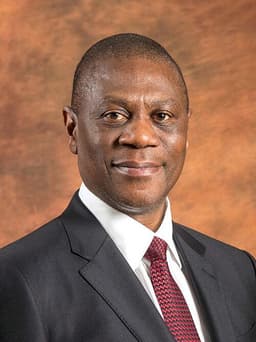
Fikile Mbalula
Politician · Modern
55.1Total

Narayan Datt Tiwari
Politician · Modern
49.1Total
Basic Information
Born
1971
1925
Died
—
—
Era
Modern
Modern
Nationality
South Africa
India
Occupation
Politician
Politician
Civilization
Other
Indian
Score Comparison
Military (10%)
48.4
47.2
Political (20%)
54.7
68.0
Influence (20%)
56.4
48.6
Legacy (20%)
43.3
40.0
Leadership (15%)
74.0
40.0
Strategy (15%)
60.0
60.0
TOTAL
55.1
49.1
Fikile Mbalula — Complete Timeline
2010 AD
Appointed Minister of Sport and RecreationPolitical Action◆ Major
Mbalula was appointed South Africa's Minister of Sport and Recreation by President Jacob Zuma. He oversaw the country's sports policy and the successful hosting of the 2010 FIFA World Cup, which had been awarded prior to his tenure.
South African GovernmentSportsWorld Cup
Impact: nationalconstructive
2014 AD
Appointed Minister of PolicePolitical Action◆ Major
Mbalula was appointed Minister of Police. He implemented visible policing strategies and faced criticism for his handling of crime statistics and police brutality incidents. He served until 2017.
South African GovernmentPoliceCrime
Impact: national
2022 AD
Elected Secretary-General of the African National Congress (ANC)Political Action◆ Major
Mbalula was elected Secretary-General of the ANC at the party's 55th National Conference. He became the chief administrator of the party, responsible for its day-to-day operations and organizational discipline.
ANCParty PoliticsLeadership
Impact: national
Narayan Datt Tiwari — Complete Timeline
1976 AD
Became Chief Minister of Uttar Pradesh for the first timePolitical Action◆ Major
Narayan Datt Tiwari was sworn in as the Chief Minister of Uttar Pradesh, leading the Congress government. His first tenure focused on land reforms and education, but was cut short by the fall of the Congress government at the centre.
Chief MinisterUttar PradeshCongress
Impact: regionalconstructive
1988 AD
Second term as Chief Minister of Uttar PradeshPolitical Action◆ Major
Tiwari returned as Chief Minister of Uttar Pradesh for a second term. His tenure saw the implementation of the Mandal Commission recommendations and faced challenges from the Ram Janmabhoomi movement.
Chief MinisterUttar PradeshCongress
Impact: regionalconstructive
2002 AD
Became Chief Minister of UttarakhandPolitical Action◆ Major
After the creation of Uttarakhand, Tiwari was appointed as the first Chief Minister of the new state. He oversaw the initial development and infrastructure projects in the hill state.
Chief MinisterUttarakhandCongress
Impact: regionalconstructive
2014 AD
Paternity scandal at age 89Political Action
At the age of 89, Tiwari was embroiled in a paternity scandal when a woman claimed he was the father of her child. DNA tests confirmed his paternity, leading to public controversy and damage to his reputation.
ScandalPaternityControversy
Impact: nationaltragic
This comparison has not been analyzed yet.
One-time AI generation (~1 minute). Scores and timeline are already available below.
Rankings
🥇
Fikile MbalulaLeader
Mil: 48.4Pol: 54.7Inf: 56.4
55.1
🥈
Narayan Datt Tiwari
Mil: 47.2Pol: 68.0Inf: 48.6
49.1
+6.0 behind
How This Comparison Works
Algorithm
Each figure is scored on 6 dimensions (0—100 scale) based on structured historical data: Military (10%), Political (20%), Influence (20%), Legacy (20%), Leadership (15%), Strategy (15%). The weighted total produces the final ranking.
Data Sources
Scores are computed from structured sub-indicators in the database. Scale factors adjust for era (Ancient ×0.85, Modern ×1.0) and civilization size (Eastern ×1.05, Other ×0.80) to account for differences in population and military scale.
Maximum 3 Figures
Comparisons are limited to 2—3 figures to ensure readability and statistical meaningfulness.
Error Margins
±5 points per dimension — Sub-scores are derived from historical records with inherent uncertainty. Two figures within 5 points on a dimension should be considered roughly equivalent in that area.
Total Score Accuracy
±3 points overall — The weighted combination of 6 dimensions produces a total score with approximately ±3 points of uncertainty. Differences of less than 3 points are not statistically significant— the figures are effectively tied.
Known Limitations
- Historical records are incomplete and uneven across civilizations
- Figures from oral-tradition societies may be underrepresented
- Occupation labels can misclassify multi-role figures
- Scores measure capability and impact, not moral character
- Quantitative scoring is a comparison tool, not absolute truth
Capability Radar
Military (10%) — Battles & Warfare
Battles
39
41
Win Rate
42
45
Expansion
46
52
Political (20%) — Governance & Reform
Reform
40
40
Diplomacy
50
50
Economy
35
45
Influence (20%) — Cultural & Global Reach
Cultural
45
20
Global
25
10
Legacy (20%) — Historical Impact
Historical
30
25
Longevity
20
15
Leadership (15%) — Power & Stability
Tenure
60
60
Stability
30
35
Strategy (15%) — Tactics & Innovation
Strategy
49
52
Tactics
50
58
Reform
58
59
Similar Comparisons
Comments & Discussion
No comments yet. Be the first to share your thoughts!