Loading...
Firuz Shah Tughlaq vs Shi Jingtang
Firuz Shah Tughlaq leads by 9.0 pts · 2 figures compared
…
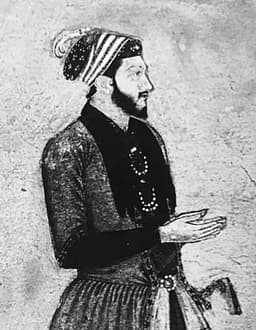
Firuz Shah Tughlaq
Emperor · Medieval
55.3Total
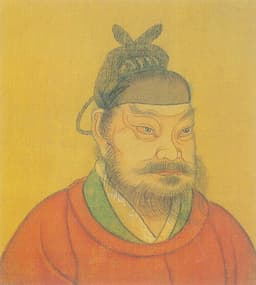
Shi Jingtang
Emperor · Medieval
46.3Total
Basic Information
Born
1309
892
Died
1388
942
Era
Medieval
Medieval
Nationality
India
China
Occupation
Emperor
Emperor
Civilization
Indian
Eastern
Score Comparison
Military (10%)
45.0
40.0
Political (20%)
72.0
39.4
Influence (20%)
56.4
53.3
Legacy (20%)
47.5
49.2
Leadership (15%)
68.0
41.5
Strategy (15%)
38.6
45.0
TOTAL
55.3
46.3
Firuz Shah Tughlaq — Complete Timeline
1354 AD
Construction of the Firuz Shah KotlaCultural◆ Major
Firuz Shah Tughlaq founded the city of Firuzabad and built the Firuz Shah Kotla fortress in Delhi. The complex included a palace, a mosque, and a pillar of Ashoka brought from Topra. It became a major administrative center.
Fort BuildingUrban PlanningArchitecture
constructive
1355 AD
Establishment of the Diwan-i-KhairatReform
Firuz Shah Tughlaq established the Diwan-i-Khairat, a department for charity and welfare. It provided financial assistance to the poor, widows, and orphans. This institutionalized state-sponsored social welfare in the Delhi Sultanate.
WelfareSocial ReformAdministration
Impact: nationalconstructive
1360 AD
Construction of Canals and Irrigation SystemsReform◆ Major
Firuz Shah Tughlaq oversaw the construction of five major canals from the Yamuna and Sutlej rivers to irrigate fields in the Delhi region. These canals improved agricultural productivity and reduced famine risk. They were a key public works achievement.
IrrigationAgriculturePublic Works
Impact: regionalconstructive
1365 AD
Imposition of Jizya on BrahminsPolitical Action◆ Major
Firuz Shah Tughlaq imposed the jizya tax on Brahmins, who had previously been exempt. This policy was based on his interpretation of Islamic law and caused resentment among Hindus. It marked a departure from earlier, more tolerant policies.
TaxationReligious PolicyHindu-Muslim Relations
Impact: nationaldestructive
Shi Jingtang — Complete Timeline
936 AD
Rebelled against Later TangWar◆ Major
Shi Jingtang, a general of Later Tang, rebelled against Emperor Li Congke. He sought help from the Khitan Liao dynasty, promising territorial concessions in return for military support.
Later TangRebellionKhitan Alliance
Impact: regionaldestructive
Founded Later Jin DynastyPolitical Action◆ Major
With Khitan support, Shi Jingtang defeated Later Tang and proclaimed himself emperor, founding the Later Jin dynasty. He ruled as a vassal of the Liao emperor, paying tribute and acknowledging Liao suzerainty.
Later JinDynasty FoundingVassalage
Impact: national
938 AD
Ceded Sixteen Prefectures to LiaoPolitical Action
Shi Jingtang formally ceded the Sixteen Prefectures of the Youyun region to the Khitan Liao dynasty as payment for their aid. This territorial loss weakened Chinese defenses and gave the Liao a strategic foothold for centuries.
Later JinLiaoTerritorial Cession
Impact: regionaldestructive
942 AD
Death and succession crisisPolitical Action
Shi Jingtang died, leaving a weak successor. His death triggered a power struggle that led to the Later Jin's eventual conquest by the Liao dynasty in 947.
Later JinSuccessionDecline
Impact: nationaltragic
Expert Analysis
Origins
Firuz Shah Tughlaq (1309–1388) was born to a Rajput mother and a Tughlaq father, likely of Turkic origin. He received a traditional Islamic education and was known for his piety and interest in history and architecture. His early life was shaped by the court of his cousin, Sultan Muhammad bin Tughlaq, where he served as a governor and gained administrative experience.
Shi Jingtang (892–942) was born into a Shatuo Turkic family in what is now northern China. He was a general under the Later Tang dynasty, known for his military prowess. His father served as a commander, and Shi Jingtang rose through the ranks due to his skill and connections.
Rise to Power
Firuz Shah ascended the Delhi Sultanate throne in 1351 after the death of Muhammad bin Tughlaq, amid a rebellion. He was chosen by nobles and religious leaders as a compromise candidate. His reign began with suppressing revolts and consolidating power, but he avoided large-scale military campaigns.
Shi Jingtang rebelled against Emperor Li Congke of Later Tang in 936, after being suspected of disloyalty. He sought aid from the Khitan Liao dynasty, promising to cede the Sixteen Prefectures. With Liao support, he defeated Later Tang and founded the Later Jin dynasty, ruling as a vassal of the Liao.
Leadership & Governance
Firuz Shah focused on public works and welfare. He constructed five major canals to irrigate fields, built the Firuz Shah Kotla fortress, and established the Diwan-i-Khairat for charity. He also imposed the jizya tax on Brahmins, reversing a policy of tolerance. His governance was paternalistic but fiscally conservative, avoiding expensive wars.
Shi Jingtang ruled as a puppet emperor, heavily dependent on Liao support. He ceded the Sixteen Prefectures, a strategic region that included Beijing, to the Liao. This weakened China's northern defenses for centuries. His governance was marked by subservience to foreign powers and internal instability.
Triumph & Tragedy
Firuz Shah's greatest success was his extensive public works: canals, hospitals, and mosques. The Firuz Shah Kotla remains a landmark. His irrigation projects boosted agriculture. However, his failure to maintain a strong military led to the decline of the sultanate. His imposition of jizya on Brahmins alienated non-Muslim subjects, scoring 45.0 in military and 38.6 in strategy.
Shi Jingtang's triumph was founding the Later Jin dynasty, but his tragedy was the cession of the Sixteen Prefectures. This territory became a launching pad for future invasions, and its loss was a strategic disaster. His political score of 39.4 reflects his subservience. He died leaving a weak heir, leading to the dynasty's fall within a decade.
Character & Destiny
Firuz Shah was religious, conservative, and benevolent but lacked ambition. He preferred building canals to conquering lands. His character led to stability but stagnation. He scored 68.0 in leadership for his administrative reforms, but his lack of military vision limited his impact.
Shi Jingtang was pragmatic and ruthless, willing to sacrifice territory for power. His decision to cede the Sixteen Prefectures was a short-term gain for long-term loss. His character reflects a survival instinct that ultimately doomed his dynasty. He scored 41.5 in leadership and 45.0 in strategy.
Legacy
Firuz Shah's legacy is visible in Delhi's architecture and irrigation systems. His welfare policies influenced later rulers. However, his military weakness contributed to the sultanate's fragmentation. He scored 47.5 in legacy.
Shi Jingtang's legacy is overwhelmingly negative in Chinese history. The loss of the Sixteen Prefectures is remembered as a national humiliation. His dynasty was short-lived, and his actions set a precedent for foreign interference. He scored 49.2 in legacy, slightly higher due to the historical significance of the territorial loss.
Conclusion
Firuz Shah Tughlaq had a greater overall impact with a total score of 55.3 compared to Shi Jingtang's 46.3. While Shi Jingtang's actions had profound consequences for China, they were largely destructive. Firuz Shah's public works improved lives and left lasting infrastructure. Though neither was a great military leader, Firuz Shah's governance and welfare projects outweigh Shi Jingtang's territorial concessions. Firuz Shah's legacy, though mixed, contributed more positively to civilization.
Rankings
🥇
Firuz Shah TughlaqLeader
Mil: 45.0Pol: 72.0Inf: 56.4
55.3
🥈
Shi Jingtang
Mil: 40.0Pol: 39.4Inf: 53.3
46.3
+9.0 behind
How This Comparison Works
Algorithm
Each figure is scored on 6 dimensions (0—100 scale) based on structured historical data: Military (10%), Political (20%), Influence (20%), Legacy (20%), Leadership (15%), Strategy (15%). The weighted total produces the final ranking.
Data Sources
Scores are computed from structured sub-indicators in the database. Scale factors adjust for era (Ancient ×0.85, Modern ×1.0) and civilization size (Eastern ×1.05, Other ×0.80) to account for differences in population and military scale.
Maximum 3 Figures
Comparisons are limited to 2—3 figures to ensure readability and statistical meaningfulness.
Error Margins
±5 points per dimension — Sub-scores are derived from historical records with inherent uncertainty. Two figures within 5 points on a dimension should be considered roughly equivalent in that area.
Total Score Accuracy
±3 points overall — The weighted combination of 6 dimensions produces a total score with approximately ±3 points of uncertainty. Differences of less than 3 points are not statistically significant— the figures are effectively tied.
Known Limitations
- Historical records are incomplete and uneven across civilizations
- Figures from oral-tradition societies may be underrepresented
- Occupation labels can misclassify multi-role figures
- Scores measure capability and impact, not moral character
- Quantitative scoring is a comparison tool, not absolute truth
Capability Radar
Military (10%) — Battles & Warfare
Battles
30
45
Win Rate
35
40
Expansion
10
25
Political (20%) — Governance & Reform
Reform
75
20
Diplomacy
60
60
Economy
65
25
Influence (20%) — Cultural & Global Reach
Cultural
50
20
Global
30
30
Legacy (20%) — Historical Impact
Historical
45
55
Longevity
40
40
Leadership (15%) — Power & Stability
Tenure
70
35
Stability
55
15
Strategy (15%) — Tactics & Innovation
Strategy
20
30
Tactics
25
35
Reform
15
20
Similar Comparisons
Comments & Discussion
No comments yet. Be the first to share your thoughts!