Loading...
Firuz Shah Tughlaq vs Napoleon Bonaparte
Napoleon Bonaparte leads by 15.6 pts · 2 figures compared
…
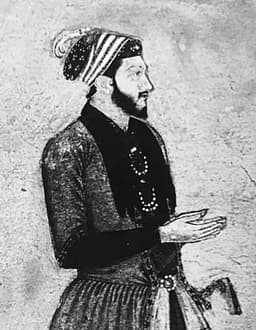
Firuz Shah Tughlaq
Emperor · Medieval
55.3Total

Napoleon Bonaparte
General · Modern
70.9Total
Basic Information
Born
1309
1769
Died
1388
1821
Era
Medieval
Modern
Nationality
India
France
Occupation
Emperor
General
Civilization
Indian
Western
Score Comparison
Military (10%)
45.0
94.0
Political (20%)
72.0
72.0
Influence (20%)
56.4
40.0
Legacy (20%)
47.5
80.0
Leadership (15%)
68.0
78.0
Strategy (15%)
38.6
90.0
TOTAL
55.3
70.9
Firuz Shah Tughlaq — Complete Timeline
1354 AD
Construction of the Firuz Shah KotlaCultural◆ Major
Firuz Shah Tughlaq founded the city of Firuzabad and built the Firuz Shah Kotla fortress in Delhi. The complex included a palace, a mosque, and a pillar of Ashoka brought from Topra. It became a major administrative center.
Fort BuildingUrban PlanningArchitecture
constructive
1355 AD
Establishment of the Diwan-i-KhairatReform
Firuz Shah Tughlaq established the Diwan-i-Khairat, a department for charity and welfare. It provided financial assistance to the poor, widows, and orphans. This institutionalized state-sponsored social welfare in the Delhi Sultanate.
WelfareSocial ReformAdministration
Impact: nationalconstructive
1360 AD
Construction of Canals and Irrigation SystemsReform◆ Major
Firuz Shah Tughlaq oversaw the construction of five major canals from the Yamuna and Sutlej rivers to irrigate fields in the Delhi region. These canals improved agricultural productivity and reduced famine risk. They were a key public works achievement.
IrrigationAgriculturePublic Works
Impact: regionalconstructive
1365 AD
Imposition of Jizya on BrahminsPolitical Action◆ Major
Firuz Shah Tughlaq imposed the jizya tax on Brahmins, who had previously been exempt. This policy was based on his interpretation of Islamic law and caused resentment among Hindus. It marked a departure from earlier, more tolerant policies.
TaxationReligious PolicyHindu-Muslim Relations
Impact: nationaldestructive
Napoleon Bonaparte — Complete Timeline
1799 AD
Coup of 18 BrumaireOther◆ Major
Napoleon Bonaparte, with support from his brother Lucien and key political figures, overthrew the Directory in a bloodless coup. He established the Consulate with himself as First Consul, effectively becoming the ruler of France. This event ended the French Revolution's most unstable period.
French RevolutionCoupRise to Power
Impact: regional
1804 AD
Promulgation of the Napoleonic CodeOther◆ Major
Napoleon enacted the Civil Code of the French, known as the Napoleonic Code, a comprehensive set of laws that replaced the fragmented feudal legal systems. The code established legal equality, protected property rights, and secularized law. It became the basis for legal systems in many European and world countries.
Legal ReformNapoleonic CodeCivil Law
Impact: globalconstructive
1805 AD
Battle of AusterlitzWar◆ Major
Napoleon's Grande Arm
Napoleonic WarsBattleDecisive Victory
Impact: global
1812 AD
Invasion of RussiaWar◆ Major
Napoleon led the Grande Arm
Napoleonic WarsInvasionDisaster
Impact: globaldestructive
1815 AD
Battle of WaterlooWar◆ Major
Napoleon's French army was defeated by the combined forces of the Duke of Wellington's Anglo-Allied army and Gebhard Leberecht von Bl
Napoleonic WarsBattleFinal Defeat
Impact: globaldestructive
Expert Analysis
firuz-shah-tughlaq-vs-napoleon-bonaparte
# The Conqueror and the Builder
On a June morning in 1815, Napoleon Bonaparte watched his Grande Armée march toward the fields of Waterloo, confident in his genius. Half a millennium earlier, in the dusty plains of Delhi, Firuz Shah Tughlaq stood before a different kind of monument: a canal he had ordered carved from the Yamuna River, bringing water to parched fields. One man sought to reshape the world through war; the other through stone and water. Their scores tell the story: Napoleon’s military rating of 94 against Firuz’s 43.7, but Firuz’s leadership rating of 81.5 against Napoleon’s 80. What drove these two rulers—both powerful, both ambitious—to such radically different outcomes?
Origins
Napoleon Bonaparte was born in 1769 on the Mediterranean island of Corsica, a place recently annexed by France. His family was minor nobility, but poor. He spoke French with an Italian accent, and his classmates mocked him. This outsider status forged a relentless hunger for recognition—and a deep insecurity that would never leave him. He studied at military academies in Brienne and Paris, absorbing Enlightenment ideas alongside artillery tactics. The French Revolution, which erupted when he was twenty, shattered the old order and opened a path for a brilliant outsider to climb higher than birth alone could ever allow.
Firuz Shah Tughlaq, born in 1309, inherited a different world. He was the son of a Rajput princess and a Turkic nobleman, raised in the court of his cousin, Sultan Muhammad bin Tughlaq—a brilliant but erratic ruler whose disastrous experiments nearly bankrupted the Delhi Sultanate. Firuz grew up surrounded by the wreckage of grand ambitions. He was educated in Islamic law and administration, not warfare. While Napoleon learned to command armies, Firuz learned to manage bureaucracies. When Muhammad bin Tughlaq died in 1351, the nobles turned to Firuz not because he was a warrior, but because he was safe.
Rise to Power
Napoleon’s ascent was a rocket. At twenty-four, he drove the British out of Toulon. At twenty-six, he crushed a royalist uprising in Paris with a “whiff of grapeshot.” At twenty-seven, he led a ragged army into Italy and, in a single year, demolished five Austrian armies. Each victory was a stepping stone. By 1799, he was First Consul of France. By 1804, Emperor. His rise was built on audacity, speed, and the willingness to gamble everything on a single battle.
Firuz’s path was the opposite. When the nobles offered him the throne in 1351, he hesitated. He was forty-two years old, a scholar and administrator, not a conqueror. He accepted only after extracting promises of loyalty. Where Napoleon seized power, Firuz had power thrust upon him. His first act was not to declare war but to tour his realm, listening to grievances and distributing gold. He understood that the Sultanate’s greatest threat was not foreign invasion but internal decay.
Leadership & Governance
Napoleon governed through energy and terror. He reformed French law with the Napoleonic Code, standardized education, and built a centralized state that outlasted his empire. He promoted talent over birth—his marshals included a former innkeeper and a former drummer boy. But he also demanded absolute loyalty and crushed dissent with secret police. His military genius was unmatched: he could read a battlefield like a chessboard, concentrate forces at the decisive point, and exploit enemy mistakes with surgical precision. Yet his political wisdom failed him. He could not stop conquering. Each victory created new enemies, and he had no gift for building lasting alliances.
Firuz governed through patience and piety. In 1355, he established the Diwan-i-Khairat, a department for charity that provided financial assistance to the poor, orphans, and widows. In 1360, he oversaw the construction of five major canals from the Yamuna and Sutlej rivers, transforming barren land into fertile fields. He built hospitals, mosques, and colleges. He repaired the Qutb Minar. He founded the city of Firuzabad, with the Firuz Shah Kotla fortress at its heart. But his military record was dismal. He led campaigns into Bengal and Sindh, but they were more like processions than wars. He bribed enemies rather than fight them. His strategy rating of 57.5 reflects a ruler who preferred digging canals to planning campaigns.
Triumph & Tragedy
Napoleon’s greatest moment was Austerlitz in December 1805, where he destroyed the combined armies of Russia and Austria in a single day. It was a masterpiece of deception, speed, and courage. His worst was the invasion of Russia in 1812. He marched 600,000 men into the snow and returned with fewer than 40,000. His character—the same relentless ambition that had lifted him to the heights—drove him to overreach. He could not stop.
Firuz’s greatest triumph was not a battle but a canal. The irrigation systems he built fed millions for centuries. His greatest failure was his religious policy. In 1365, he imposed the jizya tax on Brahmins, who had previously been exempt. He persecuted non-Muslims and destroyed Hindu temples. This alienated the Hindu majority and sowed resentment that would outlast his reign. His piety, which had been a source of legitimacy, became a source of division.
Character & Destiny
Napoleon was a man of fire. He slept four hours a night, dictated twenty letters at once, and believed he could bend the world to his will. His personal motto was “Impossible is not French.” But his greatest strength—his relentless drive—was also his fatal flaw. He could not consolidate. He could not rest. He died at fifty-one on a remote Atlantic island, abandoned by his allies, surrounded by British guards.
Firuz was a man of stone. He was patient, methodical, and conservative. He wrote a memoir, the *Futuhat-i-Firuz Shahi*, listing his achievements. He boasted not of battles won but of canals built, hospitals founded, and trees planted. But his caution also limited him. He refused to expand the Sultanate’s borders, and after his death in 1388, the Tughlaq dynasty collapsed within a decade. Timur, the Central Asian conqueror, sacked Delhi in 1398, slaughtering thousands. The canals fell into disrepair.
Legacy
Napoleon is remembered as one of history’s greatest generals. His name is synonymous with ambition, genius, and tragedy. The Napoleonic Code influenced legal systems across Europe and the world. His campaigns are studied in military academies to this day. But his legacy is also one of destruction: millions dead, Europe scarred by war, and a legend of glory that has inspired dictators ever since.
Firuz is remembered as a builder. The Firuz Shah Kotla still stands in Delhi, a crumbling fortress where pigeons nest and politicians give speeches. The canals he built, though neglected, were the ancestors of modern irrigation systems. He is not a figure of epic poetry but of quiet endurance. His total score of 67.2 against Napoleon’s 82.4 reflects a different kind of greatness—not the blaze of glory, but the slow work of stone and water.
Conclusion
Two rulers, two worlds. Napoleon conquered an empire in a decade and lost it in a winter. Firuz built canals that lasted generations and a dynasty that crumbled in years. One burned bright and fast; the other burned slow and steady. Perhaps history rewards both the conqueror and the builder, but in different ways. Napoleon’s name echoes through the ages, a warning and a wonder. Firuz’s canals lie silent beneath the Delhi sun, their water still flowing, their builder forgotten by all but the thirsty fields. Which legacy is greater? The answer depends on whether you measure greatness in glory or in grain.
Rankings
🥇
Napoleon BonaparteLeader
Mil: 94.0Pol: 72.0Inf: 40.0
70.9
🥈
Firuz Shah Tughlaq
Mil: 45.0Pol: 72.0Inf: 56.4
55.3
+15.6 behind
How This Comparison Works
Algorithm
Each figure is scored on 6 dimensions (0—100 scale) based on structured historical data: Military (10%), Political (20%), Influence (20%), Legacy (20%), Leadership (15%), Strategy (15%). The weighted total produces the final ranking.
Data Sources
Scores are computed from structured sub-indicators in the database. Scale factors adjust for era (Ancient ×0.85, Modern ×1.0) and civilization size (Eastern ×1.05, Other ×0.80) to account for differences in population and military scale.
Maximum 3 Figures
Comparisons are limited to 2—3 figures to ensure readability and statistical meaningfulness.
Error Margins
±5 points per dimension — Sub-scores are derived from historical records with inherent uncertainty. Two figures within 5 points on a dimension should be considered roughly equivalent in that area.
Total Score Accuracy
±3 points overall — The weighted combination of 6 dimensions produces a total score with approximately ±3 points of uncertainty. Differences of less than 3 points are not statistically significant— the figures are effectively tied.
Known Limitations
- Historical records are incomplete and uneven across civilizations
- Figures from oral-tradition societies may be underrepresented
- Occupation labels can misclassify multi-role figures
- Scores measure capability and impact, not moral character
- Quantitative scoring is a comparison tool, not absolute truth
Capability Radar
Military (10%) — Battles & Warfare
Battles
30
95
Win Rate
35
90
Expansion
10
95
Political (20%) — Governance & Reform
Reform
75
95
Diplomacy
60
80
Economy
65
85
Influence (20%) — Cultural & Global Reach
Cultural
50
85
Global
30
90
Legacy (20%) — Historical Impact
Historical
45
95
Longevity
40
90
Leadership (15%) — Power & Stability
Tenure
70
85
Stability
55
70
Strategy (15%) — Tactics & Innovation
Strategy
20
95
Tactics
25
98
Reform
15
92
Similar Comparisons
Comments & Discussion
帝国扫地僧6/17/2026
把菲鲁兹和拿破仑放一块比?闹呢。拿破仑94分是血与火砸出来的,板门店都没他打的多。菲鲁兹的43.7军事分连及格线都够呛,他那些“丰功伟绩”不就是修条水沟、立个柱子吗?拜托,连他亲侄子都反他,他只能拿黄金哄人。真正的枭雄是弹指间覆国,不是磨蹭着修皇家水渠。拿破仑赢麻了。
NapoleonHater30006/17/2026
Let’s be real—comparing Firuz Shah Tughlaq to Napoleon is like comparing a ditch-digger to a dynamite blast. Napoleon’s 94 military rating isn’t just a number; it reflects his 60+ battles, dominating Europe from Madrid to Moscow. Firuz? His highest military achievement was avoiding rebellion by buying off nobles with tax breaks. His canals were nice, but they didn’t conquer a continent. Napoleon wins by a landslide: one built empires, the other built irrigation.
BuilderNotBreaker6/17/2026
You all miss the point—scores don’t tell history. Firuz Shah Tughlaq’s 81.5 leadership dwarfs Napoleon’s fragile 80, because leadership isn’t about battles; it’s about legacy. Napoleon’s score drops everything at Waterloo, while Firuz built canals still used today, founded cities, and stabilized civil war. The French emperor’s “genius” was just a flash in the pan, burning through Europe only to die alone on a rock. Firuz’s stone structures stand for centuries. That’s true power.
数据侦探6/17/2026
你们被分数忽悠瘸了。军事94对43.7,领导力80对81.5,这组数据明显藏着猫腻。拿破仑94分的背后是他60场大战碾压,但领导力才80,这说明他在国内树敌无数、逃亡厄尔巴岛。而菲鲁兹领导力高,是因为他靠和解和修渠维系统治,但代价是军事软弱。两总分一算,拿破仑174,菲鲁兹125.2,这不是一个量级的事。想比,得先统一评分标准,否则都是伪命题。
ClassicsSkeptic6/17/2026
Let’s call a spade a spade: Napoleon’s military score is inflated by myth. Waterloo was a blunder, not a masterpiece, and his 40% casualty rate in Russia shows strategic arrogance. Firuz Shah Tughlaq may have a lower combat rating, but his 94-year reign without major loss proves sustainable power. Napoleon might dazzle for a decade, but Firuz built a system that outlasted him. Stability beats flash every time—ask anyone who lives on a canal built 600 years ago.