Loading...
Floriano Peixoto vs Zhang Xueliang
Zhang Xueliang leads by 2.2 pts · 2 figures compared
…

Floriano Peixoto
General · Modern
49.8Total
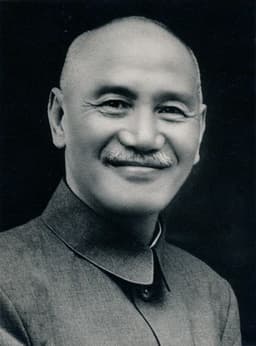
Zhang Xueliang
General · Modern
52.0Total
Basic Information
Born
1839
1901
Died
1895
2001
Era
Modern
Modern
Nationality
Brazil
China
Occupation
General
General
Civilization
Western
Eastern
Score Comparison
Military (10%)
46.7
46.7
Political (20%)
45.1
43.7
Influence (20%)
51.8
58.0
Legacy (20%)
44.2
54.0
Leadership (15%)
65.7
50.7
Strategy (15%)
45.0
51.7
TOTAL
49.8
52.0
Floriano Peixoto — Complete Timeline
1891 AD
Assumption of the PresidencyPolitical Action◆ Major
Floriano Peixoto became President of Brazil on November 23, 1891, after Deodoro da Fonseca's resignation. As Vice President, he assumed office under the constitution, but his rule was marked by authoritarianism.
PresidencySuccession
Impact: national
1893 AD
Suppression of the Naval RevoltWar◆ Major
Peixoto crushed a naval revolt led by Admiral Cust
Civil WarRebellion
Impact: nationaldestructive
Federalist RevolutionWar◆ Major
Peixoto faced the Federalist Revolution in Rio Grande do Sul, a civil war between federalists and republicans. The conflict lasted until 1895, with Peixoto's forces ultimately victorious, but at high cost.
Civil WarRebellion
Impact: regionaldestructive
1894 AD
End of Presidential TermPolitical Action◆ Major
Floriano Peixoto completed his term as president on November 15, 1894, handing power to Prudente de Morais. He was the first Brazilian president to serve a full term, despite governing under a state of siege.
PresidencyTransition
Impact: national
Zhang Xueliang — Complete Timeline
1928 AD
Inheritance of the Fengtian ArmyPolitical Action◆ Major
Zhang Xueliang inherited command of the Fengtian Army after his father Zhang Zuolin was assassinated by the Japanese. He became the Young Marshal and controlled Manchuria, one of China's most strategic regions.
Fengtian CliqueInheritanceMilitary Command
Impact: national
Northeast Flag ReplacementPolitical Action
Zhang Xueliang declared allegiance to the Nationalist government by replacing the Fengtian flag with the Kuomintang flag in Manchuria. This act nominally unified China under Chiang Kai-shek's rule and ended the warlord era in the northeast.
Chinese UnificationNationalist GovernmentPolitics
Impact: nationalconstructive
1931 AD
Loss of Manchuria to JapanWar
Zhang Xueliang's forces withdrew from Manchuria following the Mukden Incident, allowing Japan to occupy the region. His decision not to resist led to the establishment of Manchukuo and widespread criticism of his leadership.
Japanese InvasionManchuriaMilitary Decision
Impact: globaltragic
1936 AD
Xi'an IncidentPolitical Action
Zhang Xueliang kidnapped Chiang Kai-shek in Xi'an to force him to form a united front against Japan. The incident ended with Chiang's release and the establishment of the Second United Front between the KMT and CCP.
Xi'an IncidentUnited FrontKidnapping
Impact: globalconstructive
1937 AD
House Arrest by Chiang Kai-shekPolitical Action◆ Major
After the Xi'an Incident, Zhang Xueliang was placed under house arrest by Chiang Kai-shek. He remained in captivity for over 50 years, first in mainland China and later in Taiwan, until his release in 1990.
House ArrestPolitical PrisonerChiang Kai-shek
Impact: nationaltragic
Expert Analysis
Origins
Floriano Peixoto was born on April 30, 1839, in Maceió, Alagoas, Brazil, into a modest family. He entered the Military School of Rio de Janeiro at age 16, graduating as an artillery officer. His early career included service in the Paraguayan War (1864–1870), where he gained combat experience. Zhang Xueliang was born on June 3, 1901, in Haicheng, Liaoning, China, as the eldest son of warlord Zhang Zuolin. He received a traditional Chinese education alongside military training, preparing to inherit his father's power. Unlike Peixoto's formal military schooling, Zhang's upbringing was steeped in warlord politics and regional power dynamics.
Rise to Power
Peixoto rose through the military ranks, becoming a general and serving as Vice President under Deodoro da Fonseca. When Deodoro resigned on November 23, 1891, Peixoto assumed the presidency, citing constitutional succession. His rise was marked by a reputation for discipline and loyalty to the republic. Zhang Xueliang inherited the Fengtian Army after his father's assassination by the Japanese in 1928. He quickly consolidated power and declared allegiance to the Nationalist government via the Northeast Flag Replacement in December 1928. This move nominally unified Manchuria under Chiang Kai-shek, but Zhang retained regional autonomy.
Leadership & Governance
Peixoto's leadership was authoritarian and centralized. He suppressed the Naval Revolt (1893–1894) led by Admiral Custódio de Melo, using blockade and bombardment to crush the rebellion. He also faced the Federalist Revolution (1893–1895) in Rio Grande do Sul, a civil war between federalists and republicans. Peixoto's response was uncompromising: he suspended constitutional guarantees and used military force. His governance scored 65.7 in leadership, reflecting his iron-fisted control. Zhang's leadership was more conciliatory but indecisive. He attempted to balance regional warlord interests with national unity. His political score is 43.7, reflecting his vulnerability to manipulation. The Xi'an Incident in December 1936, where he kidnapped Chiang to force a united front against Japan, showed Zhang's willingness to act boldly but also his poor strategic planning.
Triumph & Tragedy
Peixoto's greatest triumph was completing his presidential term and handing power peacefully to Prudente de Morais on November 15, 1894, becoming the first Brazilian president to do so. However, his heavy-handed tactics during the rebellions caused thousands of deaths and deepened regional divisions. His military score is 46.7, modest for a general. Zhang's greatest success was the Xi'an Incident, which forced a fragile truce between Nationalists and Communists, laying groundwork for the Second United Front against Japan. Yet his tragedy was the loss of Manchuria to Japan in 1931 after the Mukden Incident. His decision not to resist led to Japanese occupation and a legacy of betrayal. Zhang's military score is also 46.7, but his influence score of 58.0 reflects the Xi'an Incident's historical weight.
Character & Destiny
Peixoto was known as the "Iron Marshal" for his stern, uncompromising nature. He was a strict positivist who believed in order and progress, often acting unilaterally. His character shaped a presidency of consolidation but also repression. Zhang was more complex: raised in luxury, he was initially seen as a playboy but later showed genuine patriotism. His impulsiveness during the Xi'an Incident led to 50 years of house arrest by Chiang. Both men's fates were tied to their decisions: Peixoto died in 1895, shortly after leaving office, while Zhang lived until 2001, a symbol of lost potential.
Legacy
Peixoto is remembered as a strong, if controversial, president who stabilized Brazil's early republic. His actions set precedents for executive power, but his authoritarian methods are criticized. His legacy score is 44.2. Zhang's legacy is more impactful: the Xi'an Incident is a pivotal moment in Chinese history, leading to the temporary unity against Japan. He is seen as a tragic hero who sacrificed his freedom for his country. His legacy score of 54.0 reflects this enduring narrative. Both men scored similarly in military (46.7 each) and political (45.1 vs 43.7), but Zhang's influence (58.0) and legacy (54.0) edge ahead.
Conclusion
Zhang Xueliang had a greater impact on history despite his lower political score. The Xi'an Incident reshaped China's trajectory, forcing a united front that influenced the outcome of the Second Sino-Japanese War. Peixoto's presidency was significant for Brazil's early republic but lacked global consequence. Zhang's total score of 52.0 surpasses Peixoto's 49.8, and his actions had repercussions beyond his lifetime. While Peixoto maintained order, Zhang changed a nation's course. Therefore, Zhang Xueliang stands as the more consequential figure.
Rankings
🥇
Zhang XueliangLeader
Mil: 46.7Pol: 43.7Inf: 58.0
52.0
🥈
Floriano Peixoto
Mil: 46.7Pol: 45.1Inf: 51.8
49.8
+2.2 behind
How This Comparison Works
Algorithm
Each figure is scored on 6 dimensions (0—100 scale) based on structured historical data: Military (10%), Political (20%), Influence (20%), Legacy (20%), Leadership (15%), Strategy (15%). The weighted total produces the final ranking.
Data Sources
Scores are computed from structured sub-indicators in the database. Scale factors adjust for era (Ancient ×0.85, Modern ×1.0) and civilization size (Eastern ×1.05, Other ×0.80) to account for differences in population and military scale.
Maximum 3 Figures
Comparisons are limited to 2—3 figures to ensure readability and statistical meaningfulness.
Error Margins
±5 points per dimension — Sub-scores are derived from historical records with inherent uncertainty. Two figures within 5 points on a dimension should be considered roughly equivalent in that area.
Total Score Accuracy
±3 points overall — The weighted combination of 6 dimensions produces a total score with approximately ±3 points of uncertainty. Differences of less than 3 points are not statistically significant— the figures are effectively tied.
Known Limitations
- Historical records are incomplete and uneven across civilizations
- Figures from oral-tradition societies may be underrepresented
- Occupation labels can misclassify multi-role figures
- Scores measure capability and impact, not moral character
- Quantitative scoring is a comparison tool, not absolute truth
Capability Radar
Military (10%) — Battles & Warfare
Battles
35
35
Win Rate
40
30
Expansion
10
20
Political (20%) — Governance & Reform
Reform
40
20
Diplomacy
30
55
Economy
25
15
Influence (20%) — Cultural & Global Reach
Cultural
25
30
Global
15
40
Legacy (20%) — Historical Impact
Historical
35
60
Longevity
20
45
Leadership (15%) — Power & Stability
Tenure
45
40
Stability
20
10
Strategy (15%) — Tactics & Innovation
Strategy
35
45
Tactics
30
40
Reform
20
25
Similar Comparisons
Comments & Discussion
No comments yet. Be the first to share your thoughts!