Loading...
Tito Okello vs Zhang Xueliang
Zhang Xueliang leads by 13.6 pts · 2 figures compared
…

Tito Okello
General · Modern
38.4Total
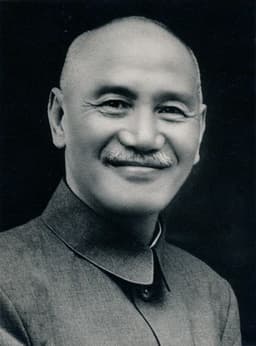
Zhang Xueliang
General · Modern
52.0Total
Basic Information
Born
1914
1901
Died
1996
2001
Era
Modern
Modern
Nationality
Uganda
China
Occupation
General
General
Civilization
Other
Eastern
Score Comparison
Military (10%)
50.0
46.7
Political (20%)
26.4
43.7
Influence (20%)
47.1
58.0
Legacy (20%)
37.5
54.0
Leadership (15%)
31.2
50.7
Strategy (15%)
35.7
51.7
TOTAL
38.4
52.0
Tito Okello — Complete Timeline
1985 AD
Overthrow of Milton ObotePolitical Action◆ Major
Tito Okello, as a senior military officer, participated in the 1985 coup that overthrew President Milton Obote. The coup was led by Bazilio Olara-Okello and resulted in the establishment of a military junta, with Tito Okello becoming president.
CoupUgandaOverthrow
Impact: nationaldestructive
Presidency of UgandaPolitical Action◆ Major
Tito Okello served as President of Uganda from July 1985 to January 1986, following the coup. His brief presidency was marked by efforts to negotiate peace with rebel groups, including Yoweri Museveni's National Resistance Army, but ultimately failed to stabilize the country.
PresidencyUgandaLeadership
Impact: national
Peace negotiations with MuseveniPolitical Action◆ Major
Okello engaged in peace negotiations with Yoweri Museveni's National Resistance Army in 1985, leading to the Nairobi Peace Accords. However, the accords failed to hold, and the NRA continued its military campaign, eventually capturing Kampala in January 1986.
Peace NegotiationsUgandaCivil War
Impact: nationalconstructive
1986 AD
Loss of power to MuseveniPolitical Action◆ Major
Okello's government was overthrown in January 1986 when Museveni's National Resistance Army captured Kampala. Okello fled into exile, ending his brief presidency and leading to Museveni's long rule.
OverthrowUgandaExile
Impact: nationaltragic
Zhang Xueliang — Complete Timeline
1928 AD
Inheritance of the Fengtian ArmyPolitical Action◆ Major
Zhang Xueliang inherited command of the Fengtian Army after his father Zhang Zuolin was assassinated by the Japanese. He became the Young Marshal and controlled Manchuria, one of China's most strategic regions.
Fengtian CliqueInheritanceMilitary Command
Impact: national
Northeast Flag ReplacementPolitical Action
Zhang Xueliang declared allegiance to the Nationalist government by replacing the Fengtian flag with the Kuomintang flag in Manchuria. This act nominally unified China under Chiang Kai-shek's rule and ended the warlord era in the northeast.
Chinese UnificationNationalist GovernmentPolitics
Impact: nationalconstructive
1931 AD
Loss of Manchuria to JapanWar
Zhang Xueliang's forces withdrew from Manchuria following the Mukden Incident, allowing Japan to occupy the region. His decision not to resist led to the establishment of Manchukuo and widespread criticism of his leadership.
Japanese InvasionManchuriaMilitary Decision
Impact: globaltragic
1936 AD
Xi'an IncidentPolitical Action
Zhang Xueliang kidnapped Chiang Kai-shek in Xi'an to force him to form a united front against Japan. The incident ended with Chiang's release and the establishment of the Second United Front between the KMT and CCP.
Xi'an IncidentUnited FrontKidnapping
Impact: globalconstructive
1937 AD
House Arrest by Chiang Kai-shekPolitical Action◆ Major
After the Xi'an Incident, Zhang Xueliang was placed under house arrest by Chiang Kai-shek. He remained in captivity for over 50 years, first in mainland China and later in Taiwan, until his release in 1990.
House ArrestPolitical PrisonerChiang Kai-shek
Impact: nationaltragic
Expert Analysis
Origins
**Tito Okello** was born in 1914 in the Acholi region of northern Uganda, then part of the British Uganda Protectorate. He came from a modest family and received limited formal education, joining the King's African Rifles (the British colonial army) as a young man. He rose through the ranks, gaining experience in counter-insurgency operations during the Mau Mau uprising in Kenya and later during Uganda's independence struggles.
**Zhang Xueliang** was born in 1901 in Haicheng, Liaoning, into a powerful warlord family. His father, Zhang Zuolin, was the ruler of Manchuria. Zhang Xueliang received a modern education, including private tutoring in Chinese classics and Western military training. He was groomed for leadership from a young age and became known as the "Young Marshal" after his father's death.
Rise to Power
Okello's rise came through the military. He supported Idi Amin's coup in 1971 and was appointed a senior officer. After Amin's overthrow, he served under President Milton Obote. In July 1985, Okello co-led a coup with Bazilio Olara-Okel that ousted Obote, and Okello assumed the presidency. His rule was immediately contested by Yoweri Museveni's National Resistance Army (NRA).
Zhang Xueliang's rise was rapid after his father's assassination in 1928 by the Japanese. He inherited the Fengtian Army and control of Manchuria, a vast region rich in resources. He declared allegiance to the Nationalist government of Chiang Kai-shek in the Northeast Flag Replacement, nominally unifying China under one government.
Leadership & Governance
Okello's leadership was short and ineffective. He attempted peace negotiations with Museveni, signing the Nairobi Peace Accords in December 1985, but failed to implement them. His government lacked control over the country, with the NRA advancing steadily. Okello's reliance on Acholi officers alienated other ethnic groups, and his administration was plagued by corruption and human rights abuses.
Zhang Xueliang's leadership was more complex. As warlord of Manchuria, he implemented reforms, including modernizing the army and promoting education. However, his decision not to resist the Japanese invasion after the Mukden Incident in 1931 led to the loss of Manchuria. He later became a key figure in the united front against Japan, culminating in the Xi'an Incident in 1936, where he kidnapped Chiang Kai-shek to force a coalition with the Communists. This action demonstrated his political independence but also led to his downfall.
Triumph & Tragedy
Okello's triumph was achieving the presidency, but his tragedy was losing it within six months. His peace efforts failed, and he was overthrown by Museveni in January 1986, forcing him into exile in Kenya, where he died in 1996.
Zhang Xueliang's triumph was the Xi'an Incident, which arguably changed the course of Chinese history by forcing a united front against Japan. His tragedy was his subsequent house arrest for over 50 years by Chiang Kai-shek, during which he lost all power and influence. He died in Hawaii in 2001.
Character & Destiny
Okello was a military man with limited political acumen. His inability to consolidate power or negotiate effectively sealed his fate. Historians view him as a transitional figure in Uganda's turbulent history.
Zhang Xueliang was a complex character: patriotic but flawed. His decision to kidnap Chiang showed courage, but his naivety about the consequences led to his imprisonment. He is remembered as a tragic hero who sacrificed his freedom for national unity.
Legacy
Okello's legacy is minimal. He is remembered as a footnote in Ugandan history, a brief president between Obote and Museveni. His scores reflect this: Military 50.0, Political 26.4, Influence 47.1, Legacy 37.5, Leadership 31.2, Strategy 35.7, TOTAL 38.4.
Zhang Xueliang's legacy is more significant. He scored 46.7 in Military, 43.7 in Political, 58.0 in Influence, 54.0 in Legacy, 50.7 in Leadership, 51.7 in Strategy, TOTAL 52.0. The Xi'an Incident is a major historical event, and his role in promoting the united front against Japan is widely recognized. However, his failure to defend Manchuria tarnishes his reputation.
Conclusion
Zhang Xueliang had a greater impact than Tito Okello. Despite his flaws, Zhang's actions in the Xi'an Incident influenced China's wartime strategy and ultimately the outcome of the Chinese Civil War. Okello's brief presidency left no lasting mark. The score gap of 13.6 points reflects this. Zhang Xueliang's influence and legacy scores (58.0 and 54.0) dwarf Okello's (47.1 and 37.5). While neither achieved their full potential, Zhang's historical significance is undeniable.
Rankings
🥇
Zhang XueliangLeader
Mil: 46.7Pol: 43.7Inf: 58.0
52.0
🥈
Tito Okello
Mil: 50.0Pol: 26.4Inf: 47.1
38.4
+13.6 behind
How This Comparison Works
Algorithm
Each figure is scored on 6 dimensions (0—100 scale) based on structured historical data: Military (10%), Political (20%), Influence (20%), Legacy (20%), Leadership (15%), Strategy (15%). The weighted total produces the final ranking.
Data Sources
Scores are computed from structured sub-indicators in the database. Scale factors adjust for era (Ancient ×0.85, Modern ×1.0) and civilization size (Eastern ×1.05, Other ×0.80) to account for differences in population and military scale.
Maximum 3 Figures
Comparisons are limited to 2—3 figures to ensure readability and statistical meaningfulness.
Error Margins
±5 points per dimension — Sub-scores are derived from historical records with inherent uncertainty. Two figures within 5 points on a dimension should be considered roughly equivalent in that area.
Total Score Accuracy
±3 points overall — The weighted combination of 6 dimensions produces a total score with approximately ±3 points of uncertainty. Differences of less than 3 points are not statistically significant— the figures are effectively tied.
Known Limitations
- Historical records are incomplete and uneven across civilizations
- Figures from oral-tradition societies may be underrepresented
- Occupation labels can misclassify multi-role figures
- Scores measure capability and impact, not moral character
- Quantitative scoring is a comparison tool, not absolute truth
Capability Radar
Military (10%) — Battles & Warfare
Battles
15
35
Win Rate
10
30
Expansion
10
20
Political (20%) — Governance & Reform
Reform
5
20
Diplomacy
10
55
Economy
5
15
Influence (20%) — Cultural & Global Reach
Cultural
5
30
Global
5
40
Legacy (20%) — Historical Impact
Historical
10
60
Longevity
5
45
Leadership (15%) — Power & Stability
Tenure
10
40
Stability
5
10
Strategy (15%) — Tactics & Innovation
Strategy
15
45
Tactics
20
40
Reform
10
25
Similar Comparisons
Comments & Discussion
No comments yet. Be the first to share your thoughts!