Loading...
Francis Walsingham vs Kiichi Miyazawa
Francis Walsingham leads by 11.3 pts · 2 figures compared
…
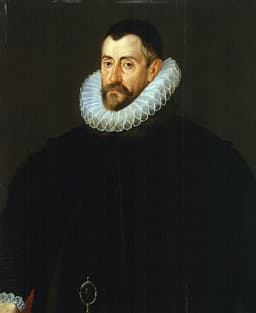
Francis Walsingham
Politician · Modern
57.7Total

Kiichi Miyazawa
Politician · Modern
46.4Total
Basic Information
Born
1532
1919
Died
1590
2007
Era
Modern
Modern
Nationality
England
Japan
Occupation
Politician
Politician
Civilization
Western
Eastern
Score Comparison
Military (10%)
50.0
14.6
Political (20%)
55.0
48.0
Influence (20%)
59.0
54.9
Legacy (20%)
55.0
45.0
Leadership (15%)
78.0
65.0
Strategy (15%)
42.7
30.0
TOTAL
57.7
46.4
Francis Walsingham — Complete Timeline
1571 AD
Discovery of the Ridolfi PlotPolitical Action◆ Major
Walsingham uncovered the Ridolfi Plot, a Catholic conspiracy to assassinate Elizabeth I and replace her with Mary, Queen of Scots. His intelligence work led to the execution of the Duke of Norfolk and the tightening of surveillance on Mary.
ConspiracyIntelligenceSecurity
Impact: nationalconstructive
1573 AD
Appointed Secretary of StatePolitical Action◆ Major
Walsingham was appointed Secretary of State by Queen Elizabeth I, becoming her principal secretary and spymaster. He established an extensive intelligence network across Europe to protect Elizabeth from Catholic plots and foreign threats.
AppointmentIntelligenceGovernment
Impact: national
1585 AD
Treaty of NonsuchPolitical Action◆ Major
Walsingham negotiated the Treaty of Nonsuch, which committed England to military support for the Dutch rebels against Spanish rule. This treaty marked England's direct entry into the war with Spain and led to the Spanish Armada's invasion attempt.
TreatyDiplomacyWar
Impact: regional
1586 AD
Babington Plot and Execution of Mary, Queen of ScotsPolitical Action
Walsingham's agents intercepted coded letters revealing the Babington Plot, in which Mary, Queen of Scots, conspired to assassinate Elizabeth. He used this evidence to secure Mary's trial and execution in 1587, eliminating the Catholic threat to the throne.
ConspiracyExecutionIntelligence
Impact: regionaldestructive
1590 AD
Death of Francis WalsinghamPolitical Action◆ Major
Walsingham died in London, heavily in debt due to his intelligence expenses. His death left England without its most effective spymaster, and his network declined. He is remembered as a pioneer of modern espionage and a key defender of the Elizabethan state.
DeathLegacyIntelligence
Impact: national
Kiichi Miyazawa — Complete Timeline
1991 AD
Elected Prime Minister of JapanPolitical Action◆ Major
Miyazawa was elected as Prime Minister of Japan, succeeding Toshiki Kaifu. He was a veteran LDP politician and former finance minister, taking office during the collapse of the Japanese asset price bubble.
JapanPrime MinisterLDP
Impact: national
1992 AD
Managed response to bubble economy collapsePolitical Action◆ Major
Miyazawa's government faced the bursting of Japan's asset price bubble, leading to a severe recession. He implemented economic stimulus packages and bank bailouts, but the economy entered a prolonged period of stagnation known as the Lost Decade.
JapanEconomic CrisisLost Decade
Impact: nationaltragic
1993 AD
Lost no-confidence vote and resignedPolitical Action◆ Major
Miyazawa lost a no-confidence motion in the Diet after failing to pass political reform bills. This triggered a general election that ended LDP rule, and Miyazawa resigned as prime minister and party leader.
JapanResignationPolitical Reform
Impact: nationaltragic
1998 AD
Served as Finance Minister during Asian financial crisisPolitical Action◆ Major
Miyazawa was appointed Finance Minister under Prime Minister Keizo Obuchi. He played a key role in Japan's response to the Asian financial crisis, including proposing the Miyazawa Initiative to provide financial assistance to affected countries.
JapanFinance MinisterAsian Financial Crisis
Impact: regionalconstructive
Expert Analysis
Origins
Francis Walsingham was born around 1532 into a well-connected English gentry family; his father was a lawyer and his mother a courtier. He studied at Cambridge and later traveled in Europe, where he developed a deep distrust of Catholic powers. His Protestant faith and diplomatic experience shaped his later intelligence career.
Kiichi Miyazawa was born on October 8, 1919, in Tokyo into a politically active family; his father was a journalist and later a Diet member. He graduated from Tokyo Imperial University with a law degree and joined the Ministry of Finance. His early career in economic policy would define his political trajectory.
Rise to Power
Walsingham rose as a trusted advisor to Queen Elizabeth I. He was appointed ambassador to France in 1570, where he negotiated the Treaty of Blois. His key turning point came in 1573 when he became Secretary of State, giving him control over foreign affairs and intelligence. He built a network of spies across Europe, uncovering plots against Elizabeth.
Miyazawa rose through the Liberal Democratic Party (LDP) as a fiscal expert. He served as Finance Minister in the 1980s, overseeing Japan's booming economy. In 1991, he became Prime Minister, succeeding Toshiki Kaifu. His rise coincided with the peak of Japan's asset bubble, and he was expected to manage economic growth.
Leadership & Governance
Walsingham's leadership was clandestine and methodical. He established England's first professional intelligence service, using ciphers, double agents, and surveillance. His governance focused on protecting Elizabeth and Protestant England. He personally managed the Babington Plot, intercepting letters that led to Mary Queen of Scots' execution in 1587. His political score of 55.0 reflects his effectiveness as a spymaster rather than a public leader.
Miyazawa's governance was reactive and consensus-driven. As Prime Minister, he faced the bursting of Japan's asset bubble in 1992. He implemented economic stimulus packages and bank bailouts, but his failure to pass political reform bills led to a no-confidence vote in 1993, ending his term. His leadership score of 65.0 indicates a competent but constrained leader during a crisis.
Triumph & Tragedy
Walsingham's greatest triumph was the Babington Plot, where his agents intercepted coded letters proving Mary's treason. This led to Mary's execution, securing Elizabeth's throne. However, his intelligence network was expensive; he died in 1590 deeply in debt (over £100,000). His tragedy was that his system of surveillance, while effective, was not maintained after his death, leaving England vulnerable.
Miyazawa's triumph was his role as Finance Minister during the Asian financial crisis in 1998, where he proposed the Miyazawa Plan, offering $30 billion in aid to affected countries. His tragedy was his premiership: he failed to address the root causes of Japan's economic stagnation, and his government fell after losing a no-confidence vote. His legacy score of 45.0 reflects his mixed record.
Character & Destiny
Walsingham was meticulous, secretive, and devoutly Protestant. He believed that the ends justified the means, using agents like Thomas Phelippes to crack codes. His destiny was to be remembered as the architect of Elizabethan intelligence, but his financial ruin showed the cost of his dedication.
Miyazawa was a pragmatic technocrat, cautious and deferential to party factions. His character led to indecision during the bubble's collapse; he prioritized stability over reform. His destiny was to be the prime minister who presided over the end of LDP dominance, a symbol of Japan's lost decade.
Legacy
Walsingham's legacy is foundational to modern espionage. His methods—code-breaking, double agents, and intelligence networks—influenced later British agencies. He scored 55.0 in legacy, reflecting his niche but lasting impact.
Miyazawa's legacy is tied to Japan's economic stagnation. The Miyazawa Plan remains a model for international financial assistance, but his failure to reform banking systems contributed to a decade of deflation. His legacy score of 45.0 is lower due to the negative outcomes of his tenure.
Conclusion
Francis Walsingham had greater impact. His intelligence work directly altered the course of English history by eliminating a major threat and stabilizing Elizabeth's rule. Miyazawa, despite his economic expertise, failed to prevent Japan's downturn and lost power ignominiously. Walsingham's total score of 57.7 against Miyazawa's 46.4 reflects this: Walsingham's strategic influence, though less visible, was more decisive.
Rankings
🥇
Francis WalsinghamLeader
Mil: 50.0Pol: 55.0Inf: 59.0
57.7
🥈
Kiichi Miyazawa
Mil: 14.6Pol: 48.0Inf: 54.9
46.4
+11.3 behind
How This Comparison Works
Algorithm
Each figure is scored on 6 dimensions (0—100 scale) based on structured historical data: Military (10%), Political (20%), Influence (20%), Legacy (20%), Leadership (15%), Strategy (15%). The weighted total produces the final ranking.
Data Sources
Scores are computed from structured sub-indicators in the database. Scale factors adjust for era (Ancient ×0.85, Modern ×1.0) and civilization size (Eastern ×1.05, Other ×0.80) to account for differences in population and military scale.
Maximum 3 Figures
Comparisons are limited to 2—3 figures to ensure readability and statistical meaningfulness.
Error Margins
±5 points per dimension — Sub-scores are derived from historical records with inherent uncertainty. Two figures within 5 points on a dimension should be considered roughly equivalent in that area.
Total Score Accuracy
±3 points overall — The weighted combination of 6 dimensions produces a total score with approximately ±3 points of uncertainty. Differences of less than 3 points are not statistically significant— the figures are effectively tied.
Known Limitations
- Historical records are incomplete and uneven across civilizations
- Figures from oral-tradition societies may be underrepresented
- Occupation labels can misclassify multi-role figures
- Scores measure capability and impact, not moral character
- Quantitative scoring is a comparison tool, not absolute truth
Capability Radar
Military (10%) — Battles & Warfare
Battles
27
14
Win Rate
33
19
Expansion
35
18
Political (20%) — Governance & Reform
Reform
60
40
Diplomacy
85
50
Economy
55
30
Influence (20%) — Cultural & Global Reach
Cultural
40
30
Global
55
30
Legacy (20%) — Historical Impact
Historical
75
35
Longevity
65
25
Leadership (15%) — Power & Stability
Tenure
70
55
Stability
75
25
Strategy (15%) — Tactics & Innovation
Strategy
38
24
Tactics
43
27
Reform
42
29
Similar Comparisons
Comments & Discussion
No comments yet. Be the first to share your thoughts!