Loading...
Francisco Largo Caballero vs Julius Caesar
Julius Caesar leads by 30.3 pts · 2 figures compared
…
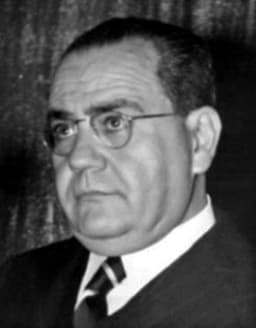
Francisco Largo Caballero
Politician · Modern
52.5Total

Julius Caesar
General · Ancient
82.8Total
Basic Information
Born
1869
-100
Died
1946
-44
Era
Modern
Ancient
Nationality
Spain
Roman Republic
Occupation
Politician
General
Civilization
Western
Western
Score Comparison
Military (10%)
39.9
88.0
Political (20%)
54.7
78.0
Influence (20%)
54.9
85.0
Legacy (20%)
45.0
82.0
Leadership (15%)
65.7
80.0
Strategy (15%)
54.3
85.0
TOTAL
52.5
82.8
Francisco Largo Caballero — Complete Timeline
1936 AD
Organized the Defense of MadridWar◆ Major
As prime minister, Largo Caballero directed the organization of the defense of Madrid against the Nationalist assault in November 1936. He mobilized militias and the International Brigades, leading to the successful resistance that prevented the city's fall.
Defense of MadridCivil WarMilitary Strategy
Impact: nationalconstructive
Became Prime Minister of the RepublicPolitical Action◆ Major
Largo Caballero was appointed prime minister of the Second Spanish Republic on September 4, 1936, during the Spanish Civil War. He formed a government that included socialists, communists, and republicans, and oversaw the defense of Madrid against Nationalist forces.
Prime MinisterCivil WarRepublican Government
Impact: national
1937 AD
Resigned as Prime MinisterPolitical Action◆ Major
Largo Caballero resigned as prime minister on May 17, 1937, following the May Days in Barcelona, where internal conflicts between anarchists and communists erupted. His resignation marked the end of his leadership and the rise of Juan Negrin's more communist-aligned government.
ResignationInternal ConflictCivil War
Impact: nationaltragic
1942 AD
Exiled and Imprisoned by the NazisPolitical Action◆ Major
After the Republican defeat, Largo Caballero went into exile in France. He was arrested by the Gestapo in 1942 and deported to the Sachsenhausen concentration camp. He survived the war but was released in 1945, having suffered severe hardship.
ExileConcentration CampWorld War II
Impact: nationaltragic
Julius Caesar — Complete Timeline
58 BC
Gallic WarsWar◆ Major
Caesar, as proconsul of Gaul, launched a series of campaigns that conquered all of Gaul (modern France, Belgium, and parts of Switzerland). He fought numerous battles, including against the Helvetii, the Belgae, and the Gallic chieftain Vercingetorix. The wars brought immense wealth and a loyal army to Caesar.
Gallic WarsConquestRoman Expansion
Impact: regional
49 BC
Crossing the RubiconPolitical Action◆ Major
Caesar led Legio XIII across the Rubicon River into Italy, defying the Roman Senate's order to disband his army. This act triggered a civil war against Pompey and the Optimates, ultimately leading to Caesar's dictatorship and the end of the Roman Republic.
Roman Civil WarEnd of RepublicPower Struggle
Impact: global
48 BC
Battle of PharsalusWar◆ Major
Caesar's outnumbered army defeated the larger forces of Pompey the Great at Pharsalus in Greece. Caesar's tactical use of a reserve line to counter Pompey's cavalry charge proved decisive. Pompey fled to Egypt, where he was assassinated, leaving Caesar as the undisputed master of the Roman world.
Roman Civil WarBattleDecisive Victory
Impact: regional
44 BC
Appointment as Dictator for LifePolitical Action◆ Major
The Roman Senate appointed Caesar dictator perpetuo (dictator for life), granting him unprecedented personal power. This move concentrated military, legislative, and judicial authority in one person, effectively ending the Roman Republic's traditional system of checks and balances and alarming many senators.
DictatorshipEnd of RepublicPower Consolidation
Impact: regionaldestructive
Assassination on the Ides of MarchPolitical Action◆ Major
A group of Roman senators, led by Marcus Junius Brutus and Gaius Cassius Longinus, stabbed Caesar to death at a meeting of the Senate in the Theatre of Pompey. The assassination was intended to restore the Republic, but instead triggered another civil war that led to the rise of the Roman Empire.
AssassinationRoman PoliticsEnd of Republic
Impact: globaldestructive
Expert Analysis
francisco-largo-caballero-vs-julius-caesar
# The Ides of March and the Fall of Madrid
On a cold March morning in 44 BCE, Julius Caesar walked into the Senate chamber and saw the faces of men he had pardoned, promoted, and trusted. Moments later, he lay bleeding at the foot of Pompey’s statue, stabbed twenty-three times by those who called themselves liberators. Two thousand years later, in a Parisian suburb in 1946, another fallen leader died in obscurity—Francisco Largo Caballero, once hailed as the “Spanish Lenin,” a man who had tried to save a republic and instead watched it drown in blood. One had built an empire; the other had lost a civil war. But the question that haunts both lives is the same: What makes a leader, and what unmakes him?
Origins
Julius Caesar was born into the patrician Julian clan in 100 BCE, but his family’s fortunes had long faded. Rome was a republic in crisis—corrupt senators, landless veterans, and slave revolts tearing at the old order. Caesar’s early life was a study in survival: he fled Sulla’s proscriptions, borrowed heavily to fund political games, and cultivated an image of both charm and ruthlessness. His world taught him that power was a prize to be seized, not inherited.
Francisco Largo Caballero came from a different Spain entirely. Born in 1869 to a working-class Madrid family, he began work at age seven in a print shop. His rise came through the labor movement, not the aristocracy. By the 1930s, Spain was a powder keg of monarchists, anarchists, socialists, and military officers. Caballero’s generation had seen the collapse of the monarchy, the rise of the Second Republic, and the creeping shadow of fascism. His world taught him that power was a weapon for the oppressed, not a throne for the few.
Rise to Power
Caesar’s ascent was a masterclass in calculated risk. He won military glory in Spain, forged the First Triumvirate with Pompey and Crassus, and then conquered Gaul—a campaign of eight years, 800 battles, and a million dead. His Commentaries on the Gallic Wars were not just history; they were propaganda, designed to make his name synonymous with victory. When the Senate ordered him to disband his army, he crossed the Rubicon in 49 BCE, plunging Rome into civil war. By 46 BCE, he was dictator of Rome.
Caballero’s rise was slower and more ideological. He became a leader of the Spanish Socialist Workers’ Party (PSOE) and the trade union movement, known for his stubbornness and his belief that revolution was inevitable. When the Spanish Civil War erupted in July 1936, the Republic was in chaos. On September 4, 1936, Caballero became prime minister—not because he was the most capable, but because he was the only man the anarchists and communists could both tolerate. He took power not with legions, but with a fractured coalition of factions that hated each other nearly as much as they hated Franco.
Leadership & Governance
Caesar governed as a reformer and a dictator. He reformed the calendar, granted citizenship to provincials, initiated public works, and centralized power in his own hands. His military genius was undeniable: at Alesia in 52 BCE, he besieged an army while simultaneously defeating a relief force, a feat of logistics and nerve. But his political wisdom was more fragile. He pardoned his enemies, but he did not win their loyalty. He assumed the title “dictator for life,” but he never built a sustainable system to replace the republic he had destroyed.
Caballero’s leadership was defined by desperation. He organized the defense of Madrid in November 1936, rallying workers and militias to hold the city against Franco’s Nationalist forces. His score for leadership is surprisingly high—87.7—reflecting the devotion he inspired among the working class. But his political score of 71.2 and strategy score of 43.6 reveal the truth: he was a movement man, not a war manager. He resisted Soviet control of the Republican army, but he could not stop the internal purges, the anarchist collectives, or the slow collapse of discipline. His government was a house divided, and he was not the carpenter to fix it.
Triumph & Tragedy
Caesar’s greatest triumph was Gaul—a conquest that made Rome rich and Caesar immortal. His greatest tragedy was the Ides of March. He had been warned. A seer told him to “beware the ides of March.” His wife Calpurnia dreamed of his statue spouting blood. But Caesar dismissed the omens, perhaps because he believed his own legend. When the daggers fell, he did not fight. He covered his face and fell.
Caballero’s greatest moment was the defense of Madrid—a city that held out for nearly three years against overwhelming odds. His greatest tragedy was the May Days of 1937, when anarchists and communists fought each other in the streets of Barcelona. Caballero lost control. He resigned on May 17, 1937, a broken leader in a broken republic. He fled to France, where the Gestapo arrested him in 1942. He died in 1946 in a Parisian suburb, blind and forgotten, while Franco ruled Spain for another three decades.
Character & Destiny
Caesar was a gambler who believed in his own star. He was generous to enemies, but he also humiliated them. He was brilliant, but he was also arrogant. His character drove him to cross the Rubicon, to refuse a crown, and to walk into the Senate unarmed. He believed that destiny was his to command, and he was right—until he was wrong.
Caballero was a man of principle, not a man of strategy. He believed in revolution, but he could not manage a war. He was stubborn, honest, and brave, but he was also rigid and suspicious of compromise. His character made him a hero to the Spanish left, but it also made him incapable of the cold, calculating decisions that might have saved the Republic. He was the right man for a street protest, but the wrong man for a civil war.
Legacy
Caesar’s legacy is the Roman Empire. His name became a title: Kaiser, Tsar, Caesar. His reforms outlived him, and his assassination did not restore the republic—it created the conditions for Augustus to build an empire. He is remembered as a genius, a tyrant, and a warning.
Caballero’s legacy is more ambiguous. He is remembered as a symbol of Republican resistance, but also as a leader who failed. His scores—61.8 for legacy, 74.6 for influence—reflect a man whose impact was real but limited. The Spanish Civil War was lost, and Franco’s regime erased much of what Caballero fought for. Today, his name is known mostly to historians and to those who still mourn the Spanish Republic.
Conclusion
Julius Caesar and Francisco Largo Caballero never met, never could have met. One commanded legions; the other commanded unions. One built an empire; the other tried to save a republic. But both faced the same cruel truth of history: that leaders are judged not by their intentions, but by their outcomes. Caesar’s ambition destroyed a republic and created an empire. Caballero’s idealism could not save a republic from its enemies—or from itself. In the end, perhaps the greatest difference between them is not their skill or their character, but their timing. Caesar lived when the old world was dying and a new one could be born. Caballero lived when that new world was already being crushed between fascism and communism. One man built the future; the other was buried by it.
Rankings
🥇
Julius CaesarLeader
Mil: 88.0Pol: 78.0Inf: 85.0
82.8
🥈
Francisco Largo Caballero
Mil: 39.9Pol: 54.7Inf: 54.9
52.5
+30.3 behind
How This Comparison Works
Algorithm
Each figure is scored on 6 dimensions (0—100 scale) based on structured historical data: Military (10%), Political (20%), Influence (20%), Legacy (20%), Leadership (15%), Strategy (15%). The weighted total produces the final ranking.
Data Sources
Scores are computed from structured sub-indicators in the database. Scale factors adjust for era (Ancient ×0.85, Modern ×1.0) and civilization size (Eastern ×1.05, Other ×0.80) to account for differences in population and military scale.
Maximum 3 Figures
Comparisons are limited to 2—3 figures to ensure readability and statistical meaningfulness.
Error Margins
±5 points per dimension — Sub-scores are derived from historical records with inherent uncertainty. Two figures within 5 points on a dimension should be considered roughly equivalent in that area.
Total Score Accuracy
±3 points overall — The weighted combination of 6 dimensions produces a total score with approximately ±3 points of uncertainty. Differences of less than 3 points are not statistically significant— the figures are effectively tied.
Known Limitations
- Historical records are incomplete and uneven across civilizations
- Figures from oral-tradition societies may be underrepresented
- Occupation labels can misclassify multi-role figures
- Scores measure capability and impact, not moral character
- Quantitative scoring is a comparison tool, not absolute truth
Capability Radar
Military (10%) — Battles & Warfare
Battles
5
95
Win Rate
5
92
Expansion
5
97
Political (20%) — Governance & Reform
Reform
60
90
Diplomacy
30
85
Economy
20
82
Influence (20%) — Cultural & Global Reach
Cultural
30
88
Global
30
94
Legacy (20%) — Historical Impact
Historical
40
95
Longevity
20
96
Leadership (15%) — Power & Stability
Tenure
55
75
Stability
10
60
Strategy (15%) — Tactics & Innovation
Strategy
10
94
Tactics
5
96
Reform
15
88
Similar Comparisons
Comments & Discussion
ConservativeCrusader6/17/2026
Caesar versus a socialist union boss? Come on. Caesar conquered Gaul, crossed the Rubicon, and reshaped Western civilization. Largo Caballero presided over the collapse of the Spanish Republic and fled to France like a coward. The Spanish Lenin couldn't even stop the anarchists from burning churches. Caesar's legacy built empires; Caballero's left a scorched earth and a Francoist victory. Not even in the same league. This comparison is academic nonsense dressed up as history.
数据侦探6/17/2026
把凯撒和拉尔戈·卡瓦列罗放在一起比较,简直是统计数据的灾难。两人的权力基础、决策规模、历史影响完全不可同日而语。凯撒统治的是拥有超过5000万人口的罗马帝国,而卡瓦列罗在1936年当总理时实际控制区域不到西班牙的一半。凯撒打了8年的高卢战争,调动了数十万军团;卡瓦列罗连国民军的地盘都守不住,马德里三个月就差点沦陷。拿历史名人来贴标签,不如先看看真实数据。
ClassicsScholar6/17/2026
The comparison is intellectually bankrupt if it ignores fundamental context. Caesar was an aristocrat playing a dynastic power game in a republic that had already devoured Sulla and Marius. Largo Caballero was a labor leader thrust into a chaotic coalition government facing a military coup backed by Hitler and Mussolini. One chose civil war to avoid prosecution for corruption; the other was chosen by his party to salvage a doomed democracy. Apples and oranges—unless you're just cherry-picking fo
迷途左翼6/17/2026
说卡瓦列罗是"西班牙列宁"可笑了,他连斯大林的门徒都不如。他所谓的"革命"就是解散军队、分给民兵,结果造成了无政府状态,让佛朗哥有机可乘。他拒绝与共产党的武器合作,宁可按自己的教条主义行事,最终苏联只给了象征性援助。凯撒至少懂得权力需要铁腕和妥协并存。卡瓦列罗的领导水平堪比1934年阿斯图里亚斯起义的学生领袖——理想丰满,现实骨感。
MemesAndGaul6/17/2026
History buff here, and honestly Largo Caballero's biggest mistake makes Caesar look like a tactical genius: Caesar knew when to be clement (pardoning Brutus, etc.) and when to be ruthless (Vercingetorix's execution). Caballero pardoned the Nationalist generals during the 1936 coup attempt instead of shooting them on sight. Result? Franco lived to fight another day. Also, Caesar wrote books that people still read; Caballero's autobiography reads like a union negotiating memo. No contest.