Loading...
Franjo Tuđman vs Sara Duterte
Franjo Tuđman leads by 18.7 pts · 2 figures compared
…
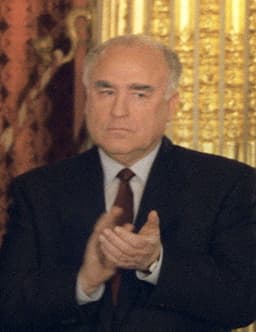
Franjo Tuđman
Politician · Modern
57.2Total

Sara Duterte
Politician · Modern
38.5Total
Basic Information
Born
1922
1978
Died
—
—
Era
Modern
Modern
Nationality
Croatia
Philippines
Occupation
Politician
Politician
Civilization
Western
Eastern
Score Comparison
Military (10%)
41.6
11.6
Political (20%)
68.0
30.8
Influence (20%)
60.0
47.9
Legacy (20%)
49.2
36.7
Leadership (15%)
68.0
55.3
Strategy (15%)
53.8
32.5
TOTAL
57.2
38.5
Franjo Tuđman — Complete Timeline
1990 AD
Election as First President of Independent CroatiaPolitical Action◆ Major
Franjo Tuđman was elected president of the Socialist Republic of Croatia in the first multi-party elections on May 30, 1990. His Croatian Democratic Union (HDZ) won a majority, and he led Croatia toward independence from Yugoslavia, declaring sovereignty later that year.
IndependenceElectionCroatia
Impact: nationalconstructive
1991 AD
Declaration of Croatian IndependencePolitical Action◆ Major
Tuđman led Croatia in declaring independence from Yugoslavia on June 25, 1991, following a referendum. This triggered the Croatian War of Independence against the Yugoslav People's Army and Serb rebels, resulting in a four-year conflict that ended with Croatian victory.
IndependenceWarYugoslav Breakup
Impact: regionalconstructive
1995 AD
Operation StormWar◆ Major
Tuđman ordered the Croatian Army to launch Operation Storm in August 1995, a military offensive that recaptured the Serb-held Krajina region. The operation ended the Croatian War of Independence but resulted in the exodus of approximately 200,000 Serb civilians and accusations of war crimes.
Military OffensiveWar CrimesCroatian War
Impact: regionaldestructive
Signing of the Dayton AgreementPolitical Action◆ Major
Tuđman signed the Dayton Peace Agreement on December 14, 1995, ending the Bosnian War. The agreement established Bosnia and Herzegovina as a decentralized state with two entities, and Tuđman's role was criticized for supporting Croat separatism in Bosnia.
Peace TreatyBosnian WarDiplomacy
Impact: regional
1999 AD
Death and Legacy ControversyOther◆ Major
Tuđman died on December 10, 1999, after a long battle with cancer. His death marked the end of an era, and his legacy remains divisive: praised for achieving Croatian independence but criticized for authoritarian tendencies and nationalist policies that contributed to ethnic conflict.
DeathLegacyCroatia
Impact: national
Sara Duterte — Complete Timeline
2010 AD
Elected Mayor of Davao CityPolitical Action◆ Major
Duterte was first elected mayor of Davao City, succeeding her father Rodrigo Duterte. She served three terms (2010-2013, 2016-2019, 2019-2022). Her administration continued the city's tough-on-crime policies, including the use of 'death squads' against drug suspects.
MayorDavaoDrug War
Impact: regionaldestructive
2022 AD
Elected Vice President of the PhilippinesPolitical Action◆ Major
Sara Duterte was elected vice president under the Lakas-CMD party, running on a joint ticket with Bongbong Marcos. She won by a landslide, receiving over 32 million votes. She was the first vice president to be elected from a different party than the president.
ElectionVice PresidencyMarcos
Impact: national
Appointed Secretary of EducationPolitical Action◆ Major
President Bongbong Marcos appointed Duterte as Secretary of the Department of Education. She concurrently served as vice president. Her tenure focused on the 'Matatag' curriculum reform and addressing learning losses from the COVID-19 pandemic.
EducationCabinetReform
Impact: nationalconstructive
Expert Analysis
Origins
Franjo Tuđman was born on May 14, 1922, in Veliko Trgovišće, Croatia, then part of the Kingdom of Serbs, Croats, and Slovenes. His father was a farmer and activist. Tuđman joined the Partisans in 1941 and later became a general in the Yugoslav People's Army, earning a doctorate in history. His early experiences shaped his nationalist views.
Sara Duterte was born on May 31, 1978, in Davao City, Philippines, to Rodrigo Duterte and Elizabeth Zimmerman. She studied law at San Beda College and practiced briefly before entering politics. Her father's political legacy heavily influenced her career.
Rise to Power
Tuđman rose through the Yugoslav military and academic ranks, but his nationalist writings led to his expulsion from the Communist Party. In 1989, he founded the Croatian Democratic Union (HDZ). In the first multi-party elections on May 30, 1990, he was elected president of the Socialist Republic of Croatia, leading to independence from Yugoslavia.
Sara Duterte's rise was propelled by her father's popularity. She was first elected mayor of Davao City in 2010, serving three terms. In 2022, she ran for vice president under the Lakas-CMD party, winning by a landslide, and was appointed Secretary of Education by President Bongbong Marcos.
Leadership & Governance
Tuđman led Croatia during the Croatian War of Independence (1991-1995). His governance focused on state-building and military consolidation. He ordered Operation Storm in August 1995, which recaptured Serb-held territory but led to civilian casualties. He signed the Dayton Agreement in December 1995, ending the Bosnian War. His style was authoritarian, centralizing power in the presidency.
Duterte's leadership is less tested. As vice president, she has limited constitutional powers. As Education Secretary, she focused on curriculum reforms and addressing learning gaps. She maintains a populist style, echoing her father's rhetoric but with less impact.
Triumph & Tragedy
Tuđman's triumphs include achieving Croatian independence and defending it militarily. His scores reflect strengths: Political 68.0, Leadership 68.0. However, his failures include the controversial Operation Storm, which caused ethnic cleansing, and his authoritarian tendencies. He died in 1999, leaving a divided legacy.
Duterte's triumphs include being elected vice president with a large mandate and serving as mayor of a major city. Her scores are lower: Political 30.8, Legacy 36.7. She has not yet faced major crises. Her tenure as Education Secretary is ongoing, with mixed results.
Character & Destiny
Tuđman was determined and strategic, but his nationalist fervor sometimes blinded him to humanitarian costs. His character shaped Croatia's destiny, but also its isolation in the post-war period.
Duterte is seen as a product of political dynasties. Her character is less defined; she has not faced the same level of challenge as Tuđman. Her destiny is still unfolding, tied to her father's legacy.
Legacy
Tuđman's legacy is foundational for Croatia. He is praised for independence but criticized for authoritarianism and war crimes. His total score is 57.2.
Duterte's legacy is nascent. She is a symbol of dynastic politics in the Philippines. Her total score is 38.5, reflecting her early stage.
Conclusion
Franjo Tuđman had greater impact, scoring 57.2 compared to Sara Duterte's 38.5. He founded a nation and led it through war, while Duterte is a rising figure in a stable democracy. Tuđman's role in history is more consequential.
Rankings
🥇
Franjo TuđmanLeader
Mil: 41.6Pol: 68.0Inf: 60.0
57.2
🥈
Sara Duterte
Mil: 11.6Pol: 30.8Inf: 47.9
38.5
+18.7 behind
How This Comparison Works
Algorithm
Each figure is scored on 6 dimensions (0—100 scale) based on structured historical data: Military (10%), Political (20%), Influence (20%), Legacy (20%), Leadership (15%), Strategy (15%). The weighted total produces the final ranking.
Data Sources
Scores are computed from structured sub-indicators in the database. Scale factors adjust for era (Ancient ×0.85, Modern ×1.0) and civilization size (Eastern ×1.05, Other ×0.80) to account for differences in population and military scale.
Maximum 3 Figures
Comparisons are limited to 2—3 figures to ensure readability and statistical meaningfulness.
Error Margins
±5 points per dimension — Sub-scores are derived from historical records with inherent uncertainty. Two figures within 5 points on a dimension should be considered roughly equivalent in that area.
Total Score Accuracy
±3 points overall — The weighted combination of 6 dimensions produces a total score with approximately ±3 points of uncertainty. Differences of less than 3 points are not statistically significant— the figures are effectively tied.
Known Limitations
- Historical records are incomplete and uneven across civilizations
- Figures from oral-tradition societies may be underrepresented
- Occupation labels can misclassify multi-role figures
- Scores measure capability and impact, not moral character
- Quantitative scoring is a comparison tool, not absolute truth
Capability Radar
Military (10%) — Battles & Warfare
Battles
10
14
Win Rate
10
20
Expansion
10
19
Political (20%) — Governance & Reform
Reform
60
20
Diplomacy
55
25
Economy
50
15
Influence (20%) — Cultural & Global Reach
Cultural
55
15
Global
45
10
Legacy (20%) — Historical Impact
Historical
55
10
Longevity
40
10
Leadership (15%) — Power & Stability
Tenure
65
30
Stability
40
20
Strategy (15%) — Tactics & Innovation
Strategy
10
24
Tactics
10
27
Reform
15
28
Similar Comparisons
Comments & Discussion
No comments yet. Be the first to share your thoughts!