Loading...
Franjo Tudjman vs Julius Caesar
Julius Caesar leads by 31.1 pts · 2 figures compared
…
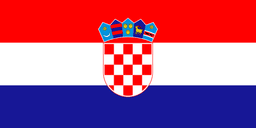
Franjo Tudjman
Politician · Modern
51.7Total

Julius Caesar
General · Ancient
82.8Total
Basic Information
Born
1922
-100
Died
—
-44
Era
Modern
Ancient
Nationality
Croatia
Roman Republic
Occupation
Politician
General
Civilization
Western
Western
Score Comparison
Military (10%)
20.0
88.0
Political (20%)
68.0
78.0
Influence (20%)
59.0
85.0
Legacy (20%)
49.2
82.0
Leadership (15%)
53.2
80.0
Strategy (15%)
45.0
85.0
TOTAL
51.7
82.8
Franjo Tudjman — Complete Timeline
1990 AD
Election as First President of CroatiaPolitical Action
Franjo Tuđman was elected as the first president of the Republic of Croatia in the first multi-party elections, leading the Croatian Democratic Union (HDZ) to victory. This marked the end of communist rule in Croatia and set the stage for independence from Yugoslavia.
ElectionIndependenceHDZ
Impact: regionalconstructive
1991 AD
Declaration of Croatian IndependencePolitical Action
Tuđman led Croatia in declaring independence from Yugoslavia on June 25, 1991, following a referendum. This triggered the Croatian War of Independence, as the Yugoslav People's Army and Serb rebels opposed secession, leading to a four-year conflict.
IndependenceYugoslav WarsReferendum
Impact: regionalconstructive
1995 AD
Operation StormWar
Tuđman authorized Operation Storm, a large-scale military offensive that recaptured the Serb-held Krajina region in Croatia. The operation ended the Croatian War of Independence but resulted in the exodus of approximately 200,000 Serb civilians, leading to accusations of ethnic cleansing.
Military OffensiveKrajinaWar Crimes
Impact: regionaldestructive
Signing of the Dayton AgreementPolitical Action◆ Major
Tuđman signed the Dayton Agreement on behalf of Croatia, ending the Bosnian War. The agreement established the political structure of Bosnia and Herzegovina, with Croatia playing a key role in supporting the Bosnian Croats and the Federation entity.
Peace TreatyBosnian WarDayton
Impact: regionalconstructive
1999 AD
Death in OfficeOther◆ Major
Tuđman died in office on December 10, 1999, after a battle with cancer. His death marked the end of an era in Croatian politics, as he had been the dominant figure since independence. His legacy remains deeply divisive, with praise for achieving independence and criticism for authoritarian tendencies.
DeathEnd of EraLegacy
Impact: national
Julius Caesar — Complete Timeline
58 BC
Gallic WarsWar◆ Major
Caesar, as proconsul of Gaul, launched a series of campaigns that conquered all of Gaul (modern France, Belgium, and parts of Switzerland). He fought numerous battles, including against the Helvetii, the Belgae, and the Gallic chieftain Vercingetorix. The wars brought immense wealth and a loyal army to Caesar.
Gallic WarsConquestRoman Expansion
Impact: regional
49 BC
Crossing the RubiconPolitical Action◆ Major
Caesar led Legio XIII across the Rubicon River into Italy, defying the Roman Senate's order to disband his army. This act triggered a civil war against Pompey and the Optimates, ultimately leading to Caesar's dictatorship and the end of the Roman Republic.
Roman Civil WarEnd of RepublicPower Struggle
Impact: global
48 BC
Battle of PharsalusWar◆ Major
Caesar's outnumbered army defeated the larger forces of Pompey the Great at Pharsalus in Greece. Caesar's tactical use of a reserve line to counter Pompey's cavalry charge proved decisive. Pompey fled to Egypt, where he was assassinated, leaving Caesar as the undisputed master of the Roman world.
Roman Civil WarBattleDecisive Victory
Impact: regional
44 BC
Appointment as Dictator for LifePolitical Action◆ Major
The Roman Senate appointed Caesar dictator perpetuo (dictator for life), granting him unprecedented personal power. This move concentrated military, legislative, and judicial authority in one person, effectively ending the Roman Republic's traditional system of checks and balances and alarming many senators.
DictatorshipEnd of RepublicPower Consolidation
Impact: regionaldestructive
Assassination on the Ides of MarchPolitical Action◆ Major
A group of Roman senators, led by Marcus Junius Brutus and Gaius Cassius Longinus, stabbed Caesar to death at a meeting of the Senate in the Theatre of Pompey. The assassination was intended to restore the Republic, but instead triggered another civil war that led to the rise of the Roman Empire.
AssassinationRoman PoliticsEnd of Republic
Impact: globaldestructive
Expert Analysis
franjo-tudjman-vs-julius-caesar
# The Dictator's Mirror: Julius Caesar and Franjo Tudjman
In the Roman Senate on the Ides of March, 44 BCE, sixty conspirators plunged their daggers into Julius Caesar, believing they were saving the Republic. In Zagreb, on December 10, 1999, Franjo Tudjman died in his bed, a cancer-ravaged president whose nation mourned him as a founding father. Both men seized history by the throat; both remade their worlds. One built an empire that would last a millennium; the other built a fragile state that still struggles to find its footing. The question is not whether they were alike—but why their paths diverged so dramatically.
Origins
Julius Caesar was born into the patrician Julian clan, an ancient family that claimed descent from the goddess Venus, but one that had fallen from political prominence. Rome in the first century BCE was a violent, expansionist republic, staggering under the weight of its own conquests. Caesar grew up in a world where military glory was the surest path to power, where the Senate was a battlefield of words and the battlefield itself was a Senate of blood. He learned early that in Rome, a man's worth was measured by the legions he commanded and the gold he could distribute.
Franjo Tudjman was born in 1922 in Veliko Trgovišće, a village in what was then the Kingdom of Serbs, Croats, and Slovenes. His father was a farmer and a local politician, his mother a devout Catholic. Unlike Caesar, Tudjman came from the soil, not the senate. His Croatia had been ruled by Hungarians, Austrians, and Serbs for centuries; it existed as an idea, not a state. The twentieth century taught him that nationalism was the only weapon the powerless possessed, and that history was written by the victors—a lesson he would later apply with academic rigor as a historian.
Rise to Power
Caesar's ascent was a masterclass in calculated audacity. He began as a military tribune, then quaestor, then aedile, spending enormous sums on games and public works to win the favor of the Roman mob. In 60 BCE, he forged the First Triumvirate with Pompey and Crassus, an alliance of ambition that controlled the Republic. His command in Gaul from 58 to 50 BCE was not merely a conquest—it was a revolution. He invaded Britain, crossed the Rhine, and slaughtered or enslaved over a million Gauls. The wealth and loyalty he accumulated made him the most powerful man in the Roman world.
Tudjman's rise was slower, more intellectual, and far more constrained. He fought as a partisan in World War II, then became a general in the Yugoslav People's Army, only to be expelled for his nationalist writings. He spent years as a dissident historian, arguing that the Croatian people had been systematically victimized by Serbian-dominated Yugoslavia. When the Cold War ended and Yugoslavia began to unravel, Tudjman was ready. In 1990, he was elected president of Croatia in the first multi-party elections, riding a wave of nationalist fervor that had been suppressed for decades.
Leadership & Governance
Caesar governed with the absolute confidence of a man who believed he was destined to rule. As dictator, he reformed the calendar, granted citizenship to provincials, redistributed land to veterans, and centralized the Roman state. His military genius was undeniable: at Alesia, he besieged 80,000 Gauls while simultaneously repelling a relief force of 250,000, a feat of logistics and tactics that still stuns military historians. But his political wisdom was flawed—he pardoned his enemies, believing they would be grateful, only to be stabbed by many of them.
Tudjman governed a country at war. From 1991 to 1995, Croatia fought for its survival against the Yugoslav People's Army and Serbian paramilitaries. Tudjman's leadership was pragmatic and authoritarian. He consolidated power, suppressed dissent, and used the war to build a personality cult. His greatest military moment was Operation Storm in 1995, a lightning offensive that recaptured the Krajina region. But unlike Caesar, who commanded from the front, Tudjman was a politician in uniform, not a general. His strategic score of 30.0 reflects a man who authorized operations but did not design them.
Triumph & Tragedy
Caesar's triumph was the conquest of Gaul, which doubled the size of the Republic and made him a living legend. His tragedy was the Civil War against Pompey, a conflict that destroyed the old order and left him alone at the top. He crossed the Rubicon in 49 BCE, uttering "the die is cast," and within five years, he was master of the Roman world. But his assassination on March 15, 44 BCE—the Ides of March—revealed his greatest failure: he could win a war, but he could not win the peace.
Tudjman's triumph was the independence of Croatia, recognized internationally in 1992 and secured militarily by 1995. His tragedy was the Dayton Agreement of 1995, which ended the Bosnian War but left Croatia entangled in a complex peace that satisfied no one fully. He died in office, having achieved his life's goal, but leaving behind a nation grappling with corruption, authoritarian habits, and an uncertain place in Europe.
Character & Destiny
Caesar was reckless with his own life, generous to his friends, and ruthless to his enemies. He was a gambler who believed that fortune favored the bold. His personality drove him to take risks that no sane man would take—crossing the Rubicon, pardoning Brutus, refusing a bodyguard. That same personality made him a legend and a corpse.
Tudjman was cautious, calculating, and deeply suspicious. He was a historian who wanted to control history, not be consumed by it. He built a state from the ruins of Yugoslavia, but he built it in his own image—nationalistic, centralized, and wary of democracy. His personality shaped Croatia's destiny, but it also limited it.
Legacy
Caesar's legacy is the Roman Empire, which lasted for nearly 500 years in the West and another thousand in the East. His name became synonymous with autocracy—Kaiser, Tsar, Caesar. He is remembered as a military genius, a political revolutionary, and a warning about the dangers of unchecked ambition.
Tudjman's legacy is Croatia itself—a small nation that survived the bloodiest war in Europe since 1945. He is remembered as the father of his country, but also as a divisive figure, criticized for his authoritarian tendencies and his role in the war. His influence score of 72.3 and legacy of 67.7 reflect a man who mattered deeply to his own people but barely registers on the world stage.
Conclusion
Standing at the edge of the Forum, looking at Caesar's funeral pyre, one sees the birth of an empire. Standing at the edge of Zagreb's Mirogoj Cemetery, at Tudjman's grave, one sees the birth of a nation. Both men were dictators in their own way, but Caesar reshaped the entire Western world, while Tudjman carved a single country from a dying federation. The difference is not in their ambition—both burned with it—but in the scale of their stage. Caesar inherited a superpower and broke it; Tudjman inherited a broken nation and built one. History judges them by what they broke and what they built, and the measure is never equal.
Rankings
🥇
Julius CaesarLeader
Mil: 88.0Pol: 78.0Inf: 85.0
82.8
🥈
Franjo Tudjman
Mil: 20.0Pol: 68.0Inf: 59.0
51.7
+31.1 behind
How This Comparison Works
Algorithm
Each figure is scored on 6 dimensions (0—100 scale) based on structured historical data: Military (10%), Political (20%), Influence (20%), Legacy (20%), Leadership (15%), Strategy (15%). The weighted total produces the final ranking.
Data Sources
Scores are computed from structured sub-indicators in the database. Scale factors adjust for era (Ancient ×0.85, Modern ×1.0) and civilization size (Eastern ×1.05, Other ×0.80) to account for differences in population and military scale.
Maximum 3 Figures
Comparisons are limited to 2—3 figures to ensure readability and statistical meaningfulness.
Error Margins
±5 points per dimension — Sub-scores are derived from historical records with inherent uncertainty. Two figures within 5 points on a dimension should be considered roughly equivalent in that area.
Total Score Accuracy
±3 points overall — The weighted combination of 6 dimensions produces a total score with approximately ±3 points of uncertainty. Differences of less than 3 points are not statistically significant— the figures are effectively tied.
Known Limitations
- Historical records are incomplete and uneven across civilizations
- Figures from oral-tradition societies may be underrepresented
- Occupation labels can misclassify multi-role figures
- Scores measure capability and impact, not moral character
- Quantitative scoring is a comparison tool, not absolute truth
Capability Radar
Military (10%) — Battles & Warfare
Battles
15
95
Win Rate
20
92
Expansion
10
97
Political (20%) — Governance & Reform
Reform
55
90
Diplomacy
50
85
Economy
45
82
Influence (20%) — Cultural & Global Reach
Cultural
50
88
Global
45
94
Legacy (20%) — Historical Impact
Historical
55
95
Longevity
40
96
Leadership (15%) — Power & Stability
Tenure
60
75
Stability
40
60
Strategy (15%) — Tactics & Innovation
Strategy
20
94
Tactics
15
96
Reform
25
88
Similar Comparisons
Comments & Discussion
CarthagoNonDelenda6/17/2026
Comparing Tudjman to Caesar is like comparing a village mayor to an emperor. Caesar conquered Gaul, crossed the Rubicon, and reshaped the known world. Tudjman could barely hold onto eastern Slavonia, and his "state" was a Cold War afterthought. Stop romanticizing a regional strongman with a history book complex. Caesar was a military strategist; Tudjman was a warlord in a cheap suit. Next you'll compare Milosevic to Augustus.
历史狠人克星6/17/2026
纯属瞎比。凯撒是地中海征服者,把高卢打到服气,改革历法,养活了罗马公投。图季曼什么玩意儿?克罗地亚独立战争赢不赢全靠美军点头,经济一塌糊涂,死后国家都快散架。凯撒在元老院被捅不死,图季曼连自己党内的汉奸都摆不平。别拿一千年帝国对比二十年实验品,太给图季曼脸了。
TheNumismaticNerd6/17/2026
Fun fact: Caesar minted coins with his own portrait while still alive—breaking centuries of Roman tradition where only dead ancestors appeared. Tudjman printed his face on the 5 kuna note, then replaced it with Petar Zrinski after criticism. That says it all. One man remade currency in his image; the other tried and failed. Caesar understood the power of iconography; Tudjman had to settle for postage stamps after his death. A republic of ego versus a shadow of Rome.
荒诞历史学家6/17/2026
凯撒被元老院暗杀时,据说布鲁图斯刺中他腹股沟,血腥又戏剧。图季曼死时,躺在病床让医生给他放克罗地亚国歌,还喊着“我建了国家”。一个被神化,一个被民族化。凯撒的帝国变戏法,图季曼的独立靠南斯拉夫解体的运气。别扯什么命运女神,凯撒有军团,图季曼有克罗地亚民族主义幻梦罢了。