Loading...
Franz Halder vs Uesugi Kenshin
Uesugi Kenshin leads by 7.9 pts · 2 figures compared
…
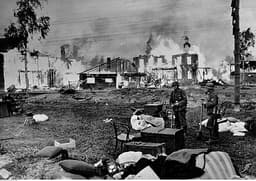
Franz Halder
General · Modern
57.3Total
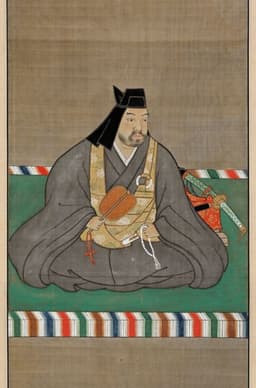
Uesugi Kenshin
General · Modern
65.2Total
Basic Information
Born
1884
1530
Died
1972
1578
Era
Modern
Modern
Nationality
Germany
Japan
Occupation
General
General
Civilization
Western
Eastern
Score Comparison
Military (10%)
65.0
67.3
Political (20%)
43.7
70.0
Influence (20%)
61.0
58.3
Legacy (20%)
50.0
55.0
Leadership (15%)
64.5
85.0
Strategy (15%)
68.1
69.1
TOTAL
57.3
65.2
Franz Halder — Complete Timeline
1938 AD
Appointed Chief of the Army General StaffPolitical Action◆ Major
Halder succeeded Ludwig Beck as Chief of the Army General Staff on August 27, 1938. He oversaw the planning of German military operations during the early years of World War II, including the invasions of Poland, France, and the Soviet Union.
World War IIGerman ArmyMilitary Command
Impact: global
Involvement in the September 1938 ConspiracyPolitical Action◆ Major
Halder participated in a planned coup against Hitler during the Sudeten crisis. The plot aimed to arrest Hitler if he ordered an invasion of Czechoslovakia. The plan was abandoned after the Munich Agreement averted war.
German ResistanceCoup AttemptMunich Agreement
Impact: national
1942 AD
Dismissed as Chief of StaffPolitical Action◆ Major
Hitler dismissed Halder as Chief of the Army General Staff on September 24, 1942, following disagreements over the conduct of the war on the Eastern Front. Halder was replaced by Kurt Zeitzler and placed in the F
World War IIGerman CommandDismissal
Impact: national
1944 AD
Arrested after the July 20 PlotPolitical Action◆ Major
Halder was arrested by the Gestapo on July 23, 1944, three days after the failed assassination attempt on Hitler. He was implicated due to his earlier involvement in resistance circles. He was imprisoned in concentration camps until the end of the war.
July 20 PlotArrestConcentration Camp
Impact: nationaltragic
Uesugi Kenshin — Complete Timeline
1548 AD
Adoption of the Name Uesugi and Inheritance of EchigoPolitical Action◆ Major
Nagao Kagetora (later Uesugi Kenshin) was adopted into the Uesugi clan and became the lord of Echigo Province. This adoption gave him the legitimacy to rule and the resources to become a major daimyo. He took the name Uesugi Kenshin and began his campaigns to expand his influence.
AdoptionSuccessionEchigo
Impact: regional
1560 AD
Invasion of Kanto RegionWar◆ Major
Uesugi Kenshin launched a major campaign into the Kanto region, aiming to challenge the Hojo clan's dominance. He captured several castles, including Odawara's outer defenses, but failed to take the main Hojo stronghold. This campaign demonstrated his ambition but also his limitations in sustained siege warfare.
InvasionKantoHojo Clan
Impact: regional
1561 AD
Battle of Kawanakajima (Fourth)War◆ Major
Uesugi Kenshin engaged Takeda Shingen in the fourth Battle of Kawanakajima, a fierce contest that ended inconclusively. Kenshin's forces reportedly broke through to Shingen's command post, with Kenshin allegedly attacking Shingen personally. The battle solidified Kenshin's reputation as a brilliant tactician.
BattleRivalrySengoku Period
Impact: regional
Siege of Odawara (1561)War
Uesugi Kenshin besieged Odawara Castle, the stronghold of the Hojo clan, for several weeks. Despite his efforts, the castle's defenses held, and he was forced to withdraw due to supply shortages and the approach of Takeda Shingen's forces. The siege was a strategic failure.
SiegeOdawaraHojo Clan
Impact: regional
Expert Analysis
Origins
Franz Halder was born on June 30, 1884, in Würzburg, Germany, into a military family. His father was a general, and Halder followed a traditional Prussian officer path, joining the Bavarian Army. He served in World War I as a staff officer, which shaped his meticulous planning style. Uesugi Kenshin, born Nagao Kagetora on February 18, 1530, in Echigo Province, Japan, was the son of a warlord. His early life was marked by conflict: his father was assassinated, and he was raised by monks. Kenshin became a Buddhist novice, which instilled a spiritual discipline that balanced his martial pursuits.
Rise to Power
Halder rose through the ranks of the Reichswehr after WWI, becoming a key figure in the German General Staff. On August 27, 1938, he succeeded Ludwig Beck as Chief of the Army General Staff, overseeing the planning of the invasion of Poland and France. His rise was tied to Hitler's expansionist policies, but he harbored reservations. Kenshin, after inheriting Echigo in 1548, defeated his brother to secure control. He adopted the Uesugi name in 1551 after the death of Uesugi Norimasa, gaining legitimacy to lead the Kanto region. His military campaigns, especially against Takeda Shingen, cemented his reputation.
Leadership & Governance
Halder excelled in operational planning, scoring 64.5 in leadership and 68.1 in strategy. He designed the successful 1940 invasion of France but clashed with Hitler over strategic priorities in the Soviet Union. His governance was constrained by Nazi ideology; he failed to prevent the Commissar Order, which mandated the execution of Soviet political commissars. Kenshin, with a leadership score of 85.0, was a charismatic and decentralized ruler. He allowed local lords autonomy, fostering loyalty. His governance of Echigo emphasized justice and tax reforms, contrasting with Halder's rigid staff system. Kenshin's military innovations, such as the use of cavalry and winter campaigns, showed strategic flexibility.
Triumph & Tragedy
Halder's greatest triumph was planning the 1940 Fall Gelb, which defeated France in six weeks. His tragedy was the failure of the July 20 Plot; he was arrested on July 23, 1944, and spent the rest of WWII in concentration camps. His earlier involvement in the 1938 conspiracy came to nothing. Kenshin's triumph was the fourth Battle of Kawanakajima (1561), where he nearly killed Takeda Shingen in single combat. His tragedy was the inconclusive Siege of Odawara (1561), failing to capture the Hojo stronghold. His sudden death in 1578, possibly from illness or assassination, left his domain in succession crisis.
Character & Destiny
Halder was a cautious, detail-oriented planner, but his deference to authority led him to serve a regime he privately opposed. His score of 43.7 in politics reflects his inability to navigate Nazi power structures. Kenshin, known as the "Dragon of Echigo," was a devout Buddhist and a fearless warrior. His political score of 70.0 shows his skill in alliances and diplomacy. His character—honorable yet pragmatic—allowed him to maintain independence against stronger clans. Both men were shaped by their eras: Halder by the totalitarian state, Kenshin by the warring states period.
Legacy
Halder's legacy is mixed. He is remembered as a skilled planner but tarnished by his service to the Nazi regime. His influence on military doctrine is minimal, scoring 61.0. Kenshin's legacy is more positive, with a score of 55.0. He is celebrated in Japanese culture as a symbol of honor and martial prowess. His military tactics influenced later samurai warfare, and his governance model inspired regional autonomy.
Conclusion
Uesugi Kenshin had a greater impact within his context, achieving a total score of 65.2 against Halder's 57.3. Kenshin's leadership and political acumen allowed him to thrive in a chaotic era, while Halder's strategic skills were undermined by moral compromise. Kenshin's legacy endures in Japanese history, whereas Halder's is overshadowed by Nazi atrocities. The data supports Kenshin as the more effective and influential figure.
Rankings
🥇
Uesugi KenshinLeader
Mil: 67.3Pol: 70.0Inf: 58.3
65.2
🥈
Franz Halder
Mil: 65.0Pol: 43.7Inf: 61.0
57.3
+7.9 behind
How This Comparison Works
Algorithm
Each figure is scored on 6 dimensions (0—100 scale) based on structured historical data: Military (10%), Political (20%), Influence (20%), Legacy (20%), Leadership (15%), Strategy (15%). The weighted total produces the final ranking.
Data Sources
Scores are computed from structured sub-indicators in the database. Scale factors adjust for era (Ancient ×0.85, Modern ×1.0) and civilization size (Eastern ×1.05, Other ×0.80) to account for differences in population and military scale.
Maximum 3 Figures
Comparisons are limited to 2—3 figures to ensure readability and statistical meaningfulness.
Error Margins
±5 points per dimension — Sub-scores are derived from historical records with inherent uncertainty. Two figures within 5 points on a dimension should be considered roughly equivalent in that area.
Total Score Accuracy
±3 points overall — The weighted combination of 6 dimensions produces a total score with approximately ±3 points of uncertainty. Differences of less than 3 points are not statistically significant— the figures are effectively tied.
Known Limitations
- Historical records are incomplete and uneven across civilizations
- Figures from oral-tradition societies may be underrepresented
- Occupation labels can misclassify multi-role figures
- Scores measure capability and impact, not moral character
- Quantitative scoring is a comparison tool, not absolute truth
Capability Radar
Military (10%) — Battles & Warfare
Battles
65
75
Win Rate
60
70
Expansion
60
60
Political (20%) — Governance & Reform
Reform
30
60
Diplomacy
40
75
Economy
20
65
Influence (20%) — Cultural & Global Reach
Cultural
30
65
Global
45
45
Legacy (20%) — Historical Impact
Historical
55
70
Longevity
40
60
Leadership (15%) — Power & Stability
Tenure
50
70
Stability
20
70
Strategy (15%) — Tactics & Innovation
Strategy
80
80
Tactics
75
85
Reform
70
65
Similar Comparisons
Comments & Discussion
No comments yet. Be the first to share your thoughts!