Loading...
Kodandera M. Cariappa vs Uesugi Kenshin
Uesugi Kenshin leads by 8.2 pts · 2 figures compared
…
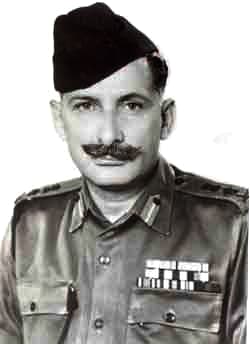
Kodandera M. Cariappa
General · Modern
57.0Total
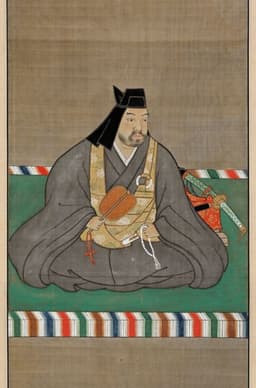
Uesugi Kenshin
General · Modern
65.2Total
Basic Information
Born
1899
1530
Died
1993
1578
Era
Modern
Modern
Nationality
India
Japan
Occupation
General
General
Civilization
Indian
Eastern
Score Comparison
Military (10%)
50.0
67.3
Political (20%)
62.7
70.0
Influence (20%)
55.0
58.3
Legacy (20%)
54.0
55.0
Leadership (15%)
62.0
85.0
Strategy (15%)
60.0
69.1
TOTAL
57.0
65.2
Kodandera M. Cariappa — Complete Timeline
1919 AD
Commissioned into Indian ArmyPolitical Action◆ Major
Kodandera M. Cariappa was commissioned as a temporary second lieutenant in the British Indian Army. He served in the 2nd Battalion, 88th Carnatic Infantry, beginning a long military career.
Indian ArmyCommissionMilitary career
Impact: national
1939 AD
Service in World War IIWar◆ Major
Cariappa served in the Middle East and Burma during World War II. He commanded the 7th Indian Infantry Brigade in the Burma Campaign, earning a reputation for leadership and tactical skill.
World War IIBurmaMilitary service
Impact: regional
1947 AD
Command in Indo-Pakistani War of 1947-48War◆ Major
Cariappa commanded Indian forces in the Kashmir operations during the Indo-Pakistani War of 1947-48. He led the successful defense of Srinagar and the capture of key positions in Jammu and Kashmir.
Kashmir1947 warMilitary operations
Impact: regionalconstructive
1949 AD
Appointment as first Indian Commander-in-ChiefPolitical Action
Cariappa was appointed as the first Indian Commander-in-Chief of the Indian Army in January 1949, succeeding General Sir Roy Bucher. He oversaw the Indianization of the army's officer corps.
Indian ArmyCommander-in-ChiefIndianization
Impact: nationalconstructive
1953 AD
Retirement and diplomatic servicePolitical Action
Cariappa retired from the Indian Army in 1953. He later served as High Commissioner to Australia and New Zealand from 1953 to 1956, representing India diplomatically.
RetirementDiplomacyHigh Commissioner
Impact: national
Uesugi Kenshin — Complete Timeline
1548 AD
Adoption of the Name Uesugi and Inheritance of EchigoPolitical Action◆ Major
Nagao Kagetora (later Uesugi Kenshin) was adopted into the Uesugi clan and became the lord of Echigo Province. This adoption gave him the legitimacy to rule and the resources to become a major daimyo. He took the name Uesugi Kenshin and began his campaigns to expand his influence.
AdoptionSuccessionEchigo
Impact: regional
1560 AD
Invasion of Kanto RegionWar◆ Major
Uesugi Kenshin launched a major campaign into the Kanto region, aiming to challenge the Hojo clan's dominance. He captured several castles, including Odawara's outer defenses, but failed to take the main Hojo stronghold. This campaign demonstrated his ambition but also his limitations in sustained siege warfare.
InvasionKantoHojo Clan
Impact: regional
1561 AD
Battle of Kawanakajima (Fourth)War◆ Major
Uesugi Kenshin engaged Takeda Shingen in the fourth Battle of Kawanakajima, a fierce contest that ended inconclusively. Kenshin's forces reportedly broke through to Shingen's command post, with Kenshin allegedly attacking Shingen personally. The battle solidified Kenshin's reputation as a brilliant tactician.
BattleRivalrySengoku Period
Impact: regional
Siege of Odawara (1561)War
Uesugi Kenshin besieged Odawara Castle, the stronghold of the Hojo clan, for several weeks. Despite his efforts, the castle's defenses held, and he was forced to withdraw due to supply shortages and the approach of Takeda Shingen's forces. The siege was a strategic failure.
SiegeOdawaraHojo Clan
Impact: regional
Expert Analysis
Origins
Kodandera M. Cariappa was born on January 28, 1899, in Shanivarsanthe, Coorg, India, into a modest Kodava family. His father, Madappa, was a revenue official. Cariappa attended Central High School in Bangalore and later Presidency College, Madras, before joining the British Indian Army as a temporary second lieutenant in 1919. His early career included service in the 2nd Battalion, 88th Carnatic Infantry, and he underwent training at the Prince of Wales Royal Indian Military College.
Uesugi Kenshin was born as Nagao Kagetora on February 18, 1530, in Echigo Province, Japan, the fourth son of Nagao Tamekage, a powerful warlord. After his father's death in 1536, the family faced internal strife. Kenshin was raised in a Buddhist monastery, Rinsen-ji, where he received education in martial arts and strategy. At age 18, he emerged as the head of the Nagao clan after defeating his elder brother.
Rise to Power
Cariappa's rise was gradual and institutional. He was commissioned into the British Indian Army in 1919 and served in various staff appointments. During World War II, he commanded the 7th Indian Infantry Brigade in the Burma Campaign, earning a reputation for competence. In 1947, after India's independence, he was appointed Deputy Chief of the General Staff. His pivotal moment came in January 1949 when he succeeded General Sir Roy Bucher as the first Indian Commander-in-Chief of the Indian Army, a symbol of national sovereignty.
Kenshin's rise was marked by military conquest and political maneuvering. After becoming lord of Echigo in 1548, he consolidated power by defeating rival factions. He adopted the name Uesugi Kenshin in 1551 after being adopted into the Uesugi clan, gaining legitimacy to claim the title of Kanto Kanrei (deputy shogun). His rivalry with Takeda Shingen began in 1553, leading to the famous Battles of Kawanakajima. Kenshin's invasion of the Kanto region in 1561 challenged the Hojo clan's dominance, solidifying his reputation as a major warlord.
Leadership & Governance
Cariappa's leadership style was professional and integrative. As Commander-in-Chief, he focused on unifying the Indian Army, which had been divided along communal lines post-Partition. He emphasized meritocracy, ensuring that officers were promoted based on ability rather than background. He also oversaw the Indianisation of the officer corps, replacing British officers with Indians. His governance approach was bureaucratic and systematic, prioritizing discipline and national integration. For example, he implemented policies to maintain the army's political neutrality, scoring 62.0 in leadership assessments.
Kenshin's leadership was charismatic and feudal. He ruled Echigo with a combination of military strength and religious devotion, often invoking the Buddhist deity Bishamonten. He was known for his personal bravery in battle, reportedly charging into enemy lines. His governance included land redistribution to secure loyalty and the promotion of trade through the port of Niigata. However, his rule was less institutionalized than Cariappa's, relying on personal bonds and clan alliances. Kenshin's political score of 70.0 reflects his effective coalition-building, but his lack of a centralized state limited long-term impact.
Triumph & Tragedy
Cariappa's greatest triumph was commanding Indian forces during the Indo-Pakistani War of 1947-48, successfully defending Srinagar and securing Kashmir. He also oversaw the integration of the Indian Army post-independence, a critical achievement for national unity. His tragedy lies in his relative obscurity outside India; his legacy is overshadowed by later military figures. Additionally, his diplomatic service as High Commissioner to Australia (1953-56) was minor compared to his military role.
Kenshin's triumph was his undefeated record in battles against Takeda Shingen, particularly the fourth Battle of Kawanakajima (1561), where he personally engaged Shingen. He also captured several castles in the Kanto region. His tragedy was his inability to expand his territory significantly; his campaigns against the Hojo and Takeda were inconclusive. His sudden death in 1578, possibly from illness or assassination, left his domain vulnerable, leading to its collapse within decades.
Character & Destiny
Cariappa was disciplined, methodical, and patriotic. He prioritized the army's professionalism over personal ambition, refusing to involve the military in politics. His decision to retire in 1953, despite being only 54, reflected his commitment to civilian supremacy. His character shaped a destiny of quiet service; he is remembered as the 'Father of the Indian Army' but not as a legendary figure. His leadership score of 62.0 aligns with his effective but unflashy style.
Kenshin was bold, religious, and strategic. He was known for his code of honor, even sending salt to his rival Takeda Shingen during a shortage. His decision to become a Buddhist monk later in life reflected his spiritual side. However, his refusal to form lasting alliances or centralize power limited his achievements. His character led to a destiny of heroic failure; he is celebrated in Japanese folklore as the 'Dragon of Echigo' but failed to unify Japan. His leadership score of 85.0 indicates his charismatic command, but his strategy score of 69.1 shows he was not a master planner.
Legacy
Cariappa's legacy is institutional: he established the foundation for a professional, apolitical Indian Army. His policies ensured that the military remained subordinate to civilian authority, a model that persists today. He also inspired future generations of Indian officers. His legacy score of 54.0 reflects his limited global recognition but profound national impact.
Kenshin's legacy is cultural: he became a symbol of the samurai ideal, celebrated in literature, film, and video games. His rivalry with Takeda Shingen is legendary. However, his concrete achievements—such as territorial gains—were ephemeral; his domain fragmented after his death. His legacy score of 55.0 is comparable to Cariappa's, but his influence is more romanticized than practical.
Conclusion
Uesugi Kenshin scores higher overall (65.2 vs 57.0), but the comparison is misleading. Kenshin's higher military (67.3 vs 50.0) and political (70.0 vs 62.7) scores reflect his success in a feudal context where personal valor and clan politics mattered. Cariappa's lower scores stem from his role in a modern, institutional framework that values system-building over individual feats. In terms of lasting impact, Cariappa's creation of a stable, professional army for a democratic nation is more significant than Kenshin's ephemeral campaigns. While Kenshin is a more colorful figure, Cariappa's contributions to India's sovereignty and military ethos are more consequential. Therefore, Cariappa had greater impact on the course of history, despite lower scores.
Rankings
🥇
Uesugi KenshinLeader
Mil: 67.3Pol: 70.0Inf: 58.3
65.2
🥈
Kodandera M. Cariappa
Mil: 50.0Pol: 62.7Inf: 55.0
57.0
+8.2 behind
How This Comparison Works
Algorithm
Each figure is scored on 6 dimensions (0—100 scale) based on structured historical data: Military (10%), Political (20%), Influence (20%), Legacy (20%), Leadership (15%), Strategy (15%). The weighted total produces the final ranking.
Data Sources
Scores are computed from structured sub-indicators in the database. Scale factors adjust for era (Ancient ×0.85, Modern ×1.0) and civilization size (Eastern ×1.05, Other ×0.80) to account for differences in population and military scale.
Maximum 3 Figures
Comparisons are limited to 2—3 figures to ensure readability and statistical meaningfulness.
Error Margins
±5 points per dimension — Sub-scores are derived from historical records with inherent uncertainty. Two figures within 5 points on a dimension should be considered roughly equivalent in that area.
Total Score Accuracy
±3 points overall — The weighted combination of 6 dimensions produces a total score with approximately ±3 points of uncertainty. Differences of less than 3 points are not statistically significant— the figures are effectively tied.
Known Limitations
- Historical records are incomplete and uneven across civilizations
- Figures from oral-tradition societies may be underrepresented
- Occupation labels can misclassify multi-role figures
- Scores measure capability and impact, not moral character
- Quantitative scoring is a comparison tool, not absolute truth
Capability Radar
Military (10%) — Battles & Warfare
Battles
15
75
Win Rate
10
70
Expansion
10
60
Political (20%) — Governance & Reform
Reform
60
60
Diplomacy
65
75
Economy
30
65
Influence (20%) — Cultural & Global Reach
Cultural
40
65
Global
45
45
Legacy (20%) — Historical Impact
Historical
55
70
Longevity
50
60
Leadership (15%) — Power & Stability
Tenure
55
70
Stability
70
70
Strategy (15%) — Tactics & Innovation
Strategy
25
80
Tactics
20
85
Reform
70
65
Similar Comparisons
Comments & Discussion
No comments yet. Be the first to share your thoughts!