Loading...
This comparison has not been analyzed yet.
One-time AI generation (~1 minute). Scores and timeline are already available below.
Fred Sinowatz vs John Diefenbaker
John Diefenbaker leads by 5.6 pts · 2 figures compared
…
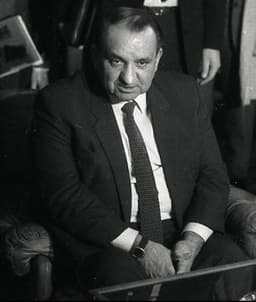
Fred Sinowatz
Politician · Modern
47.8Total
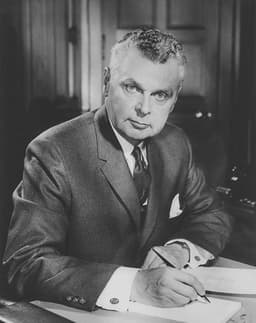
John Diefenbaker
Politician · Modern
53.4Total
Basic Information
Born
1929
1895
Died
—
1979
Era
Modern
Modern
Nationality
Austria
Canada
Occupation
Politician
Politician
Civilization
Western
Western
Score Comparison
Military (10%)
50.0
50.0
Political (20%)
40.8
68.0
Influence (20%)
50.2
56.4
Legacy (20%)
40.0
47.5
Leadership (15%)
65.7
53.2
Strategy (15%)
42.7
42.5
TOTAL
47.8
53.4
Fred Sinowatz — Complete Timeline
1983 AD
Appointment as ChancellorPolitical Action◆ Major
Fred Sinowatz became Chancellor of Austria after the 1983 elections, leading a coalition government between the Social Democratic Party (SP
CoalitionSPÖFPÖ
Impact: national
1984 AD
Hainburg Power Plant ProtestsPolitical Action◆ Major
Sinowatz's government faced massive protests against the construction of a hydroelectric power plant in Hainburg. The protests, involving tens of thousands of environmental activists, led to the project's cancellation and marked a turning point in Austrian environmental politics.
EnvironmentProtestsHainburg
Impact: national
1986 AD
Chancellorship During the Waldheim AffairPolitical Action◆ Major
Fred Sinowatz served as Chancellor during the controversy surrounding Kurt Waldheim's election as President. Waldheim's past as a Wehrmacht officer in World War II was revealed, leading to international isolation of Austria. Sinowatz resigned in June 1986, citing the affair.
Waldheim AffairScandalResignation
Impact: nationaltragic
Resignation as ChancellorPolitical Action◆ Major
Sinowatz resigned as Chancellor on June 9, 1986, following the controversy over Kurt Waldheim's Nazi past. He was succeeded by Franz Vranitzky. His resignation was seen as an attempt to distance the SP
ResignationWaldheimSPÖ
Impact: nationaltragic
John Diefenbaker — Complete Timeline
1957 AD
Became Prime Minister of CanadaPolitical Action◆ Major
Diefenbaker became the 13th Prime Minister of Canada, leading the Progressive Conservative Party. His victory ended 22 years of Liberal rule and was built on a populist platform.
Government FormationElectionConservatism
Impact: national
1959 AD
Cancelled the Avro Arrow projectPolitical Action◆ Major
Diefenbaker's government cancelled the Avro CF-105 Arrow, a state-of-the-art supersonic interceptor aircraft. The decision was controversial, leading to the loss of thousands of jobs and the destruction of the prototypes, but was driven by cost concerns.
AviationDefenseEconomic Policy
Impact: nationaldestructive
1960 AD
Passed the Canadian Bill of RightsReform◆ Major
Diefenbaker's government passed the Canadian Bill of Rights, a federal statute that guaranteed fundamental freedoms such as speech, assembly, and religion. Though not constitutional, it was a landmark in human rights protection.
Human RightsLegislationCivil Liberties
Impact: nationalconstructive
Extended the franchise to Indigenous peoplesReform◆ Major
Diefenbaker's government amended the Canada Elections Act to give First Nations people the right to vote in federal elections without losing their status. This was a significant step toward Indigenous rights.
Indigenous RightsVoting RightsEquality
Impact: nationalconstructive
This comparison has not been analyzed yet.
One-time AI generation (~1 minute). Scores and timeline are already available below.
Rankings
🥇
John DiefenbakerLeader
Mil: 50.0Pol: 68.0Inf: 56.4
53.4
🥈
Fred Sinowatz
Mil: 50.0Pol: 40.8Inf: 50.2
47.8
+5.6 behind
How This Comparison Works
Algorithm
Each figure is scored on 6 dimensions (0—100 scale) based on structured historical data: Military (10%), Political (20%), Influence (20%), Legacy (20%), Leadership (15%), Strategy (15%). The weighted total produces the final ranking.
Data Sources
Scores are computed from structured sub-indicators in the database. Scale factors adjust for era (Ancient ×0.85, Modern ×1.0) and civilization size (Eastern ×1.05, Other ×0.80) to account for differences in population and military scale.
Maximum 3 Figures
Comparisons are limited to 2—3 figures to ensure readability and statistical meaningfulness.
Error Margins
±5 points per dimension — Sub-scores are derived from historical records with inherent uncertainty. Two figures within 5 points on a dimension should be considered roughly equivalent in that area.
Total Score Accuracy
±3 points overall — The weighted combination of 6 dimensions produces a total score with approximately ±3 points of uncertainty. Differences of less than 3 points are not statistically significant— the figures are effectively tied.
Known Limitations
- Historical records are incomplete and uneven across civilizations
- Figures from oral-tradition societies may be underrepresented
- Occupation labels can misclassify multi-role figures
- Scores measure capability and impact, not moral character
- Quantitative scoring is a comparison tool, not absolute truth
Capability Radar
Military (10%) — Battles & Warfare
Battles
30
29
Win Rate
29
31
Expansion
35
32
Political (20%) — Governance & Reform
Reform
30
60
Diplomacy
35
50
Economy
30
40
Influence (20%) — Cultural & Global Reach
Cultural
20
40
Global
20
30
Legacy (20%) — Historical Impact
Historical
25
50
Longevity
15
35
Leadership (15%) — Power & Stability
Tenure
40
55
Stability
25
45
Strategy (15%) — Tactics & Innovation
Strategy
41
36
Tactics
38
40
Reform
44
47
Similar Comparisons
Comments & Discussion
No comments yet. Be the first to share your thoughts!