Loading...
Fred Sinowatz vs Julius Caesar
Julius Caesar leads by 35.0 pts · 2 figures compared
…
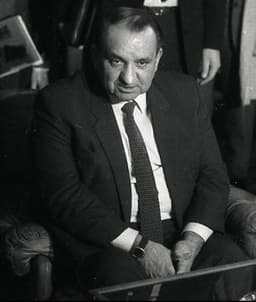
Fred Sinowatz
Politician · Modern
47.8Total

Julius Caesar
General · Ancient
82.8Total
Basic Information
Born
1929
-100
Died
—
-44
Era
Modern
Ancient
Nationality
Austria
Roman Republic
Occupation
Politician
General
Civilization
Western
Western
Score Comparison
Military (10%)
50.0
88.0
Political (20%)
40.8
78.0
Influence (20%)
50.2
85.0
Legacy (20%)
40.0
82.0
Leadership (15%)
65.7
80.0
Strategy (15%)
42.7
85.0
TOTAL
47.8
82.8
Fred Sinowatz — Complete Timeline
1983 AD
Appointment as ChancellorPolitical Action◆ Major
Fred Sinowatz became Chancellor of Austria after the 1983 elections, leading a coalition government between the Social Democratic Party (SP
CoalitionSPÖFPÖ
Impact: national
1984 AD
Hainburg Power Plant ProtestsPolitical Action◆ Major
Sinowatz's government faced massive protests against the construction of a hydroelectric power plant in Hainburg. The protests, involving tens of thousands of environmental activists, led to the project's cancellation and marked a turning point in Austrian environmental politics.
EnvironmentProtestsHainburg
Impact: national
1986 AD
Chancellorship During the Waldheim AffairPolitical Action◆ Major
Fred Sinowatz served as Chancellor during the controversy surrounding Kurt Waldheim's election as President. Waldheim's past as a Wehrmacht officer in World War II was revealed, leading to international isolation of Austria. Sinowatz resigned in June 1986, citing the affair.
Waldheim AffairScandalResignation
Impact: nationaltragic
Resignation as ChancellorPolitical Action◆ Major
Sinowatz resigned as Chancellor on June 9, 1986, following the controversy over Kurt Waldheim's Nazi past. He was succeeded by Franz Vranitzky. His resignation was seen as an attempt to distance the SP
ResignationWaldheimSPÖ
Impact: nationaltragic
Julius Caesar — Complete Timeline
58 BC
Gallic WarsWar◆ Major
Caesar, as proconsul of Gaul, launched a series of campaigns that conquered all of Gaul (modern France, Belgium, and parts of Switzerland). He fought numerous battles, including against the Helvetii, the Belgae, and the Gallic chieftain Vercingetorix. The wars brought immense wealth and a loyal army to Caesar.
Gallic WarsConquestRoman Expansion
Impact: regional
49 BC
Crossing the RubiconPolitical Action◆ Major
Caesar led Legio XIII across the Rubicon River into Italy, defying the Roman Senate's order to disband his army. This act triggered a civil war against Pompey and the Optimates, ultimately leading to Caesar's dictatorship and the end of the Roman Republic.
Roman Civil WarEnd of RepublicPower Struggle
Impact: global
48 BC
Battle of PharsalusWar◆ Major
Caesar's outnumbered army defeated the larger forces of Pompey the Great at Pharsalus in Greece. Caesar's tactical use of a reserve line to counter Pompey's cavalry charge proved decisive. Pompey fled to Egypt, where he was assassinated, leaving Caesar as the undisputed master of the Roman world.
Roman Civil WarBattleDecisive Victory
Impact: regional
44 BC
Appointment as Dictator for LifePolitical Action◆ Major
The Roman Senate appointed Caesar dictator perpetuo (dictator for life), granting him unprecedented personal power. This move concentrated military, legislative, and judicial authority in one person, effectively ending the Roman Republic's traditional system of checks and balances and alarming many senators.
DictatorshipEnd of RepublicPower Consolidation
Impact: regionaldestructive
Assassination on the Ides of MarchPolitical Action◆ Major
A group of Roman senators, led by Marcus Junius Brutus and Gaius Cassius Longinus, stabbed Caesar to death at a meeting of the Senate in the Theatre of Pompey. The assassination was intended to restore the Republic, but instead triggered another civil war that led to the rise of the Roman Empire.
AssassinationRoman PoliticsEnd of Republic
Impact: globaldestructive
Expert Analysis
fred-sinowatz-vs-julius-caesar
# The Ides of March and the Quiet Resignation
On March 15, 44 BCE, Julius Caesar fell beneath twenty-three dagger strokes in the Senate chamber of Rome, his blood pooling on the marble floor as his assassins celebrated what they believed was the salvation of the Republic. Two thousand and thirty years later, on June 9, 1986, Fred Sinowatz, Chancellor of Austria, quietly submitted his resignation in Vienna, his political career undone not by violence but by the slow poison of a scandal that would haunt his nation for decades. One death shook the ancient world; the other was a footnote in modern European politics. Yet both men stood at the crossroads of history, and both failed to see the storm coming.
Origins
Caesar was born into the chaos of the late Roman Republic, a world of civil wars, senatorial corruption, and expanding empire. His family, the Julii, claimed descent from the goddess Venus, but their political standing was modest. His father died when Caesar was sixteen, leaving him to navigate a treacherous landscape of alliances and vendettas. The young patrician learned early that survival required audacity. He refused Sulla’s order to divorce his wife, fled Rome, and eventually earned military laurels in Asia Minor. The Republic was dying, and Caesar was forged in its death throes.
Fred Sinowatz emerged from a very different world. Born in 1929 in Neufeld an der Leitha, a small Austrian town, he grew up in the shadow of the Anschluss and the Second World War. His father was a bricklayer; his mother, a seamstress. The war ended when Sinowatz was sixteen, and Austria was left divided, occupied, and morally compromised. He studied law and history at the University of Vienna, joining the Social Democratic Party (SPÖ) in the 1950s. Where Caesar was raised on the sword, Sinowatz was raised on paperwork, committee meetings, and the careful rebuilding of a broken nation.
Rise to Power
Caesar’s ascent was a masterpiece of calculated risk. He allied with Pompey and Crassus in the First Triumvirate, secured command in Gaul, and spent eight years conquering a territory that made him rich, famous, and dangerously powerful. When the Senate ordered him to disband his army, he crossed the Rubicon River in 49 BCE, plunging the Republic into civil war. “The die is cast,” he reportedly said. He defeated Pompey, pursued him to Egypt, and returned to Rome as dictator. By 44 BCE, he was dictator for life. His rise was swift, bloody, and irreversible.
Sinowatz’s path was slow and bureaucratic. He served as Minister of Education from 1971 to 1983, quietly modernizing Austria’s school system. When Chancellor Bruno Kreisky retired, Sinowatz inherited the leadership of the SPÖ and became Chancellor in 1983. He led a coalition with the Freedom Party (FPÖ), a delicate arrangement that required constant negotiation. There was no Rubicon, no dramatic gamble. His power came from patience and party loyalty, not from the edge of a sword.
Leadership & Governance
Caesar governed with the energy of a man who believed in the impossible. As dictator, he reformed the calendar, granted citizenship to provincials, initiated public works, and centralized authority in his own hands. His military campaigns in Gaul were models of speed, discipline, and strategic brilliance. He wrote his own commentary, shaping how history would remember him. Yet his political wisdom was flawed: he pardoned his enemies, underestimated their hatred, and ignored warnings of conspiracy. He believed his popularity would protect him. It did not.
Sinowatz governed in a different key. His chancellorship was defined by the Hainburg Power Plant protests of 1984, where he faced massive public opposition to a hydroelectric project in a pristine forest. He eventually backed down, a rare retreat that pleased environmentalists but weakened his authority. His greatest challenge came in 1986, when Kurt Waldheim, a former UN Secretary-General, ran for the Austrian presidency. Waldheim’s past as a Nazi intelligence officer in the Balkans was revealed, and Sinowatz, who had supported him, found himself defending a man whose history embarrassed the nation. Sinowatz’s leadership style—cautious, consensus-driven, averse to confrontation—proved disastrous. He could not control the narrative.
Triumph & Tragedy
Caesar’s greatest triumph was the conquest of Gaul, a feat that doubled Rome’s territory and made his name synonymous with military genius. His greatest tragedy was his assassination, a moment that ensured his transformation from man to legend. He died at the height of his power, and his death unleashed another civil war that ended the Republic he had tried to save.
Sinowatz’s triumph was quieter: he held Austria together during a period of transition, maintaining stability in a coalition government. His tragedy was the Waldheim affair. He resigned in June 1986, his reputation tarnished by association. He lived another twenty-two years, but his chancellorship was remembered only as a prelude to scandal.
Character & Destiny
Caesar was bold, charismatic, and ruthless. He gambled everything on his own genius and lost only when he assumed others would act as he would. His personality—arrogant, magnanimous, impatient with tradition—shaped every decision. He believed destiny belonged to the daring.
Sinowatz was cautious, intellectual, and weary. He came of age in a nation that had learned to avoid grand gestures. His personality—deferential, procedural, risk-averse—led him to avoid hard choices until they became crises. Where Caesar charged forward, Sinowatz waited for the storm to pass. It never did.
Legacy
Caesar’s legacy is monumental. His name became a title—Kaiser, Tsar—and his reforms outlived the Republic. He is remembered as the father of the Roman Empire, a political and military genius whose life became a Shakespearean tragedy.
Sinowatz’s legacy is modest. He is remembered, if at all, as the chancellor who resigned over the Waldheim affair. Austria’s reckoning with its Nazi past began in earnest only after his departure. He was a transitional figure, a caretaker in a time that demanded a bolder hand.
Conclusion
Caesar and Sinowatz lived in different worlds, but both faced the same fundamental question: how to lead when the ground shifts beneath your feet. Caesar answered with force, brilliance, and fatal overconfidence. Sinowatz answered with caution, compromise, and fatal hesitation. One created an empire; the other presided over a scandal. History judges them accordingly, but perhaps the real lesson is in the scale of the stage. Caesar’s Rome was the center of the known world; Sinowatz’s Austria was a small neutral republic. Yet both men remind us that leadership is not merely about power, but about the courage to see clearly—and the wisdom to act before the daggers fall, or the resignation letter is written.
Rankings
🥇
Julius CaesarLeader
Mil: 88.0Pol: 78.0Inf: 85.0
82.8
🥈
Fred Sinowatz
Mil: 50.0Pol: 40.8Inf: 50.2
47.8
+35.0 behind
How This Comparison Works
Algorithm
Each figure is scored on 6 dimensions (0—100 scale) based on structured historical data: Military (10%), Political (20%), Influence (20%), Legacy (20%), Leadership (15%), Strategy (15%). The weighted total produces the final ranking.
Data Sources
Scores are computed from structured sub-indicators in the database. Scale factors adjust for era (Ancient ×0.85, Modern ×1.0) and civilization size (Eastern ×1.05, Other ×0.80) to account for differences in population and military scale.
Maximum 3 Figures
Comparisons are limited to 2—3 figures to ensure readability and statistical meaningfulness.
Error Margins
±5 points per dimension — Sub-scores are derived from historical records with inherent uncertainty. Two figures within 5 points on a dimension should be considered roughly equivalent in that area.
Total Score Accuracy
±3 points overall — The weighted combination of 6 dimensions produces a total score with approximately ±3 points of uncertainty. Differences of less than 3 points are not statistically significant— the figures are effectively tied.
Known Limitations
- Historical records are incomplete and uneven across civilizations
- Figures from oral-tradition societies may be underrepresented
- Occupation labels can misclassify multi-role figures
- Scores measure capability and impact, not moral character
- Quantitative scoring is a comparison tool, not absolute truth
Capability Radar
Military (10%) — Battles & Warfare
Battles
30
95
Win Rate
29
92
Expansion
35
97
Political (20%) — Governance & Reform
Reform
30
90
Diplomacy
35
85
Economy
30
82
Influence (20%) — Cultural & Global Reach
Cultural
20
88
Global
20
94
Legacy (20%) — Historical Impact
Historical
25
95
Longevity
15
96
Leadership (15%) — Power & Stability
Tenure
40
75
Stability
25
60
Strategy (15%) — Tactics & Innovation
Strategy
41
94
Tactics
38
96
Reform
44
88
Similar Comparisons
Comments & Discussion
BrutusBard6/17/2026
Caesar's assassination was a masterclass in political theater; Sinowatz's resignation was a whimper. Comparing the two is like comparing a volcanic eruption to a leaking faucet. Caesar's death birthed an empire, while Sinowatz's exit just meant Waldheim got the spotlight. One bled on marble, the other faded into bureaucratic obscurity. Give me the daggers and the drama over Austrian paperwork any day.
数据破壁人6/17/2026
这对比就是拿核弹跟擦炮比。凯撒被杀时有60多位元老院议员参与,连布鲁图斯都刺了他一刀,政治博弈烈度拉满;辛诺瓦茨下台呢?不过是"红发阴谋"里他那位国防部长布莱夏留下的丑闻烂摊子。算算账:凯撒死后引发15年内战并催生罗马帝国,辛诺瓦茨辞职后奥地利该咋还是咋。数据不会说谎——影响力差了至少两个数量级。
CampusTogas6/17/2026
You're all missing the real parallel: both men were undone by their own political machinery. Caesar thought his reforms and popularity made him untouchable, ignoring the senatorial death list. Sinowatz thought being a quiet Social Democrat shielded him from the Waldheim scandal fallout. Victors of circumstance become victims of oversight—that's the lesson. Caesar lost his life; Sinowatz lost his legacy. Funny how history repeats the arrogance.
考古狂人6/17/2026
得了吧,辛诺瓦茨哪配跟凯撒放同一张桌子?考古学告诉你:凯撒遇刺后,他的血衣在广场展示激怒了平民,直接促成屋大维上台;而辛诺瓦茨的辞职信现在还躺在奥地利国家档案馆某个积灰的文件夹里,编号我都能查——你就说谁更值得研究?一个改变了地中海世界的权力结构,一个连维也纳市政厅的咖啡价都没撼动。别抬举他了。
IronLegion6/17/2026
Caesar was a titan; Sinowatz was a footnote. The Ides of March wasn't just a death—it was a declaration that personal loyalty was dead in Rome. Sinowatz's resignation over the Waldheim affair? That was Austria finally admitting its Nazi past was still radioactive. Different scales, same theme: leaders fall when the narrative shifts against them. Caesar's assassin had a plan; Sinowatz just had bad timing.