Loading...
Frederick II of Denmark vs Jean-Bedel Bokassa
Frederick II of Denmark leads by 14.9 pts · 2 figures compared
…

Frederick II of Denmark
Emperor · Modern
54.4Total
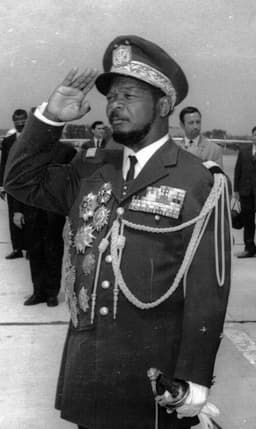
Jean-Bedel Bokassa
Emperor · Modern
39.5Total
Basic Information
Born
1534
1921
Died
1588
—
Era
Modern
Modern
Nationality
Denmark
Central African Republic
Occupation
Emperor
Emperor
Civilization
Western
Other
Score Comparison
Military (10%)
38.3
20.0
Political (20%)
62.7
29.3
Influence (20%)
59.0
47.1
Legacy (20%)
47.5
36.7
Leadership (15%)
68.0
45.0
Strategy (15%)
43.3
54.3
TOTAL
54.4
39.5
Frederick II of Denmark — Complete Timeline
1560 AD
Expansion of the Danish NavyOther
Frederick II significantly expanded the Danish navy, building new warships and strengthening naval infrastructure. This investment made Denmark a major naval power in the Baltic Sea during his reign.
NavyMilitary
Impact: regionalconstructive
1563 AD
Northern Seven Years' WarWar◆ Major
Frederick II led Denmark into the Northern Seven Years' War against Sweden. The war was inconclusive, ending with the Treaty of Stettin in 1570, which confirmed the status quo but drained Danish resources.
WarSwedenTreaty of Stettin
Impact: regional
1570 AD
Treaty of StettinPolitical Action◆ Major
Frederick II signed the Treaty of Stettin ending the Northern Seven Years' War. The treaty maintained the territorial boundaries but required Sweden to pay a ransom for the fortress of
TreatyPeace
Impact: regional
1574 AD
Construction of Kronborg CastleCultural◆ Major
Frederick II commissioned the construction of Kronborg Castle in Helsing
ArchitectureKronborgHamlet
Impact: globalconstructive
Jean-Bedel Bokassa — Complete Timeline
1966 AD
Seized Power in Central African Republic CoupPolitical Action◆ Major
Jean-Bédel Bokassa led a military coup against President David Dacko, his cousin. He suspended the constitution, dissolved the National Assembly, and declared himself president, beginning a repressive regime.
Central African RepublicCoupDacko
Impact: nationaldestructive
1976 AD
Proclaimed Emperor of Central AfricaPolitical Action◆ Major
Bokassa declared the Central African Republic a monarchy and crowned himself Emperor Bokassa I in a lavish ceremony costing millions of dollars. The event was modeled on Napoleon's coronation and widely criticized as extravagant.
Central African RepublicMonarchyExtravagance
Impact: nationaldestructive
1979 AD
Overthrown by French Operation BarracudaWar◆ Major
French paratroopers, in Operation Barracuda, overthrew Bokassa while he was in Libya. David Dacko was reinstalled as president. Bokassa went into exile in France and later C
Central African RepublicFrench InterventionExile
Impact: regional
Bangui Student MassacrePolitical Action◆ Major
Bokassa ordered the arrest and killing of schoolchildren protesting compulsory school uniforms. Approximately 100 children were killed, leading to international condemnation and accelerating the end of his regime.
Central African RepublicHuman Rights AbusesMassacre
Impact: nationaltragic
1986 AD
Convicted and Sentenced to DeathPolitical Action◆ Major
Bokassa returned to CAR voluntarily and was put on trial for crimes including murder, cannibalism, and embezzlement. He was convicted and sentenced to death, later commuted to life imprisonment.
Central African RepublicJusticeTrial
Impact: nationalconstructive
Expert Analysis
Origins
Frederick II of Denmark (1534-1588) was born into the Oldenburg dynasty, son of King Christian III and Dorothea of Saxe-Lauenburg. He received a humanist education, studying in Germany and the Netherlands, and was groomed for rule from an early age. His formative years were shaped by the Protestant Reformation and the power struggles of the Baltic region. Jean-Bedel Bokassa (1921-1996) was born in Bobangui, French Ubangi-Shari (now Central African Republic), to a village chief father who was killed when Bokassa was young. He was raised by his mother and later by missionaries, receiving a basic education before joining the French colonial army at age 18. His early life was marked by poverty and the experience of colonial subjugation.
Rise to Power
Frederick II ascended to the Danish throne in 1559 upon his father's death. His early reign focused on consolidating royal authority and challenging Swedish dominance in the Baltic. The Northern Seven Years' War (1563-1570) was his major military venture, initially sparked by disputes over the Three Crowns emblem and trade routes. Despite early Danish successes, the war became a costly stalemate, ending with the Treaty of Stettin (1570). Frederick used the peace to strengthen the navy and fortify the realm, notably commissioning Kronborg Castle (1574-1585) as a symbol of power. Bokassa rose through the ranks of the French military, serving in Indochina and Algeria, and became a captain in 1961. After the Central African Republic's independence, he was appointed chief of staff of the army by his cousin President David Dacko. On December 31, 1965, Bokassa led a coup, seizing power and suspending the constitution. He established a repressive regime, consolidating control through purges and patronage.
Leadership & Governance
Frederick II ruled as an absolute monarch, centralizing administration and promoting Lutheranism. He reformed the Danish legal code, standardized weights and measures, and supported trade through the Sound Dues from ships passing through the Øresund. His governance was pragmatic, balancing noble interests with royal prerogative. He invested heavily in the navy (score 38.3 military, 68.0 leadership), building warships like the *Fortification* and improving Copenhagen's defenses. In contrast, Bokassa's leadership was erratic and brutal. He ruled through decree, amending the constitution to concentrate power, and declared himself Emperor in 1976 in a coronation ceremony costing $20 million (nearly a third of the country's annual budget). His governance was marked by corruption, nepotism, and human rights abuses, including the arrest of political opponents and forced labor. He scored 29.3 in political and 45.0 in leadership, reflecting his inability to build stable institutions.
Triumph & Tragedy
Frederick II's greatest success was the construction of Kronborg Castle, a UNESCO World Heritage site that became a symbol of Danish power and a setting for Shakespeare's Hamlet. He also expanded the navy, making Denmark a major Baltic power. However, the Northern Seven Years' War was a strategic failure: it drained resources and ended without territorial gains. The Treaty of Stettin forced Denmark to recognize Swedish sovereignty over Estonia, a blow to ambitions. Bokassa's triumph was his initial consolidation of power and international recognition, but his tragedy was catastrophic. The Bangui Student Massacre in 1979, where 100 children were killed for protesting school uniforms, led to international condemnation and French intervention. Operation Barracuda overthrew him on September 20, 1979. He was later convicted of murder, cannibalism, and embezzlement, dying in exile in 1996. His legacy is one of infamy.
Character & Destiny
Frederick II was known for his interest in the arts and sciences, patronizing Tycho Brahe and other scholars. He was a skilled administrator but cautious in foreign policy, avoiding further wars after 1570. His character—pragmatic, reform-minded, and focused on naval strength—shaped a stable reign. His destiny was to solidify Danish power in the Baltic, though his ambitions were tempered by realistic assessments. Bokassa was charismatic but megalomaniacal, exhibiting paranoia and cruelty. His self-coronation showed delusions of grandeur. His character—impulsive, violent, and corrupt—led to his downfall. Historians describe him as a classic African despot, whose rule was sustained only by French support until that support was withdrawn.
Legacy
Frederick II's legacy endures through Kronborg Castle, a major tourist attraction, and his naval reforms that influenced Danish maritime power. Politically, he scored 62.7, reflecting his effective governance. His reign is seen as a high point of the Oldenburg dynasty, with stability and cultural flourishing. Bokassa's legacy is overwhelmingly negative: his rule is synonymous with tyranny, and the Central African Republic continues to suffer from political instability. His scores of 20.0 military, 29.3 political, and 36.7 legacy reflect his destructive impact. The Bangui Student Massacre remains a dark symbol. In global history, Bokassa is a cautionary tale of post-colonial autocracy.
Conclusion
Frederick II of Denmark had a greater impact than Jean-Bedel Bokassa, as evidenced by his total score of 54.4 compared to Bokassa's 39.5. Frederick's contributions to Danish state-building, naval power, and cultural heritage have endured for centuries, while Bokassa's reign was a brief, catastrophic failure that left no positive legacy. Frederick's pragmatic governance created lasting institutions, whereas Bokassa's personal rule destroyed them. In the final analysis, Frederick's net contribution to history was positive and substantial, while Bokassa's was negative and fleeting. Therefore, Frederick II of Denmark is the more significant figure, with a lasting influence that far outweighs Bokassa's ephemeral notoriety.
Rankings
🥇
Frederick II of DenmarkLeader
Mil: 38.3Pol: 62.7Inf: 59.0
54.4
🥈
Jean-Bedel Bokassa
Mil: 20.0Pol: 29.3Inf: 47.1
39.5
+14.9 behind
How This Comparison Works
Algorithm
Each figure is scored on 6 dimensions (0—100 scale) based on structured historical data: Military (10%), Political (20%), Influence (20%), Legacy (20%), Leadership (15%), Strategy (15%). The weighted total produces the final ranking.
Data Sources
Scores are computed from structured sub-indicators in the database. Scale factors adjust for era (Ancient ×0.85, Modern ×1.0) and civilization size (Eastern ×1.05, Other ×0.80) to account for differences in population and military scale.
Maximum 3 Figures
Comparisons are limited to 2—3 figures to ensure readability and statistical meaningfulness.
Error Margins
±5 points per dimension — Sub-scores are derived from historical records with inherent uncertainty. Two figures within 5 points on a dimension should be considered roughly equivalent in that area.
Total Score Accuracy
±3 points overall — The weighted combination of 6 dimensions produces a total score with approximately ±3 points of uncertainty. Differences of less than 3 points are not statistically significant— the figures are effectively tied.
Known Limitations
- Historical records are incomplete and uneven across civilizations
- Figures from oral-tradition societies may be underrepresented
- Occupation labels can misclassify multi-role figures
- Scores measure capability and impact, not moral character
- Quantitative scoring is a comparison tool, not absolute truth
Capability Radar
Military (10%) — Battles & Warfare
Battles
30
5
Win Rate
40
5
Expansion
30
5
Political (20%) — Governance & Reform
Reform
50
10
Diplomacy
55
10
Economy
50
5
Influence (20%) — Cultural & Global Reach
Cultural
55
10
Global
40
10
Legacy (20%) — Historical Impact
Historical
50
15
Longevity
45
5
Leadership (15%) — Power & Stability
Tenure
60
30
Stability
45
5
Strategy (15%) — Tactics & Innovation
Strategy
40
5
Tactics
35
5
Reform
45
5
Similar Comparisons
Comments & Discussion
No comments yet. Be the first to share your thoughts!