Loading...
Hussein of Jordan vs Jean-Bedel Bokassa
Hussein of Jordan leads by 16.2 pts · 2 figures compared
…

Hussein of Jordan
Emperor · Modern
55.7Total
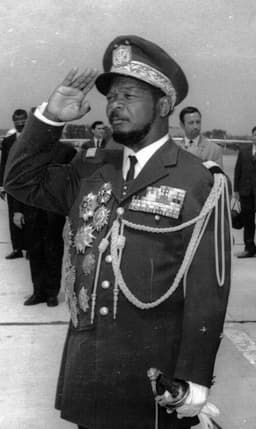
Jean-Bedel Bokassa
Emperor · Modern
39.5Total
Basic Information
Born
1935
1921
Died
—
—
Era
Modern
Modern
Nationality
Jordan
Central African Republic
Occupation
Emperor
Emperor
Civilization
Middle Eastern
Other
Score Comparison
Military (10%)
50.0
20.0
Political (20%)
60.0
29.3
Influence (20%)
59.0
47.1
Legacy (20%)
49.2
36.7
Leadership (15%)
72.0
45.0
Strategy (15%)
38.6
54.3
TOTAL
55.7
39.5
Hussein of Jordan — Complete Timeline
1951 AD
Assassination of King Abdullah IPolitical Action◆ Major
Hussein, then 15, witnessed the assassination of his grandfather King Abdullah I in Jerusalem. This event shaped his political outlook and prepared him for his future role as king.
AssassinationRoyal FamilyJerusalem
Impact: nationaltragic
1952 AD
Ascension to the ThronePolitical Action◆ Major
Hussein became King of Jordan at age 17 after his father King Talal was declared unfit to rule due to mental illness. He was formally crowned in 1953.
SuccessionMonarchy
Impact: national
1956 AD
Arab Dismissal of Glubb PashaPolitical Action◆ Major
Hussein dismissed British General John Glubb, commander of the Arab Legion, asserting Jordanian sovereignty. This reduced British influence and aligned Jordan with Arab nationalism.
DecolonizationArab NationalismMilitary
Impact: national
1967 AD
Six-Day WarWar
Jordan entered the Six-Day War against Israel alongside Egypt and Syria. Israel captured the West Bank and East Jerusalem from Jordan, resulting in a massive influx of Palestinian refugees into Jordan.
Arab-Israeli WarTerritorial LossRefugees
Impact: regionaldestructive
1970 AD
Black September ConflictWar
Hussein ordered the Jordanian military to suppress Palestinian militant groups (PLO) that threatened his rule. The conflict resulted in thousands of casualties and the expulsion of the PLO from Jordan to Lebanon.
Civil ConflictPLOPalestinian Refugees
Impact: regionaldestructive
1994 AD
Signing of the Israel-Jordan Peace TreatyPolitical Action
Hussein signed a peace treaty with Israel at the Arava border crossing, normalizing relations. Jordan became the second Arab state to make peace with Israel, ending a 46-year state of war.
Peace TreatyArab-Israeli RelationsDiplomacy
Impact: regionalconstructive
Jean-Bedel Bokassa — Complete Timeline
1966 AD
Seized Power in Central African Republic CoupPolitical Action◆ Major
Jean-Bédel Bokassa led a military coup against President David Dacko, his cousin. He suspended the constitution, dissolved the National Assembly, and declared himself president, beginning a repressive regime.
Central African RepublicCoupDacko
Impact: nationaldestructive
1976 AD
Proclaimed Emperor of Central AfricaPolitical Action◆ Major
Bokassa declared the Central African Republic a monarchy and crowned himself Emperor Bokassa I in a lavish ceremony costing millions of dollars. The event was modeled on Napoleon's coronation and widely criticized as extravagant.
Central African RepublicMonarchyExtravagance
Impact: nationaldestructive
1979 AD
Overthrown by French Operation BarracudaWar◆ Major
French paratroopers, in Operation Barracuda, overthrew Bokassa while he was in Libya. David Dacko was reinstalled as president. Bokassa went into exile in France and later C
Central African RepublicFrench InterventionExile
Impact: regional
Bangui Student MassacrePolitical Action◆ Major
Bokassa ordered the arrest and killing of schoolchildren protesting compulsory school uniforms. Approximately 100 children were killed, leading to international condemnation and accelerating the end of his regime.
Central African RepublicHuman Rights AbusesMassacre
Impact: nationaltragic
1986 AD
Convicted and Sentenced to DeathPolitical Action◆ Major
Bokassa returned to CAR voluntarily and was put on trial for crimes including murder, cannibalism, and embezzlement. He was convicted and sentenced to death, later commuted to life imprisonment.
Central African RepublicJusticeTrial
Impact: nationalconstructive
Expert Analysis
Origins
**Hussein of Jordan** was born on November 14, 1935, in Amman, into the Hashemite dynasty, direct descendants of the Prophet Muhammad. His grandfather, King Abdullah I, was a key figure in the Arab Revolt and the founding of Jordan. Hussein was educated at Victoria College in Alexandria and later at Harrow School in England. He also trained at the Royal Military Academy Sandhurst. His early life was marked by political instability and the assassination of his grandfather in 1951, which he witnessed firsthand.
**Jean-Bedel Bokassa** was born on February 22, 1921, in Bobangui, French Equatorial Africa (now Central African Republic). His father was a village chief killed by French colonial authorities when Bokassa was young, and his mother died shortly after. He was raised by missionaries and received a basic education. At age 18, he joined the French colonial army, serving in World War II and the First Indochina War. He rose to the rank of captain, the highest achievable by an African at the time.
Rise to Power
Hussein became King of Jordan on August 11, 1952, at age 17, after his father King Talal was declared unfit to rule due to mental illness. He was formally crowned in 1953. His early reign focused on consolidating power and navigating the Arab-Israeli conflict. He modernized the army and maintained Jordan's independence despite pressures from neighboring Arab states and Israel. His political score of 60.0 reflects his ability to survive numerous assassination attempts and regional turmoil.
Bokassa seized power on January 1, 1966, through a military coup against his cousin, President David Dacko. He suspended the constitution, dissolved the National Assembly, and assumed full control. He initially promised stability and development but quickly became autocratic. In 1976, he proclaimed the Central African Republic a monarchy and crowned himself Emperor Bokassa I in a lavish ceremony costing $20 million, equivalent to a quarter of the country's annual budget. His political score of 29.3 indicates his failure to build legitimate governance.
Leadership & Governance
Hussein ruled as a constitutional monarch but held substantial power. He pursued a pragmatic foreign policy, balancing ties with the West, Arab states, and Israel. Domestically, he implemented economic reforms, improved infrastructure, and promoted education. He survived multiple coup attempts and regional wars, including the 1967 Six-Day War where Jordan lost the West Bank and East Jerusalem. His leadership score of 72.0 reflects his ability to maintain stability in a volatile region.
Bokassa ruled through fear and repression. He personally participated in beatings and executions. His regime was characterized by corruption, mismanagement, and human rights abuses. He ordered the 1979 Bangui student massacre, where approximately 100 children were killed for protesting school uniforms. His military score of 20.0 reflects his focus on personal power rather than national defense. He embezzled state funds and maintained a lavish lifestyle while the country remained impoverished.
Triumph & Tragedy
Hussein's greatest triumph was the 1994 Israel-Jordan Peace Treaty, which normalized relations with Israel and secured Jordan's position as a stable ally of the West. He also successfully navigated the 1970 Black September conflict, expelling Palestinian militant groups that threatened his rule. His tragedies include the loss of the West Bank in 1967 and the subsequent influx of Palestinian refugees, which strained Jordan's resources. He also faced economic challenges and periodic unrest.
Bokassa's initial triumph was seizing power and centralizing control, but his regime quickly descended into brutality. His crowning as emperor was a personal triumph but a national tragedy. The Bangui massacre led to international condemnation and French intervention. He was overthrown in 1979 and later returned voluntarily to stand trial. He was convicted of murder, cannibalism, and embezzlement, sentenced to death, later commuted to life imprisonment. He died in 1996.
Character & Destiny
Hussein was known for his resilience, pragmatism, and personal courage. He often led from the front, surviving 12 assassination attempts. His character was shaped by the assassination of his grandfather and the pressures of ruling a small, vulnerable state. He was a skilled diplomat who balanced competing interests. His total score of 55.7 reflects his moderate but effective leadership.
Bokassa was narcissistic, paranoid, and cruel. He believed in his own grandeur and surrounded himself with sycophants. His character led to isolation and eventual downfall. He was erratic, once claiming to have eaten human flesh. His total score of 39.5 indicates a failure in leadership and legacy. His destiny was sealed by his own excesses and the intervention of France, the former colonial power.
Legacy
Hussein is remembered as the "father of modern Jordan" and a symbol of stability. His peace treaty with Israel set a precedent for Arab-Israeli relations. He modernized Jordan's economy and society, though challenges remain. His legacy score of 49.2 reflects his enduring impact on Jordan and the region. The Hashemite monarchy continues under his son, King Abdullah II.
Bokassa's legacy is that of a brutal dictator and a cautionary tale of African autocracy. His reign is studied as an example of post-colonial mismanagement and the dangers of megalomania. The Central African Republic remains one of the poorest and most unstable countries in the world. His legacy score of 36.7 reflects his negative impact.
Conclusion
King Hussein of Jordan had a significantly greater positive impact than Jean-Bedel Bokassa. Hussein's leadership score of 72.0 dwarfs Bokassa's 45.0, and his political score of 60.0 contrasts with Bokassa's 29.3. Hussein successfully navigated regional conflicts and established a lasting peace with Israel, while Bokassa plunged his country into tyranny and chaos. The 16.2-point gap in total scores underscores this disparity. Hussein's legacy is one of survival and diplomacy; Bokassa's is of failure and brutality. While neither achieved perfect scores, Hussein's contributions to stability and peace in the Middle East far outweigh Bokassa's destructive rule.
Rankings
🥇
Hussein of JordanLeader
Mil: 50.0Pol: 60.0Inf: 59.0
55.7
🥈
Jean-Bedel Bokassa
Mil: 20.0Pol: 29.3Inf: 47.1
39.5
+16.2 behind
How This Comparison Works
Algorithm
Each figure is scored on 6 dimensions (0—100 scale) based on structured historical data: Military (10%), Political (20%), Influence (20%), Legacy (20%), Leadership (15%), Strategy (15%). The weighted total produces the final ranking.
Data Sources
Scores are computed from structured sub-indicators in the database. Scale factors adjust for era (Ancient ×0.85, Modern ×1.0) and civilization size (Eastern ×1.05, Other ×0.80) to account for differences in population and military scale.
Maximum 3 Figures
Comparisons are limited to 2—3 figures to ensure readability and statistical meaningfulness.
Error Margins
±5 points per dimension — Sub-scores are derived from historical records with inherent uncertainty. Two figures within 5 points on a dimension should be considered roughly equivalent in that area.
Total Score Accuracy
±3 points overall — The weighted combination of 6 dimensions produces a total score with approximately ±3 points of uncertainty. Differences of less than 3 points are not statistically significant— the figures are effectively tied.
Known Limitations
- Historical records are incomplete and uneven across civilizations
- Figures from oral-tradition societies may be underrepresented
- Occupation labels can misclassify multi-role figures
- Scores measure capability and impact, not moral character
- Quantitative scoring is a comparison tool, not absolute truth
Capability Radar
Military (10%) — Battles & Warfare
Battles
15
5
Win Rate
20
5
Expansion
10
5
Political (20%) — Governance & Reform
Reform
60
10
Diplomacy
80
10
Economy
55
5
Influence (20%) — Cultural & Global Reach
Cultural
40
10
Global
55
10
Legacy (20%) — Historical Impact
Historical
55
15
Longevity
50
5
Leadership (15%) — Power & Stability
Tenure
85
30
Stability
65
5
Strategy (15%) — Tactics & Innovation
Strategy
25
5
Tactics
20
5
Reform
30
5
Similar Comparisons
Comments & Discussion
No comments yet. Be the first to share your thoughts!