Loading...
Frederick II of Sicily vs Muhammad al-Nasir
Frederick II of Sicily leads by 9.2 pts · 2 figures compared
…

Frederick II of Sicily
Emperor · Medieval
57.4Total
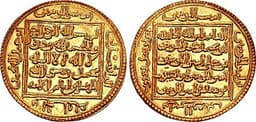
Muhammad al-Nasir
Emperor · Medieval
48.2Total
Basic Information
Born
1194
1181
Died
1250
1213
Era
Medieval
Medieval
Nationality
Holy Roman Empire
Almohad Caliphate
Occupation
Emperor
Emperor
Civilization
Western
Middle Eastern
Score Comparison
Military (10%)
40.0
35.0
Political (20%)
70.3
37.9
Influence (20%)
65.0
56.4
Legacy (20%)
40.0
45.8
Leadership (15%)
72.0
64.0
Strategy (15%)
58.0
38.3
TOTAL
57.4
48.2
Frederick II of Sicily — Complete Timeline
1227 AD
Excommunication by Pope Gregory IXPolitical Action◆ Major
Frederick II was excommunicated by Pope Gregory IX for failing to fulfill his crusade vow. This excommunication led to a long conflict between Frederick and the Papacy, weakening the Holy Roman Empire.
PapacyConflict
Impact: regionaldestructive
1229 AD
Treaty of JaffaPolitical Action
Frederick II negotiated the Treaty of Jaffa with Sultan al-Kamil of Egypt. The treaty returned Jerusalem, Bethlehem, and Nazareth to Christian control without a battle, marking a diplomatic victory for Frederick.
CrusadeTreatyJerusalem
Impact: regionalconstructive
Coronation as King of JerusalemPolitical Action◆ Major
Frederick II crowned himself King of Jerusalem in the Church of the Holy Sepulchre in March 1229. This act was controversial because he was excommunicated by the Pope at the time.
Crusader StatesCoronation
Impact: regional
1231 AD
Promulgation of the Constitutions of MelfiReform◆ Major
Frederick II issued the Constitutions of Melfi, a comprehensive legal code for the Kingdom of Sicily. The code centralized royal authority, reformed the judiciary, and promoted economic development.
LawReformSicily
Impact: regionalconstructive
1237 AD
Battle of CortenuovaWar◆ Major
Frederick II defeated the Lombard League at the Battle of Cortenuova. The victory strengthened his control over northern Italy but did not end the League's resistance.
ItalyBattleLombard League
Impact: regional
Muhammad al-Nasir — Complete Timeline
1199 AD
Accession as CaliphPolitical Action◆ Major
Muhammad al-Nasir succeeded his father Yaqub al-Mansur as Almohad caliph. He inherited a powerful but overextended empire facing growing Christian pressure in Iberia and internal dissent among Berber tribes.
Almohad CaliphateSuccessionDynasty
Impact: regional
1212 AD
Battle of Las Navas de TolosaWar
Muhammad al-Nasir led the Almohad army against a coalition of Christian kingdoms at Las Navas de Tolosa in southern Spain. The Almohad forces were decisively defeated, marking the beginning of the end of Almohad dominance in Iberia and opening the way for the Reconquista.
Las Navas de TolosaAlmohad DefeatReconquista
Impact: regionaltragic
1213 AD
Loss of Al-Andalus TerritoriesWar◆ Major
Following the defeat at Las Navas de Tolosa, Muhammad al-Nasir lost control of most Almohad territories in Al-Andalus. Christian forces captured key cities including
Al-Andalus LossAlmohad DeclineChristian Advance
Impact: regionaltragic
Death and Succession CrisisPolitical Action◆ Major
Muhammad al-Nasir died in Marrakesh shortly after the defeat at Las Navas de Tolosa. His death triggered a succession crisis among Almohad princes, leading to a period of internal strife and further weakening the caliphate.
Succession CrisisAlmohad DeclineDynasty
Impact: regionaltragic
Expert Analysis
Origins
Frederick II of Sicily was born in 1194 in Jesi, Italy, to Emperor Henry VI and Constance of Sicily. Orphaned young, he was raised under papal guardianship in Palermo, a multicultural hub blending Norman, Byzantine, Arab, and Jewish influences. This cosmopolitan environment shaped his pragmatic and tolerant worldview. He received education in law, languages (Latin, Arabic, Greek), and science, fostering a rationalist approach.
Muhammad al-Nasir was born around 1182 in Marrakesh, son of Caliph Yaqub al-Mansur, who had consolidated Almohad power in North Africa and Al-Andalus. Raised in the imperial court, he was trained in Islamic jurisprudence and military command. However, he lacked his father's administrative acumen and faced a sprawling empire stretched thin by overextension.
Rise to Power
Frederick II was elected King of Germany in 1212 at age 18, with support from Pope Innocent III, who saw him as a counterweight to the Welf dynasty. He was crowned Holy Roman Emperor in 1220. His rise was marked by strategic concessions to the papacy, including promises to lead a crusade and to keep Sicily separate from the empire. His diplomatic maneuvering allowed him to consolidate power in Italy and Germany.
Muhammad al-Nasir ascended as caliph in 1199 after his father's death. He inherited a vast but unstable realm. His early reign focused on suppressing rebellions in North Africa and maintaining control over Al-Andalus. He launched a campaign against the Christian kingdoms in Iberia, aiming to reverse their advances. His rise was uncontested but marked by internal strife and dwindling resources.
Leadership & Governance
Frederick II's governance was innovative. He promulgated the Constitutions of Melfi in 1231, a centralized legal code for Sicily that reformed administration, taxation, and justice. He established a bureaucracy staffed by trained officials, promoted trade, and patronized arts and science. His court in Palermo was a center of translation and learning. However, his authoritarian style alienated nobles and the papacy, leading to prolonged conflicts.
Muhammad al-Nasir ruled through traditional Almohad structures. He relied on tribal leaders and religious scholars. His military strategy was conventional, focusing on large armies and set-piece battles. He failed to adapt to the evolving tactics of the Christian kingdoms. His administrative capacity was weak, with provinces often acting independently. He scored 37.9 in political skill versus Frederick's 70.3, reflecting his inability to manage the empire's complexity.
Triumph & Tragedy
Frederick II's greatest triumph was the Treaty of Jaffa (1229), negotiated with Sultan al-Kamil of Egypt, which returned Jerusalem, Bethlehem, and Nazareth to Christian control without major combat. He crowned himself King of Jerusalem, a diplomatic achievement that enhanced his prestige. However, his excommunication by Pope Gregory IX in 1227 for delayed crusade vows led to a destructive conflict with the papacy and German princes. His later campaigns in Italy, while victorious at Cortenuova (1237), failed to break the Lombard League.
Muhammad al-Nasir's tragedy was the Battle of Las Navas de Tolosa (1212), where his army was decisively defeated by a coalition of Castile, Aragon, Navarre, and Portugal. The battle was a turning point, leading to rapid Christian conquests in Al-Andalus, including Córdoba and Seville. He died in 1213 in Marrakesh, leaving a succession crisis that fractured the Almohad Caliphate. His military score of 35.0 reflects this catastrophic failure.
Character & Destiny
Frederick II was pragmatic, intellectual, and autocratic. His nickname "Stupor Mundi" (Wonder of the World) reflects his unconventional nature. He challenged papal authority, promoted religious tolerance, and was skeptical of dogma. His character led to both brilliant diplomatic coups and bitter conflicts with the Church. His destiny was shaped by his refusal to conform, leading to a legacy of intellectual achievement but political instability.
Muhammad al-Nasir was traditional and cautious. He lacked the strategic vision of his father. His decision to confront the Christian coalition directly at Las Navas de Tolosa was a gamble that failed catastrophically. His character—stubborn and overconfident—led to a defeat that sealed his empire's fate. He scored 38.3 in strategy, indicating poor decision-making in a critical moment.
Legacy
Frederick II's legacy is mixed. His Constitutions of Melfi influenced later legal codes. His patronage of science and translation preserved classical knowledge. However, his conflict with the papacy weakened the Holy Roman Empire and contributed to its fragmentation. He is remembered as an enlightened ruler ahead of his time. His total score is 57.4, with high political (70.3) and leadership (72.0) scores.
Muhammad al-Nasir's legacy is defined by defeat. The Battle of Las Navas de Tolosa marked the beginning of the end for Muslim rule in Iberia. His failure accelerated the Reconquista, leading to the eventual fall of Granada in 1492. He is remembered as a weak caliph whose incompetence destroyed a once-mighty empire. His total score is 48.2, with low military (35.0) and strategy (38.3) scores.
Conclusion
Frederick II had greater impact than Muhammad al-Nasir based on data. His diplomatic achievement in the Sixth Crusade and his legal reforms had lasting effects on European governance and cross-cultural exchange. Muhammad al-Nasir's defeat, while significant, was a symptom of broader Almohad decline. Frederick's scores are higher across all metrics except legacy (40.0 vs 45.8), where al-Nasir's defeat had a more dramatic historical impact. However, Frederick's overall score of 57.4 vs 48.2 reflects his superior leadership and political acumen. Therefore, Frederick II is the more consequential historical figure.
Rankings
🥇
Frederick II of SicilyLeader
Mil: 40.0Pol: 70.3Inf: 65.0
57.4
🥈
Muhammad al-Nasir
Mil: 35.0Pol: 37.9Inf: 56.4
48.2
+9.2 behind
How This Comparison Works
Algorithm
Each figure is scored on 6 dimensions (0—100 scale) based on structured historical data: Military (10%), Political (20%), Influence (20%), Legacy (20%), Leadership (15%), Strategy (15%). The weighted total produces the final ranking.
Data Sources
Scores are computed from structured sub-indicators in the database. Scale factors adjust for era (Ancient ×0.85, Modern ×1.0) and civilization size (Eastern ×1.05, Other ×0.80) to account for differences in population and military scale.
Maximum 3 Figures
Comparisons are limited to 2—3 figures to ensure readability and statistical meaningfulness.
Error Margins
±5 points per dimension — Sub-scores are derived from historical records with inherent uncertainty. Two figures within 5 points on a dimension should be considered roughly equivalent in that area.
Total Score Accuracy
±3 points overall — The weighted combination of 6 dimensions produces a total score with approximately ±3 points of uncertainty. Differences of less than 3 points are not statistically significant— the figures are effectively tied.
Known Limitations
- Historical records are incomplete and uneven across civilizations
- Figures from oral-tradition societies may be underrepresented
- Occupation labels can misclassify multi-role figures
- Scores measure capability and impact, not moral character
- Quantitative scoring is a comparison tool, not absolute truth
Capability Radar
Military (10%) — Battles & Warfare
Battles
45
45
Win Rate
50
30
Expansion
40
25
Political (20%) — Governance & Reform
Reform
85
30
Diplomacy
90
25
Economy
80
30
Influence (20%) — Cultural & Global Reach
Cultural
80
30
Global
65
20
Legacy (20%) — Historical Impact
Historical
75
40
Longevity
70
25
Leadership (15%) — Power & Stability
Tenure
75
55
Stability
55
20
Strategy (15%) — Tactics & Innovation
Strategy
65
35
Tactics
70
40
Reform
60
20
Similar Comparisons
Comments & Discussion
No comments yet. Be the first to share your thoughts!