Loading...
Frederick II of Sicily vs Henry Bolingbroke
Frederick II of Sicily leads by 4.8 pts · 2 figures compared
…

Frederick II of Sicily
Emperor · Medieval
57.4Total
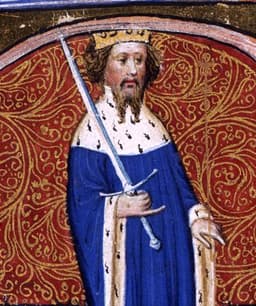
Henry Bolingbroke
Emperor · Medieval
52.6Total
Basic Information
Born
1194
1367
Died
1250
1413
Era
Medieval
Medieval
Nationality
Holy Roman Empire
England
Occupation
Emperor
Emperor
Civilization
Western
Western
Score Comparison
Military (10%)
40.0
25.0
Political (20%)
70.3
48.0
Influence (20%)
65.0
58.0
Legacy (20%)
40.0
50.0
Leadership (15%)
72.0
65.7
Strategy (15%)
58.0
60.0
TOTAL
57.4
52.6
Frederick II of Sicily — Complete Timeline
1227 AD
Excommunication by Pope Gregory IXPolitical Action◆ Major
Frederick II was excommunicated by Pope Gregory IX for failing to fulfill his crusade vow. This excommunication led to a long conflict between Frederick and the Papacy, weakening the Holy Roman Empire.
PapacyConflict
Impact: regionaldestructive
1229 AD
Treaty of JaffaPolitical Action
Frederick II negotiated the Treaty of Jaffa with Sultan al-Kamil of Egypt. The treaty returned Jerusalem, Bethlehem, and Nazareth to Christian control without a battle, marking a diplomatic victory for Frederick.
CrusadeTreatyJerusalem
Impact: regionalconstructive
Coronation as King of JerusalemPolitical Action◆ Major
Frederick II crowned himself King of Jerusalem in the Church of the Holy Sepulchre in March 1229. This act was controversial because he was excommunicated by the Pope at the time.
Crusader StatesCoronation
Impact: regional
1231 AD
Promulgation of the Constitutions of MelfiReform◆ Major
Frederick II issued the Constitutions of Melfi, a comprehensive legal code for the Kingdom of Sicily. The code centralized royal authority, reformed the judiciary, and promoted economic development.
LawReformSicily
Impact: regionalconstructive
1237 AD
Battle of CortenuovaWar◆ Major
Frederick II defeated the Lombard League at the Battle of Cortenuova. The victory strengthened his control over northern Italy but did not end the League's resistance.
ItalyBattleLombard League
Impact: regional
Henry Bolingbroke — Complete Timeline
1398 AD
Exiled by Richard IIPolitical Action◆ Major
Henry Bolingbroke was exiled from England by King Richard II following a dispute with Thomas de Mowbray. The exile was initially for ten years, later commuted to life, stripping Henry of his inheritance and prompting his return to claim the throne.
ExilePower StruggleLancaster
Impact: nationaldestructive
1399 AD
Returned from Exile and Deposed Richard IIPolitical Action
Henry landed at Ravenspur in Yorkshire with a small force while Richard II was in Ireland. He gathered support from nobles, captured Richard, and forced his abdication. Parliament then accepted Henry as King Henry IV, establishing the Lancastrian dynasty.
CoupDepositionLancastrian Dynasty
Impact: national
1403 AD
Battle of ShrewsburyWar◆ Major
Henry IV's forces defeated a rebellion led by Henry Percy (Hotspur) and the Earl of Worcester. The battle was the first major engagement between English armies using longbows. Hotspur was killed, ending the Percy rebellion and securing Henry's throne.
RebellionBattlePercy
Impact: nationaldestructive
1409 AD
Suppressed the Welsh RebellionWar◆ Major
Henry IV's forces captured Harlech Castle, the headquarters of Owain Glynd
Welsh RebellionMilitary Campaign
Impact: regionaldestructive
1412 AD
Suffered from Illness and Political InstabilityOther
Henry IV suffered from a debilitating illness, possibly leprosy or epilepsy, which weakened his ability to govern. Factional struggles between his son Prince Henry and Archbishop Arundel intensified. The king's health declined further, leading to his death in 1413.
IllnessSuccession Crisis
Impact: nationaltragic
Expert Analysis
Origins
Frederick II of Sicily was born in 1194 in Jesi, Italy, to Holy Roman Emperor Henry VI and Constance of Sicily. His mother secured his inheritance as King of Sicily at age three. Raised in Palermo's multicultural court, he absorbed Norman, Byzantine, and Arab influences. Henry Bolingbroke was born in 1366 at Bolingbroke Castle, Lincolnshire, to John of Gaunt, Duke of Lancaster, and Blanche of Lancaster. He was educated in chivalry and governance, inheriting vast estates and a claim to the English throne through his father and mother.
Rise to Power
Frederick II was crowned King of Germany in 1212 and Holy Roman Emperor in 1220. His rise was marked by strategic marriage to Isabella of Brienne, giving him claim to Jerusalem. He avoided direct conflict with the papacy initially, but his delay in crusading led to excommunication. Henry Bolingbroke rose by deposing his cousin Richard II in 1399. Exiled by Richard in 1398 after a dispute, Henry returned in 1399 while Richard was in Ireland. He gathered noble support, captured Richard, and forced abdication, becoming King Henry IV in October 1399.
Leadership & Governance
Frederick II governed Sicily through the Constitutions of Melfi (1231), a centralized legal code that reformed taxation, justice, and administration. He promoted tolerance, employing Muslim and Jewish officials. In Germany, he granted princes autonomy, weakening imperial power. Henry IV faced constant rebellions, from the Percy family and Owain Glyndŵr in Wales. He relied on parliamentary grants for revenue, strengthening the Commons. His governance was reactive, focused on survival rather than reform. Frederick scored 72.0 in leadership, Henry 65.7.
Triumph & Tragedy
Frederick's greatest success was the 1229 Treaty of Jaffa, securing Jerusalem, Bethlehem, and Nazareth without battle. He crowned himself King of Jerusalem, a diplomatic feat. His tragedy was the ongoing conflict with the papacy; Pope Gregory IX excommunicated him and later Innocent IV deposed him at the Council of Lyon (1245). Frederick died in 1250, his dynasty soon collapsing. Henry's triumph was deposing Richard II and establishing the Lancastrian line. His tragedy was chronic illness and instability; the Percy rebellion at Shrewsbury (1403) nearly toppled him. He died in 1413, worn down by conflict.
Character & Destiny
Frederick was intellectual, curious, and autocratic. He spoke multiple languages, wrote a falconry treatise, and challenged papal authority. His character made him enemies; the papacy branded him Antichrist. Henry was pragmatic, determined, but insecure. He seized the throne but lacked legitimacy, constantly defending it. His illness mirrored his reign's frailty. Historians note Henry's political acumen (political score 48.0) but also his inability to unify England.
Legacy
Frederick's legal reforms influenced later European law. His Sicilian court fostered culture and science. However, his conflict with the papacy weakened the Holy Roman Empire, contributing to German particularism. Henry IV's deposition of Richard II created a precedent for parliamentary involvement in succession. The Lancastrian dynasty he founded lasted until 1471, but his reign exposed the fragility of usurped power. Frederick's influence score is 65.0, Henry's 58.0.
Conclusion
Frederick II had greater impact than Henry Bolingbroke. His diplomatic achievement in Jerusalem, legal codification, and cultural patronage shaped European history more durably than Henry's political maneuvering. Frederick scored 57.4 total versus Henry's 52.6. While Henry's deposition altered English governance, Frederick's reforms and conflicts with the papacy had continental significance. Frederick's legacy, though contested, remains more transformative.
Rankings
🥇
Frederick II of SicilyLeader
Mil: 40.0Pol: 70.3Inf: 65.0
57.4
🥈
Henry Bolingbroke
Mil: 25.0Pol: 48.0Inf: 58.0
52.6
+4.8 behind
How This Comparison Works
Algorithm
Each figure is scored on 6 dimensions (0—100 scale) based on structured historical data: Military (10%), Political (20%), Influence (20%), Legacy (20%), Leadership (15%), Strategy (15%). The weighted total produces the final ranking.
Data Sources
Scores are computed from structured sub-indicators in the database. Scale factors adjust for era (Ancient ×0.85, Modern ×1.0) and civilization size (Eastern ×1.05, Other ×0.80) to account for differences in population and military scale.
Maximum 3 Figures
Comparisons are limited to 2—3 figures to ensure readability and statistical meaningfulness.
Error Margins
±5 points per dimension — Sub-scores are derived from historical records with inherent uncertainty. Two figures within 5 points on a dimension should be considered roughly equivalent in that area.
Total Score Accuracy
±3 points overall — The weighted combination of 6 dimensions produces a total score with approximately ±3 points of uncertainty. Differences of less than 3 points are not statistically significant— the figures are effectively tied.
Known Limitations
- Historical records are incomplete and uneven across civilizations
- Figures from oral-tradition societies may be underrepresented
- Occupation labels can misclassify multi-role figures
- Scores measure capability and impact, not moral character
- Quantitative scoring is a comparison tool, not absolute truth
Capability Radar
Military (10%) — Battles & Warfare
Battles
45
45
Win Rate
50
50
Expansion
40
20
Political (20%) — Governance & Reform
Reform
85
40
Diplomacy
90
50
Economy
80
45
Influence (20%) — Cultural & Global Reach
Cultural
80
40
Global
65
40
Legacy (20%) — Historical Impact
Historical
75
55
Longevity
70
50
Leadership (15%) — Power & Stability
Tenure
75
55
Stability
55
30
Strategy (15%) — Tactics & Innovation
Strategy
65
45
Tactics
70
40
Reform
60
30
Similar Comparisons
Comments & Discussion
No comments yet. Be the first to share your thoughts!