Loading...
Frederick III of Denmark vs Oscar I
Frederick III of Denmark leads by 3.2 pts · 2 figures compared
…

Frederick III of Denmark
Emperor · Modern
52.9Total
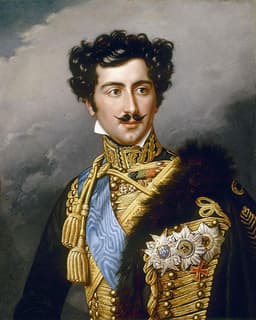
Oscar I
Emperor · Modern
49.7Total
Basic Information
Born
1609
1799
Died
1670
1859
Era
Modern
Modern
Nationality
Denmark
Sweden
Occupation
Emperor
Emperor
Civilization
Western
Western
Score Comparison
Military (10%)
22.6
21.2
Political (20%)
59.3
72.0
Influence (20%)
54.9
51.8
Legacy (20%)
49.2
40.0
Leadership (15%)
80.0
72.0
Strategy (15%)
36.8
30.3
TOTAL
52.9
49.7
Frederick III of Denmark — Complete Timeline
1658 AD
Siege of Copenhagen (1658-1660)War◆ Major
During the Second Northern War, Swedish forces besieged Copenhagen. Frederick III led the city's defense, rallying citizens and soldiers. The successful resistance, aided by Dutch naval relief, saved the Danish monarchy and led to the Treaty of Copenhagen, which established Denmark's modern borders.
SiegeWarNational Defense
Impact: regional
1660 AD
Coup of 1660Political Action◆ Major
After the war, Frederick III staged a bloodless coup, using the Estates' gratitude for his leadership to force through a constitutional change. He abolished the elective monarchy and the Council of the Realm, concentrating power in his own hands and paving the way for the Lex Regia.
CoupConstitutional ChangePower Consolidation
Impact: regional
1665 AD
Establishment of absolute monarchy (Lex Regia)Political Action
Frederick III oversaw the introduction of the Lex Regia (Kongeloven), which formally established absolute hereditary monarchy in Denmark-Norway. This constitution, one of the most absolute in Europe, gave the king unlimited legislative, executive, and judicial power, ending the power of the nobility.
Absolute MonarchyConstitutionPolitical Reform
Impact: regional
Oscar I — Complete Timeline
1840 AD
Liberal reforms of the penal codeReform◆ Major
Oscar I oversaw a major reform of the Swedish penal code, abolishing the death penalty for most crimes and reducing the use of corporal punishment. This was part of a broader liberalization of Swedish law, influenced by Enlightenment principles and aimed at modernizing the justice system.
SwedenLawReformPenal Code
Impact: nationalprogressive
Introduction of freedom of the pressReform◆ Major
Oscar I introduced a new press law that significantly expanded freedom of the press in Sweden. This allowed for greater public debate and criticism of the government, marking a shift towards a more open and liberal society, though it was still subject to some restrictions.
SwedenPress FreedomLiberalismReform
Impact: nationalprogressive
1854 AD
First Swedish railway concessionOther◆ Major
Oscar I granted the first concession for the construction of a railway in Sweden, connecting Stockholm to Gothenburg. This initiated the development of Sweden's railway network, which was crucial for economic integration and industrial growth in the following decades.
SwedenRailwayInfrastructureIndustrialization
Impact: nationalconstructive
1858 AD
Repeal of the Conventicle ActReform◆ Major
Oscar I repealed the Conventicle Act, which had prohibited religious gatherings outside the state church. This allowed for greater religious freedom and the establishment of free churches, a significant step towards religious toleration in Sweden.
SwedenReligionFreedomReform
Impact: nationalprogressive
Expert Analysis
Origins
Frederick III of Denmark (1609–1670) was born into the Oldenburg dynasty, the second son of Christian IV. He received a thorough education in theology and statecraft, but his early life was overshadowed by his father's long reign and the prominence of his older brother, the heir apparent. The death of his brother in 1647 unexpectedly placed Frederick in line for the throne. His formative years were marked by Denmark's decline in power during the Thirty Years' War, which instilled in him a desire to strengthen royal authority.
Oscar I (1799–1859) was born in Paris as the son of Jean-Baptiste Bernadotte (later Charles XIV John of Sweden) and Désirée Clary. He was raised in Sweden after his father became crown prince in 1810. Oscar's education emphasized liberal ideals and Enlightenment philosophy, influenced by his mother's French background. He traveled widely and developed a cosmopolitan outlook, contrasting with the traditional Swedish nobility.
Rise to Power
Frederick III ascended the Danish throne in 1648, inheriting a kingdom weakened by military defeats and economic strain. His early reign was dominated by the nobility, who controlled the Council of the Realm. The turning point came during the Second Northern War (1655–1660). In 1658, Swedish forces under Charles X Gustav besieged Copenhagen. Frederick III led the city's defense, rallying citizens and soldiers. The successful defense elevated his popularity and allowed him to stage a bloodless coup in 1660, forcing the Estates to accept hereditary monarchy. The Lex Regia (1665) formalized absolute rule.
Oscar I became king in 1844 upon his father's death. He had already served as viceroy of Norway and was exposed to reformist ideas. His rise was smooth, as his father had stabilized the monarchy. Oscar's political acumen allowed him to navigate tensions between the old nobility and emerging liberal forces. He ascended with a clear agenda of modernization.
Leadership & Governance
Frederick III's leadership style was autocratic. After the coup of 1660, he centralized administration, reduced the power of the nobility, and established a bureaucracy loyal to the crown. He scored 80.0 in Leadership, reflecting his decisive action during the siege and his ability to consolidate power. However, his governance was conservative, maintaining the existing social hierarchy. He focused on military readiness but achieved limited success (Military score 22.6).
Oscar I, scoring 72.0 in Leadership and 72.0 in Political, pursued liberal reforms. He introduced freedom of the press in 1844, repealed the Conventicle Act in 1858 (allowing religious freedom), and reformed the penal code, abolishing the death penalty for most crimes. He also granted the first railway concession in 1853, connecting Stockholm to Gothenburg. His governance was consultative, working with the Riksdag to pass legislation.
Triumph & Tragedy
Frederick III's greatest triumph was the establishment of absolute monarchy through the Lex Regia, which ended noble dominance and created a unified state. His successful defense of Copenhagen in 1658-1660 was a military and political victory. However, his reign saw continued economic struggles and the loss of territories like Scania to Sweden in the Treaty of Copenhagen (1660). His authoritarian rule stifled political development, leaving Denmark ill-prepared for later constitutional changes.
Oscar I's triumphs include his liberal reforms, which modernized Swedish society. The press freedom law allowed public debate, and penal reform set a humane standard. His support for railways spurred economic growth. However, his legacy is mixed: his reforms were partial, and he faced criticism from both conservatives and radicals. He failed to address the growing democratic movement, and his foreign policy (e.g., support for Denmark in the First Schleswig War) was cautious.
Character & Destiny
Frederick III was determined and pragmatic, using the crisis of war to seize power. His character was shaped by a belief in divine right, yet he was capable of inspiring loyalty. Historians note his patience in waiting for the right moment to act. His destiny was to transform Denmark from a elective monarchy to an absolute one, but this system would later be overturned.
Oscar I was idealistic and reform-minded, but also cautious. He sought to balance tradition with progress. His liberal leanings were tempered by his father's authoritarian legacy. He was a patron of arts and sciences, but his reign lacked dramatic events. His destiny was to set Sweden on a path toward modernization, though full democratization came after his death.
Legacy
Frederick III's legacy is the absolute monarchy that lasted until 1848 in Denmark. The Lex Regia remained in force for nearly two centuries, centralizing power and shaping Danish governance. However, his military failures and territorial losses limited his influence. He scores 49.2 in Legacy and 54.9 in Influence.
Oscar I's legacy is more subtle. His reforms laid the groundwork for Sweden's liberal democracy. Freedom of the press and religious tolerance became cornerstones. The railway network expanded, fueling industrialization. He is remembered as a reformer, but his impact was gradual. He scores 40.0 in Legacy and 51.8 in Influence.
Conclusion
Frederick III had a more immediate and transformative impact on his kingdom, establishing absolute rule that endured for centuries. His Political score of 59.3 and Leadership of 80.0 reflect his ability to reshape governance. In contrast, Oscar I's reforms were important but less revolutionary; his Political score of 72.0 indicates effective but limited change. Frederick III's total score of 52.9 edges out Oscar I's 49.7. While Oscar I promoted liberal values, Frederick III's institutional change was more profound. Therefore, Frederick III had greater historical impact.
Rankings
🥇
Frederick III of DenmarkLeader
Mil: 22.6Pol: 59.3Inf: 54.9
52.9
🥈
Oscar I
Mil: 21.2Pol: 72.0Inf: 51.8
49.7
+3.2 behind
How This Comparison Works
Algorithm
Each figure is scored on 6 dimensions (0—100 scale) based on structured historical data: Military (10%), Political (20%), Influence (20%), Legacy (20%), Leadership (15%), Strategy (15%). The weighted total produces the final ranking.
Data Sources
Scores are computed from structured sub-indicators in the database. Scale factors adjust for era (Ancient ×0.85, Modern ×1.0) and civilization size (Eastern ×1.05, Other ×0.80) to account for differences in population and military scale.
Maximum 3 Figures
Comparisons are limited to 2—3 figures to ensure readability and statistical meaningfulness.
Error Margins
±5 points per dimension — Sub-scores are derived from historical records with inherent uncertainty. Two figures within 5 points on a dimension should be considered roughly equivalent in that area.
Total Score Accuracy
±3 points overall — The weighted combination of 6 dimensions produces a total score with approximately ±3 points of uncertainty. Differences of less than 3 points are not statistically significant— the figures are effectively tied.
Known Limitations
- Historical records are incomplete and uneven across civilizations
- Figures from oral-tradition societies may be underrepresented
- Occupation labels can misclassify multi-role figures
- Scores measure capability and impact, not moral character
- Quantitative scoring is a comparison tool, not absolute truth
Capability Radar
Military (10%) — Battles & Warfare
Battles
15
10
Win Rate
10
10
Expansion
10
10
Political (20%) — Governance & Reform
Reform
85
70
Diplomacy
60
60
Economy
50
60
Influence (20%) — Cultural & Global Reach
Cultural
40
30
Global
30
20
Legacy (20%) — Historical Impact
Historical
55
30
Longevity
50
20
Leadership (15%) — Power & Stability
Tenure
70
60
Stability
65
65
Strategy (15%) — Tactics & Innovation
Strategy
15
10
Tactics
10
10
Reform
20
20
Similar Comparisons
Comments & Discussion
No comments yet. Be the first to share your thoughts!